Choosing the right display can make color grading, timeline editing, and client review on a Mac feel far more precise. For video work, panel quality matters as much as resolution and connectivity.
This roundup focuses on displays that fit real post-production workflows, from portable OLED options to larger desktop monitors with strong color support.
Best 10 OLED Monitor for Mac Video Production Picks for 2026
Portable 4K OLED Sidecar

- 15.6-inch 4K OLED panel
- 1.5 lb portable design
- USB-C with 60W charging
Best For: Mobile Mac editors needing a compact OLED second screen
Color-Rich Desktop 4K Pick

- 27-inch 4K IPS with 99% sRGB
- 120Hz refresh and fast response
- ComfortView Plus for easier long sessions
Best For: Mac editors wanting a larger desktop monitor for 4K workflows
Travel-Friendly OLED Editor
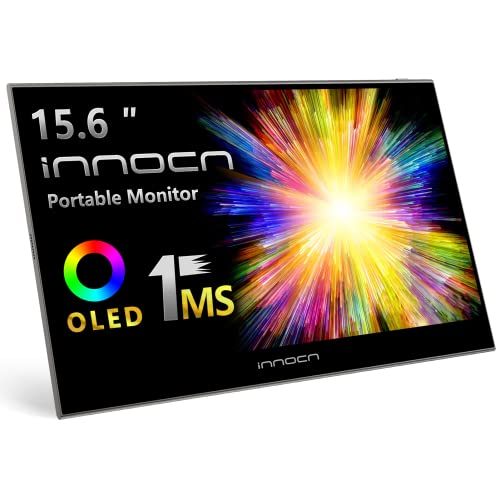
- OLED panel with 100% DCI-P3
- Portable 15.6-inch design
- USB-C and mini HDMI inputs
Best For: Traveling Mac creators needing a compact OLED editing side monitor
Mac-Calibrated 4K Display

- Mac color tuning with wide P3 gamut
- 90W USB-C power delivery
- Adjustable stand with Mac controls
Best For: MacBook creators wanting a calibrated desktop monitor for editing
Color-Accurate Desktop Choice
ASUS ProArt PA278QV 27" for Mac Editing

- Calman Verified with Delta E < 2
- 100% sRGB and 100% Rec. 709 coverage
- 27-inch WQHD display with ergonomic adjustments
Best For: Mac-based editors and creators who want a larger, color-accurate desktop monitor for editing and review
4K Portable Creative Display
14" OLED Touch Monitor for Mac

- 4K OLED with 3840 x 2400 resolution
- 100% DCI-P3 wide-gamut coverage
- 10-point touch and active pen support
Best For: Mac creators who want a sharp 4K portable OLED monitor with touch support for editing, review, or sketching on the move
Studio-Calibrated 4K IPS
27" USB-C Monitor for Mac Work

- 4K UHD 3840 x 2160 panel
- DeltaE<2 with HDR400 support
- USB-C, DP, and HDMI inputs
Best For: Mac editors needing a color-accurate 27-inch workspace
Portable OLED Creator Screen

- 4K OLED panel with deep contrast
- 100% DCI-P3 and DeltaE<2 calibration
- Ultra-light 1.33 lb portable design
Best For: Mobile MacBook creators needing a color-accurate travel display
Budget Portable USB-C

- 15.6-inch IPS display at 1080p
- Two full-feature USB-C ports
- Lightweight design with smart cover
Best For: Affordable portable side display for Mac multitasking
Portable 4K OLED Sidecar – ViewSonic VX1655-4K-OLED
If you want an OLED monitor for Mac video production that travels easily, the ViewSonic VX1655-4K-OLED gives you a 15.6-inch 4K OLED panel in a compact, 1.5-pound body. It is a practical choice for editors who need a sharp second screen for timeline work, client review, or on-location monitoring without carrying a full-size display.
Best For: Mobile Mac creators who need a lightweight OLED second screen for editing and review.
Pros:
- 4K UHD OLED panel with strong contrast and 60Hz refresh for detailed viewing
- Very portable at 1.5 lbs and 0.6 inches thick
- USB-C connectivity with 60W charging helps reduce cable clutter
- Built-in stand, screen cover, and support for Mac systems
Cons:
- 15.6-inch size is small for a primary editing workspace
- 60Hz refresh is fine for editing, but not aimed at high-refresh workflows
- Mini HDMI and USB-C ports are practical, but limited compared with larger desktop monitors
This is a strong pick if portability matters more than desk-sized screen space. For Mac video production, it offers OLED contrast, 4K detail, and simple single-cable convenience in a travel-friendly package.
Color-Rich Desktop 4K Pick – Dell 27 Plus 4K S2725QS
The Dell 27 Plus 4K Monitor is not OLED, but it is still a useful option for Mac video production if you want a larger 27-inch desktop display with sharp 4K detail and wide color coverage. Its IPS panel, 99% sRGB, and 1500:1 contrast ratio make it a sensible fit for editing spaces where comfort, size, and smooth performance matter.
Best For: Mac editors who want a color-accurate 4K desktop monitor with a larger work area.
Pros:
- 27-inch 4K IPS panel with 99% sRGB for color-focused work
- 120Hz refresh rate and very fast response time for smooth motion
- ComfortView Plus helps reduce blue light without sacrificing color accuracy
- Built-in speakers and adjustable stand add convenience for desktop use
Cons:
- Not an OLED panel, so it will not deliver OLED-level blacks or contrast
- Designed as a desktop monitor rather than a portable option
- Best suited to general editing and review, not specialized OLED grading workflows
If your priority is a roomy 4K workspace for Mac editing rather than true OLED performance, this Dell is a solid, comfortable desktop choice. It balances color, size, and productivity features well.
Travel-Friendly OLED Editor – INNOCN 15.6" K1F
For buyers looking for an OLED monitor for Mac video production in a portable form, the INNOCN 15.6″ K1F is built around color and mobility. Its Full HD OLED panel, 100% DCI-P3 coverage, and 100000:1 contrast ratio make it a strong travel companion for editing, reviewing footage, or using as a second Mac display on the go.
Best For: Traveling Mac creators who want a compact OLED display for editing and color work.
Pros:
- Self-lit OLED panel with 100% DCI-P3 and strong contrast
- Designed with photo and video editing in mind
- USB-C and mini HDMI inputs support broad device compatibility
- Thin, lightweight build makes it easy to carry
Cons:
- 1080p resolution is less detailed than 4K options
- 15.6-inch screen is better as a second display than a main editing monitor
- 60Hz refresh is standard rather than premium
This monitor makes sense if you want OLED color and contrast in a portable package, especially for Mac-based editing away from the studio. It is best treated as a travel-friendly companion rather than a primary grading display.
Mac-Calibrated 4K Display – BenQ MA270U 27-inch 4K
The BenQ MA270U is aimed directly at Mac users who want a polished 4K desktop monitor for creative work, though it is not OLED. For Mac video production, its wide P3 color gamut, Mac color tuning, and 90W USB-C delivery make it a practical all-in-one display for editors who want strong color support and a clean single-cable setup.
Best For: MacBook users who want a color-tuned 4K monitor for editing and general creative work.
Pros:
- Calibrated for MacBook with BenQ color tuning and P3 wide gamut
- Dual USB-C ports with up to 90W power delivery
- Height, tilt, swivel, and pivot adjustments improve ergonomics
- Integrated Mac controls for brightness and volume add convenience
Cons:
- Not an OLED display, so contrast is more typical of IPS than self-lit panels
- 60Hz refresh is standard for editing, not motion-focused work
- Best suited to desk setups rather than portable production
If your Mac video production setup needs a well-integrated desktop monitor more than an OLED panel, the MA270U is a smart fit. It emphasizes color tuning, USB-C simplicity, and comfort for long editing sessions.
Portable OLED Pick – ViewSonic VP16-OLED 15.6" ColorPro for Mac
If you want an OLED monitor for Mac video production that travels easily, the ViewSonic VP16-OLED is built around portability and color work. Its 15.6-inch Full HD OLED panel, Pantone validation, and USB-C connectivity make it a practical second screen for editing, reviewing cuts, or checking color on the go.
Best For: Mac editors who need a lightweight, color-validated portable monitor for travel and on-location review.
Pros:
- 15.6-inch OLED display with 1920 x 1080 resolution and 60Hz refresh rate
- Pantone validated color accuracy for color-sensitive workflows
- USB-C connection supports fast data, audio, video, and up to 40W charging
- Includes an ergonomic adjustable stand, tripod mount, hood, and screen cover
Cons:
- 1080p resolution is lower than 4K options for detailed timeline work
- Small 15.6-inch screen is better as a secondary display than a full desktop monitor
- Portable design prioritizes convenience over large-screen editing comfort
This is a strong fit if your priority is a compact OLED monitor that works well with Mac laptops and keeps cable clutter low. For mobile production setups, it offers a balanced mix of color credibility, portability, and simple connectivity.
Color-Accurate Desktop Choice – ASUS ProArt PA278QV 27" for Mac Editing
For a desktop OLED monitor for Mac video production alternative focused on accuracy, the ASUS ProArt PA278QV is a 27-inch WQHD IPS display designed for creator workflows. It is Calman Verified, offers 100% sRGB and 100% Rec. 709 coverage, and includes wide connectivity for a clean editing desk.
Best For: Mac-based editors and creators who want a larger, color-accurate desktop monitor for editing and review.
Pros:
- Calman Verified with Delta E < 2 accuracy for dependable color work
- 100% sRGB and 100% Rec. 709 coverage for standard digital and video workflows
- 27-inch WQHD 2560 x 1440 display gives more room for timelines and panels
- Height, tilt, pivot, and swivel adjustments help match your setup
Cons:
- Uses IPS LCD technology rather than OLED
- Matte screen finish lacks the deep contrast of OLED panels
- At 17 pounds, it is not meant for frequent moving or travel
If your priority is creator-focused color fidelity on a larger monitor, this ASUS ProArt model is a practical studio option. It is especially appealing for Mac users who want reliable Rec. 709 and sRGB support without stepping into a portable form factor.
4K Portable Creative Display – 14" OLED Touch Monitor for Mac
This 14-inch 4K OLED portable monitor is a strong fit for Mac video production when you want high resolution in a travel-friendly size. It combines a 3840 x 2400 panel, 100% DCI-P3 coverage, touchscreen support, and a slim 1.3-pound design for field work or a compact desktop setup.
Best For: Mac creators who want a sharp 4K portable OLED monitor with touch support for editing, review, or sketching on the move.
Pros:
- 4K OLED panel with 3840 x 2400 native resolution
- 100% DCI-P3 color coverage for wide-gamut creative work
- 10-point touchscreen and active pen support add flexibility
- Very portable at 1.3 pounds with a slim aluminum alloy build
Cons:
- 14-inch size is best as a secondary display rather than a main editing monitor
- Touch support requires a compatible USB-C 3.1 DP Alt Mode or Thunderbolt port
- May need separate power in some setups to avoid flicker or black-screen issues
For Mac users who want a compact OLED panel with more resolution than a typical portable display, this model stands out. The combination of 4K detail, DCI-P3 coverage, and touch input makes it a versatile companion for production workflows away from the studio.
Studio-Calibrated 4K IPS – 27" USB-C Monitor for Mac Work
If you want an OLED monitor for Mac video production but prefer a larger 27-inch desktop display, this INNOCN 4K IPS monitor is a practical creator-friendly option. It offers 3840 x 2160 resolution, HDR400 support, and DeltaE<2 color accuracy, making it a solid pick for editing, color review, and day-to-day MacBook or Mac mini use.
Best For: Mac editors and creators who want a color-accurate 27-inch 4K workspace for photo and video editing.
Pros:
- 4K UHD 3840 x 2160 resolution with 1.07B colors for detailed timelines and imagery
- DeltaE<2 and HDR400 support for stronger color confidence in creative work
- USB-C, DisplayPort, and HDMI inputs make it easy to connect a MacBook or Mac mini
- Adjustable stand with swivel, height, tilt, and pivot support
Cons:
- It uses an IPS LCD panel, not OLED
- 60Hz refresh rate is fine for editing, but not aimed at fast-motion gaming
- Built-in speakers are included, but creators may still prefer external audio
For Mac video production, this monitor stands out more for accuracy and usability than for flashy specs. If you need a dependable 27-inch 4K screen with strong color handling and simple USB-C connectivity, it is an easy monitor to work with.
Portable OLED Creator Screen – 14" Travel Monitor for Mac
If you are shopping for an OLED monitor for Mac video production and need something portable, this 14-inch Upperizon display is the most directly aligned option here. Its 4K OLED panel, 100% DCI-P3 coverage, factory calibration to DeltaE < 2, and very high contrast are all aimed at creators who need rich blacks and accurate color on the go.
Best For: Mobile MacBook creators who want an OLED travel display for editing, color review, and portable dual-screen workflows.
Pros:
- OLED self-luminous panel with deep blacks and bright highlights
- 4K 3840 x 2400 resolution with 100% DCI-P3 and DeltaE < 2 calibration
- Very portable at 1.33 lb and 0.13 inches thick, with sleeve case included
- Two USB-C ports plus HDMI, kickstand, speakers, and VESA support
Cons:
- 14-inch size is compact for a main editing display
- 350 nits brightness may feel limited in bright environments
- Requires USB-C DisplayPort Alt Mode or Thunderbolt support for best use
This is the strongest fit for creators who want OLED contrast without giving up portability. It is better suited as a travel companion or secondary grading screen than a full-size desktop replacement.
Budget Portable USB-C – 15.6" FHD Second Screen
This MNN portable monitor is a straightforward second-screen choice for Mac users who want more workspace without paying for a premium creative panel. With a 15.6-inch IPS display, 1080p resolution, HDR support, and plug-and-play USB-C connectivity, it works well for general editing tasks, previews, and on-the-go productivity.
Best For: Mac users who want an affordable portable side display for lighter video work and general multitasking.
Pros:
- 15.6-inch IPS panel with 1080p resolution and 178-degree viewing angle
- Two full-feature USB-C ports for simple plug-and-play connection
- Lightweight, ultra-slim design with smart cover stand included
- HDR mode and multiple display modes for flexible use
Cons:
- 1080p resolution is less detailed than 4K options for video production
- Not an OLED panel, so contrast will not match premium creator displays
- Brightness is rated at 300 nits, which is modest for demanding environments
For Mac video production, this monitor makes the most sense as a budget-friendly portable helper rather than a primary grading screen. It delivers easy setup and solid everyday usability, but it is clearly aimed at convenience over high-end color work.
How We Picked the Best OLED Monitor for Mac Video Production
For OLED Monitor for Mac Video Production buyers, the best choices combine accurate color, dependable Mac connectivity, and a resolution that supports clean editing timelines and detailed preview work. We favored monitors with wide color gamut claims, low Delta E where available, USB-C support, and practical sizes for both desk setups and mobile editing.
Quick Comparison
Portable OLED models are the easiest to carry for location edits, client playback, and secondary monitoring. Larger 27-inch desktop monitors are better for full-time editing because they give you more room for timelines, tool panels, and frame-accurate review. IPS models in this roundup are still useful when you want strong calibration support and a more traditional studio display at a lower cost than OLED.
Key Buying Factors for OLED Monitor for Mac Video Production
Color Accuracy and Gamut
Look for wide-gamut coverage such as DCI-P3 or at least full sRGB/Rec. 709 support if your work is web, broadcast, or social-first video. Factory calibration and low Delta E matter more than flashy contrast claims.
Resolution and Screen Size
4K is the sweet spot for most Mac editors because it gives you sharper text and more usable workspace. Portable 1080p OLED panels are fine for monitoring and travel, but a 27-inch 4K display is usually the stronger primary edit screen.
Connectivity and Power
Mac users should prioritize USB-C with video plus power delivery, especially if you want a clean single-cable setup with MacBook Air or MacBook Pro. For desktop Macs, make sure the monitor has HDMI or DisplayPort options that fit your dock or adapter plan.
Brightness and HDR
HDR support can help when reviewing high-contrast footage, but it is not a substitute for proper color management. A bright, uniform panel is often more valuable than a headline HDR label.
Who Should Buy Which OLED Monitor for Mac Video Production?
If you need maximum portability, choose a compact OLED model for travel, on-set review, or a dual-screen MacBook setup. If you edit daily at a desk, a 27-inch 4K monitor with strong color calibration support is the safer long-term pick. Budget-conscious creators who still want pro-style color should consider the calibrated IPS options, while users who want the most immersive contrast for grading and previewing should lean toward OLED.
For most buyers, the right monitor is the one that matches where you work most often. A portable OLED is ideal for mobile production, but a larger calibrated display will usually deliver the most comfortable and reliable editing experience over time.