Need more speed, more redundancy, or just more room for growing files? The best USB-C RAID enclosures make it easier to build a flexible desktop storage setup without jumping straight to a full NAS.
In this roundup, we focus on practical options for creators, backups, and small office workflows, with choices that balance capacity, cooling, and RAID features.
Best 10 USB C Raid Enclosures Picks for 2026
Speed-Focused RAID
TERRAMASTER D2-320 USB RAID Enclosure

- USB 3.2 Gen 2 Type-C with 10Gbps speed
- Hardware RAID 0/1, JBOD, and Single modes
- Tool-free trays and temperature-controlled fan
Best For: Compact 2-bay RAID storage with speed and mirrored backup
All-in-One Expansion

- Four bays with up to 88TB total capacity
- USB 3.2 Type-C up to 10Gbps plus HDMI output
- Dual fans and per-bay power switches
Best For: A high-capacity desktop enclosure with cooling and extra display connectivity
Backup-Ready DAS
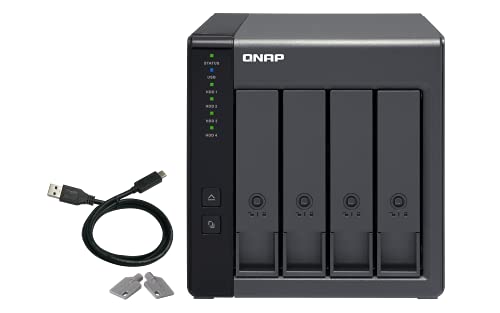
- 4-bay hardware RAID with RAID 5 support
- USB Type-C DAS for Windows, macOS, and Linux
- Lockable bays and included tray keys
Best For: NAS backup and multi-drive storage with hardware RAID control
Reliable JBOD Dock
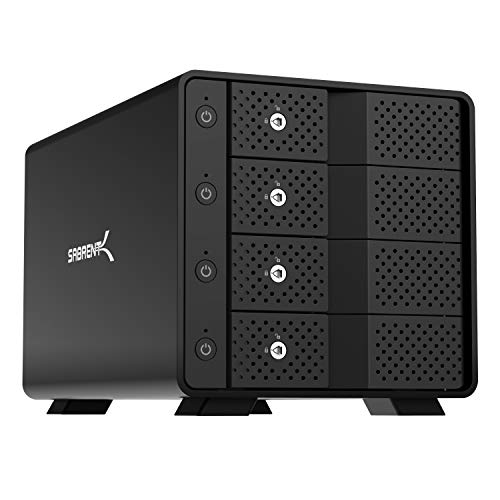
- Independent controller for each of four bays
- 10Gbps USB-C with trayless hot-swap
- Aluminum build with 92mm cooling fan
Best For: Independent-drive storage without hardware RAID
Dual-Bay RAID Value Pick
MAIWO Dual Bay RAID Enclosure for SATA 3.5" HDD

- 4 RAID modes: RAID 0, RAID 1, JBOD, Normal
- USB 3.1 Gen2 with UASP and ASM1352R chip
- Aluminum body, fan cooling, and 48W power supply
Best For: A flexible two-drive 3.5-inch SATA enclosure with active cooling
High-Capacity DAS Dock
SABRENT 5-Bay USB-C 10Gbps 3.5in Enclosure

- Five bays with up to 100TB total capacity
- Independent controller per bay for stable access
- Trayless hot-swap design with PWM cooling fan
Best For: A five-drive USB-C dock when you do not need RAID
Budget RAID Two-Bay
CENMATE Aluminum 2 Bay RAID Enclosure

- RAID 0, RAID 1, Normal, and JBOD modes
- Supports 2.5-inch and 3.5-inch SATA HDDs/SSDs
- USB A/C 3.0 connectivity with aluminum build
Best For: An affordable mixed-drive two-bay RAID enclosure
5-Bay High-Capacity RAID

- Up to 110TB across 5 SATA drives
- RAID 0/1/3/5/10, JBOD, and CLONE
- Aluminum body with 80mm fan
Best For: Large media libraries and multi-drive backup setups
Fast Dual-Bay RAID
MAIWO 10Gbps Dual-Bay Enclosure

- USB 3.1 Gen 2 Type-C with 10Gbps speed
- RAID 0, RAID 1, JBOD, and NORMAL modes
- Aluminum case with built-in fan
Best For: Compact dual-drive RAID with faster USB-C connectivity
Four-Bay RAID with eSATA
CENMATE 4-Bay Aluminum Enclosure

- Up to 80TB across four SATA drives
- RAID 0/1/3/5/10 plus CLONE and NORMAL
- USB-C, USB-A, and eSATA connections
Best For: Multi-connection setups needing four-drive RAID support
Speed-Focused RAID – TERRAMASTER D2-320 USB RAID Enclosure
If you want usb c raid enclosures for fast desktop storage, the TERRAMASTER D2-320 is built around USB 3.2 Gen 2 and hardware RAID. It supports RAID 0, RAID 1, JBOD, and Single modes, so it can be set up for either speed, redundancy, or simple expansion depending on your workflow.
Best For: Users who want a 2-bay USB-C RAID enclosure with hardware RAID, strong speed, and simple tool-free drive loading.
Pros:
- USB 3.2 Gen 2 Type-C connection with up to 10Gbps transfer speed
- Hardware RAID 0, RAID 1, JBOD, and Single support
- Tool-free tray design with push-lock drive retention
- Intelligent temperature-controlled fan for quieter cooling
Cons:
- Only two drive bays, so total capacity is more limited than 4-bay models
- Diskless enclosure, so drives must be purchased separately
The D2-320 is a practical pick if you want a compact USB-C RAID enclosure with real hardware RAID options and straightforward installation. Its 2-bay design makes it less expandable than larger enclosures, but it stays focused on speed, cooling, and mirrored backup support.
All-in-One Expansion – WAVLINK 4-Bay USB-C Enclosure
This WAVLINK model stands out among usb c raid enclosures if you need a high-capacity four-bay unit with extra connectivity. It uses USB 3.2 Type-C for up to 10Gbps transfers, supports 3.5-inch and 2.5-inch SATA drives, and adds HDMI output plus a second USB-C port for more flexible desk setups.
Best For: Buyers who want a 4-bay USB-C enclosure with cooling, hot-swap convenience, and HDMI output in one box.
Pros:
- Four SATA bays with support for up to 4x22TB capacity
- 10Gbps USB 3.2 Type-C data transfer
- Dual built-in fans with automatic activation at 48°C
- Independent on/off switches for each bay and hot-swappable design
Cons:
- 2.5-inch drives need additional mounting brackets that are not included
- HDMI only works if the host USB-C port supports video output
For mixed-use setups, this enclosure offers more than storage alone by combining fast USB-C connectivity with display output. It is a strong fit when you want a roomy, cooled enclosure that can also help simplify a workstation.
Backup-Ready DAS – QNAP TR-004 USB Type-C RAID
QNAP TR-004 4 Bay USB Type-C Direct Attached Storage (DAS) with hardware RAID (Diskless)
Check Price On AmazonThe QNAP TR-004 is a practical choice if you are comparing usb c raid enclosures for backup and expandable storage. It connects over USB Type-C, supports hardware RAID modes including RAID 0, RAID 1, RAID 5, JBOD, and individual disks, and can also serve as external storage for a QNAP NAS backup workflow.
Best For: Users who need a 4-bay hardware RAID DAS for Windows, macOS, or Linux, especially for NAS backup and expansion.
Pros:
- Hardware RAID support including RAID 0, 1, 5, JBOD, and individual disks
- USB Type-C direct-attached storage for Windows, macOS, and Linux
- Lockable drive bays for added security
- Includes Type-C to Type-A connector cable and drive tray keys
Cons:
- USB transfer rate is 5Gbps, which is slower than some 10Gbps alternatives
- Compatibility notes limit use with certain older QNAP NAS models
The TR-004 is more storage-and-backup focused than speed-chasing models, but it brings dependable RAID options and broad OS support. It makes the most sense when your priority is controlled storage management rather than maximum USB bandwidth.
Reliable JBOD Dock – SABRENT 4-Bay USB-C Enclosure
If you do not need RAID and just want straightforward usb c raid enclosures alternatives for independent drive access, the SABRENT DS-SC4B is built as a 4-bay DAS. Each bay has its own controller, so every drive connects independently over a USB-C 10Gbps link, making it a good fit for users who prefer JBOD-style operation over hardware RAID.
Best For: Users who want a stable 4-bay USB-C DAS with individual drive access rather than RAID.
Pros:
- Dedicated controller per bay for independent drive connections
- USB 3.1 Gen 2 Type-C connection with up to 10Gbps speed
- Trayless hot-swap design with per-bay switches and activity LEDs
- Aluminum and metal build with a 92mm fan for active cooling
Cons:
- Not hardware RAID, so it will not meet RAID-focused use cases
- Requires external power and is relatively heavy at 9 pounds
This SABRENT enclosure is best viewed as a dependable multi-drive dock rather than a RAID box. If you want individual mount points, hot-swap convenience, and solid cooling, it offers a very practical desktop setup.
Dual-Bay RAID Value Pick – MAIWO Dual Bay RAID Enclosure for SATA 3.5" HDD
If you want usb c raid enclosures for a simple two-drive storage setup, this MAIWO model focuses on the essentials: RAID 0, RAID 1, JBOD, and Normal modes, plus USB 3.1 Gen 2 with a 10Gbps-rated connection. It is built for 3.5-inch SATA drives and includes active cooling, so it fits buyers who want a compact desktop enclosure with flexible storage behavior.
Best For: Users who want a two-bay USB-C RAID enclosure for 3.5-inch SATA drives with mode flexibility and cooling.
Pros:
- Supports 4 RAID modes: RAID 0, RAID 1, JBOD, and Normal
- USB 3.1 Gen 2 with ASM1352R chipset and UASP support
- Aluminum alloy body with adjustable cooling fan
- Includes 48W power supply for both drives and controller
Cons:
- Designed for 3.5-inch SATA HDDs; 2.5-inch drives need a bracket
- Mechanical drive speeds still cap real-world transfer performance
- Only supports two drives
For users building a practical dual-drive setup, this enclosure offers a solid mix of RAID options, cooling, and capacity expansion up to 48TB. It is a straightforward choice if you need reliable desktop storage rather than advanced features.
High-Capacity DAS Dock – SABRENT 5-Bay USB-C 10Gbps 3.5in Enclosure
Among usb c raid enclosures, this SABRENT unit is really a direct-attached storage dock rather than a RAID box, but it is a strong pick if your priority is holding multiple drives over one USB-C connection. It offers five independent bays, trayless hot-swap access, and a 10Gbps USB-C link for users who want easy expansion without hardware RAID.
Best For: Users who need a five-drive USB-C DAS dock with independent bays and hot-swap convenience.
Pros:
- Five 3.5-inch bays with up to 100TB total capacity
- Dedicated controller for each bay for stable drive access
- Quiet PWM fan with temperature-based speed control
- Trayless hot-swap design with per-bay power switches
Cons:
- Not a RAID enclosure and not a NAS
- Only supports direct-attached, JBOD-style access
- Large and heavy compared with two-bay units
This is a good fit if you want a multi-drive dock that behaves like separate disks instead of a RAID array. It is especially practical for workflows where expandability, hot-swap convenience, and cooling matter more than RAID features.
Budget RAID Two-Bay – CENMATE Aluminum 2 Bay RAID Enclosure
If you are shopping usb c raid enclosures for a basic two-drive setup, this CENMATE enclosure offers the core RAID modes at a lower-spec 5Gbps level. It supports both 2.5-inch and 3.5-inch SATA HDDs and SSDs, making it a practical option for users who want a plug-and-play enclosure with simple RAID options and broad compatibility.
Best For: Buyers who want an affordable two-bay RAID enclosure for mixed 2.5-inch and 3.5-inch SATA drives.
Pros:
- Supports RAID 0, RAID 1, Normal, and JBOD
- Works with 2.5-inch and 3.5-inch SATA HDDs/SSDs
- USB A/C 3.0 cable included for broad connection options
- Aluminum-alloy build with built-in fan cooling
Cons:
- USB 3.0 interface is limited to 5Gbps
- Fan noise is noted around 40-50 decibels
- Mac OS has no RAID software support mentioned
For straightforward desktop storage, this enclosure covers the basics without much complexity. It makes the most sense if you want a two-bay RAID unit with support for different SATA drive sizes and do not need top-end transfer speeds.
5-Bay High-Capacity RAID – Yottamaster 5-Bay USB-C DAS
If you need one of the more spacious usb c raid enclosures for a large media library or backup set, this Yottamaster 5-bay model is built around raw capacity and flexible RAID setup. It supports 2.5-inch and 3.5-inch SATA HDDs/SSDs, offers multiple RAID modes, and pairs that with a metal chassis and active cooling for everyday DAS use.
Best For: Photographers, video editors, and users who want up to 110TB in a USB-C DAS with flexible RAID modes.
Pros:
- Supports up to 5 SATA drives and up to 110TB total capacity
- RAID 0/1/3/5/10, JBOD, and CLONE support for different workflows
- Aluminum-alloy body with an 80mm intelligent temperature-control fan
- Works with both 2.5-inch and 3.5-inch SATA HDDs/SSDs
Cons:
- USB 3.1 Type-C transfer tops out at 5Gbps
- Total drive power draw must stay under 78W
- New drives may need formatting and partitioning before use
Overall, this is a strong choice if capacity and RAID flexibility matter more than compact size or top-end transfer speed. The cooling design and tray-based layout make it well suited to larger multi-drive storage setups.
Fast Dual-Bay RAID – MAIWO 10Gbps Dual-Bay Enclosure
Among usb c raid enclosures, this MAIWO dual-bay unit stands out for its 10Gbps USB 3.1 Gen 2 Type-C connection and straightforward RAID switching. It supports 2.5-inch and 3.5-inch SATA drives, includes active cooling, and is aimed at users who want a compact external RAID enclosure with practical everyday performance.
Best For: Users who want a compact dual-bay USB-C RAID enclosure with faster 10Gbps connectivity.
Pros:
- USB 3.1 Gen 2 Type-C interface with up to 10Gbps transfer speed
- RAID 0, RAID 1, JBOD/LARGE, and NORMAL/PM modes
- Built-in cooling fan and full aluminum body for heat management
- Includes both C-to-C and C-to-A cables plus power adapter
Cons:
- 2.5-inch drives may need an additional 2.5-to-3.5 mounting bracket
- Actual drive speeds are limited by the drives themselves under UASP
- New drives should be initialized and formatted before RAID setup
This is a good pick if you want a two-drive enclosure that keeps setup simple while still offering RAID flexibility and faster USB-C connectivity. Its compact size makes it easier to place on a desk or move between workspaces.
Four-Bay RAID with eSATA – CENMATE 4-Bay Aluminum Enclosure
This CENMATE model is a practical option if you want usb c raid enclosures that also include eSATA support for wider connection flexibility. It accepts 2.5-inch and 3.5-inch HDDs/SSDs, supports multiple RAID layouts, and uses an aluminum body with fans to help manage heat in a four-bay DAS setup.
Best For: Users who want a four-bay RAID enclosure with USB-C, USB-A, and eSATA connection options.
Pros:
- Supports up to 80TB total capacity across four drives
- RAID 0/1/3/5/10, CLONE, LARGE, and NORMAL modes
- Aluminum enclosure with dual 2-inch fans for cooling
- Includes USB A/C 3.0 and eSATA cables in the box
Cons:
- Hot-swapping is not supported
- eSATA access depends on the computer supporting RAID over eSATA
- Fan noise is noted at around 40-50 dB
For buyers who need flexibility in connectivity as well as RAID options, this enclosure offers a lot of utility in one chassis. Just be sure your eSATA setup is compatible if you plan to use that port for multi-bay access.
How We Picked the Best USB C Raid Enclosures
We prioritized models that offer a useful mix of transfer speed, RAID flexibility, drive compatibility, and thermal management. For USB C Raid Enclosures, those four factors usually matter more than flashy extras. We also looked for options that make sense for real-world desktop use, including tools-free access where possible, sensible bay counts, and clear support for 2.5-inch and 3.5-inch SATA drives.
Quick Comparison: What to Expect
Two-bay units are typically best for compact backups and mirror-based protection, while four- and five-bay enclosures are better for larger media libraries, shared project files, and higher-capacity RAID arrays. If you want straightforward expansion, a DAS-style enclosure with USB-C is often simpler than network storage and can deliver faster local access for editing, archiving, and clones.
Key Buying Factors for USB-C RAID Enclosures
RAID Modes and Flexibility
Check which modes are supported before buying. RAID 1 is ideal for redundancy, RAID 0 emphasizes speed, JBOD keeps drives separate, and basic spanning or normal modes can help maximize usable capacity. Some USB C Raid Enclosures include hardware RAID controls, while others rely on software configuration.
Drive Size and Maximum Capacity
Make sure the enclosure matches your drive type and expected workload. Many units support both 2.5-inch SSDs and 3.5-inch HDDs, but some are optimized for one size or the other. Capacity limits can vary widely, so confirm whether the enclosure supports today’s large drives and your future upgrade path.
Cooling and Build Quality
Multiple drives generate heat, especially during long transfers or rebuilds. Aluminum housings, built-in fans, and temperature-controlled cooling can help maintain performance and drive health. If you plan to run the enclosure for long sessions, cooling should be a top priority.
Connection Speed and Compatibility
USB-C is not always the same as full 10Gbps performance, so verify the port standard and cable quality. Also check compatibility with USB-A, eSATA, or mixed system setups if you need broader device support.
Who Should Buy Which USB C Raid Enclosures?
Choose a 2-bay enclosure if you want affordable redundancy for backups or a compact desktop footprint. Pick a 4-bay model if you need a better balance of capacity, speed, and RAID options for creative work or office storage. Go with a 5-bay enclosure if your priority is maximum local storage density and you want room to grow without replacing the enclosure soon.
For most buyers, the best choice comes down to whether you value simplicity, redundancy, or scale. If you are building a fast local archive or editing workspace, a well-cooled USB-C RAID enclosure can be a practical long-term upgrade.