A DJ controller with screens can make browsing tracks, monitoring waveforms, and performing without a laptop faster and more focused. The right model depends on whether you prioritize standalone operation, portability, scratching, club-style control, or software integration.
We compare 10 strong options across different budgets and performance styles, highlighting the features that matter most before you buy.
Best 10 Dj Controller with Screens Picks for 2026
Best Standalone Pick
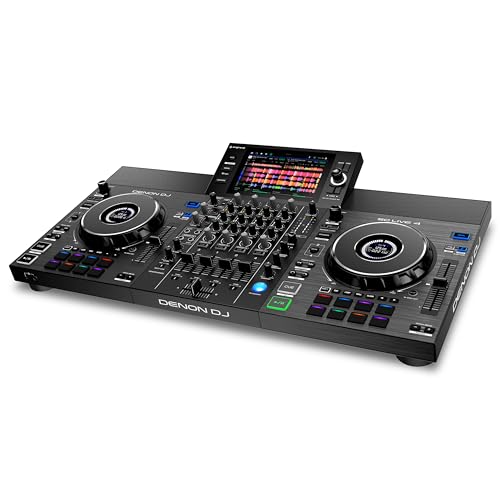
- Four-deck standalone operation
- 7-inch touchscreen and music streaming
- Built-in speakers with extensive outputs
Best For: Laptop-free mobile, streaming, and club DJs
Best Simple Rekordbox System

- Two-channel all-in-one system
- 7-inch Rekordbox touchscreen
- USB connectivity and velocity pads
Best For: DJs wanting a focused Rekordbox workflow
Best for Streaming and Lights

- 7-inch adjustable touchscreen
- Built-in speakers and Wi-Fi streaming
- Wireless control for compatible DJ lights
Best For: Home, mobile, and entertainment-focused DJs
Best Portable Battery-Powered Pick
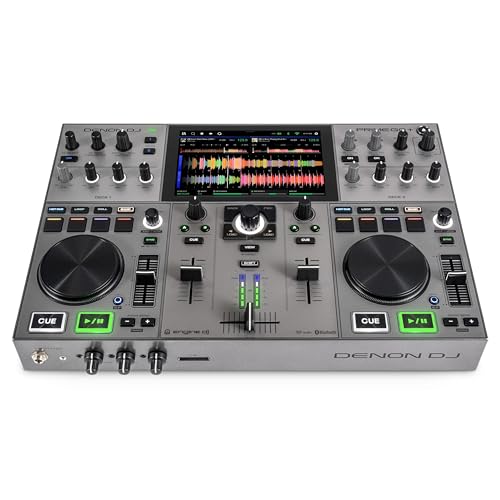
- Battery-powered standalone performance
- Built-in Wi-Fi music streaming
- Pro effects and balanced outputs
Best For: Mobile DJs and performers on the move
Best Scratch Controller

- On-jog displays show playback position
- Battle-style layout with full-size jog wheels
- Supports rekordbox and Serato DJ Pro
Best For: Scratch DJs and open-format performers
Best Portable Standalone Controller

- 7-inch touchscreen and laptop-free Engine DJ OS
- Battery-powered with built-in speakers
- Wi-Fi, streaming, USB, and SD support
Best For: Mobile DJs wanting a self-contained setup
Best Four-Channel Controller

- Four-channel club-standard workflow
- Multicolor on-jog displays show performance details
- Track Separation and built-in DMX output
Best For: Open-format DJs and mobile professionals
Compact Beatmaker

- Roland drum kits and 16-step sequencing
- Large platters for scratching
- USB-powered, lightweight Serato controller
Best For: Portable beginners and creative Serato performances
Screen-Forward Performer

- Built-in song and waveform displays
- Motorized seven-inch aluminum platters
- OLED pads and advanced stem controls
Best For: Experienced performers needing visual feedback and pro connections
Streamlined Starter
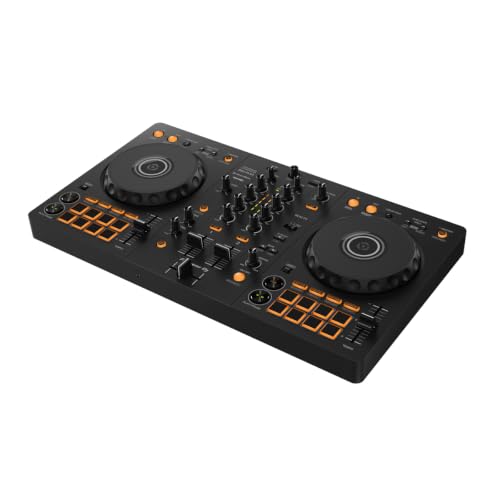
- Beginner-friendly two-deck layout
- Smart Fader simplifies transitions
- USB and Bluetooth support for streaming setups
Best For: New DJs practicing, streaming, and mixing across devices
Best Standalone Pick – Denon DJ SC LIVE 4
The Denon DJ SC LIVE 4 is a strong choice if you want a dj controller with screens that can handle laptop-free performances. Its 7-inch touchscreen, four-deck layout, built-in speakers, streaming support, and broad connectivity make it suitable for home practice, mobile gigs, and streaming setups.
Best For: DJs who want a full-featured standalone controller with four decks, streaming, and built-in audio.
Pros:
- Runs without a computer using Engine DJ OS.
- 7-inch touchscreen, SD slot, two USB inputs, and wireless streaming support.
- Includes built-in speakers, Bluetooth audio input, two microphone inputs, and balanced XLR main output.
- Supports Serato DJ and VirtualDJ integration.
Cons:
- Its 28.3-inch width may be less convenient for compact setups.
- It is corded rather than battery powered.
Choose the SC LIVE 4 when you value maximum flexibility and four-deck control more than portability. It is particularly practical for DJs who want one self-contained booth for varied performance environments.
Best Simple Rekordbox System – Pioneer DJ XDJ-RR
The Pioneer DJ XDJ-RR is a straightforward option for shoppers seeking a dj controller with screens in an all-in-one format. It is a two-channel digital DJ system with USB connectivity, velocity pads, and a 7-inch touchscreen designed around Rekordbox.
Best For: DJs who want a compact two-channel system with Rekordbox support and a built-in touchscreen.
Pros:
- All-in-one digital DJ system with two channels.
- Includes a 7-inch touchscreen and velocity pads.
- USB connectivity keeps the setup relatively simple.
Cons:
- The supplied details list fewer connection options than the other controllers here.
- It does not list built-in speakers or standalone streaming features.
The XDJ-RR makes the most sense for users who prefer a focused Rekordbox-based workflow. It offers the essential screen and performance controls without the broader streaming and standalone feature set of newer alternatives.
Best for Streaming and Lights – Numark Mixstream Pro+
The Numark Mixstream Pro+ combines a 7-inch adjustable touchscreen with standalone mixing, built-in speakers, Wi-Fi streaming, and wireless lighting control. For a dj controller with screens that can work without a laptop, it offers an accessible setup for home use, mobile performance, and casual events.
Best For: DJs who want streaming access, built-in speakers, and control over compatible DJ lighting from one unit.
Pros:
- Engine DJ OS supports laptop-free performance with USB, SD, Dropbox, and streaming sources.
- 7-inch touchscreen with adjustable brightness and two deck control.
- Built-in speakers and dedicated controls can simplify practice and small setups.
- Controls Philips Hue, Nanoleaf, and DMX lighting wirelessly.
Cons:
- It is a two-deck controller rather than a four-deck system.
- Standalone stems require pre-rendering through Engine DJ Desktop and a one-time software license purchase.
The Mixstream Pro+ is a compelling all-in-one choice when convenience matters. Its streaming integrations and lighting controls are especially useful for DJs who want an entertaining setup with fewer separate components.
Best Portable Battery-Powered Pick – Denon DJ PRIME GO+
The Denon DJ PRIME GO+ is a highly portable dj controller with screens for performers who need professional features away from a power outlet. Its battery-powered design, built-in Wi-Fi streaming, touchscreen workflow, extensive effects, and pro-grade outputs fit mobile and on-the-go DJing.
Best For: Mobile DJs and performers who prioritize battery-powered operation, streaming, and compact transport.
Pros:
- Battery-powered standalone operation using Engine DJ OS.
- Built-in Wi-Fi supports access to more than 100 million tracks across supported streaming services.
- Includes 26 main FX, sweep FX, fader echo, and touch-controlled effects.
- Offers balanced XLR, booth, RCA, Bluetooth, AUX, and microphone connectivity.
Cons:
- Its compact design provides less physical workspace than larger controllers.
- Standalone stems require pre-rendering with Engine DJ Desktop and a one-time software license purchase.
The PRIME GO+ stands out when portability is the deciding factor. It retains a broad selection of performance and connection features while allowing DJs to work in locations where mains power is inconvenient.
Best Scratch Controller – Pioneer DJ DDJ-REV5
The Pioneer DJ DDJ-REV5 is a strong choice if you want a dj controller with screens focused on scratch and open-format performance. Its on-jog displays show playback position while the battle-style layout, full-size jog wheels, and DJM-style controls support a hands-on workflow.
Best For: Scratch DJs and open-format performers who want rekordbox and Serato DJ Pro support.
Pros:
- On-jog displays help you monitor playback position.
- Battle-style 2-channel layout with full-size jog wheels.
- Includes rekordbox and Serato DJ Pro support.
- Streaming-service compatibility, samples, and Hot Cues add performance flexibility.
Cons:
- It has two channels rather than the four-channel layout of the DDJ-FLX10.
- At 14 pounds, it is not the lightest portable option.
The DDJ-REV5 prioritizes scratch control and visual feedback over standalone operation. Choose it when a battle-ready layout and on-jog position displays matter more than built-in speakers or a touchscreen.
Best Portable Standalone Controller – Numark Mixstream Pro Go
The Numark Mixstream Pro Go stands out among dj controller with screens for laptop-free sets. Its 7-inch touchscreen, built-in speakers, battery power, Wi-Fi, streaming support, and media slots make it suited to flexible performances at home, events, or on the go.
Best For: Mobile DJs and performers who want a battery-powered standalone setup with streaming and built-in audio.
Pros:
- Battery-powered design supports portable performances.
- 7-inch touchscreen with adjustable brightness controls Engine DJ features.
- Built-in speakers, Wi-Fi, SD card, and USB drive support.
- Works with multiple streaming services and offers wireless DJ-light control.
Cons:
- Its 2-deck design is less expansive than a four-channel controller.
- Standalone Stems require pre-rendering through Engine DJ Desktop.
The Mixstream Pro Go is the most self-contained option here. It is particularly practical when avoiding a laptop, carrying less equipment, or accessing music through supported streaming and storage options.
Best Four-Channel Controller – Pioneer DJ DDJ-FLX10
The Pioneer DJ DDJ-FLX10 is a powerful dj controller with screens for serious hobbyists, mobile DJs, and professionals. Its four-channel layout, multicolor on-jog displays, track separation, rekordbox and Serato DJ Pro support, and DMX output give it a broad performance and event-production role.
Best For: DJs who need four-channel mixing, live track separation, and direct lighting control.
Pros:
- Four-channel layout follows a club-standard workflow.
- On-jog displays show waveforms, artwork, and playing parts.
- Track Separation enables live vocal, drum, and instrument remixing.
- Built-in DMX output supports compatible lighting setups.
Cons:
- At 14.8 pounds, it is relatively substantial for transport.
- Its advanced feature set may be more than casual two-channel users need.
The DDJ-FLX10 is the most capable choice for complex sets and professional-style workflows. Its extra channels, visual jog feedback, separation tools, and lighting output make it a strong fit for open-format performances and mobile production.
Compact Beatmaker – Roland DJ-202
The Roland DJ-202 is a portable option for shoppers seeking a dj controller with screens alternative focused on hands-on controls rather than built-in displays. It pairs Serato DJ Lite with large low-latency platters, drum sounds, sequencing, sampling, and a USB-powered design.
Best For: Beginners and mobile DJs who want scratching, beat creation, and Serato-based four-deck control in a lightweight controller.
Pros:
- Built-in TR-808, TR-909, and TR-606 drum kits use Roland ACB technology.
- Large low-latency platters support hands-on scratching.
- Includes Serato DJ Lite, an onboard 16-step sequencer, and eight performance pads.
- Lightweight 4.6-pound body offers grab handles and USB power.
Cons:
- Does not include built-in song-information or waveform displays.
- Uses a two-channel layout, even though it can control four decks in Serato.
- Outputs are limited to RCA stereo connections.
The DJ-202 is a practical, compact controller for learning and creative performance. Choose it if portability, drum programming, and Serato integration matter more than onboard screens.
Screen-Forward Performer – RANE PERFORMER
The RANE PERFORMER is a strong fit for shoppers specifically looking for a dj controller with screens. Its built-in displays show song information and waveforms, while OLED pad displays, motorized platters, stem controls, and extensive professional connections support detailed live sets.
Best For: Experienced DJs and performers who want motorized platters, onboard visual feedback, Serato DJ Pro stems, and a robust four-channel setup.
Pros:
- Built-in displays provide song information and waveform views.
- Seven-inch motorized, high-torque aluminum platters offer expressive control.
- OLED pad displays and advanced stem controls add detailed performance feedback.
- Offers XLR, 1/4-inch, RCA, dual USB Type-B, microphone, and DVS connectivity.
Cons:
- At 28.2 pounds, it is substantially less portable than compact controllers.
- Its larger professional feature set may be more than beginners need.
- Requires corded electric power.
The RANE PERFORMER is the clearest match here for a screen-equipped workflow. Its premium construction, motorized decks, OLED feedback, and broad connections make it suited to serious stage and club-oriented performance.
Streamlined Starter – Pioneer DJ DDJ-FLX4
The Pioneer DJ DDJ-FLX4 is a beginner-friendly alternative for shoppers comparing a dj controller with screens. It does not list built-in displays, but its familiar two-deck layout, Smart Fader, streaming support, and broad device compatibility make it approachable for first mixes.
Best For: New DJs who want an easy-to-learn controller for home practice, streaming, and mixes across computers, phones, and tablets.
Pros:
- Simple layout is designed to help beginners start and progress.
- Smart Fader automatically adjusts volume, bass, and BPM for easier transitions.
- Supports Apple Music, Tidal, and Beatport mixing and livestreaming.
- Works with PC, Mac, iPhone, iPad, and Android devices via USB or Bluetooth.
Cons:
- Does not include built-in song or waveform screens.
- Two-channel, two-deck design provides less hardware expansion than the RANE option.
- Advanced features depend on compatible DJ apps or software.
The DDJ-FLX4 prioritizes accessibility over onboard visual displays. It is a sensible choice for learning, streaming, and flexible mobile setups, but shoppers who require integrated screens should look to the RANE PERFORMER instead.
How We Picked the Best Dj Controller with Screens
We selected models based on screen usefulness, mixing controls, software or standalone flexibility, portability, connectivity, performance features, and suitability for different experience levels. Because “screens” can mean a built-in display, jog-wheel display, or an integrated interface for browsing and monitoring, we included several designs rather than treating every controller as identical.
We also considered whether each unit supports laptop-free performance, how well it suits live sets, and whether its layout provides a practical upgrade path as your skills develop.
Quick Comparison
| Best For | What to Prioritize | Recommended Direction |
|---|---|---|
| Standalone sets | Built-in display, storage access, streaming, and independent operation | Choose a standalone Denon DJ or Numark system |
| Portable DJing | Battery operation, compact dimensions, and fast track browsing | Look at the PRIME GO+ or Mixstream Pro Go |
| Scratch performance | Responsive jogs, pad layout, crossfader control, and battle-style workflow | Consider the DDJ-REV5 |
| Four-deck mixing | Four-channel layout, track control, and expanded effects access | Compare the DDJ-FLX10 and RANE PERFORMER |
| Beginners | Clear software support, approachable controls, and manageable size | Start with the DDJ-FLX4 or Roland DJ-202 |
Key Buying Factors for a Dj Controller with Screens
Screen Type and Workflow
Decide whether you need full-color displays for browsing and waveform views or simply jog-wheel information such as track position and tempo. Larger integrated screens are more useful for laptop-free mixing, while smaller displays can improve timing without significantly increasing size or cost.
Standalone Versus Laptop Control
Standalone controllers run compatible DJ software, media, or streaming services directly from the unit. They are useful for mobile work and a cleaner setup. Laptop-focused controllers can offer deeper software features and broader library management, but require a computer during performance.
Channels, Decks, and Controls
Two-channel units are easier to learn and transport. Four-channel models are better for layered transitions, multiple sources, remixing, and more advanced live sets. Check whether the controller’s physical controls match the number of decks you expect to use.
Connectivity and Expansion
Check outputs, microphone inputs, booth monitoring, USB connections, media slots, and compatibility with your preferred software. If you perform publicly, balanced master outputs and dependable headphone monitoring can be more important than extra effects.
Who Should Buy Which Dj Controller with Screens?
Choose a standalone model if you want to perform without carrying a laptop. Pick a portable unit if battery life and quick setup matter most. Scratch-focused DJs should prioritize jog response, crossfader feel, and pad placement. DJs building toward club-style sets should consider four-channel control and comprehensive outputs.
For newcomers, a simpler two-channel controller is usually the best value and the least intimidating. Experienced performers should focus on workflow, library access, deck expansion, and the connections required for their actual setup—not just the number of screens.