The best portable DACs with volume control make it easier to get cleaner, more powerful headphone audio from phones, tablets, and computers. The right model can also add balanced output, hardware controls, EQ, and broad hi-res format support without taking up much space.
These 10 options range from compact USB-C dongles to higher-output DAC amplifiers. Use the guide below to compare connections, power, controls, compatibility, and everyday portability before choosing one.
Best 10 Portable Dacs with Volume Control Picks for 2026
Balanced Detail

- 768kHz PCM, DSD512, and MQA support
- 3.5mm and 4.4mm headphone outputs
- OLED display and high driving power
Best For: Audiophiles wanting flexible high-resolution mobile playback
Power User Pick
Protocol Max Portable DAC-Amplifier

- Up to 600mW through balanced output
- Persistent 10-band parametric EQ
- 3.5mm and 4.4mm outputs with two power modes
Best For: Users driving demanding headphones and customizing their sound
Everyday Lightweight
- Physical 50-level volume controls
- 32-bit/384kHz support and 65mW output
- 10g USB-C plug-and-play design
Best For: Commuters and phone users seeking simple wired audio improvement
Wireless Versatility
Khadas Tea Pro Magnetic DAC/Amp
- Bluetooth 5.4, USB, and broad codec support
- 3.5mm and 4.4mm outputs with 0.95-inch display
- 2100mAh battery with up to 11 hours wireless playback
Best For: Mobile listeners wanting wireless and wired flexibility
Best Balanced Power

- 3.5mm and 4.4mm outputs
- Up to 32-bit/768kHz PCM
- Six selectable sound filters
Best For: Flexible high-resolution listening across multiple devices
Best App-Controlled Volume

- 100-level DAC volume control
- Customizable app-based DSP
- Dual 3.5mm and 4.4mm outputs
Best For: Fine volume and EQ control from a phone
Best High-Power Option

- Up to 550mW in desktop mode
- 3.5mm and 4.4mm outputs
- Supports PCM 384kHz and DSD256
Best For: Driving demanding headphones from a compact dongle
Balanced Hi-Res Pick

- Dual ESS Sabre DAC design
- Balanced 4.4mm output up to 241mW
- PCM 384kHz and native DSD256 support
Best For: Balanced USB-C listening with high-resolution audio
Versatile Volume-Control Choice

- Independent volume control
- 3.5mm and 4.4mm outputs
- DSD512 and 32-bit/768kHz support
Best For: Multi-device listening with flexible headphone connections
Dedicated Button-Control Pick

- Independent 60-step volume buttons
- Volume memory function
- 3.5mm and 4.4mm outputs
Best For: Portable listening with precise physical volume adjustment
Balanced Detail – SHANLING UA4 Portable DAC/AMP
The SHANLING UA4 is a strong choice among portable dacs with volume control for listeners who want high-resolution playback, flexible headphone connections, and on-device monitoring. Its OLED display and separate 3.5mm and 4.4mm outputs make it practical for everyday mobile listening.
Best For: Audiophiles who want a compact, high-resolution dongle with balanced-output support.
Pros:
- Supports PCM up to 768kHz and DSD512, with MQA support.
- Includes both 3.5mm single-ended and 4.4mm balanced outputs.
- 0.87-inch OLED display helps monitor playback information.
- Offers up to 237mW at 32 ohms, according to the supplied product title.
Cons:
- Its advanced features may be more than casual listeners need.
- Balanced 4.4mm headphones or cables are required to use that output.
The UA4 stands out for combining a compact 80g design with detailed playback support, high driving power, and useful display-based control. It is especially appealing if you already use both standard and balanced headphones.
Power User Pick – Protocol Max Portable DAC-Amplifier
The Protocol Max is one of the more feature-rich portable dacs with volume control for users who want substantial amplification and sound customization. Its dual DAC design, 10-band parametric EQ, and two power modes make it suitable for both detailed tuning and demanding headphones.
Best For: Enthusiasts who need powerful balanced output and persistent parametric EQ customization.
Pros:
- Balanced 4.4mm output delivers up to 600mW of amplification.
- 10-band parametric EQ profiles can be saved without an additional app.
- Provides both 4.4mm balanced and 3.5mm single-ended outputs.
- Eco and Boost modes let users prioritize battery life or performance.
Cons:
- The 110g aluminum unit is heavier than ultra-light dongle DACs.
- Its extensive tuning features may be unnecessary for plug-and-play users.
With low 0.2-ohm impedance, dual power modes, and support for Android, iOS, Windows, and macOS, the Protocol Max is built for flexibility. It makes the most sense for listeners who will actually use its EQ and high-power balanced output.
Everyday Lightweight – HiBy Digital D1 USB DAC
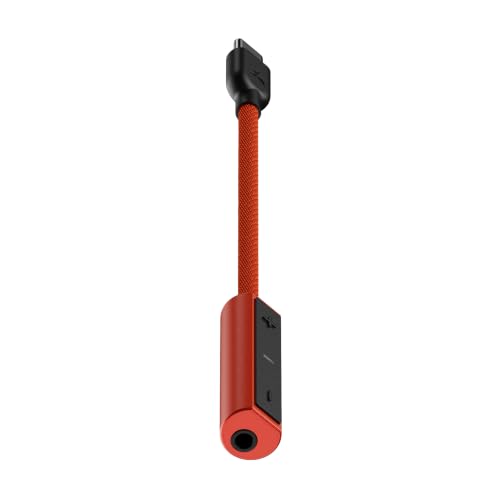
The HiBy Digital D1 is a straightforward option among portable dacs with volume control, connecting directly through USB-C without a battery to charge. Its physical volume buttons, 3.5mm output, and 10g aluminum body suit commuters and anyone upgrading a phone or computer’s built-in audio.
Best For: Daily mobile listeners who want a simple, lightweight USB-C DAC with physical volume buttons.
Pros:
- 50-level hardware volume adjustment avoids repeated phone controls.
- Supports up to 32-bit/384kHz audio and provides 65mW at 32 ohms.
- Plug-and-play USB-C design works with phones, tablets, PCs, Macs, and laptops.
- Ultra-light 10g aluminum body is easy to carry.
Cons:
- Only a 3.5mm headphone output is provided.
- It does not offer the balanced output or amplification power of larger models.
The D1 keeps the setup simple: connect it, plug in wired headphones, and use the dedicated buttons for volume. It is a practical pick when portability and convenience matter more than advanced outputs or extensive tuning.
Wireless Versatility – Khadas Tea Pro Magnetic DAC/Amp
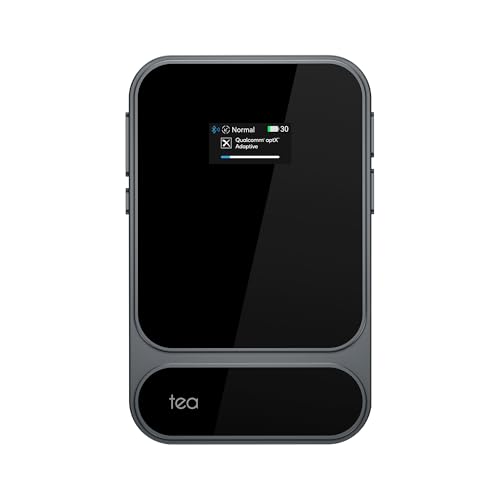
The Khadas Tea Pro expands the portable dacs with volume control category with Bluetooth, USB connectivity, a built-in battery, and a display. Its slim magnetic design and dual headphone outputs make it a versatile option for listeners who switch between wireless and wired setups.
Best For: iPhone users and travelers who want wireless flexibility, magnetic mounting, and balanced headphone support.
Pros:
- Combines Bluetooth 5.4 and USB input with broad codec support, including LDAC and aptX HD.
- Offers 3.5mm single-ended and 4.4mm balanced outputs.
- MagSafe-compatible design attaches to iPhone 12–17 models.
- 2100mAh battery provides up to 11 hours wireless or 8 hours wired playback.
Cons:
- Its wireless and battery features add complexity compared with a basic USB dongle.
- Magnetic mounting is most useful for compatible iPhone users.
At 96g and 7.85mm thin, the Tea Pro balances portability with a large feature set. Its 0.95-inch display, dual outputs, and wireless support make it a strong all-purpose companion for modern mobile listening.
Best Balanced Power – S9 Pro Plus Martha
The S9 Pro Plus Martha is a versatile choice among portable dacs with volume control, combining 3.5mm single-ended and 4.4mm balanced outputs with firmware-based volume control. Its ES9038Q2M chip supports up to 32-bit/768kHz PCM, while six selectable filters let you adjust the presentation to suit your listening preferences.
Best For: Listeners who want both output formats, strong power for IEMs and headphones, and broad Windows, Mac, Android, and iOS compatibility.
Pros:
- Offers 138mW+138mW through 3.5mm and 180mW+180mW through balanced 4.4mm at 32 ohms.
- Supports high-resolution 32-bit/768kHz PCM audio.
- Includes six filter options with RGB lighting feedback.
- Works with Windows, Mac OS, Android, iOS, and Harmony OS.
Cons:
- The product information describes volume control as firmware-based rather than specifying a physical knob.
- Its compact dongle design provides one USB interface and two headphone outputs, but no additional connectivity is listed.
The Martha stands out for combining balanced output, low distortion, high-resolution support, and sound-shaping filters in a small 17 g aluminum device. It is a particularly flexible pick when you use multiple source platforms and headphone connection types.
Best App-Controlled Volume – MOONDROP Dawn PRO 2
The MOONDROP Dawn PRO 2 is one of the more feature-focused portable dacs with volume control, using a 100-level DAC volume system that separates adjustment from smartphone volume. It also adds app-based DSP, dual CS43198 chips, and both 3.5mm and 4.4mm headphone outputs.
Best For: Buyers who want fine volume adjustment and customizable equalization through the MOONDROP app.
Pros:
- Provides smooth, almost lossless 100-level DAC volume control.
- Supports app-based parametric EQ adjustments, including frequency, gain, and Q value.
- Includes 3.5mm and 4.4mm outputs with up to 124mW+124mW output.
- Uses dual CS43198 DAC chips and three independent LDO power chips.
Cons:
- Advanced DSP customization requires the MOONDROP app.
- Its listed maximum output is lower than the 550mW desktop mode rating of the KA13.
The Dawn PRO 2 is a strong fit for listeners who value precise control over simple plug-and-play operation. Its 100-step volume system and adjustable DSP make it especially appealing for users who like to fine-tune both loudness and tonal balance.
Best High-Power Option – FiiO/JadeAudio KA13
The FiiO/JadeAudio KA13 is a compact, high-output option among portable dacs with volume control, with a desktop mode that raises balanced output power to 550mW. It supports 3.5mm and 4.4mm headphones, 32-bit/384kHz PCM, and DSD256, while the FiiO Control app handles settings such as filters and RGB lighting.
Best For: Users who need unusually high power from a small USB-C DAC for both low- and high-impedance headphones.
Pros:
- Desktop mode delivers up to 550mW through the balanced output.
- Provides both 3.5mm and 4.4mm headphone outputs.
- Uses dual CS43131 DACs and dual SGM8262 op-amps.
- Supports 32-bit/384kHz PCM and DSD256 playback.
Cons:
- The supplied specifications do not state a dedicated physical volume control.
- Desktop mode is specifically associated with the balanced output, so compatible headphones and cable are needed to access its highest power.
The KA13 is the power-focused choice in this group. Its desktop mode gives it the headroom to handle a wider range of headphones, while dual outputs and app connectivity keep the small aluminum dongle practical for everyday portable use.
Balanced Hi-Res Pick – iFi Audio Go Link Max
If you want portable dacs with volume control and a balanced output, the iFi Audio Go Link Max combines dual ESS Sabre DAC chips with USB-C plug-and-play connectivity. Its 4.4mm output can provide up to 241mW, while support for PCM 384kHz and native DSD256 suits high-resolution listening.
Best For: Listeners seeking a compact USB-C DAC with balanced 4.4mm output and high-resolution format support.
Pros:
- Dual ESS Sabre DAC chips form a balanced circuit.
- Offers 3.5mm and balanced 4.4mm headphone connections.
- Supports up to 32-bit/384kHz PCM and native DSD256.
- Includes a flexible cable and USB-A adapter for easier portability.
Cons:
- The supplied notes do not specify a dedicated volume-control system.
- Its USB-C compatibility may require an adapter for some source devices.
The Go Link Max is a strong choice when balanced connectivity and high-resolution decoding matter most. However, shoppers specifically prioritizing physical volume controls should verify that feature before buying.
Versatile Volume-Control Choice – Fosi Audio DS1
The Fosi Audio DS1 is one of the more practical portable dacs with volume control, offering independently controlled volume alongside 3.5mm and 4.4mm outputs. Its ES9038Q2M DAC supports up to DSD512 and 32-bit/768kHz PCM, while the compact USB design works with phones, computers, tablets, and music players.
Best For: Users who want independent volume control, dual headphone outputs, and broad device compatibility.
Pros:
- Volume control operates independently from the audio source device.
- Includes both 3.5mm single-ended and 4.4mm balanced outputs.
- Supports DSD512 and up to 32-bit/768kHz PCM.
- Provides up to 220mW of output power and a stated noise floor below 1.6µV.
Cons:
- Lightning-device use requires an additional Lightning-to-USB-C cable.
- Its high-resolution specifications may exceed the needs of casual listeners.
With independently controlled volume, flexible outputs, and extensive format support, the DS1 is a well-rounded option for mobile and desktop listening. It is especially appealing if you regularly switch between conventional and balanced headphones.
Dedicated Button-Control Pick – Fosi Audio DS2
For shoppers comparing portable dacs with volume control, the Fosi Audio DS2 stands out with independent 60-step volume buttons and volume memory. Its dual CS43131 DAC chips support PCM 32-bit/384kHz and DSD256, while 3.5mm and 4.4mm outputs accommodate both standard and balanced headphones.
Best For: Mobile listeners who want physical, memory-enabled volume adjustment and dual headphone outputs.
Pros:
- Provides independent 60-step volume control with memory function.
- Offers 3.5mm single-ended and 4.4mm balanced connections.
- Supports PCM 32-bit/384kHz and DSD256 decoding.
- Works with compatible iPhone, iPad, Android, Windows, Mac, and laptop sources.
Cons:
- Its stated 170mW output is specified at 32Ω, so demanding headphones may need closer consideration.
- It uses USB-C connectivity, which may require a suitable cable or adapter for some sources.
The DS2 is the clearest fit for buyers who want straightforward hardware volume adjustment without giving up balanced output. Its durable CNC-machined metal body and broad compatibility further suit frequent portable use.
How We Picked the Best Portable Dacs with Volume Control
We focused on models that combine a USB DAC with a usable headphone amplifier and practical volume control. The selections cover compact dongles, higher-power balanced designs, and feature-rich units with displays or EQ. We also considered output options, supported formats, device compatibility, portability, and the kinds of headphones each model is best suited to drive.
Specifications such as DSD and PCM support can indicate format compatibility, but they do not guarantee better sound by themselves. Power delivery, implementation, controls, and dependable device support matter more for most buyers.
Quick Comparison
| What to Compare | Why It Matters |
|---|---|
| Output options | 3.5mm is broadly compatible; 4.4mm balanced output can provide more power with compatible headphones. |
| Amplifier power | Higher output helps demanding headphones, while sensitive IEMs may need less power and lower noise. |
| Volume control | Physical buttons or a knob are faster and more precise than relying only on a phone’s software controls. |
| Device compatibility | Check USB-C, Lightning, operating-system, and app requirements before buying. |
Key Buying Factors for Portable Dacs with Volume Control
Output and Headphone Matching
Choose 3.5mm if you use conventional headphones or IEMs. A 4.4mm balanced connection is useful when your headphones support it and you want additional output headroom. Avoid assuming that maximum wattage is always better: extremely sensitive earphones can reveal hiss from an overly powerful or noisy amplifier.
Controls and Usability
Look for clearly marked buttons, a responsive knob, or a display that shows volume and playback information. Hardware volume control is especially useful when the source device is in a pocket or bag. Some models also offer filters, gain settings, or parametric EQ, which can be valuable for experienced listeners but unnecessary for simple plug-and-play use.
Portability, Power, and Compatibility
Dongles are convenient, but high-power models may draw more battery from a phone and can become warm during use. Confirm the connector you need, whether the DAC works with your operating system, and whether it requires a special cable or app. If you use a phone case, check that the included plug fits securely.
Who Should Buy Which Portable Dacs with Volume Control?
Choose a small, straightforward USB-C dongle for commuting, laptop use, and efficient IEMs. Pick a model with both 3.5mm and 4.4mm outputs if you own multiple headphones or plan to upgrade. Higher-powered options are better for less-sensitive over-ear headphones, while units with EQ and displays suit listeners who want deeper control over their setup.
For the simplest buying decision, prioritize the connector, volume-control style, and headphone power requirements first. Then weigh extra features such as balanced output, filtering, display support, and high-resolution format compatibility.