The best dynamic microphones help reduce room noise, handle loud sources, and deliver focused sound for podcasts, streams, vocals, and instruments. This roundup compares 10 options across USB, XLR, handheld, broadcast, and karaoke formats.
Whether you need a studio-standard vocal mic, a flexible USB/XLR setup, or an affordable microphone for casual singing, the right choice depends on your equipment, room, and recording goals.
Best 10 Dynamic Microphones Picks for 2026
Premium Broadcast Pick
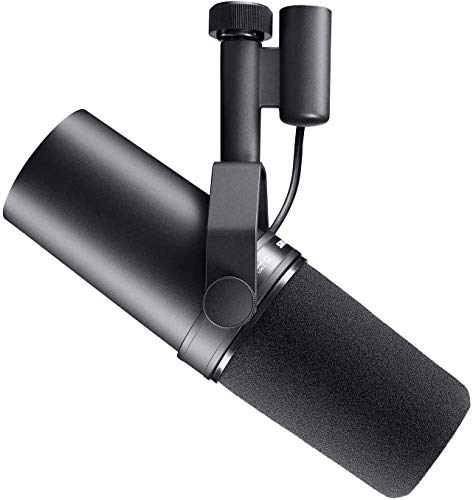
- Warm, balanced vocals
- Focused cardioid pickup
- Professional XLR control
Best For: Podcasting, vocals, streaming, and studio recording
Podcast Value Pick

- Speech-focused broadcast capsule
- Internal pop and shock protection
- Durable all-metal body
Best For: XLR podcasting and streaming
Flexible USB/XLR Pick

- USB-C and XLR connectivity
- Real-time denoising and auto level
- Included stand and touch mute
Best For: Podcasting, streaming, gaming, and remote work
Budget Handheld Pick

- Cardioid pickup for live use
- Cable included
- Rugged handheld construction
Best For: Karaoke, live vocals, and basic recording
Best USB/XLR Flexibility

- USB and XLR outputs
- Built-in mute, gain, and monitoring controls
- Includes windscreen and shock mount
Best For: Podcasting, streaming, and flexible home recording
Best Proven Vocal Standard

- Clear, present vocal response
- Rugged cardioid handheld design
- Includes 25-foot XLR cable
Best For: Live vocals, presentations, and dependable stage use
Best Budget Karaoke Setup

- Cardioid pickup helps limit feedback
- Includes 14.8-foot 1/4-inch cable
- Rugged handheld design with on/off switch
Best For: Karaoke, presentations, and 1/4-inch PA systems
Best Instrument Mic
Shure SM57 Pro XLR Dynamic Instrument Microphone

- Clear, focused instrument capture
- Cardioid pattern reduces bleed
- Rugged XLR design for studio and stage
Best For: Guitar amps, drums, brass, and versatile instrument miking
Best USB/XLR Kit
FIFINE AmpliTank K688CT Podcast Microphone Kit

- USB and XLR connectivity
- Boom arm and accessories included
- Mute, gain, and headphone controls in USB mode
Best For: Podcasting, streaming, gaming, and desktop voice recording
Best Vocal Stage Mic
Shure SM58S Pro XLR Dynamic Vocal Microphone

- Clear, warm vocal response
- Cardioid pattern rejects off-axis noise
- Convenient integrated on/off switch
Best For: Live singers, presenters, rehearsals, and stage vocals
Premium Broadcast Pick – Shure SM7B
The Shure SM7B is a professional choice among dynamic microphones for podcasting, voiceover, singing, streaming, and studio recording. Its cardioid pattern, built-in pop filtering, and electromagnetic shielding help produce focused, polished vocals, while the XLR connection gives experienced users control over gain and tone.
Best For: Podcasters, vocalists, streamers, and studio users with an XLR interface or mixer.
Pros:
- Warm, balanced vocal response with a wide frequency range.
- Cardioid pickup, air suspension, and shielding help reduce room noise, vibration, and interference.
- Built-in pop filtering and a detachable windscreen reduce plosives and breath noise.
- Rugged all-metal construction with a locking yoke mount.
Cons:
- Requires an XLR setup and at least 60 dB of gain is recommended for its characteristic tone.
- Its 2.7-pound body may be more demanding for lighter microphone arms.
The SM7B is a strong long-term investment for creators who want refined close-mic vocals and already have suitable XLR equipment. Buyers seeking a simpler plug-and-play setup may prefer a USB-equipped model.
Podcast Value Pick – RØDE PodMic
The RØDE PodMic is a practical broadcast option among dynamic microphones, tuned for clear speech and designed to reject room noise in untreated spaces. Its XLR connection, internal pop filter, integrated shock mounting, and all-metal body make it well suited to podcasting and streaming setups.
Best For: Podcasters and streamers using an XLR interface, mixer, or RØDECaster.
Pros:
- Broadcast-oriented dynamic capsule is tuned for speech.
- Internal pop protection and shock mounting help control plosives and desk thumps.
- All-metal construction is designed for regular long-term use.
- Integrated swing mount is included.
Cons:
- Requires an XLR interface or mixer and is not a USB microphone.
- Its table-array form factor may require a suitable boom or mounting arrangement.
The PodMic keeps the feature set focused on broadcast speech and durable everyday use. It is a sensible choice for buyers building an XLR podcast rig, especially those using other RØDECaster-family equipment.
Flexible USB/XLR Pick – Shure MV7+
The Shure MV7+ combines USB-C convenience with XLR flexibility, making it one of the more adaptable dynamic microphones for podcasting, streaming, gaming, and remote work. Its built-in DSP adds real-time denoising, auto level control, and a digital pop filter, while the included desktop stand supports quick setup.
Best For: Beginners and experienced creators who want USB simplicity plus an upgrade path to XLR.
Pros:
- USB-C and XLR connectivity supports both computer-based and traditional audio setups.
- Real-time denoiser and Voice Isolation Technology help reduce ambient noise and room echo.
- Auto Level Mode adjusts gain based on voice volume and microphone distance.
- Includes a desktop stand, USB-C cable, foam windscreen, and touch mute control.
Cons:
- Digital features and app controls are most useful with compatible computer software.
- At 3.6 pounds, the bundled microphone and stand setup is relatively substantial.
The MV7+ is a strong all-around solution when recording conditions vary or you want to move between USB and XLR workflows. Its onboard processing also makes it appealing for users who want cleaner speech without relying entirely on external software.
Budget Handheld Pick – Pyle PDMIC59
The Pyle PDMIC59 is an affordable handheld option among dynamic microphones for live vocals, karaoke, amplified instruments, and basic recording. Its unidirectional cardioid pattern helps limit off-axis sound, and the included 15-foot XLR-to-1/4-inch cable makes it easy to connect to compatible equipment.
Best For: Budget-conscious performers, karaoke users, bedroom studios, and basic stage applications.
Pros:
- Cardioid pickup helps reduce background sound and feedback.
- Rugged metal-style construction includes a zinc die-cast case and steel mesh windscreen.
- Integrated pop filter and windscreen help reduce breath and pop noise.
- Includes a 15-foot XLR-to-1/4-inch audio cable.
Cons:
- Its frequency range is limited to 15 kHz compared with broader studio-oriented models.
- The included connection is XLR to 1/4 inch rather than USB.
- It is designed primarily as a handheld microphone, not a desktop broadcast mic.
The PDMIC59 prioritizes basic usability, durability, and included accessories over advanced studio features. It is a practical starting point for live vocals or karaoke when a straightforward wired microphone is all you need.
Best USB/XLR Flexibility – FIFINE AmpliTank K688
The FIFINE AmpliTank K688 is a versatile choice among dynamic microphones for podcasting, voice-over work, streaming, and recording. Its USB and XLR outputs let you connect directly to a Windows or Mac computer or use a mixer or sound card, while the cardioid pattern helps reduce background noise.
Best For: Creators who want convenient USB recording now and the option to add XLR equipment later.
Pros:
- USB and XLR connectivity supports flexible recording setups.
- Front mute control, gain knob, headphone monitoring, and volume adjustment are convenient over USB.
- Metal construction, included windscreen, and shock mount help support clean vocal recording.
- Cardioid pickup and a 130 dB SPL rating help manage background noise and louder sources.
Cons:
- Arm stand, mic stand, and XLR cable are not included.
- Mute, gain, and headphone controls work only with the USB connection.
- The microphone should be used at a close distance for recording.
The K688 stands out for home creators who value plug-and-play USB operation without giving up a conventional XLR upgrade path. It is a practical all-in-one starting point, but budget separately for an XLR cable and support hardware if needed.
Best Proven Vocal Standard – Shure SM58
The Shure SM58 remains a dependable pick among dynamic microphones for live vocals, public speaking, karaoke, and studio use. Its cardioid pattern focuses on the primary sound source, while the tailored vocal response and built-in pop and wind protection support clear, present vocals.
Best For: Singers, presenters, and performers who want a rugged XLR handheld microphone with a long-established reputation.
Pros:
- Tailored frequency response and enhanced midrange help vocals cut through a mix.
- Cardioid pickup minimizes unwanted background sound.
- Built-in spherical filter reduces wind, breath, and plosive noise.
- Rugged metal construction includes a break-resistant stand adapter and a 25-foot XLR cable.
Cons:
- It uses XLR connectivity and does not offer USB output.
- Its handheld design may require a separate stand or clip for fixed-position recording.
The SM58 is a straightforward choice when reliability, vocal intelligibility, and tour-ready construction matter more than extra onboard controls. The included cable and storage bag make this package especially convenient for live setups.
Best Budget Karaoke Setup – FIFINE K6 Karaoke Microphone
The FIFINE K6 is a simple wired option among dynamic microphones for karaoke, presentations, weddings, church events, and stage performances. Its cardioid pickup pattern helps limit feedback, and the included 14.8-foot XLR-to-1/4-inch cable connects directly to compatible amplifiers, speakers, mixers, and karaoke machines.
Best For: Karaoke and live-use situations with equipment that has a 1/4-inch, or 6.35 mm, microphone input.
Pros:
- Cardioid pickup helps reduce feedback and unwanted noise.
- Includes a long 14.8-foot cable for greater movement during performances.
- Rugged metal construction and a built-in pop filter support regular use.
- On/off switch allows convenient control during presentations or performances.
Cons:
- Compatible with 1/4-inch inputs only; it is not available for 3.5 mm connections, even with an adapter.
- It does not provide USB or standard direct XLR connectivity without the included cable.
- Requires an amplifier, speaker, mixer, or karaoke machine.
The K6 is a practical, no-power-required microphone for straightforward karaoke and PA use. Confirm that your equipment has a 6.35 mm input before buying, since connector compatibility is its main limitation.
Best Instrument Mic – Shure SM57 Pro XLR Dynamic Instrument Microphone
The Shure SM57 is one of the most versatile dynamic microphones for recording and live instrument work. Its cardioid pickup pattern helps isolate close-miked sources, while the contoured response adds attack and clarity to guitar amps, snare drums, brass, and other instruments.
Best For: Guitar cabinets, snare drums, percussion, brass, acoustic instruments, and studio or stage setups.
Pros:
- Clear, focused sound with a presence boost for instrument detail.
- Cardioid pattern helps reduce background noise and bleed.
- Rugged construction handles high sound pressure levels and frequent transport.
- Works across home studios, professional recording spaces, and live stages.
Cons:
- Wired XLR connectivity requires a compatible input or interface.
- Its instrument-focused design may be less specialized for vocal use than a dedicated vocal mic.
The SM57 remains a practical choice when you need dependable dynamic microphones for several instruments rather than a model tailored to just one source.
Best USB/XLR Kit – FIFINE AmpliTank K688CT Podcast Microphone Kit
The FIFINE AmpliTank K688CT is a flexible option among dynamic microphones for podcasting, streaming, gaming, and voice recording. USB connectivity supports plug-and-play use, while XLR provides a path to an audio interface or mixer; the included boom arm, shock mount, and windscreen make it a ready-made desktop setup.
Best For: Podcasters, streamers, gamers, and voice creators who want USB convenience with XLR upgrade flexibility.
Pros:
- Offers both USB and XLR connections for flexible setups.
- Includes a metal boom arm, shock mount, and windscreen.
- USB controls include tap-to-mute, gain, headphone monitoring, and volume adjustment.
- Cardioid pickup and noise-suppression accessories help keep vocals focused.
Cons:
- Microphone controls work only in USB mode; XLR operation requires mixer or interface controls.
- The C-clamp fits desks under 2 inches thick.
- For optimal input volume, the microphone should be used within about 2 to 6 inches.
This kit is a strong all-in-one choice if you want dynamic microphones for a desktop vocal setup without giving up the option to move to XLR recording later.
Best Vocal Stage Mic – Shure SM58S Pro XLR Dynamic Vocal Microphone
The Shure SM58S is a purpose-built vocal option among dynamic microphones, designed to deliver clear, warm, and present vocals in live and rehearsal settings. Its cardioid pattern helps reject off-axis noise, while the integrated on/off switch provides quick control between songs, speakers, or takes.
Best For: Singers, presenters, houses of worship, rehearsal spaces, clubs, and live stage performances.
Pros:
- Tuned vocal response helps voices remain clear and present.
- Cardioid pickup isolates the performer and reduces surrounding noise.
- Hardened grille and internal filtering help manage plosives, breath noise, and handling sounds.
- Integrated on/off switch allows convenient muting without unplugging.
Cons:
- Wired XLR connection requires an audio mixer or compatible input.
- Designed primarily for vocals rather than broad instrument-miking versatility.
- The switch can be accidentally changed during handling if not monitored.
Choose the SM58S when reliable vocal performance and quick mute control matter more than USB connectivity or multi-purpose instrument use.
How We Picked These Dynamic Microphones
We selected these Dynamic Microphones based on connection options, intended use, pickup pattern, reputation, included accessories, ease of setup, and value. The lineup includes broadcast-focused models, versatile USB/XLR microphones, handheld vocal mics, an instrument microphone, and budget-friendly choices for karaoke or entry-level recording.
Because microphone performance depends heavily on placement, audio interfaces, gain levels, and room acoustics, we prioritized practical differences that matter during real-world use rather than treating one specification as decisive.
Quick Comparison
| Best For | Look For | Most Suitable Type |
|---|---|---|
| Podcasting and streaming | Cardioid pickup, strong off-axis rejection, desk-friendly setup | Broadcast dynamic microphone |
| Flexible computer and studio recording | USB and XLR connectivity, headphone monitoring, gain control | Hybrid USB/XLR microphone |
| Live vocals | Rugged construction, handheld shape, clear midrange | Handheld vocal microphone |
| Instruments | Focused cardioid response and high sound-pressure handling | Instrument dynamic microphone |
| Karaoke and casual singing | Simple connection, included cable, low cost | Basic handheld microphone |
Key Buying Factors for Dynamic Microphones
USB, XLR, or Both
USB microphones connect directly to a computer and are usually the simplest option for podcasting or streaming. XLR microphones require an audio interface, mixer, or compatible recorder but can integrate more easily into studio and live setups. USB/XLR models offer a useful upgrade path when your needs may change.
Room Noise and Pickup Pattern
Most microphones in this roundup use a cardioid or similarly directional pattern. This helps emphasize sound from the front while reducing noise from behind, but it does not eliminate keyboard clicks, fans, reflections, or nearby conversations. Place the microphone close to your mouth and aim its rear or null area toward the loudest unwanted sound.
Gain, Accessories, and Mounting
Dynamic Microphones generally need more gain than many condenser microphones. Check whether your interface or mixer can provide enough clean preamp gain, especially with broadcast-style models. Also account for a stand, boom arm, shock mount, windscreen, pop filter, cable, and headphones if they are not included.
Sound and Intended Source
Broadcast vocal microphones often favor a smooth, controlled voice sound, while handheld vocal models are built for durability and live use. Instrument microphones are designed to handle louder sources and may emphasize different frequencies. Choose for the source you record most often, not just the microphone with the longest feature list.
Who Should Buy Which Dynamic Microphones?
Choose a broadcast-focused model if you mainly record podcasts, voiceovers, or streams in a typical home environment. Choose a USB/XLR microphone if you want easy computer recording now and a more traditional studio connection later. Choose a handheld vocal microphone for live singing, rehearsal, or a rugged all-purpose option.
Choose an instrument microphone when recording guitar cabinets, drums, or other loud sources. Choose a basic karaoke microphone for occasional singing and simple plug-and-play use. Before buying, confirm connector compatibility and budget for any stand, interface, or adapter required by your setup.