The right flash can make indoor portraits, event photos, and low-light snapshots look cleaner and more consistent without requiring advanced lighting skills. This roundup compares 10 camera flashes for beginners across automatic TTL models, simple manual units, compact mini flashes, and versatile universal options.
Before choosing, confirm your camera’s hot-shoe compatibility and decide whether you value automatic exposure, maximum portability, wireless control, or low-cost simplicity. The buying guide below highlights the practical differences that matter most.
Best 10 Camera Flashes for Beginners Picks for 2026
Versatile Manual Starter

- GN33 output and 22 manual power levels
- M, S1, and S2 shooting modes
- Includes stand, pouch, and color filters
Best For: Beginners learning manual flash control
Pocket Fill-Light Pick
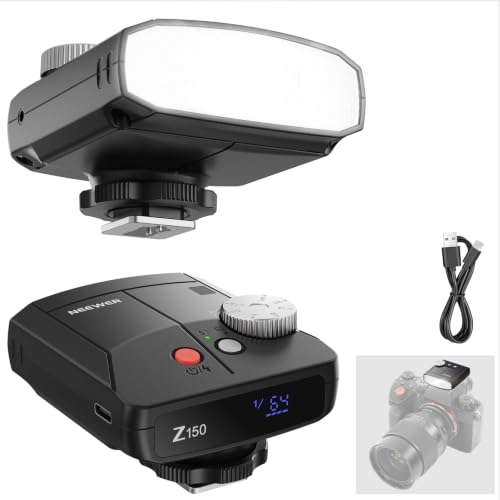
- Compact 103g body with retro styling
- Manual output from 1/64 to 1/1
- Rechargeable battery and USB charging
Best For: Portable everyday fill lighting
Simple Off-Camera Option

- GN33 output for portraits and events
- Manual power from 1/128 to 1/1
- S1/S2 optical slave modes included
Best For: Learning manual and optical-slave lighting
Feature-Rich TTL Upgrade

- 55Ws round-head flash with soft light
- 2.4G wireless control and HSS to 1/8000s
- 650 full-power shots per charge
Best For: Olympus and Panasonic portrait and event shooting
Simple Starter Pick

- Eight manual power levels
- 500–700 flashes per charge
- 1.3-ounce plug-and-play design
Best For: Beginners learning manual flash with a compact hot shoe camera light
Best Automatic Option

- TTL automatically adjusts output
- 52-gram foldable design
- USB-C charging with up to 700 flashes
Best For: Beginners wanting portable automatic flash exposure
Manual Control Upgrade
NEEWER Z160 SE Manual Speedlight

- 20Ws output with GN15
- Power range from 1/1 to 1/128
- S1/S2 optical slave modes
Best For: Learners who want stronger manual control and simple wireless triggering
Best Pocket TTL Pick

- 52g foldable design
- TTL and five manual power levels
- Up to 700 flashes per charge
Best For: Sony shooters wanting a tiny, beginner-friendly rechargeable flash
Best Simple Manual Value

- Compact 100g manual flash
- Five adjustable upward head angles
- GN20m output and PC sync port
Best For: Compatible Canon, Nikon, Panasonic, Olympus, and Pentax users learning manual flash
Versatile Manual Starter – PHOTOOLEX FK300 GN33 Flash
For beginners comparing camera flashes for beginners, the PHOTOOLEX FK300 offers strong output and straightforward manual controls. Its GN33 rating, 22 power levels, and M, S1, S2 modes provide room to learn both on-camera and optical-slave lighting.
Best For: Beginners who want an affordable, higher-output manual flash for compatible single-contact hot-shoe cameras.
Pros:
- GN33 output with a consistent daylight color temperature.
- Manual power adjustment across 22 levels, from 1/128 to full power.
- Includes a pouch, stand, 12 color filters, and a 24-month warranty.
Cons:
- Does not support TTL or camera-menu control.
- Wireless triggering is limited to optical S1/S2 modes.
- Requires four AA batteries.
The FK300 is a practical learning tool when you are comfortable setting flash power yourself. Confirm that your camera has a compatible single-contact hot shoe before buying.
Pocket Fill-Light Pick – NEEWER Z150 Mini Flash
The NEEWER Z150 is a compact option for beginners seeking camera flashes for beginners that are easy to carry. It uses a universal single-contact hot shoe, offers manual power from 1/64 to 1/1, and weighs only 3.6 ounces.
Best For: Travel and everyday photographers who need a lightweight manual fill flash for compatible cameras.
Pros:
- Very compact 103g design for on-the-go shooting.
- Rechargeable battery supports up to 640 full-power flashes.
- Offers Manual, S1, and S2 optical-slave modes.
- USB charging and a 3.1-second recycle time add convenience.
Cons:
- No TTL, HSS, automatic exposure, or camera-menu control.
- GN15 output is less powerful than larger flashes.
- Fuji and other mirrorless cameras must use mechanical shutter mode.
The Z150 makes sense when portability matters more than maximum reach. Its extensive compatibility warnings make checking your exact camera and hot-shoe design especially important.
Simple Off-Camera Option – PHOTOOLEX FK300 Speedlite
The PHOTOOLEX FK300 is a straightforward choice among camera flashes for beginners who want more reach than a mini flash. It combines GN33 output with manual, S1, and S2 optical triggering and fits cameras using a standard single-contact hot shoe.
Best For: Beginners practicing manual portraits, product photography, and basic multi-light setups.
Pros:
- GN33 output provides useful reach for portraits and events.
- Manual power ranges from 1/128 to 1/1 across eight settings.
- Supports S1 and S2 optical slave modes for off-camera use.
- Includes a stand, protective pouch, and 12 color filters.
Cons:
- Manual exposure control only; no TTL is listed.
- Optical triggering depends on a compatible line of sight.
- Not water resistant.
This FK300 is appealing for learners who want a basic flash kit without complicated wireless radio controls. Verify the single-contact hot-shoe requirement and be prepared to set exposure manually.
Feature-Rich TTL Upgrade – Godox V1 Mid O Flash
For Olympus and Panasonic users comparing camera flashes for beginners, the Godox V1 Mid O offers a more automated and expandable starting point. Its round-head design, touchscreen controls, 2.4G wireless connectivity, HSS to 1/8000 second, and rechargeable battery make it suited to fast-moving shoots.
Best For: Olympus and Panasonic beginners who want modern automation, wireless control, and room to grow into event and portrait work.
Pros:
- Supports TTL-style automation and HSS up to 1/8000 second as listed.
- 55Ws output with a soft, uniform circular light pattern.
- 2.4G wireless connectivity and touchscreen controls.
- Battery provides up to 650 full-power flashes with 1.7-second recycling.
Cons:
- Compatibility is focused on Olympus and Panasonic systems.
- At 413g with battery, it is heavier than a mini flash.
- It costs more than basic manual flashes and includes a one-year warranty.
The V1 Mid O is the most capable option here for beginners who prefer guided controls and plan to keep developing. It is best considered when your camera is on the listed Olympus or Panasonic compatibility path.
Simple Starter Pick – NEEWER N12 Mini Manual Flash
For shoppers comparing camera flashes for beginners, the NEEWER N12 keeps things straightforward: it is a tiny, rechargeable manual flash with eight output levels and a standard hot shoe. Its fixed 5600K light and plug-and-play design make it a practical entry point for basic fill lighting, provided your camera is compatible.
Best For: Beginners who want an inexpensive, lightweight manual flash for portraits, product photos, close-ups, and simple indoor or outdoor fill light.
Pros:
- Eight power settings from 1/1 to 1/128 provide useful manual control.
- Built-in 350mAh battery supports approximately 500–700 flashes.
- Very compact 1.3-ounce design with a single-contact hot shoe for simple setup.
- Compatible with many standard hot shoe cameras from Canon, Nikon, Sony, and Fujifilm.
Cons:
- No TTL, camera-menu control, or automatic exposure.
- Not compatible with several Canon Rebel models listed by the manufacturer.
- Single-contact operation may require manual exposure adjustments.
The N12 is best viewed as a basic learning tool rather than a fully automated speedlight. It offers portability and essential output control, but confirm your camera’s hot shoe compatibility before ordering.
Best Automatic Option – VILTROX Z2 TTL Pocket Flash
The VILTROX Z2 is a strong choice among camera flashes for beginners because its TTL mode automatically adjusts flash output for more balanced exposures. Its 52-gram foldable design, USB-C charging, and support for Canon, Nikon, Sony, and Fujifilm systems also make it convenient for travel and everyday shooting.
Best For: Beginners who want automatic TTL exposure for portraits, street photography, travel, family moments, and content creation.
Pros:
- TTL mode simplifies exposure for new flash users.
- Folds to a compact, pocket-friendly size and weighs only 52 grams.
- Also offers five manual power levels from 1/1 to 1/16.
- Rechargeable 420mAh battery provides up to 700 full-power flashes and charges via USB-C.
Cons:
- Its listed guide number of 6 indicates modest output for larger spaces.
- Manual mode has fewer output steps than more adjustable flashes.
- TTL compatibility depends on selecting the version appropriate for your camera system.
For a beginner who prefers the camera to handle flash exposure, the Z2 is more forgiving than a fully manual unit. The foldable head and lightweight body are especially useful when portability matters.
Manual Control Upgrade – NEEWER Z160 SE Manual Speedlight
The NEEWER Z160 SE suits beginners who are ready to learn deliberate manual flash control. It delivers 20Ws of output, a 1/1–1/128 power range, optical slave modes, and a larger 1200mAh battery, but it does not provide TTL, HSS, or automatic flash exposure.
Best For: Beginners and developing photographers who want more manual range for studio work, daily photography, or off-camera optical triggering.
Pros:
- 20Ws output and GN15 provide more capability than a basic mini flash.
- Wide manual range from full power down to 1/128.
- Built-in 1200mAh battery supports up to 650 full-power flashes.
- S1 and S2 optical slave modes support simple wireless manual triggering.
Cons:
- No TTL, HSS, camera-menu control, or automatic flash exposure.
- Recycle time is approximately 2.8 seconds.
- Compatibility has specific exclusions, and Fujifilm or other mirrorless cameras must use mechanical shutter mode.
The Z160 SE is a better fit than a minimal starter flash when you want a broad manual power range and optical slave capability. Its controls require more setup, so it rewards users willing to practice flash distance, aperture, and output adjustments.
Best Pocket TTL Pick – VILTROX Z2 Mini TTL Flash
For beginners comparing camera flashes for beginners, the VILTROX Z2 is an especially approachable option for Sony shooters. Its TTL mode handles basic exposure automatically, while its 52g foldable design makes it easy to carry for travel, street, family, and everyday photography.
Best For: Sony users who want a lightweight, rechargeable TTL flash for casual shooting and content creation.
Pros:
- TTL mode automatically adjusts flash output for simpler exposure control.
- Extremely compact 52g design folds to approximately earbud-case size.
- USB-C rechargeable battery provides up to 700 full-power flashes.
- Manual mode offers five power levels from 1/1 to 1/16.
Cons:
- Its 10Ws output and 28mm coverage are geared toward everyday use rather than demanding professional setups.
- The supplied compatibility details identify this model as compatible with Sony cameras.
The Z2 prioritizes portability and ease of use over maximum power. Beginners who want an uncomplicated flash that can slip into a small bag will likely appreciate its TTL automation, folding head, and long battery life.
Best Simple Manual Value – FocusFoto YINYAN CY-20 Flash
The FocusFoto YINYAN CY-20 is a straightforward choice for beginners exploring camera flashes for beginners without needing TTL automation. It uses manual exposure control, offers a GN20m rating, and includes an adjustable head for directing light at several upward angles.
Best For: Beginners who want an inexpensive, compact manual flash for compatible Canon, Nikon, Panasonic, Olympus, or Pentax cameras.
Pros:
- Compact 100g design is convenient for portable shooting.
- Adjustable head supports 0°, 45°, 60°, 75°, and 90° angles.
- GN20m output provides useful illumination for basic on-camera work.
- Includes a 2.5mm PC sync port and supports slow-sync and rear-curtain modes.
Cons:
- Manual exposure control requires the user to set the flash output and camera settings.
- It is not compatible with Minolta or Sony anti-intercalation shoes according to the supplied notes.
- It does not include TTL exposure automation.
The CY-20 makes the most sense for shoppers who want to learn manual flash fundamentals or add basic fill light on a compatible camera. Check the camera and hot-shoe compatibility carefully before buying, especially for Sony equipment.
Best Higher-Power Sony Option – VILTROX Spark Z3-S TTL Flash
For Sony users shopping among camera flashes for beginners, the VILTROX Spark Z3-S combines beginner-friendly TTL automation with greater output and deeper manual control than a basic mini flash. It delivers 26Ws of power, seven adjustable levels, and a rechargeable 1,800mAh battery.
Best For: Sony photographers who need a compact flash for longer sessions, challenging light, and experimentation with manual or optical triggering.
Pros:
- Supports both automatic TTL and manual modes.
- 26Ws output and GN16 rating provide stronger illumination for difficult lighting.
- Seven power levels range from 1/1 to 1/64 for finer control.
- Battery supports up to 650 full-power flashes and a stated one-second recycle time.
Cons:
- Designed for Sony cameras, limiting cross-system flexibility.
- It is not weather resistant.
- Its optical S1 and S2 trigger modes may require more setup knowledge than straightforward on-camera TTL use.
The Spark Z3-S is a strong step-up choice for beginners who expect their skills and shooting demands to grow. TTL keeps the initial learning curve manageable, while the extra power levels, optical triggering, and included softbox leave room for more creative lighting.
How We Picked These Camera Flashes for Beginners
We selected models that cover the main needs of new photographers: straightforward controls, broad camera compatibility, useful power levels, manageable size, and sensible pricing. The lineup includes universal manual flashes for learning the basics, TTL speedlights that can automate exposure, and compact units for travel or casual fill light.
Compatibility was a priority because a flash designed for one camera system may not provide TTL, high-speed sync, or full communication on another. We also considered battery capacity, recycle behavior, flash-head flexibility, wireless modes, and whether each model suits on-camera use or more deliberate off-camera lighting.
Quick Comparison
| Flash type | Best for | Main advantage | Potential limitation |
|---|---|---|---|
| Universal manual | Learning fundamentals | Simple controls and wide compatibility | Exposure requires more adjustment |
| TTL speedlight | Fast-moving subjects | Automatic exposure assistance | System-specific compatibility |
| Mini flash | Travel and casual fill | Small, lightweight design | Less power and fewer controls |
| Wireless-capable flash | Off-camera lighting | More creative placement options | Requires compatible triggering or setup |
Key Buying Factors for Camera Flashes for Beginners
Camera Compatibility
Check the exact camera mount and electronic system before ordering. Canon, Sony, Nikon, Fujifilm, Panasonic, Olympus, and other systems can use different TTL protocols. A universal manual flash may fire across multiple cameras, but its automatic features may not work.
TTL Versus Manual Operation
TTL measures the scene and adjusts flash output automatically, which is helpful for events, changing distances, and quick portraits. Manual control is less automatic but teaches flash exposure and can deliver consistent results in a fixed setup.
Power and Coverage
Guide numbers and watt-seconds provide useful power clues, but real-world performance also depends on ISO, aperture, modifier use, and bounce distance. A more powerful flash gives you greater flexibility for bouncing light or working at lower ISO settings.
Head Movement and Wireless Features
A tilting or swiveling head lets you bounce light from a ceiling or wall for softer results. Optical slave modes such as S1 or S2 can help with simple off-camera setups, while radio systems are generally more reliable over distance and around obstacles.
Battery and Recycle Time
Rechargeable batteries can provide convenient shooting and reduce disposable battery costs. Look for adequate capacity, a reasonable recycle time, and easy access to spare power if you photograph events or extended sessions.
Who Should Buy Which Camera Flashes for Beginners?
Choose a universal manual flash if you want an affordable introduction to flash photography or use several camera brands. Choose a TTL model if you photograph people, events, or moving subjects and want faster exposure decisions. Choose a mini flash if compact size matters most for travel, street photography, or occasional fill light. Choose a wireless-capable speedlight if you plan to build a multi-light setup or experiment with off-camera portraits.
For the best match, prioritize compatibility first, then decide whether automatic TTL exposure or simple manual control better fits your learning style. A modest flash you can use confidently is usually more valuable than a larger model with features you will not need.