Small studios need lighting that delivers consistent exposure without consuming valuable space. The right flash can improve portraits, product photos, and creative setups while keeping your kit practical and affordable.
This roundup compares 10 camera flashes for small studios, including compact speedlights, TTL-compatible portable strobes, macro flashes, and 300Ws monolights. Use the guide below to match power, control, compatibility, and portability to your shooting style.
Best 10 Camera Flashes for Small Studios Picks for 2026
Compact Studio Strobe Pick

- 300W output with GN58 and 0.1–1.8s recycling
- 150W adjustable LED modeling lamp
- Bowens mount and compatible wireless controls
Best For: Small studio portraits and modifier-based lighting setups
Budget Hot-Shoe Option

- GN33 manual flash output
- S1/S2 optical wireless modes
- Includes stand, pouch, and 12 filters
Best For: Portable beginner setups and simple off-camera lighting
Portable HSS Strobe Pick

- 120Ws output with TTL and 1/8000s HSS
- 3000mAh battery for up to 420 full-power flashes
- 2.4GHz wireless and app-based multi-flash control
Best For: Portable studio and outdoor portrait photography
Reliable Manual Monolight

- 300W output with 50-step manual adjustment
- 150W adjustable modeling lamp
- 2.4G wireless X system and Bowens mount
Best For: Consistent manual portrait and product studio lighting
Versatile Wireless Strobe

- 200Ws output with TTL and HSS up to 1/8000 second
- Built-in 2.4G wireless control and rechargeable battery
- Interchangeable Fresnel and bare-bulb flash heads
Best For: Portable studios needing flexible wireless lighting
Macro Detail Specialist
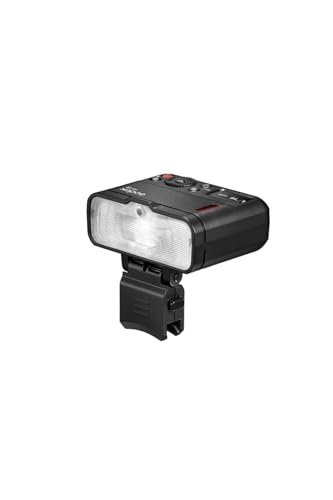
- Compact lighting for macro and product subjects
- Adjustable placement improves texture and shadow control
- Includes color sets, filters, holder, hood, and carry bag
Best For: Close-up product, jewelry, collectible, and macro photography
Portable Powerhouse

- 200Ws output with bare-bulb and Fresnel heads
- 500 full-power flashes and 0.01–2.1-second recycling
- 2.4GHz wireless control with TTL and 1/8000-second HSS
Best For: Small studios needing powerful, portable off-camera lighting
Compact Wireless System

- Magnetic X5N trigger supports on- and off-camera use
- GN18 output with TTL and 1/8000-second HSS
- USB-C charging and approximately 510 full-power flashes
Best For: Nikon photographers building a compact wireless setup
Modular Mini Flash
Godox iT32 TTL Touchscreen Flash

- Compact GN18 TTL flash with touchscreen controls
- Optional X5 triggers enable cross-brand wireless setups
- Includes diffuser, color filters, stand, and USB charging cable
Best For: Lightweight studio setups using compatible Godox triggers
Compact Studio Strobe Pick – Godox MS300V
For photographers comparing camera flashes for small studios, the Godox MS300V offers 300W of manual strobe power in a compact body. Its Bowens mount, 150W adjustable LED modeling lamp, wireless controls, and 0.1–1.8-second recycle time make it well suited to portrait and product setups.
Best For: Small studio portrait photographers who want strong output and broad Bowens-mount modifier compatibility.
Pros:
- 300W output with a GN58 guide number and fast 0.1–1.8-second recycle time
- 150W LED modeling lamp with adjustment from 5% to 100%
- Wireless control for power, modeling lamp, and buzzer through compatible Godox transmitters
- Compact 1.3kg design with standard Bowens mount
Cons:
- Manual-only operation; it does not offer HSS
- Requires removing the lamp cover before use
The MS300V is a practical choice when a small studio needs dependable, repeatable light rather than TTL automation. Its stable output and modifier compatibility give it room to grow as the lighting setup expands.
Budget Hot-Shoe Option – PHOTOOLEX FK300 Speedlite
If you need camera flashes for small studios without committing to a monolight, the PHOTOOLEX FK300 is a straightforward manual speedlite. It provides GN33 output, eight power levels, and S1/S2 optical triggering for simple off-camera portrait, product, or event lighting.
Best For: Beginners and small-space shooters who want an affordable, portable flash with broad hot-shoe compatibility.
Pros:
- GN33 output for indoor portraits, events, and product photography
- Manual, S1, and S2 modes support basic off-camera setups
- Eight power levels from 1/128 to full power
- Includes a stand, pouch, and 12 color filters
Cons:
- No TTL exposure control or HSS is listed
- Optical wireless triggering can require line of sight
- Uses a universal single-contact hot shoe, so advanced camera communication is limited
The FK300 is best viewed as a simple, kit-friendly flash rather than a fully automated studio system. Its manual controls and included accessories make it useful for learning lighting or adding a low-cost fill light.
Portable HSS Strobe Pick – NEEWER Q120
The NEEWER Q120 brings many features useful for camera flashes for small studios into a palm-sized, battery-powered design. Its 120Ws output, TTL support, 1/8000-second HSS, 2.4GHz wireless control, and 420 full-power flashes make it flexible for both indoor and location work.
Best For: Small studios that also shoot on location and need portable TTL, HSS, and battery-powered operation.
Pros:
- 120Ws output with TTL, manual, and MULTI modes
- 1/8000-second HSS supports bright outdoor conditions and creative shutter speeds
- 3000mAh battery provides up to 420 full-power flashes
- 2.4GHz Q System control with app support and Godox X System receiver compatibility
Cons:
- Q System and Godox X System cannot be used simultaneously
- Full compatibility may require a firmware update
- Its 120Ws output is lower than a 300W studio monolight
The Q120 is a strong hybrid option for photographers who do not want to choose between studio convenience and location portability. Its battery and HSS are especially useful when a small studio kit regularly travels outdoors.
Reliable Manual Monolight – Godox MS300
For a traditional small-studio lighting setup, the Godox MS300 combines 300W output with precise manual adjustment and a standard Bowens mount. Its built-in 2.4G wireless X system, adjustable 150W modeling lamp, and output stability make it a dependable option for repeatable portrait and product lighting.
Best For: Manual studio photographers building a consistent multi-light system around Bowens modifiers and Godox wireless control.
Pros:
- 300W output with 1/32-to-1/1 adjustment across 50 steps
- 150W modeling lamp adjustable from 5% to 100%
- Built-in 2.4G wireless X system controls output, modeling lamp, and buzzer
- Output stability is rated within 2% during extended operation
Cons:
- Manual exposure control does not provide TTL automation
- No HSS capability is listed
- Requires compatible Godox transmitters for wireless remote operation
The MS300 is a sensible foundation for a controlled studio where consistent manual exposure matters more than portability. Its Bowens mount and wireless ecosystem also make it easier to add modifiers and additional compatible lights later.
Budget Manual Pick – Neewer TT560 Speedlite
For photographers building a basic setup around camera flashes for small studios, the NEEWER TT560 is a straightforward manual option. It offers GN38 output, eight manually selectable power levels, bounce and swivel movement, optical slave modes, and PC sync for off-camera lighting. Because it has no TTL, HSS, automatic exposure, or camera-menu control, it is best suited to photographers comfortable setting exposure themselves.
Best For: Budget-conscious users who want a simple manual flash for tabletop portraits, product work, or off-camera studio experiments.
Pros:
- Eight power levels from 1/128 to full power allow basic exposure control.
- Tilts 0°–90° and rotates 0°–270° for flexible bounce positioning.
- S1/S2 optical slave modes and PC sync support off-camera lighting.
- Uses widely available AA batteries and includes overheating protection.
Cons:
- No TTL, HSS, automatic flash exposure, or camera-menu control.
- Requires four AA batteries, which are not included.
- Fujifilm and other compatible mirrorless cameras must use mechanical shutter mode.
The TT560 can be a practical entry point for a controlled small-studio setup, provided your camera has a compatible center-contact hotshoe and you are prepared to manage flash power manually. Confirm camera compatibility before ordering, especially with the listed unsupported models.
Versatile Wireless Strobe – Godox AD200 Pro
The Godox AD200 Pro is a flexible choice for camera flashes for small studios when you want more power and wireless control in a compact package. Its 200Ws output, built-in 2.4G system, TTL support, HSS up to 1/8000 second, rechargeable battery, and interchangeable flash heads give it room to handle both controlled studio setups and location work.
Best For: Small-studio photographers who want portable wireless lighting with TTL, HSS, manual control, and multiple light-shaping options.
Pros:
- 200Ws output with manual adjustment from full power to 1/256 in 1/10-stop increments.
- Supports TTL, HSS up to 1/8000 second, front/rear curtain sync, modeling light, and multi-flash modes.
- Built-in 2.4G wireless system works with compatible Godox triggers and supports master/slave operation.
- Interchangeable Fresnel and bare-bulb heads broaden its lighting possibilities.
Cons:
- Wireless control requires compatible Godox equipment for the full feature set.
- Its advanced functions may be more than needed for a simple manual tabletop setup.
- The listed weight and dimensions exclude the flash head and battery.
With a rechargeable battery rated for up to 500 full-power flashes and a recycle time as quick as 0.01–1.8 seconds, the AD200 Pro is well suited to repeatable small-studio production. It is a strong upgrade path for users who expect their lighting needs to grow.
Macro Detail Specialist – Godox MF12 Macro Flash
The Godox MF12 is designed for close-up work where compact placement and shadow control matter. Among camera flashes for small studios, it is particularly suited to macro, product, jewelry, collectibles, and other detail-focused photography. Its compact form, included color-effect and color-temperature sets, filter holder, adapter hood, and carry bag support controlled tabletop workflows.
Best For: Macro and product photographers who need portable, adjustable lighting for small subjects and tight shooting spaces.
Pros:
- Compact design is easy to position around small subjects.
- Adjustable placement helps shape light and reveal texture and contours.
- Supports improved detail and shadow control for close-up photography.
- Includes color-effect and color-temperature sets, filter holder, adapter hood, holder, and carry bag.
Cons:
- Its macro-focused design is less suitable as a general-purpose studio flash.
- Uses a nonstandard battery, so replacement and charging considerations may differ from AA-powered units.
- The supplied notes do not specify TTL, HSS, guide number, or recycle-time performance.
The MF12 makes the most sense when your subjects are small and lighting precision matters more than broad general-purpose coverage. Its portable design can move easily between a home studio, client space, and location setup, while the included accessories expand creative control.
Portable Powerhouse – Godox AD200Pro Pocket Strobe
For photographers comparing camera flashes for small studios, the Godox AD200Pro offers substantial lighting power in a compact, portable body. Its 200Ws output, TTL and manual modes, 1/8000-second HSS, and wireless 2.4GHz control make it suitable for both controlled studio portraits and location work.
Best For: Small studios needing a versatile, battery-powered main or secondary light with strong wireless control.
Pros:
- Delivers 500 full-power flashes from its 2900mAh lithium-ion battery.
- Supports TTL, manual, multi-flash, and HSS operation up to 1/8000 second.
- Offers 330-foot 2.4GHz wireless control, group selection, and channel triggering.
- Provides a broad 1/256-to-full-power adjustment range in 1/10-stop increments.
Cons:
- It is not water resistant.
- The unit weighs about 1928 grams, so it is less convenient than a compact hot-shoe flash for handheld use.
- A compatible Godox transmitter is needed for the full wireless feature set.
The AD200Pro is a strong choice when a small studio needs more output and battery endurance than a typical camera-mounted flash. Its interchangeable bare-bulb and Fresnel heads also give the setup added flexibility, though its larger size and weight favor stand-mounted use.
Compact Wireless System – Godox iT32 with X5N Trigger
The Godox iT32 with X5N is a space-saving option for camera flashes for small studios, combining a compact TTL flash with a detachable wireless trigger. Its touchscreen controls, built-in radio system, modeling light, and USB-C charging support quick changes between on-camera and multi-light setups.
Best For: Nikon users who want a compact TTL flash that can also control multiple Godox lights wirelessly.
Pros:
- The magnetic X5N design switches between on-camera flash use and wireless triggering without separate cables or pairing.
- Supports TTL, manual, stroboscopic flash, and HSS up to 1/8000 second.
- Provides 32 channels, five groups, and wireless control from up to 80 meters.
- Its 7.4V/900mAh battery delivers approximately 510 full-power flashes and charges through USB-C.
Cons:
- With a guide number of GN18, it has less output than the AD200Pro.
- The supplied X5N trigger is specifically for Nikon systems.
- It has a 1.5-second full-power recycle time, which is slower than the AD200Pro’s stated range.
This iT32 package is appealing for compact studios that prioritize portability and straightforward wireless control over maximum flash power. The touchscreen and integrated modifiers add convenience, while the detachable trigger helps reduce equipment clutter.
Modular Mini Flash – Godox iT32 TTL Touchscreen Flash
For photographers seeking camera flashes for small studios without adding much bulk, the Godox iT32 is a compact, modular TTL flash with a touchscreen and flexible wireless options. It can be used on-camera or paired with an optional X5 trigger for off-camera and multi-light control.
Best For: Photographers who already own a compatible Godox trigger or want a lightweight flash that can grow into a wireless system.
Pros:
- Works with optional X5C, X5N, X5F, X5O, or X5S triggers for broad camera-system compatibility.
- Supports TTL, manual, and stroboscopic modes through the Godox 2.4GHz X system.
- The magnetic modular design allows the flash and optional trigger to transition between on- and off-camera use.
- Includes a diffuser, magnetic color filters, USB charging cable, and mini stand.
Cons:
- The package contains the flash only; the X5 trigger is sold separately.
- Its GN18 output is suited to smaller subjects and spaces rather than high-output studio lighting.
- The listed flash sync speed is 1/250 second, even though the notes also indicate HSS capability with compatible control equipment.
The iT32 is a flexible entry point for a modular Godox setup, especially when portability matters. Buyers should budget for an optional trigger if they need wireless off-camera operation, and should choose a higher-output unit for large modifiers or brighter studio environments.
How We Picked the Best Camera Flashes for Small Studios
We focused on the features that matter most when working in limited space: usable power, light-shaping flexibility, wireless control, camera compatibility, recycle performance, and portability. The selection includes manual speedlights for simple setups, TTL flashes for fast-moving shoots, and monolights for repeatable studio work.
We also considered whether each flash suits a particular role. A compact unit may be ideal for tabletop photography or fill light, while a 300Ws monolight is better for modifiers, portraits, and consistent exposure at lower ISO settings.
Quick Comparison
| Flash type | Best suited to | Main advantage |
|---|---|---|
| Compact speedlight | On-camera, bounce, and travel setups | Small size and broad compatibility |
| TTL portable strobe | Location portraits and flexible studio work | Higher power with automatic exposure support |
| Manual monolight | Portraits, products, and controlled sets | Consistent output and strong modifier support |
| Macro flash | Close-up and product photography | Directional light near the subject |
Key Buying Factors for Camera Flashes for Small Studios
Power and Light Control
For small rooms, moderate power is often enough, especially when subjects are close to the light. Look for adjustable output and a modeling lamp if you need to preview shadows. Higher-powered monolights provide more flexibility with softboxes, umbrellas, and smaller apertures.
Manual, TTL, and Wireless Control
Manual flashes are predictable and cost-effective for fixed lighting positions. TTL can save time when subject distance changes, while 2.4GHz wireless systems make it easier to trigger and adjust lights without crossing the room. Confirm that the trigger and flash use compatible systems before buying.
Camera Compatibility
Check the dedicated version for your camera brand when using TTL or advanced wireless features. A manual flash may fire on many cameras, but automatic exposure, high-speed sync, and remote adjustment can require brand-specific support.
Size, Recycle Time, and Modifiers
Compact units are easier to position in cramped studios, but larger strobes generally recycle faster at useful power levels and work better with full-size modifiers. Consider your available stands, power outlets, and storage space as well as the flash itself.
Who Should Buy Which Camera Flashes for Small Studios?
Choose a manual speedlight if you need an affordable secondary light, bounce flash, or backup for occasional studio sessions. A TTL pocket strobe is a better fit for photographers who move between studio and location work and want more output than a conventional speedlight.
Choose a 300Ws monolight for portraits, headshots, and product photography where consistent output and modifier compatibility matter most. If your work involves coins, jewelry, insects, or other close subjects, a dedicated macro flash provides more precise positioning than a general-purpose unit.
Before ordering, verify the camera mount, trigger compatibility, included accessories, and power requirements. In a small studio, the best flash is not necessarily the most powerful model—it is the one that fits your space, controls light reliably, and supports the modifiers you already use.