The best compact smart home hubs make it easier to connect sensors, lights, remotes, and appliances without dedicating space to bulky equipment. The right model can also simplify control across Alexa, Google Home, Apple Home, SmartThings, or Matter.
We compared 10 compact smart home hubs across protocol support, platform compatibility, automation features, setup requirements, and expansion potential to help you choose a hub that fits your home.
Best 10 Compact Smart Home Hubs Picks for 2026
Best for Lutron Lighting
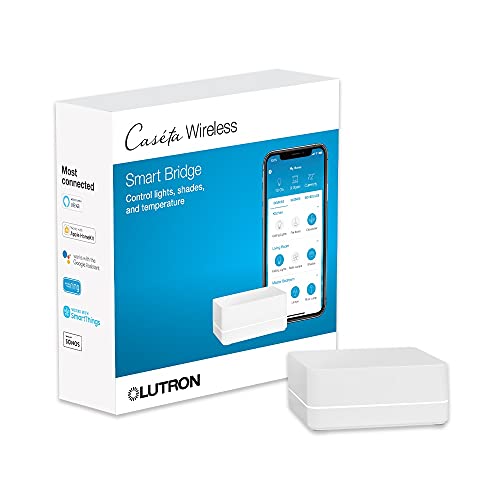
- Supports up to 75 Caseta devices
- Works with Alexa, HomeKit, Google Assistant, Ring, and Sonos
- Uses Clear Connect separately from Wi-Fi
Best For: Lutron Caseta lighting setups needing broad platform support
Most Versatile Multi-Protocol Hub

- Combines Zigbee, Thread, Matter, Wi-Fi, and IR
- Supports local automations and PoE
- Works with Aqara, HomeKit, Alexa, Google Home, and Home Assistant
Best For: Advanced mixed-device homes needing protocol flexibility
Best for Long-Range Alerts

- Up to 0.25-mile stated maximum range
- Supports smartphone and voice control
- Wired design with motion alert support
Best For: YoLink users prioritizing range and basic alerts
Best Universal IR Hub

- Controls 8,000+ IR brands across 18 appliance types
- Matter-certified with Alexa, Google Assistant, and Siri support
- Includes a built-in 93 dB alarm and app automations
Best For: Homes combining legacy IR appliances with modern smart-home controls
Best Compact Alarm Hub

- Supports up to 128 Aqara Zigbee devices
- Built-in RGB light, sensor, and alarm speaker
- Works with major voice and smart-home platforms
Best For: Aqara-focused homes needing compact security and automation
Best Simple Sensor Hub

- Connects up to 64 Tapo devices
- Low-power protocol supports longer battery life
- Built-in chime and siren up to 90 dB
Best For: Tapo-based sensor and home-alert setups
Best Advanced Compact Hub

- Supports Zigbee, Thread, Matter bridging, and IR
- Prioritizes local automation as an Edge Hub
- Offers dual-band Wi-Fi, PoE, WPA3, and encrypted storage
Best For: Advanced multi-protocol Aqara and Matter installations
Best SmartThings Pick
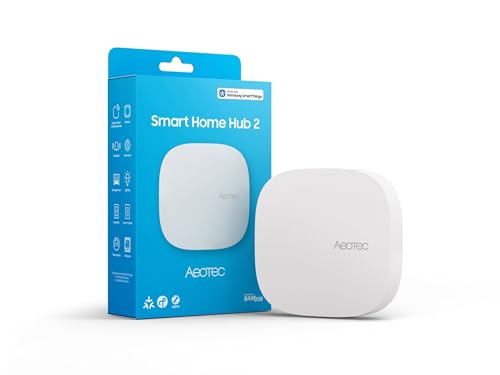
- Matter and Zigbee support
- Wi-Fi or Ethernet connectivity
- Local SmartThings automations
Best For: SmartThings users without Z-Wave devices
Best Small Aqara Bridge
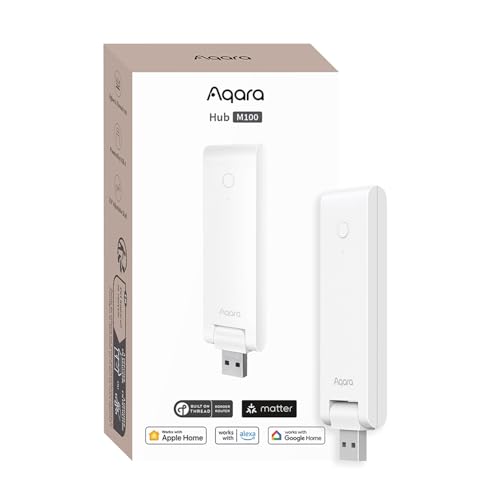
- Matter bridging for Aqara devices
- Thread and Zigbee support
- Adjustable USB-powered design
Best For: Aqara homes expanding into Matter and Thread
Best Local Automation Hub

- Local processing and privacy focus
- Zigbee, Matter, Thread, and Ethernet
- Works with 1,000+ brands
Best For: Multi-brand homes seeking flexible automation without subscriptions
Best for Lutron Lighting – Caseta Smart Hub
If your priority is dependable lighting control, the Lutron Caseta Smart Hub is a focused choice among compact smart home hubs. It connects Caseta devices to Alexa, Apple HomeKit, Google Assistant, Ring, Serena shades, and Sonos, while using Clear Connect Technology separately from Wi-Fi-connected devices.
Best For: Homes built around Lutron Caseta lighting and users who want broad voice-assistant integration.
Pros:
- Supports up to 75 Caseta devices.
- Works with Alexa, Apple HomeKit, Google Assistant, Ring, Serena shades, and Sonos.
- Simple setup: connect it to a router, install the Lutron app, and follow the instructions.
- Clear Connect Technology does not compete with Wi-Fi devices.
Cons:
- Caseta dimmers and switches are sold separately.
- Its strongest feature set is centered on Lutron Caseta devices.
- Requires a wired connection to your Wi-Fi router.
This is a practical, expandable hub for Lutron users rather than a general-purpose controller for every smart-home protocol. Choose it when lighting reliability and Caseta compatibility matter most.
Most Versatile Multi-Protocol Hub – Aqara Smart Hub M200
The Aqara Smart Hub M200 stands out among compact smart home hubs for combining Aqara Zigbee, Thread, Wi-Fi, Matter, and infrared control. It also supports local automations, PoE networking, and integration with Apple HomeKit, Alexa, Google Home, and Home Assistant.
Best For: Advanced smart homes that need multi-protocol compatibility, local automation, and IR appliance control.
Pros:
- Acts as a Matter Controller, Thread Border Router, and Matter Bridge.
- Supports up to 40 Aqara Zigbee devices and 40 Thread devices.
- Its 360-degree IR blaster can control appliances and provide feedback.
- Offers local Zigbee and Matter automations, plus Wi-Fi and PoE connectivity.
Cons:
- A 2A USB power adapter is not included.
- Only one air-conditioning device can be exposed to Matter.
- Some features, including cloud push notifications, still require cloud access.
The M200 is a feature-rich option for users willing to manage a more capable ecosystem. Its combination of Matter bridging, local processing, IR control, and flexible power options gives it unusual range for its compact size.
Best for Long-Range Alerts – YoLink Smart Home Hub
The YoLink YS1603 is a straightforward option among compact smart home hubs for connected alerts and remote control. It uses a wired connection, supports smartphone compatibility and voice control, and lists a maximum range of up to 0.25 miles.
Best For: Users who want a simple YoLink hub with extended stated range for sensor-based alerts.
Pros:
- Lists a maximum range of up to 0.25 miles.
- Supports smartphone compatibility and voice control.
- Compact design measures 4.33 by 4.33 by 1.06 inches.
- Provides motion-related alert support.
Cons:
- The supplied details identify it as a wired hub but do not specify broader platform compatibility.
- This version does not include battery backup.
- Its feature set is less fully detailed than the other hubs in this roundup.
The YS1603 makes the most sense when range and basic connected alerts are more important than extensive protocol details. Confirm compatibility with your intended YoLink devices before buying.
Best Universal IR Hub – Tapo Smart IR & IoT Hub
The Tapo H110 is one of the most appliance-focused compact smart home hubs, pairing Matter support with a universal IR remote and built-in chime. It can control TVs, air conditioners, fans, and many other devices from more than 8,000 infrared brands through the Tapo app, voice assistants, or automations.
Best For: Homes that need one hub for legacy infrared appliances, Matter devices, schedules, and audible alerts.
Pros:
- Supports more than 8,000 IR brands and 18 appliance types.
- Works with Alexa, Google Assistant, and Siri through Matter.
- Built-in 93 dB alarm provides audible alerts.
- Offers remote app access, schedules, GPS-based control, and custom automations.
Cons:
- Requires 2.4 GHz Wi-Fi.
- IR control depends on the appliance being within infrared range.
- Its corded design requires access to power.
Choose the H110 if your smart home includes older remotes or appliances that do not otherwise connect to an ecosystem. It is especially useful for consolidating IR control while adding Matter, voice commands, alerts, and routines.
Best Compact Alarm Hub – Aqara Hub M1S Gen 2
The Aqara Hub M1S Gen 2 is a practical choice for shoppers seeking compact smart home hubs centered on Aqara devices, sensors, and security automations. Its 3.14-by-3.14-inch footprint includes a built-in RGB light, illumination sensor, and 2-watt speaker that can serve as an alarm or doorbell.
Best For: Aqara-focused homes that want compact alarm, lighting, and sensor automation.
Pros:
- Supports up to 128 Aqara devices using Zigbee 3.0, with repeaters required.
- Works with Apple HomeKit, Google Assistant, Alexa, and IFTTT.
- Built-in RGB light, illumination sensor, speaker, and customizable alarm sounds.
- Supports WPA3 and four HomeKit alarm modes.
Cons:
- Requires a 2.4 GHz Wi-Fi network and does not support Wi-Fi 6.
- Does not support third-party Zigbee devices or Zigbee2MQTT officially.
- Full functionality depends on compatible Aqara child devices and network placement.
This hub offers more than basic device bridging, but it is best suited to users already invested in Aqara products. Confirm your network supports 2.4 GHz Wi-Fi before choosing it.
Best Simple Sensor Hub – Tapo Smart Hub H100
The Tapo H100 is one of the more straightforward compact smart home hubs for connecting Tapo sensors, switches, and buttons. It uses a low-power wireless protocol designed to help extend connected device battery life, while its built-in chime can also provide audible alerts.
Best For: Tapo users building an affordable sensor and alert system with simple app or voice control.
Pros:
- Connects up to 64 Tapo devices.
- Offers a stated connection distance of up to 30 meters, depending on conditions.
- Low-power connectivity can extend device battery life by up to 10 times versus Wi-Fi-based devices.
- Can trigger smart actions and a siren reaching up to 90 dB.
Cons:
- Requires a 2.4 GHz Wi-Fi connection.
- Cannot directly connect to Tapo smart plugs or smart lighting.
- Designed for Tapo devices rather than a broad, mixed-brand ecosystem.
The H100 makes sense when your setup is built around Tapo sensors, buttons, and switches. Its long-range, low-power link and siren are useful for basic home monitoring, but check device compatibility before expanding beyond the Tapo ecosystem.
Best Advanced Compact Hub – Aqara Smart Home Hub M3
The Aqara Hub M3 is a strong option for shoppers who want compact smart home hubs with broader connectivity and local automation. It combines Aqara Zigbee, Thread, Matter bridging, dual-band Wi-Fi, PoE, and an IR blaster in a compact 4.13-by-4.13-inch enclosure.
Best For: Advanced Aqara users who want local automation, Matter integration, wired networking, and IR control.
Pros:
- Supports up to 127 Aqara Zigbee devices and 127 Thread devices, with repeaters required for Thread.
- Acts as an Edge Hub to prioritize local automations and control.
- Includes Matter bridge support, dual-band Wi-Fi, PoE, and WPA3.
- Features a 360-degree IR blaster with feedback and learning for compatible devices.
Cons:
- A 2A USB power adapter is not included.
- Some cloud-based notifications still require internet access.
- IR-to-Matter functionality has device and integration limitations, including one AC device exposed to Matter.
The M3 is the most flexible choice here for technically advanced installations, especially those using Matter, Thread, Home Assistant, or PoE. Its capabilities are substantial, so it is best purchased when you expect to use its local automation and multi-protocol features.
Best SmartThings Pick – Aeotec Smart Home Hub2
The Aeotec Smart Home Hub2 is a practical choice for shoppers seeking compact smart home hubs built around Samsung’s SmartThings ecosystem. It supports Matter and Zigbee devices, connects over Wi-Fi or Ethernet, and can run many automations locally when the internet is temporarily unavailable.
Best For: SmartThings users building a Matter- and Zigbee-based home without Z-Wave devices.
Pros:
- Supports Matter and Zigbee devices from Aeotec and other compatible brands.
- Works with Alexa, Google Assistant, and the SmartThings app.
- Offers Wi-Fi or Ethernet setup and local automation processing.
- Supports routines for lighting, security, climate, and energy management.
Cons:
- Z-Wave is not supported.
- Compatibility and features depend on supported SmartThings, Matter, and Zigbee devices.
Choose this hub if SmartThings is your preferred platform and you want flexible networking plus local routines. It is less suitable for homes centered on Z-Wave products.
Best Small Aqara Bridge – Aqara Smart Hub M100
The Aqara Smart Hub M100 is one of the more flexible compact smart home hubs for Aqara households adding Matter or Thread devices. Its adjustable shaft, USB-A power connection, Wi-Fi 6, and local automation support make it convenient for small installations, though Aqara Zigbee compatibility is limited to Aqara devices.
Best For: Aqara users who want Matter bridging, Thread support, and compact placement options.
Pros:
- Bridges Aqara Zigbee products into Matter ecosystems such as Apple Home, Alexa, and Home Assistant.
- Supports Thread devices and local Zigbee and Matter automations.
- Adjustable 210-degree shaft and USB-A power make placement flexible.
- Uses 2.4GHz Wi-Fi 6 with WPA3 security.
Cons:
- Does not support third-party Zigbee devices.
- Power adapter is not included.
- Some cloud-dependent features, including push notifications, still require an internet connection.
The M100 makes sense when your setup already uses Aqara products and you want to expose them to broader Matter ecosystems. Check the device compatibility limits and plan for a separate 5V USB power adapter.
Best Local Automation Hub – Homey Pro mini
The Homey Pro mini is a strong option among compact smart home hubs for users who want local processing and broad brand support in a small system. It includes Zigbee, Matter, Thread, and Ethernet, while Homey Flow provides an approachable way to create simple or advanced automations.
Best For: Multi-brand households wanting local control, flexible automations, and no required subscription.
Pros:
- Supports Zigbee, Matter, Thread, and Ethernet out of the box.
- Works with more than 1,000 brands, including Philips Hue, Sonos, Ecobee, and Yale.
- Processes data locally and can continue operating when the internet is down.
- Includes Homey Flow and voice integrations without a monthly subscription.
Cons:
- Z-Wave, Bluetooth, and infrared require the separately sold Homey Bridge.
- Advanced workflows may require using the Homey desktop app.
- Brand support depends on available official or community Homey apps.
Consider the Homey Pro mini if you are combining devices from many brands and value local control. Its built-in protocols cover common newer standards, but households needing Z-Wave or infrared should budget for the optional Bridge.
How We Picked the Best Compact Smart Home Hubs
We evaluated these hubs based on the features that matter most in a real smart home: supported protocols, compatibility with major platforms, automation flexibility, installation requirements, and the number of device types each hub can coordinate. Matter, Zigbee, Thread, Wi-Fi, infrared, Ethernet, and Z-Wave support can vary significantly, so we considered both current capabilities and future upgrade potential.
We also looked at practical details such as whether a hub requires a specific Wi-Fi band, whether it includes a built-in chime or infrared remote, and whether it depends on another ecosystem. A compact design is useful, but reliability and compatibility should come first.
Quick Comparison
For straightforward lighting control, the Lutron Caseta hub is a strong ecosystem-focused choice. Aqara offers several options for sensors, alarms, and advanced automations, while Tapo hubs combine smart-device control with chime and infrared features. YoLink is well suited to long-range sensors and devices. Aeotec targets SmartThings users and supports Zigbee and Matter, while Homey Pro mini is designed for broader multi-protocol automation with Ethernet, Thread, and Zigbee.
Key Buying Factors for Compact Smart Home Hubs
Protocol and Platform Support
Check whether the hub supports the devices you already own. Matter can improve cross-platform compatibility, but a Matter controller may still need separate support for Zigbee, Thread, or infrared equipment. If you use Apple Home, Alexa, Google Home, or SmartThings, verify compatibility before buying.
Connectivity and Setup
Some hubs use 2.4GHz Wi-Fi only, while others offer Ethernet for a more stable connection. Consider router location, available ports, and whether the hub needs cloud access. Ethernet can be preferable for a central controller, while Wi-Fi is often simpler for apartments or smaller spaces.
Automation and Expansion
Look beyond basic app control. Advanced automation may include sensor-triggered routines, alarm functions, local processing, scenes, and cross-brand control. Choose a hub that supports the device categories you expect to add later rather than only the products you own today.
Special Features
Built-in infrared control can operate older televisions or air conditioners, while a chime can provide doorbell and sensor alerts. These features may eliminate the need for separate accessories, but they should not outweigh missing protocol or platform support.
Who Should Buy Which Compact Smart Home Hubs?
Choose Lutron Caseta if dependable smart lighting is your main priority. Pick Aqara M100, M1S Gen 2, M200, or M3 if you want Aqara sensors, alarms, and increasingly advanced automations. Tapo’s H100 or H110 is a practical fit for Tapo devices, chimes, and infrared control. YoLink is worth considering for long-range monitoring.
SmartThings users should look closely at the Aeotec Smart Home Hub2, while Homey Pro mini is the better match for users who want broad protocol support and flexible multi-brand automation. Before purchasing, confirm device compatibility and whether your preferred ecosystem supports the features you plan to use.