The right channel strip can make voiceover recordings sound cleaner, more controlled, and easier to mix. These picks cover practical home-studio tools, USB interfaces, 500 Series hardware, and premium tube designs.
We compare the features that matter most for spoken-word work, including preamp quality, compression, de-essing, noise control, connectivity, and day-to-day usability.
Best 10 Channel Strip for Voiceover Picks for 2026
Best All-Around Voiceover Control

- Preamp plus compression, de-esser, enhancer, and gate
- Loop-out and insert connections for expandability
- Rackmount 1U design with level and status LEDs
Best For: Integrated analog voiceover processing
Best Tube-and-Digital Option
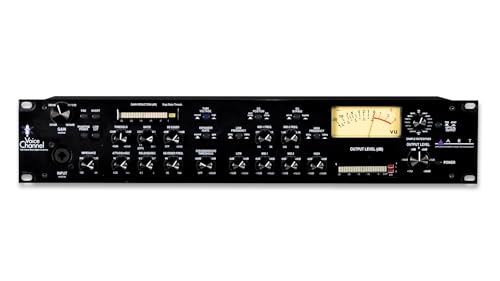
- Tube preamp for warmth and definition
- Compressor, expander, de-esser, and gate included
- ADAT, AES/EBU, S/PDIF, TOSLink, and USB outputs
Best For: Flexible studio voiceover routing
Best Compact 500-Series Choice
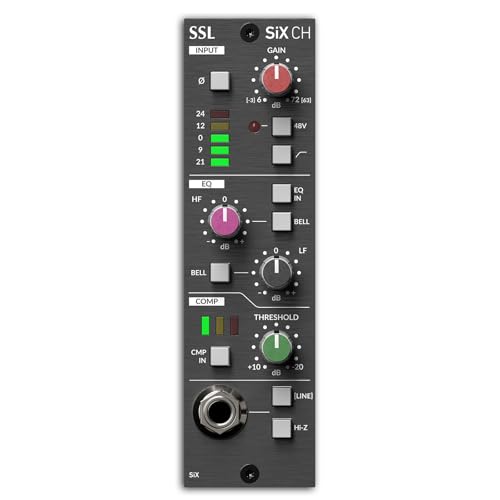
- Mic preamp, EQ, and single-knob compressor
- 75 Hz high-pass filter and +48V phantom power
- Front-panel TRS input with 1 MΩ Hi-Z switch
Best For: Streamlined 500-series voiceover chains
Best Tube EQ Flexibility

- Class A 12AX7 tube preamp with adjustable drive
- Three-band EQ with variable-Q mid band
- VCA compressor plus pad, filter, phantom, and polarity controls
Best For: Detailed analog voice shaping
Flexible USB Voiceover Setup

- One-channel mic/line preamp with USB interface
- Includes compressor, gate, and de-esser
- Supports up to 192 kHz sample rates
Best For: Voiceover users wanting integrated USB recording and vocal processing
Dedicated Spoken-Word Processing

- Mono preamp for mic and instrument sources
- Adds compressor/limiter, EQ, metering, and de-esser
- Designed for comprehensive single-channel processing
Best For: Studio voiceover chains needing extensive hands-on processing
Tube Character for Voiceover

- Vacuum-tube mic, instrument, and line preamp
- Includes EQ and optical compressor
- Dedicated single-channel hardware design
Best For: Voiceover studios wanting tube-based preamp and optical compression
Low-Noise Choice
RO05 Analog Noise Gate Channel Strip

- Reduces ambient and preamp-floor noise
- Analog processing with nearly zero latency
- Must follow a mic preamp in the signal chain
Best For: Beginner home-studio voiceover users needing dedicated analog noise control
Flexible Tube Control

- Mono tube channel-strip design
- Switchable mic impedance
- Opto/FET compression and four-band EQ
Best For: Voiceover users wanting hands-on tube processing and vocal shaping
Full Vocal Chain
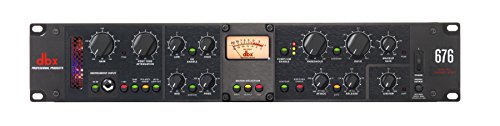
- 250-volt Class-A tube preamp
- Built-in compressor/limiter and parametric EQ
- Rackmount design with XLR and 1/4-inch connections
Best For: Professional or serious hobbyist voiceover setups needing an integrated hardware chain
Best All-Around Voiceover Control – dbx 286s
The dbx 286s is a practical channel strip for voiceover work when you want microphone preamplification, dynamics control, de-essing, tone enhancement, and gating in one rackmount unit. Its dedicated processors and status LEDs make it useful for shaping a clear, controlled spoken-word signal.
Best For: Voiceover setups needing integrated compression, de-essing, enhancement, and expander/gate processing.
Pros:
- Combines a microphone preamp with compression, de-esser, enhancer, and expander/gate.
- Loop-out and insert connections support additional external processing.
- Rackmountable 1U design with XLR and 1/4-inch connectivity.
- Front-panel LEDs show audio levels and processor status.
Cons:
- It is a single-channel, corded-electric unit.
- Its digital connectivity is not specified in the supplied details.
Choose the 286s if you want a straightforward analog signal chain for spoken-word recording and live voice processing without assembling separate hardware processors.
Best Tube-and-Digital Option – ART VoiceChannel
The ART VoiceChannel suits buyers seeking a channel strip for voiceover with tube-based preamplification, dynamics control, and broad digital-output flexibility. Its compressor, expander, de-esser, and gate provide useful tools for refining a spoken-word recording before conversion or routing to other equipment.
Best For: Voiceover studios that want tube preamp character and ADAT, AES/EBU, S/PDIF, TOSLink, or USB connectivity.
Pros:
- Uses ART tube preamp design for warmth and definition.
- Includes compressor, expander, de-esser, and gate processing.
- Offers multiple digital connections plus USB direct connection.
- Supports sample rates up to 192 kHz.
Cons:
- The supplied details do not specify rack dimensions or front-panel metering.
- It is a single-channel unit.
The VoiceChannel is a strong fit when your workflow extends beyond basic analog recording and you want one preamp-based channel strip with numerous digital routing choices.
Best Compact 500-Series Choice – SSL SiX Channel
Solid State Logic SiX Channel Strip 500 Series | Mic-Pre, EQ, and Single Knob Compressor
Check Price On AmazonThe Solid State Logic SiX Channel is a focused channel strip for voiceover built around a mic preamp, EQ, and single-knob compressor. Its high-pass filter, phantom power, and streamlined controls make it appropriate for a 500-series setup where space and quick operation matter.
Best For: 500-series users wanting a compact voice channel with essential filtering, EQ, and compression.
Pros:
- Combines mic preamp, EQ, and compressor in one module.
- Provides +48V phantom power for compatible microphones.
- Includes a switched 75 Hz high-pass filter.
- Front-panel TRS line input includes a 1 MΩ Hi-Z switch.
Cons:
- Requires a compatible 500-series rack or chassis.
- Its compressor uses a single-knob control rather than a full multi-parameter layout.
- The supplied details do not mention de-essing or gating.
Pick the SiX Channel if you already use 500-series hardware and prefer a compact, essentials-first strip for cleaning and controlling voiceover signals.
Best Tube EQ Flexibility – PreSonus StudioChannel
The PreSonus StudioChannel is a versatile channel strip for voiceover combining a high-voltage Class A 12AX7 tube preamplifier, VCA compressor, and three-band EQ. It provides gain, tube drive, filtering, polarity, and compression controls for shaping a spoken-word signal from a mic, instrument, or line source.
Best For: Voiceover users who want tube coloration alongside detailed EQ and variable compressor behavior.
Pros:
- Combines a Class A tube preamp, VCA compressor, and three-band EQ.
- EQ includes a variable-Q mid band and shelving or peak options on the high and low bands.
- Offers high-pass filtering, a -20 dB pad, phantom power, and polarity reverse.
- Accepts microphone, instrument, and line inputs in a rugged 1U chassis.
Cons:
- The supplied details do not mention digital outputs or USB connectivity.
- It is a larger rackmount unit that may be more control than a basic setup needs.
The StudioChannel is a compelling choice for hands-on voice shaping, especially when you want to adjust tube drive, midrange character, and compression behavior from one analog unit.
Flexible USB Voiceover Setup – Behringer UV1
The Behringer Ultravoice UV1 combines a one-channel mic/line preamp with a USB audio interface, making it a practical channel strip for voiceover when you want recording connectivity and basic vocal processing in one unit. Its compressor, gate, and experienced-designed de-esser features can help shape a spoken-word signal before it reaches your computer.
Best For: Voiceover users seeking a one-channel USB setup with integrated dynamics and de-essing.
Pros:
- Combines mic/line preamp and USB audio interface functionality.
- Includes compressor, gate, and de-esser processing.
- Supports sample rates up to 192 kHz.
- Compatible with Windows 10 and Mac OS X 10.4 or higher.
Cons:
- Provides only one channel.
- Its supplied notes do not specify detailed control ranges or metering features.
The UV1 is a straightforward choice if your priority is a compact computer-connected channel strip for voiceover with several essential processing tools built in. It is less suited to users who need multiple input channels.
Dedicated Spoken-Word Processing – SPL Track One MK3
The SPL Track One MK3 is a mono channel strip for voiceover built around a mic/instrument preamp, compressor/limiter, output metering, three-band EQ, and de-esser. It suits a more traditional hardware workflow for shaping a single voice signal before recording or mixing.
Best For: Voiceover setups that need comprehensive one-channel preamp, EQ, dynamics, and de-essing tools.
Pros:
- Provides a mic/instrument preamp in a mono channel-strip format.
- Includes compressor/limiter and output metering.
- Offers three-band EQ and a dedicated de-esser.
- Combines several voice-processing functions in one unit.
Cons:
- It is a mono channel strip, so it does not provide multiple channels.
- The supplied dimensions indicate a substantial 21.5 x 14.95 x 5.3-inch unit.
- At 10.26 pounds, it may be less convenient for portable setups.
For buyers prioritizing hands-on processing over an all-in-one USB interface, the Track One MK3 offers a broad toolset for a single voice path. Its size and weight make it better suited to a permanent studio position.
Tube Character for Voiceover – Universal Audio LA-610 Mk II
The Universal Audio LA-610 Mk II pairs a vacuum-tube microphone, instrument, and line preamp with EQ and an optical compressor. As a channel strip for voiceover, it is aimed at users who want a dedicated single-channel hardware path with tube-based preamp design and optical dynamics control.
Best For: Voiceover studios seeking a tube preamp, EQ, and optical compressor in one channel.
Pros:
- Uses a vacuum-tube microphone, instrument, and line preamp.
- Combines EQ with an optical compressor.
- Supports microphone, instrument, and line-level applications.
- Includes a stated two-year warranty.
Cons:
- Provides one channel.
- At 15.7 pounds, it is relatively heavy for a single-channel unit.
- The supplied notes do not identify a built-in USB interface.
The LA-610 Mk II is a focused option for a hardware voiceover chain where tube preamp design and optical compression are central priorities. Choose it when you value that signal-path approach more than direct USB connectivity or multiple channels.
Low-Noise Choice – RO05 Analog Noise Gate Channel Strip
If your home voiceover recordings suffer from ambient noise or preamp hiss, the RO05 is a specialized channel strip for voiceover setups that need cleaner vocal pauses and low-level passages. Its analog processing is designed to reduce background and preamp-floor noise without digital conversion or noticeable latency. Note that it must be placed after a mic preamp or elsewhere in a line-level chain; it is not intended for direct microphone connection.
Best For: Beginner home-studio voiceover users who want analog noise reduction without a monthly software subscription.
Pros:
- Targets ambient background noise and inherent preamp-floor noise.
- Fully analog operation avoids signal conversion and is designed for nearly zero latency.
- Balanced circuit design and real-time processing aim for smoother, more natural continuity than basic cutoff-style gates.
Cons:
- Requires a mic preamp or line-level signal chain; a microphone should not connect directly.
- Its more complex circuitry has higher power consumption.
- A slight circuit echo when powering off can occur as internal components discharge.
The RO05 is best viewed as a focused noise-control processor rather than a complete microphone preamp. It makes the most sense when your existing voiceover chain already provides preamplification and you want a compact analog solution for cleaner recordings.
Flexible Tube Control – ART Pro Channel III
The ART Pro Channel III is a channel strip for voiceover recording when you want hands-on control over microphone input, compression character, and vocal equalization. Its mono tube design combines switchable microphone impedance with selectable opto and FET compression voicings, plus a four-band semi-parametric EQ for shaping the recorded voice.
Best For: Voiceover users who want a conventional hardware channel strip with tube processing and multiple compression flavors.
Pros:
- Tube-based mono channel-strip design for vocal recording.
- Switchable microphone impedance supports flexible microphone matching.
- Selectable opto/FET compression voicings provide different control approaches.
- Four-band semi-parametric EQ offers detailed tonal shaping.
Cons:
- Its 10.61-pound weight and listed 21.9-by-11.4-by-5.4-inch dimensions may require substantial workspace.
- Single-channel design is aimed at mono sources rather than stereo processing.
- The supplied notes do not specify onboard noise-gate or limiter functions.
For voiceover artists who prefer shaping the signal before it reaches the interface, the Pro Channel III offers a broad set of core controls in one tube-based unit. Its strongest appeal is flexibility across microphone matching, compression voicing, and EQ rather than dedicated noise elimination.
Full Vocal Chain – dbx 676FX Tube Mic Preamp
The dbx 676FX is a channel strip for voiceover work when you want preamplification, dynamics control, and equalization in a rack-mountable unit. Its 250-volt Class-A tube preamp can be voiced from warm to crystal clear or richly dirty, while the integrated compressor/limiter and three-band parametric EQ help manage and shape a vocal signal.
Best For: Serious hobbyists and professional recording setups that need a complete rackmount voiceover front end with tube coloration and detailed control.
Pros:
- High-voltage Class-A tube preamp offers a range of tonal colors.
- Integrated compressor/limiter supports louder, cleaner output.
- Three-band parametric EQ includes sweepable mids for precise frequency shaping.
- XLR and 1/4-inch connectivity, front-panel instrument input, side-chain insert, and VU metering add setup flexibility.
Cons:
- At 13 pounds and 2U rack size, it is less compact than desktop processors.
- Its extensive controls may be more than a beginner needs for basic voiceover recording.
- The supplied dimensions and rack specification indicate a dedicated studio or live-rack installation rather than a minimal setup.
The 676FX is the most comprehensive option here for building a voiceover signal chain around one hardware unit. Choose it when tube tone, compression/limiting, and sweepable EQ matter more than portability or simplicity.
How We Picked the Best Channel Strip for Voiceover
We focused on channel strips that can improve spoken-word recordings at the source, rather than models designed mainly for full-band tracking. Each pick was evaluated for microphone preamp quality, dynamics control, de-essing, noise management, EQ flexibility, connectivity, and ease of setup.
Because voiceover studios vary widely, this list includes several formats: compact processors for home recording, USB-equipped units for simple computer connections, 500 Series modules for modular systems, and tube channel strips for a more colored sound. We also considered whether each unit offers useful metering, reliable controls, and a practical signal path for narration, podcasting, streaming, or broadcast-style production.
Quick Comparison
| Best For | Look For |
|---|---|
| Simple home voiceover setup | Built-in USB interface, de-esser, compressor, and gate |
| Natural, polished narration | Quiet preamp, gentle compression, and adjustable de-essing |
| Warm or characterful vocals | Tube gain stages and flexible drive controls |
| Rack or modular studio | Balanced connections, recallable workflow, or 500 Series compatibility |
| Detailed processing control | Separate EQ, expander, compressor, limiter, and output controls |
Key Buying Factors for a Channel Strip for Voiceover
Preamp Noise and Gain
Voiceover microphones can require substantial clean gain, especially low-output dynamic models. Choose a preamp with enough headroom and low self-noise so quiet passages remain clean without excessive hiss.
Compression and De-Essing
A compressor helps keep narration consistent, while a de-esser reduces harsh “s” and “sh” sounds. Adjustable threshold, ratio, attack, release, and frequency controls are more useful than preset-only processing when you need to match different voices and microphones.
Noise Gate or Expander
An expander can reduce room tone between phrases without making the recording sound abruptly chopped. Use it carefully in untreated rooms, where an aggressive gate may remove word endings or create distracting level changes.
Connectivity and Workflow
Check whether the unit uses XLR, balanced line outputs, digital outputs, USB, or 500 Series power. A USB model may be the simplest choice for a solo creator, while a rack or analog unit can better suit an interface-based studio.
Tube Color Versus Clean Detail
Tube circuits can add warmth and harmonic character, but they may also be less transparent and require more careful gain staging. Clean solid-state designs are often easier to fit into broadcast, audiobook, and commercial voiceover workflows.
Who Should Buy Which Channel Strip for Voiceover?
Choose a USB-equipped channel strip if you want the shortest path from microphone to computer and do not already own a suitable audio interface. A compact solid-state processor is a strong fit for home studios that need compression, de-essing, and noise control without adding much complexity.
Choose a tube model if you specifically want a warmer, more colored vocal sound and are comfortable managing gain and headroom. A 500 Series unit makes the most sense when you already own a compatible chassis and want to build a modular recording system.
For professional narration, commercial production, or a dedicated booth, prioritize the quietest preamp, precise dynamics controls, dependable metering, and balanced outputs. The best Channel Strip for Voiceover is the one that matches your microphone, room, interface, and preferred recording workflow—not simply the model with the most features.