Choosing the best channel strips for live sound means balancing signal quality, hands-on control, connectivity, and setup speed. The right unit can add useful preamp character, dynamics control, and EQ before a signal reaches the mixer or recording system.
This roundup covers tube and solid-state channel strips, compact live mixers, digital snakes, and USB-equipped options so you can match your setup to your inputs, workflow, and budget.
Best 10 Channel Strips for Live Sound Picks for 2026
Tube Processing & Digital Connectivity

- Tube preamp for warmth and definition
- Compressor, expander, de-esser, and gate
- ADAT, AES/EBU, S/PDIF, TOSLink, and USB
Best For: Priority inputs needing tube tone and digital routing
Compact Mixing & Effects

- 12-channel compact mixer
- Onyx preamps and GigFX effects
- USB, XLR, and TRS connectivity
Best For: Small live rigs needing mixing and effects
500-Series Vocal Shaping
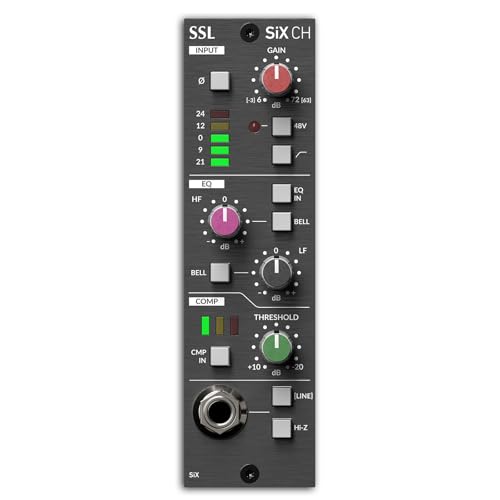
- Mic pre, EQ, and compressor in one module
- +48V phantom power and 75 Hz HPF
- Front-panel TRS input with Hi-Z switch
Best For: 500 Series rigs needing focused input processing
Digital Stagebox Expansion

- 16 programmable MIDAS-designed mic preamps
- Eight servo-balanced XLR outputs
- AES50 and ULTRANET connectivity
Best For: Live systems needing networked I/O expansion
Flexible Analog Control
SPL Track One MK3 Mono Channel Strip

- Mic/instrument preamp with compressor and limiter
- 3-band EQ, de-esser, and output metering
- Mono design for focused vocal or instrument processing
Best For: Vocal and instrument channels needing complete front-end control
Tube-Toned Versatility
PreSonus StudioChannel Vacuum-Tube Channel Strip

- Class A 12AX7 tube mic/instrument preamp
- VCA compressor with automatic attack and release
- Variable-Q mid EQ in a rugged 1U chassis
Best For: Tube-style front-end shaping for microphones and instruments
Compact Digital Connectivity
Behringer Ultravoice UV1 Channel Strip

- One-channel mic/line preamp with compressor and gate
- Integrated de-esser for vocal-focused processing
- USB interface supports sample rates up to 192 kHz
Best For: Single-channel setups combining dynamics processing and computer connectivity
Flexible Tube Control
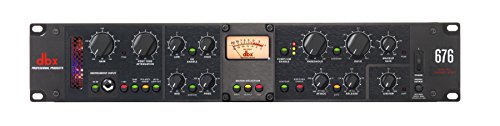
- High-voltage Class-A tube preamp
- Compressor/limiter with side-chain insert
- 3-band parametric EQ with sweepable mids
Best For: Rack-based live rigs needing tube tone and integrated processing
Versatile Voice Shaping

- Mono tube channel strip
- Selectable Opto/FET compression voicings
- Four-band semi-parametric EQ
Best For: Single-source processing with flexible compression and EQ
Classic Tube Dynamics

- Vacuum-tube mic, instrument, and line preamp
- Optical compressor with EQ
- Single-channel signal path
Best For: Focused processing of one live microphone or instrument source
Tube Processing & Digital Connectivity – ART VoiceChannel
For demanding channel strips for live sound applications, the ART VoiceChannel combines a tube preamp with onboard dynamics processing and extensive digital connectivity. Its single-channel design suits a vocal, instrument, or other priority input that needs shaping before conversion or routing.
Best For: Engineers who need warm tube coloration, flexible dynamics control, and digital output options for recording or live-system integration.
Pros:
- Tube preamp design provides warmth and definition.
- Includes compressor, expander, de-esser, and gate functions.
- Supports ADAT, AES/EBU, S/PDIF, TOSLink, and USB connectivity.
Cons:
- Provides only one channel.
- At 5.5 kg, it is less convenient to transport than a compact module.
The VoiceChannel is a feature-rich choice when one input deserves detailed tone and dynamics control. Its broad digital connectivity is particularly useful in hybrid recording and live rigs.
Compact Mixing & Effects – Mackie ProFX12v3 Mixer
The Mackie ProFX12v3 is a practical alternative to individual channel strips for live sound when you need multiple inputs, USB connectivity, and built-in effects in one compact mixer. Its 12-channel format is suited to small performances, recording, and content-creation setups.
Best For: Small live rigs and creators who want a multi-channel mixer with Onyx preamps, USB, and integrated GigFX effects.
Pros:
- Provides 12 channels in a compact mixer format.
- Includes Onyx preamps and the GigFX effects engine.
- Offers USB plus XLR and TRS output connectivity.
Cons:
- It is a mixer rather than a dedicated single-channel strip.
- The supplied listing contains inconsistent model naming between ProFX12v3 and ProFX16v3.
Choose the ProFX12v3 when channel count and integrated mixing matter more than dedicated per-channel strip hardware. It is a versatile all-in-one option for compact live and recording systems.
500-Series Vocal Shaping – SSL SiX Channel Strip
Solid State Logic SiX Channel Strip 500 Series | Mic-Pre, EQ, and Single Knob Compressor
Check Price On AmazonThe Solid State Logic SiX Channel Strip brings mic preamp, EQ, and a single-knob compressor into a 500 Series module. For channel strips for live sound, its focused feature set is useful when you want straightforward tone shaping and dynamics control in a compatible rack system.
Best For: Engineers using 500 Series hardware who need a compact mic-pre, EQ, and compressor channel for a selected input.
Pros:
- Combines mic preamp, EQ, and compressor functions.
- Offers +48V phantom power and a switchable 75 Hz high-pass filter.
- Includes a front-panel TRS line input with 1 MΩ Hi-Z switching.
Cons:
- Requires a compatible 500 Series setup.
- Provides one channel.
- Compression uses a single-knob control rather than a full multi-parameter section.
The SiX is a streamlined choice for focused input processing rather than broad system connectivity. Its 500 Series format makes it best suited to modular rigs with an available rack frame.
Digital Stagebox Expansion – Behringer S16 Digital Snake
The Behringer S16 approaches channel strips for live sound from the digital stagebox side, providing 16 programmable mic preamps and networked audio connectivity. It is designed to expand input and output access rather than provide onboard EQ or compression for each channel.
Best For: Live systems needing multiple remote microphone inputs, eight analog outputs, and AES50-based digital networking.
Pros:
- Provides 16 MIDAS-designed programmable mic preamps.
- Includes eight servo-balanced XLR analog outputs.
- Supports AES50 networking, ULTRANET personal monitoring, and TURBOSOUND speaker connectivity.
Cons:
- Does not list onboard channel EQ, compression, or other strip processing.
- Its stagebox format depends on a compatible digital audio network.
- At 10.36 pounds, it is less lightweight than a small single-channel unit.
The S16 is a strong infrastructure choice when a live setup needs many mic inputs and distributed outputs. Pair it with compatible digital mixing and processing equipment for full channel-strip control.
Flexible Analog Control – SPL Track One MK3 Mono Channel Strip
For live engineers seeking channel strips for live sound, the SPL Track One MK3 combines a mono mic/instrument preamp with compression, limiting, metering, EQ, and de-essing in one rack-ready processing unit. Its broad feature set is suited to shaping a single vocal or instrument path before it reaches the rest of the system.
Best For: Vocal and instrument channels that need preamp, dynamics, EQ, and de-essing in one unit.
Pros:
- Combines mic/instrument preamp, compressor/limiter, 3-band EQ, and de-esser.
- Output metering supports practical level monitoring.
- Stainless-steel construction is specified in the product details.
Cons:
- It is a mono channel strip, so each channel requires its own unit.
- Its listed weight of 10.26 pounds may matter for portable rigs.
The Track One MK3 is a comprehensive choice when you want several essential processing stages available from one channel strip, especially for a focused vocal or instrument input.
Tube-Toned Versatility – PreSonus StudioChannel Vacuum-Tube Channel Strip
The PreSonus StudioChannel is a useful option for channel strips for live sound when you want a tube-based preamp alongside compression and flexible equalization. Its Class A 12AX7 stage, variable controls, and multiple input options make it adaptable to microphones, instruments, keyboards, and synths.
Best For: Users wanting tube preamp character with integrated compression and adjustable EQ in a 1U rack format.
Pros:
- High-voltage Class A 12AX7 vacuum-tube mic/instrument preamplifier.
- Includes a VCA compressor with auto attack/release and selectable knee characteristics.
- Three-band EQ includes a variable-Q mid band and shelving/peak high and low bands.
- Offers mic, line, and instrument inputs plus phantom power, polarity reverse, pad, and high-pass filtering.
Cons:
- The feature-rich control set may take more setup time than a simpler channel strip.
- The supplied details do not specify USB connectivity or onboard digital functions.
With its tube preamp, VCA compression, and flexible EQ, the StudioChannel suits engineers who prefer hands-on analog-style tone shaping in a rugged 1U chassis.
Compact Digital Connectivity – Behringer Ultravoice UV1 Channel Strip
The Behringer Ultravoice UV1 brings a one-channel mic/line preamp together with compression, gating, de-essing, and a USB audio interface. For channel strips for live sound, its computer connectivity can be useful when a setup also needs straightforward integration with Windows or Mac systems.
Best For: Single-channel vocal or line applications that benefit from built-in dynamics processing and USB connectivity.
Pros:
- Combines a mic/line preamp with compressor, gate, and de-esser functions.
- Includes a USB audio interface with support for up to 192 kHz sample rate.
- Compatible with Windows 10 and Mac OS X 10.4 or higher.
Cons:
- It provides one channel, which limits multi-input applications.
- The supplied details do not list an integrated EQ section.
The UV1 is a practical choice for a single vocal or line path when USB output and essential dynamics tools are more important than a larger analog control section.
Flexible Tube Control – dbx 676FX Tube Channel Strip
The dbx 676FX is one of the more fully equipped channel strips for live sound, combining a high-voltage Class-A tube preamp with compression, limiting, and a sweepable 3-band parametric EQ. Its XLR and 1/4-inch connectivity also suits varied stage and rack setups.
Best For: Performers and engineers who want tube coloration, dynamics control, and flexible EQ in a rackmount unit.
Pros:
- 250-volt Class-A tube design supports warm, clear, or more saturated tones.
- Integrated compressor/limiter helps produce a louder, cleaner output.
- Sweepable mids provide useful control over detailed tonal shaping.
- Front-panel instrument input and XLR/1/4-inch connections add flexibility.
Cons:
- The 2U rackmount chassis is larger than a simple preamp.
- At 13 pounds, it may add noticeable weight to a portable rack.
Choose this model when you want several processing stages in one unit rather than a basic preamp. The VU meter and side-chain insert are practical extras for monitoring and more precise dynamics work.
Versatile Voice Shaping – ART Pro Channel III
The ART Pro Channel III is a mono tube channel strip for live sound setups that need preamp, compression, and EQ in one signal path. Its selectable compression voicings and four-band semi-parametric EQ provide practical control for shaping a source.
Best For: Vocal, instrument, or other mono sources that benefit from tube character and adjustable dynamics processing.
Pros:
- Tube-based mono channel strip combines several processing functions.
- Switchable microphone impedance expands preamp matching options.
- Selectable Opto/FET compression voicings support different response styles.
- Four-band semi-parametric EQ offers detailed tonal adjustment.
Cons:
- It is a single-channel unit, so stereo sources require additional equipment.
- The supplied details do not specify its connectivity or rack dimensions.
This is a strong choice when compression character and EQ flexibility matter more than having multiple channels. Its mono design makes it especially straightforward for processing one featured source at a time.
Classic Tube Dynamics – Universal Audio LA-610 Mk II
The Universal Audio LA-610 Mk II pairs a vacuum-tube microphone, instrument, and line preamp with EQ and an optical compressor. For channel strips for live sound, it offers a focused single-channel approach to adding tube character and controlled dynamics.
Best For: Engineers and performers who want a dedicated tube preamp and optical compression path for one important source.
Pros:
- Supports microphone, instrument, and line-level sources.
- Combines a vacuum-tube preamp, EQ, and optical compressor.
- Dedicated single-channel format suits focused source processing.
- Includes a 2-year warranty according to the supplied details.
Cons:
- One channel limits its use for stereo or multiple simultaneous sources.
- At 15.7 pounds, it may be less convenient for highly portable rigs.
The LA-610 Mk II is best suited to setups where one premium-feeling signal path is more important than channel count. Its combination of tube preamplification, EQ, and optical compression keeps the core processing chain compact.
How We Picked the Best Channel Strips for Live Sound
We selected products based on the functions that matter during rehearsals, performances, installations, and mobile production. Our comparison considers preamp quality, EQ and dynamics processing, input and output flexibility, noise performance, durability, rack or stage practicality, and how quickly each unit can be integrated into an existing system.
Because “channel strip” can describe several formats, this list includes traditional single-channel processors alongside live mixers and digital stage-I/O equipment. They serve different roles, so confirm the product’s signal path and connection requirements before buying.
Quick Comparison
| Best For | Recommended Type | What to Prioritize |
|---|---|---|
| Lead vocals and featured instruments | Analog channel strip | Clean gain, usable EQ, compressor, and reliable outputs |
| Small bands and events | Compact mixer | Input count, monitor sends, effects, and USB recording |
| Large stage setups | Digital snake | Channel capacity, network compatibility, and remote control |
| Tube coloration | Tube channel strip | Drive control, headroom, cooling, and maintenance |
| Hybrid live and studio work | USB-equipped processor | Computer connectivity, routing, and driver support |
Key Buying Factors for Channel Strips for Live Sound
Inputs, Outputs, and Routing
Check whether you need XLR microphone input, instrument or line input, insert connections, balanced outputs, digital output, or USB. A channel strip with excellent processing is less useful if it cannot connect cleanly to your console, interface, or stage box.
Processing Control
Look for the controls you will actually use: high-pass filtering, sweepable or parametric EQ, compression, limiting, de-essing, and phase or polarity reversal. Simple controls can be preferable for fast live changes, while more detailed sections suit experienced engineers and repeatable setups.
Headroom and Noise
Live sources can produce sudden peaks, particularly vocals, drums, and amplified instruments. Adequate headroom, sensible metering, and low self-noise help preserve clarity before the signal reaches the main system. Tube models may add desirable color, but they can also require more careful gain staging.
Format and Durability
Rack units are useful for permanent rigs and touring racks, while 500 Series modules require a compatible chassis. Mixers and digital snakes should be judged by their control surface, networking, mounting options, and serviceability as well as their audio specifications.
Who Should Buy Which Channel Strips for Live Sound?
Choose a traditional analog strip if you want focused control over one important source, such as a lead vocal, bass, kick drum, or spoken-word microphone. A tube model is a good fit when warmth and harmonic character are part of the goal; a solid-state design is often preferable when transparency, speed, and predictable headroom matter most.
Choose a compact mixer when you need several inputs, monitor mixes, built-in effects, or straightforward USB recording in one portable unit. A digital snake is the better choice for expanding stage inputs and reducing long analog cable runs, but it should match your console and network ecosystem.
For most buyers, the best Channel Strips for Live Sound are the ones that solve a specific routing or processing problem without complicating setup. Count your sources, identify the connections you already own, and prioritize dependable gain staging over features that will remain unused.