The best audio compressors for podcasting help keep speech intelligible and consistent without forcing listeners to adjust the volume between speakers. The right unit can also add useful control over peaks, noise, and vocal dynamics before the signal reaches your recorder or mixer.
We selected 10 compressors and channel processors covering rackmount studio setups, compact microphone chains, multi-channel productions, and budget-conscious streaming rigs. Use the guide below to match features, connectivity, and workflow to the way you record.
Best 10 Audio Compressors for Podcasting Picks for 2026
Reliable Dynamics Control

- Compressor smooths uneven levels
- Adaptive expander/gate control
- Separate threshold and gain-reduction LEDs
Best For: Rack-based podcast setups needing compression and gating
Two-Channel Voice Processing
Behringer Composer Pro-XL MDX2600

- Two-channel compressor and limiter
- Includes gate and de-esser functions
- Suited to production and mixing workflows
Best For: Multi-source podcast setups needing several dynamics tools
All-in-One Mic Channel Strip

- Preamp plus compression and de-essing
- Includes enhancer and expander/gate
- XLR and 1/4-inch signal connections
Best For: Single-microphone podcast chains needing integrated voice processing
Classic Single-Channel Compression

- Fully discrete signal path
- Custom CineMag USA transformers
- Supports the all-buttons-in setting
Best For: Single-mic setups seeking dedicated classic-style compression
Rack-Ready Control
ART SCL2 Dual/Stereo Compressor
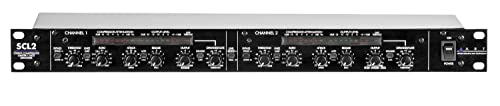
- Dual or linked-stereo operation
- Compression, limiting, expansion, and gating
- Balanced XLR/TRS inputs with LED meters
Best For: Rack-based podcast studios needing flexible dynamics control
Simple Inline Gain
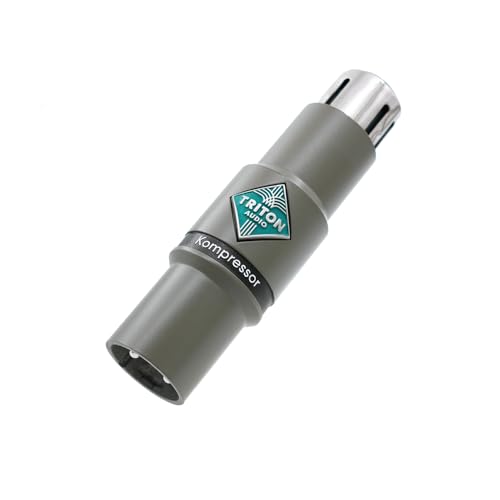
- Inline compression with 25 dB of gain
- One-knob Less-to-More control
- Compact XLR design for dynamic and ribbon mics
Best For: Podcasters wanting simple inline gain and compression
Tube-Style Flexibility

- Selectable tube or solid-state operation
- Variable uncompressed/compressed blend
- Switchable +4 dBu and -10 dBV modes
Best For: Single-channel podcast setups seeking flexible analog compression
Vocal Dynamics Pro

- Dual-channel compression with automatic attack and release
- Built-in noise gate and LED monitoring
- XLR/TRS I/O plus sidechain insert
Best For: Podcast studios and streaming rigs needing flexible vocal processing
Four-Channel Control Center

- Four-channel dynamics processing
- Includes compressor and limiter functions
- Adds peak limiting for signal control
Best For: Multi-microphone podcast studios needing four channels
Live Voice Protector

- Compression, peak limiting, and noise gate
- Includes feedback suppression and DSP reverb
- XLR/TRS connectivity for studio or live use
Best For: Hybrid podcast, streaming, and stage audio setups
Reliable Dynamics Control – dbx 266xs Compressor/Gate
The dbx 266xs is a practical rackmount choice for audio compressors for podcasting when you need to smooth inconsistent speech levels and control unwanted noise. Its compressor and gate controls, adaptive timing, and dedicated LED displays support quick setup for spoken-word chains.
Best For: Podcasters building a simple, hardware-based compression and gating setup.
Pros:
- Compression helps smooth uneven levels.
- Program-adaptive expander/gates offer noise-control flexibility.
- Separate LED displays show gain reduction, compression threshold, and gate threshold.
- Single 1U rack-space design suits studio or portable rigs.
Cons:
- Its analog, rackmount format requires additional equipment and space.
- It is a dedicated compressor/gate rather than a complete microphone channel strip.
The 266xs is a straightforward option for creators who want visible metering and both compression and gating in one unit. It is especially useful when consistent voice levels and controlled background noise are priorities.
Two-Channel Voice Processing – Behringer Composer Pro-XL MDX2600
The Behringer Composer Pro-XL MDX2600 is a two-channel compressor, limiter, and gate for podcasters comparing audio compressors for podcasting. Its dual-channel layout can support more than one signal path, while the de-esser feature adds a useful tool for spoken-word processing.
Best For: Podcasters who want multiple dynamics-processing functions in a compact, two-channel unit.
Pros:
- Combines compression, limiting, and gating.
- Two-channel design supports multiple audio paths.
- Includes a de-esser for additional vocal processing.
- Designed for audio production, mixing, and mastering applications.
Cons:
- The supplied notes provide limited control and connectivity details.
- It is a corded hardware processor, so it needs a suitable power and signal setup.
The MDX2600 makes sense when a podcast workflow benefits from compression plus limiting, gating, and de-essing in one device. Its two-channel configuration may also be useful for handling more than one source.
All-in-One Mic Channel Strip – dbx 286s Preamp and Processor
The dbx 286s is a microphone preamp and channel strip for audio compressors for podcasting, combining compression with de-essing, enhancement, and expansion/gating. It is designed to process a microphone signal before recording, with XLR and 1/4-inch connections and front-panel status LEDs.
Best For: Solo podcasters who want preamp, compression, de-essing, and voice shaping in one rackmount unit.
Pros:
- Combines microphone preamp and four independent processing sections.
- Classic dbx compression helps reduce the difference between loud and quiet elements.
- De-esser targets harsh high frequencies and sibilance.
- Enhancer and expander/gate provide additional control over vocal detail and noise.
Cons:
- It has one channel, limiting simultaneous microphone processing.
- The many processing sections may require more setup than a basic compressor.
- It is a wired, rackmount unit rather than a software solution.
The 286s is a strong fit for spoken-word chains that need more than level control. Its integrated preamp and voice-processing sections can reduce the need for separate hardware, particularly in a single-microphone recording setup.
Classic Single-Channel Compression – Warm Audio WA76 Compressor
The Warm Audio WA76 is a single-channel discrete compressor for podcasters seeking a dedicated hardware option among audio compressors for podcasting. Its fully discrete signal path, CineMag USA transformers, and classic 1176-style design are aimed at professional audio applications.
Best For: Podcasters who want a dedicated, character-focused compressor for one microphone channel.
Pros:
- Fully discrete signal path follows the classic ’76-style design.
- Custom CineMag USA transformers are included.
- Supports the famous “all buttons in” ratio setting.
- Single-channel format focuses processing on one source.
Cons:
- Only one channel is provided.
- It is a dedicated compressor without the preamp, gate, or de-esser functions listed for some alternatives.
- The supplied notes identify a DC power supply and professional-audio orientation, so system compatibility should be checked.
The WA76 is best considered when compression character and a dedicated signal path matter more than having several integrated voice-processing tools. It can suit a one-microphone setup that already has a compatible preamp and other required processing.
Rack-Ready Control – ART SCL2 Dual/Stereo Compressor
For podcast producers who want flexible rack-based processing, the ART SCL2 is one of the more versatile audio compressors for podcasting. It combines compression, limiting, expansion, and gating, with dual-channel or linked-stereo operation and both XLR and 1/4-inch TRS balanced inputs.
Best For: Podcast studios needing hands-on control over two channels or a linked stereo signal.
Pros:
- Supports dual-channel or linked-stereo operation.
- Includes compressor, limiter, expander, and gate functionality.
- Offers selectable automatic or manual attack and release controls.
- Provides precise LED level meters and balanced XLR/TRS connectivity.
Cons:
- Its 19-inch rack format is less suitable for compact desktop setups.
- Its many controls may be more than a simple podcast chain requires.
The SCL2 is a strong choice when you want broader dynamics-management options than compression alone. Its rack-mount dimensions, balanced connections, and stereo-link capability make it better suited to a dedicated studio than a minimalist mobile rig.
Simple Inline Gain – Triton Audio Kompressor
The Triton Audio Kompressor is a compact option for podcasters who want source-level processing without a rack unit. This inline FET-OPTO compressor and microphone preamplifier provides up to 25 dB of gain for dynamic and ribbon microphones, with a single control for straightforward adjustment.
Best For: Dynamic or ribbon microphone users who need inline gain and simple compression, including low-output microphone setups.
Pros:
- Combines compression and a 25 dB microphone gain boost.
- Uses a simple one-knob control ranging from “Less” to “More.”
- Its compact XLR-barrel design fits directly into a microphone signal chain.
- Requires 48V phantom power while blocking it from reaching the microphone.
Cons:
- One-knob operation offers less detailed control than a full compressor.
- It requires 48V phantom power to operate.
For straightforward podcast setups, the Kompressor keeps the workflow simple while adding gain and dynamics control at the microphone. It is especially practical for users of dynamic or ribbon microphones who prefer a compact inline device over a larger processor.
Tube-Style Flexibility – ART Solo VLA Compressor
The ART Solo VLA is a single-channel choice for podcasters who want selectable sonic approaches and blend control. Its mastering-quality analog signal path combines tube and solid-state operation, while the variable blend lets you mix uncompressed and compressed signals.
Best For: Single-channel podcast recording where selectable tube/solid-state character and parallel-style blend control are useful.
Pros:
- Offers selectable MultiVoice tube or solid-state control.
- Uses analog optical isolators for compression.
- Provides variable blending between uncompressed and compressed signals.
- Supports switch-selectable +4 dBu and -10 dBV level modes.
Cons:
- It processes only one channel.
- Its tube-based, corded-electric design is less compact than an inline unit.
The Solo VLA is suited to users who want more tonal and signal-blend flexibility than a basic compressor provides. Its single-channel format makes it a focused option for one microphone or source in a podcast recording chain.
Vocal Dynamics Pro – Dual-Channel Compressor
For podcasters seeking audio compressors for podcasting, this dual-channel rackmount processor offers flexible control over vocal dynamics, with classic VCA circuitry, automatic attack and release settings, and visual gain-reduction monitoring.
Best For: Podcast studios, streaming setups, and creators who want vocal compression plus noise-gate and sidechain options.
Pros:
- Dual-channel design supports multiple sound sources.
- Noise gate helps reduce unwanted background noise.
- XLR and 1/4-inch TRS connectivity supports professional routing.
- LED indicators show gain reduction, compression, and gate thresholds.
Cons:
- Requires corded power and rack space.
- Its 1U rackmount format may be more hardware than a simple podcast setup needs.
This is a versatile choice when podcast vocal control is part of a broader studio or streaming rig. The sidechain insert and dual-channel layout add useful flexibility for more involved signal chains.
Four-Channel Control Center – MULTICOM PRO-XL Compressor
Behringer MDX4600 MULTICOM PRO-XL - 4 Channel Compressor/Limiter and Peak Limiter
Check Price On AmazonThe Behringer MDX4600 MULTICOM PRO-XL is a four-channel compressor, limiter, and peak limiter for podcasters who need to manage several audio paths. Its multi-channel format can suit larger recording or live-sound systems.
Best For: Multi-microphone podcast studios and setups requiring four channels of compression and peak limiting.
Pros:
- Provides four channels in one unit.
- Combines compression, limiting, and peak limiting.
- Designed for centralized multi-channel dynamics control.
Cons:
- The supplied details do not specify inputs, outputs, or control features.
- A four-channel rack unit may be excessive for a single-microphone podcast.
Choose this model when channel count is the priority. It is best considered for a more developed podcasting setup, while buyers needing detailed connectivity information should verify the current specifications before purchase.
Live Voice Protector – Dual-Channel Audio Processor
For audio compressors for podcasting with additional live-sound processing, this two-channel rackmount unit combines compression and peak limiting with a noise gate. It also includes voice refinement, feedback suppression, DSP reverb, and anti-howling features.
Best For: Podcast, streaming, and stage setups that need vocal dynamics control alongside feedback and peak management.
Pros:
- Dual-channel compressor-limiter helps maintain consistent output.
- Noise gate can reduce unwanted background noise.
- XLR and 1/4-inch TRS connections support studio and live integration.
- Additional feedback suppression and anti-howling processing suit demanding venues.
Cons:
- Features such as DSP reverb and crossover may be unnecessary for a straightforward podcast chain.
- The supplied details do not identify specific compression controls or monitoring displays.
This processor is geared toward users who want more than basic podcast compression. Its extra live-performance tools may be useful in hybrid podcast and stage environments, though a simpler setup may not need all of its processing features.
How We Picked the Best Audio Compressors for Podcasting
We focused on the factors that matter most for spoken-word production: dependable gain control, usable attack and release adjustments, low-noise operation, practical input and output connections, and features that simplify recording. The selection includes single-channel vocal processors, dual-channel and four-channel rack units, channel strips with preamps and de-essers, and compact inline designs.
We also considered workflow. A dedicated compressor may suit a mixer or interface with line-level outputs, while a channel strip or inline preamp can be more convenient when you need microphone gain and dynamics processing in one place. Sidechain inserts, gates, limiters, and de-essers were treated as useful extras rather than substitutes for good microphone technique and recording levels.
Quick Comparison
| Type | Best suited to | What to prioritize |
|---|---|---|
| Single-channel compressor | Solo hosts and voiceover | Quiet operation, easy metering, vocal-friendly controls |
| Dual-channel compressor | Two-person shows and stereo buses | Linkable channels, consistent controls, flexible routing |
| Multi-channel rack unit | Panels and multi-mic productions | Channel count, independent metering, reliable peak limiting |
| Channel strip or inline processor | Direct microphone chains | Clean preamp gain, phantom power compatibility, compact setup |
Key Buying Factors for Audio Compressors for Podcasting
Compression Controls
Ratio, threshold, attack, and release determine how naturally the processor handles speech. A moderate ratio and slower attack can preserve articulation, while a suitable release prevents pumping between phrases. Clear meters make it easier to avoid excessive gain reduction.
Connectivity and Signal Level
Check whether your setup needs XLR microphone inputs, TRS or XLR line connections, or an insert loop. Many rack compressors expect line-level signals, whereas inline microphone processors and channel strips are designed to sit directly after a microphone. Confirm phantom-power requirements before connecting condenser microphones.
Extra Processing
A de-esser can reduce harsh sibilance, a gate or expander can limit room noise between phrases, and a limiter can provide final peak protection. These features are helpful, but aggressive settings can make speech sound clipped, dull, or unnatural.
Format and Installation
Rackmount units are practical for permanent studios and equipment cases, while compact processors suit desktop, mobile, or single-microphone setups. Consider ventilation, power requirements, cable routing, and whether you need one, two, or four independently processed channels.
Who Should Buy Which Audio Compressors for Podcasting?
Solo podcasters: Choose a single-channel compressor or channel strip with straightforward controls and reliable vocal gain management.
Two-host shows: A dual-channel unit can process each voice separately, while linked operation may help when treating a stereo mix.
Interview and panel producers: Multi-channel compressors are the practical choice when several microphones need consistent control at once.
Streamers and live producers: Look for simple metering, peak limiting, sidechain access, and connections that match your mixer or interface.
Mobile and compact-rig users: An inline compressor and preamp can reduce equipment clutter, especially when microphone gain and dynamics control must travel together.