A USB extension cable can make a desktop easier to use by moving ports within reach, reducing cable strain, or positioning a webcam, Wi-Fi adapter, hub, or other accessory more effectively.
We compared 10 USB-A male-to-female options across speed ratings, lengths, construction, pack sizes, and practical desktop uses so you can choose the right cable without paying for features you do not need.
Best 10 USB Extension Cables for Desktop Setups Picks for 2026
Long-Reach Workhorse

- 10-foot USB-A male-to-female reach
- Up to 5Gbps data transfer
- Braided, reinforced construction
Best For: Long-distance desktop and TV peripheral connections
Desk-Ready Reliability
StarTech 5ft USB 3.0 Extension

- Convenient 5-foot desktop reach
- Shielded Twisted Pair construction
- Up to 5Gbps with USB 2.0 compatibility
Best For: Accessible USB ports on PC and Mac desks
Organized Two-Pack
AINOPE 6.6ft USB Extension 2-Pack
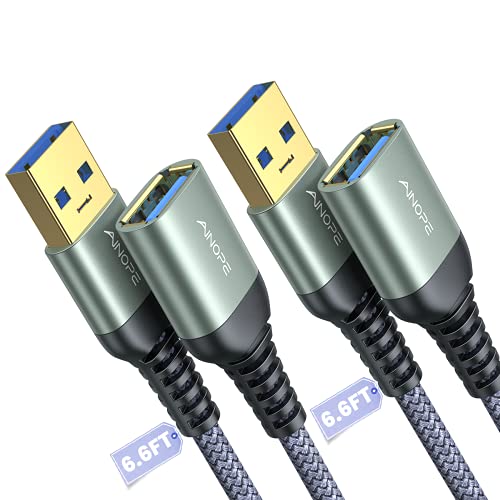
- Two 6.6-foot USB 3.0 cables
- Included sticky buckles for organization
- Reinforced braided design
Best For: Multi-device desks needing extra reach and cable control
Long-Range Performance
Cable Matters 10ft USB 3.0 Extension

- 10-foot USB-A extension length
- Up to 5Gbps transfer rate
- Shielded cable with durable strain relief
Best For: Long-reach storage, gaming, VR, and hub connections
Best Two-Pack Value
UGREEN 3-Foot USB 3.0 Extension Cables
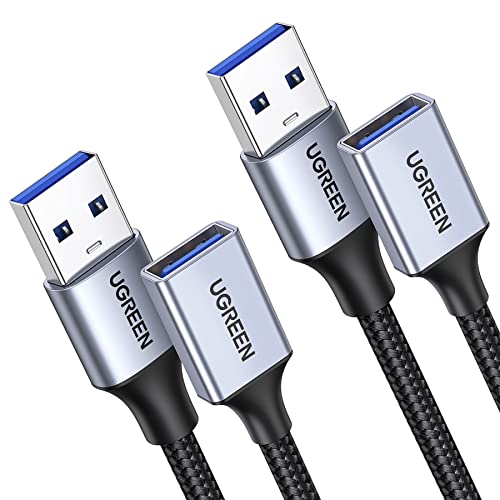
- Two 3-foot cables for multiple peripherals
- Up to 5 Gbps data transfer and 2A charging
- Braided build with aluminum alloy connectors
Best For: Multi-device desktop workstations and home offices
Simple Desktop Pick
3.3-Foot USB 3.0 Extension Cable

- Convenient 3.3-foot reach for desks and consoles
- Up to 5 Gbps data transfer
- Shielded cable with reinforced connectors
Best For: Single nearby desktop, office, or gaming peripheral
Most Durable Build
QianLink 3.3-Foot Braided USB Extender

- Nylon braid with reinforced joints and aluminum alloy case
- Up to 5 Gbps with backward compatibility
- Designed for frequent plugging and bending
Best For: High-use desktop peripherals and frequently repositioned devices
Best Desktop Stand Cable

- Raised pedestal makes the port easy to reach
- Up to 5Gbps USB 3.0 transfer speeds
- Supports charging and data synchronization
Best For: Accessible desktop connections for frequently used USB-A peripherals
Best Long-Run Pair
JSAUX 10-Foot USB 3.0 Extensions

- Two 10-foot cables provide generous reach
- Up to 5Gbps data transfer
- Braided design with an 18-month warranty
Best For: Large desks and remote USB peripherals
Best Budget Multi-Pack
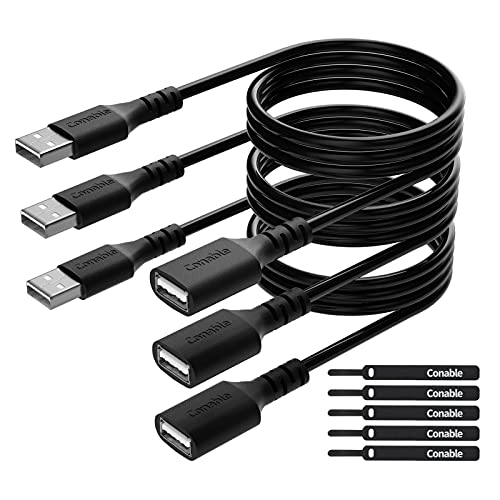
- Three cables cover multiple peripherals
- Includes five cable ties
- Plug-and-play charging and data transfer
Best For: Affordable connections for everyday USB 2.0 devices
Long-Reach Workhorse – 10ft USB 3.0 Extension Cable
For desktop setups that need extra reach, this 10-foot USB 3.0 cable is a practical choice among USB extension cables for desktop setups. Its male-to-female USB-A connection supports up to 5Gbps transfers and works with USB 3.0, 2.0, 1.1, and 1.0 peripherals.
Best For: Reaching peripherals behind desks, across work areas, or near TVs and gaming consoles.
Pros:
- Long 10-foot length reduces the need to bend behind a desk.
- Supports data transfer speeds up to 5Gbps and backward compatibility.
- Braided nylon jacket, reinforced joints, and aluminum alloy housing add durability.
- Designed for more than 10,000 bend tests.
Cons:
- The 10-foot length may leave excess cable on compact desks.
- USB-A connectivity may not suit setups built around newer USB-C ports.
This cable stands out when reach is the priority. The braided construction and broad peripheral compatibility make it useful for a flexible desktop or entertainment-area setup.
Desk-Ready Reliability – StarTech 5ft USB 3.0 Extension
This 5-foot StarTech cable offers a tidy middle ground for USB extension cables for desktop setups. It relocates a USB-A port away from the computer case while supporting up to 5Gbps transfers and backward compatibility with USB 2.0 devices.
Best For: Moving frequently used USB devices to a more accessible position on a PC or Mac desk.
Pros:
- 5-foot length is suited to everyday desktop use.
- Shielded Twisted Pair construction helps reduce electromagnetic interference.
- Supports SuperSpeed USB 3.0 transfers up to 5Gbps.
- Includes backward compatibility with USB 2.0 and a lifetime warranty.
Cons:
- Shorter than 10-foot alternatives for distant peripherals.
- Uses USB-A connectors rather than USB-C.
Choose this model for a straightforward, established desktop extension rather than maximum reach. Its shielding and 5-foot size fit common keyboard, storage, camera, and flash-drive placements.
Organized Two-Pack – AINOPE 6.6ft USB Extension 2-Pack
For a multi-device workspace, this two-pack adds flexibility to USB extension cables for desktop setups. Each 6.6-foot USB 3.0 male-to-female cable supports up to 5Gbps, and the included sticky buckles help manage unused length.
Best For: Desks with several peripherals that benefit from two extension cables and easier cable organization.
Pros:
- Two cables provide coverage for multiple USB peripherals.
- 6.6-foot length balances reach with manageable routing.
- Sticky buckles help shorten and organize excess cable.
- Nylon braiding, reinforced joints, and multi-layer shielding support durability.
Cons:
- USB-A male-to-female connections do not directly address USB-C-only devices.
- The two-pack may be unnecessary for a single-device setup.
This is a useful option when cable management and quantity matter as much as reach. Its compatibility list covers hubs, printers, storage, input devices, scanners, and other USB peripherals.
Long-Range Performance – Cable Matters 10ft USB 3.0 Extension
This 10-foot Cable Matters model is built for users who need substantial reach without giving up USB 3.0 performance. It supports up to 5Gbps and works with USB 3.0 and older USB 2.0 peripherals, making it a capable choice among USB extension cables for desktop setups.
Best For: Long-distance connections to storage drives, hubs, printers, gaming accessories, and VR headsets.
Pros:
- 10-foot length supports flexible placement around a desk or room.
- Up to 5Gbps transfer speeds with USB 2.0 and 1.x compatibility.
- Gold-plated connectors, copper conductors, and foil-and-braid shielding support signal quality.
- Molded strain relief and grip treads improve everyday handling.
Cons:
- The long cable can require extra routing on smaller desks.
- USB-A male-to-female design is not a direct USB-C solution.
This cable is a strong fit when you want long reach for demanding peripherals. Its listed support for VR headsets, hard drives, hubs, and other devices gives it broad desktop and gaming utility.
Best Two-Pack Value – UGREEN 3-Foot USB 3.0 Extension Cables
For desktop setups that need more than one conveniently placed USB port, the UGREEN two-pack is a practical choice among usb extension cables for desktop setups. Each 3-foot USB 3.0 cable supports data transfer speeds up to 5 Gbps and up to 2A charging, while the braided construction is designed for regular indoor use.
Best For: Multi-device desktop workstations, home offices, and setups that need two short extensions for peripherals such as keyboards, mice, webcams, printers, or hubs.
Pros:
- Includes two 3-foot male-to-female USB 3.0 extension cables.
- Supports data transfer up to 5 Gbps and charging up to 2A.
- Braided shielding and aluminum alloy connectors add durability and help reduce interference.
- Plug-and-play design works with many common USB peripherals.
Cons:
- The 3-foot length may not be enough for distant or floor-level devices.
- USB-A male-to-female connectors may not suit setups built around USB-C ports.
The main advantage here is flexibility: two cables let you extend separate peripherals or keep a spare available. Choose it when quantity, broad compatibility, and a reinforced braided build matter more than maximum reach.
Simple Desktop Pick – 3.3-Foot USB 3.0 Extension Cable
This single 3.3-foot USB 3.0 extender is a straightforward option for usb extension cables for desktop setups. Its length can bring a rear or inconvenient USB port within easier reach, and it supports up to 5 Gbps transfers for compatible devices such as flash drives, printers, keyboards, mice, and hard drives.
Best For: Users who need one compact extension cable for a desktop, office, gaming console, or nearby USB accessory.
Pros:
- 3.3-foot length is suited to desks, office environments, and gaming setups.
- Supports USB 3.0 transfer speeds up to 5 Gbps.
- Multi-layer shielding is designed to help maintain a stable, low-interference signal.
- Reinforced connectors and plug-and-play operation support everyday use.
Cons:
- Only one cable is included.
- The short length may not work for devices positioned far from the computer.
- It uses USB Type-A connectors rather than USB-C.
This cable keeps the decision simple for a single-port extension: it offers useful reach without adding much bulk. It is a sensible fit when your peripheral is nearby and reliable USB 3.0 performance is the priority.
Most Durable Build – QianLink 3.3-Foot Braided USB Extender
The QianLink combines a compact 3.3-foot reach with a nylon-braided exterior, making it a strong contender among usb extension cables for desktop setups that see frequent plugging and unplugging. It supports USB 3.0 transfer rates up to 5 Gbps and is backward compatible with USB 2.0, 1.1, and 1.0 devices.
Best For: Frequently used desktop peripherals, webcams, hubs, printers, and other devices where cable protection and repeated connector use are important.
Pros:
- Nylon-braided jacket, reinforced joints, and aluminum alloy case provide a durable build.
- Supports up to 5 Gbps transfers and backward compatibility with older USB standards.
- Designed to protect device USB sockets from frequent plugging and unplugging.
- Rated for more than 40,000 bend tests according to the supplied specifications.
Cons:
- The 3.3-foot version provides limited reach for widely separated equipment.
- Only one cable is included.
- USB-A-style extension compatibility may require an adapter for USB-C-only devices.
QianLink stands out for its emphasis on physical durability rather than extra length or a multi-pack. It is a good choice for a desk accessory that gets moved, disconnected, or repositioned regularly.
Best Desktop Stand Cable – 4.9-Foot USB 3.0 Extension
For desktop setups where rear-facing or under-desk ports are awkward to reach, this USB extension cable for desktop setups adds a front-facing USB 3.0 connection. Its integrated pedestal helps keep the female port positioned on the workspace, while the 4.9-foot length supports up to 5Gbps data transfer and backward compatibility with USB 2.0, 1.1, and 1.0 devices.
Best For: Desktop users who want a raised, accessible connection for flash drives, card readers, keyboards, mice, or Wi-Fi adapters.
Pros:
- Integrated stand keeps the USB port elevated and easier to access.
- USB 3.0 supports data transfer speeds up to 5Gbps.
- Supports charging and data synchronization with plug-and-play setup.
Cons:
- Only one cable is included.
- The 4.9-foot length may be limiting for widely separated devices.
- Designed for USB Type-A connections rather than newer USB-C ports.
This is a practical choice when accessibility and port protection matter more than maximum cable length. The desktop pedestal gives it a distinct advantage for frequently connected peripherals.
Best Long-Run Pair – JSAUX 10-Foot USB 3.0 Extensions
For larger desks, entertainment centers, or setups where devices sit well away from the computer, the JSAUX pair provides two 10-foot USB 3.0 extension cables. These USB extension cables for desktop setups support up to 5Gbps transfers, work with USB 2.0 and USB 1.1 devices, and use braided nylon construction with gold-plated connectors.
Best For: Users who need substantial reach for webcams, printers, hubs, hard drives, game consoles, or other USB peripherals.
Pros:
- Includes two long 10-foot cables for flexible placement.
- USB 3.0 supports transfer speeds up to 5Gbps.
- Nylon braiding, gold-plated connectors, and an 18-month warranty support everyday durability.
Cons:
- Long cables can create extra slack in compact desktop setups.
- Does not include a built-in stand or cable ties.
- Uses USB Type-A male-to-female connectors.
The two-cable package is especially useful when several devices need to be relocated at once. Choose it when reach and quantity are higher priorities than a compact cable footprint.
Best Budget Multi-Pack – Three 6-Foot USB 2.0 Cables
When you need several straightforward connections for a keyboard, mouse, printer, or flash drive, this three-pack offers three 6-foot USB 2.0 extension cables. They provide plug-and-play charging and data transmission at up to 480Mbps, with included cable ties for tidier desktop organization.
Best For: Budget-conscious desktop users connecting everyday USB 2.0 peripherals and organizing multiple cables.
Pros:
- Three cables offer useful coverage for multiple devices.
- Includes five cable ties to help manage excess cable.
- Pure copper conductors, shielding, and reinforced strain relief support regular use.
Cons:
- USB 2.0 is slower than USB 3.0, with speeds up to 480Mbps.
- Not the best choice for high-speed storage transfers.
- Does not include a desktop stand.
This pack makes sense for basic peripherals where convenience and quantity matter more than maximum throughput. The included ties are a useful extra for keeping a multi-device setup organized.
How We Picked the Best USB Extension Cables for Desktop Setups
We focused on USB-A male-to-female extension cables suited to common desktop accessories, including keyboards, mice, printers, webcams, game controllers, flash drives, hubs, and wireless adapters. Our comparison considered advertised transfer speed, cable length, connector design, durability features such as nylon braiding, pack value, and whether the design solves a specific desktop problem.
USB 3.0 and USB 3.2 Gen 1 cables typically advertise transfer rates up to 5Gbps under compatible conditions. Actual performance depends on the computer, connected device, hub, and cable quality. USB 2.0 models remain suitable for low-bandwidth peripherals and can be a cost-effective choice when high-speed data is not required.
Quick Comparison
| Best For | What to Look For |
|---|---|
| Everyday desktop accessories | 3- to 6-foot USB 3.0 cable |
| Hard-to-reach ports | 10-foot length, with careful cable routing |
| Multiple workstations | Two- or three-pack value |
| Frequent handling | Nylon braiding and reinforced connectors |
| Basic keyboard, mouse, or printer use | USB 2.0 can be sufficient |
| Wireless adapters or flash drives | USB 3.0 and a low-loss, well-built connection |
Key Buying Factors for USB Extension Cables for Desktop Setups
Speed and Compatibility
Choose a USB 3.0-rated cable when you regularly move files, connect a webcam, use a flash drive, or extend a USB hub. For keyboards, mice, and many printers, USB 2.0 is usually adequate. The extension cannot increase the speed beyond the slowest device or port in the chain.
Length and Signal Reliability
Measure the route from the computer to the accessory before buying. Shorter cables generally create less clutter and are easier to manage, while 10-foot models help with ports located under or behind a desk. Avoid unnecessary cable runs, tight bends, and chaining several extensions together.
Build Quality and Connector Design
Braided jackets can help resist everyday abrasion, but connector strain relief is equally important. A compact connector is useful behind a desktop, while a pedestal or stand-style design may make a frequently used USB port easier to access.
Pack Size and Intended Use
Multipacks are practical for dual-monitor desks, shared workspaces, or several peripherals. Before choosing one, confirm that all included cables have the length and USB speed you need; a lower-cost multipack is not always the best value if its specification limits your setup.
Who Should Buy Which USB Extension Cables for Desktop Setups?
- Choose a 3- to 5-foot USB 3.0 cable for a clean, close-range connection to a keyboard, mouse, webcam, or printer.
- Choose a 10-foot USB 3.0 cable when the computer is mounted under a desk or an accessory needs to be positioned farther away.
- Choose a braided multipack for multiple devices, shared desks, or frequent reconnecting.
- Choose a USB 2.0 multipack for basic input devices and printers when file-transfer speed is not important.
- Choose a pedestal-style option if you want to bring a hard-to-reach port onto the desktop for flash drives or wireless adapters.