Choosing among the best audio equalizers for podcasting can make spoken-word recordings sound clearer, more balanced, and easier to process. The right option depends on whether you need simple tone shaping, an all-in-one podcast console, or precise multiband control.
This roundup includes compact creator-focused mixers, USB podcast interfaces, and traditional graphic equalizers. Use the guide below to match channel count, connectivity, controls, and workflow to your recording setup.
Best 10 Audio Equalizers for Podcasting Picks for 2026
Best All-in-One Mixer
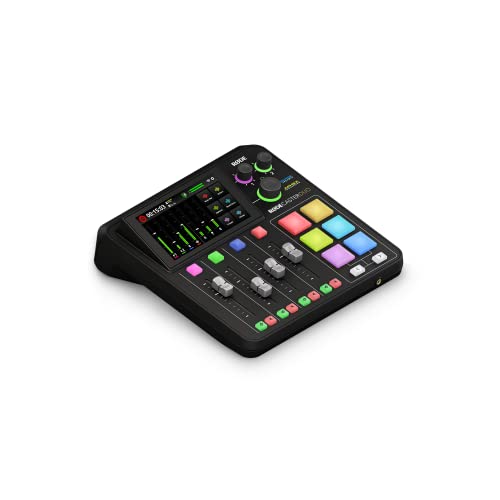
- Two combo inputs with 76 dB gain
- APHEX voice effects and SMART pads
- Touchscreen, faders, and USB connectivity
Best For: Podcasters and streamers wanting integrated production controls
Best for Two Presenters

- Two mic inputs and headphone outputs
- Auto Gain and four Enhance presets
- Bluetooth, phone, and camera connectivity
Best For: Two-person podcasts needing quick setup
Best for Multitrack Production

- Four XLR mic inputs and studio preamps
- APHEX processing and eight SMART pads
- Records standalone or to computer, microSD, or USB
Best For: Multi-person podcasts and live productions
Best Dedicated EQ

- Seven frequency bands from 60 Hz to 15 kHz
- ±12 dB adjustment with dual-channel processing
- 3.5mm input and headset-oriented output
Best For: Hands-on EQ adjustment in compact 3.5mm setups
Best Solo-Podcaster Interface

- Over 70dB of microphone gain
- Auto Gain and four Enhance presets
- Phone, camera, and stereo loopback connectivity
Best For: Solo podcasters who prioritize quick, clean voice recording
Best Rackmount EQ
15-Band Stereo Graphic Equalizer EQ-215
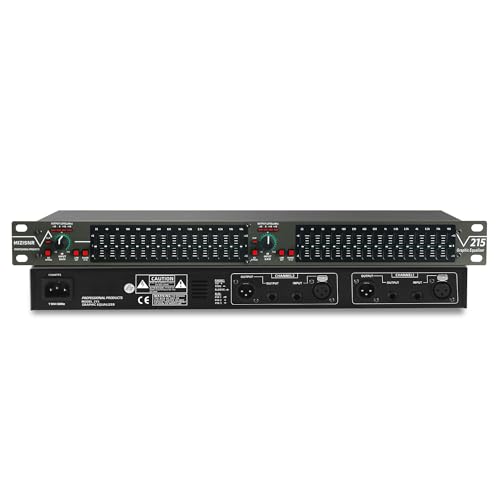
- Dual-channel 15-band graphic control
- Low-cut filter for rumble and hum
- XLR and 1/4-inch connectivity
Best For: Rack-based podcast studios needing detailed hardware EQ
Best Compact Stereo Preamp
Douk Audio T7 7-Band Equalizer

- Seven adjustable frequency bands
- XLR and RCA inputs and outputs
- Compact aluminum-alloy enclosure
Best For: Home setups needing simple stereo EQ and flexible connections
Flexible Digital Tuning

- 31-band tuning with spectrum monitoring
- Noise and echo reduction for clearer sound
- Bluetooth, USB, optical, and coaxial inputs
Best For: Podcasters wanting detailed EQ and broad connectivity
Rack-Mount Control
15-Band Dual-Channel Equalizer

- 15-band control per stereo channel
- Low-cut filter for unwanted low end
- Balanced XLR and 1/4-inch TRS connections
Best For: Rack-based studio and live podcasting systems
Visual EQ Monitoring
31-Band Digital Rack Equalizer

- Real-time 31-segment LED spectrum display
- Ten presets, bypass, and noise reduction
- Bluetooth 5.2, USB, XLR, and TRS support
Best For: Podcasters who want visual monitoring and rack integration
Best All-in-One Mixer – RØDECaster Duo
For creators comparing audio equalizers for podcasting, the RØDECaster Duo offers a broader production setup than a standalone EQ. It combines two Neutrik combo inputs, high-gain Revolution Preamps, faders, SMART pads, touchscreen control, and APHEX processing in one compact unit.
Best For: Podcasters and streamers who want integrated mixing, effects, and recording controls.
Pros:
- Two combo inputs with up to 76 dB of gain
- Includes APHEX effects such as Aural Exciter and Big Bottom
- Four faders, six SMART pads, and touchscreen control
- Supports microphone, instrument, headset, and USB workflows
Cons:
- More equipment than needed for users seeking only basic EQ adjustment
- Requires corded power
The RØDECaster Duo is a strong choice when podcast processing, routing, and hands-on control matter more than having a simple equalizer. Its two-input design suits smaller shows and solo production setups.
Best for Two Presenters – Focusrite Vocaster Two
The Focusrite Vocaster Two is a straightforward option for creators evaluating audio equalizers for podcasting alongside essential voice-processing tools. It provides two microphone inputs, two headphone outputs, Auto Gain, four Enhance presets, and convenient phone and camera connectivity.
Best For: Host-and-guest podcasts that need simple setup and independent monitoring.
Pros:
- Two microphone inputs and separate headphone outputs
- Over 70 dB of gain for a wide range of microphones
- Auto Gain and four voice Enhance presets simplify level setting
- Bluetooth or TRRS phone connectivity and camera output
Cons:
- Limited to two channels
- Enhance presets are less configurable than a multiband equalizer
Vocaster Two prioritizes speed and accessibility over extensive manual tone shaping. It is a practical fit for conversational shows where automatic gain, voice presets, and two-person monitoring are the main priorities.
Best for Multitrack Production – RØDECaster Pro II
For advanced creators comparing audio equalizers for podcasting, the RØDECaster Pro II is an all-in-one production console with four XLR mic inputs, APHEX voice processing, effects, sound pads, and multitrack recording. It can record to a computer, microSD card, or USB drive, and it can operate without a computer.
Best For: Multi-person podcasts, live streams, and producers who need extensive routing and show control.
Pros:
- Four studio preamps for multiple microphones
- APHEX processing provides one-tap voice enhancement
- Eight customizable SMART pads trigger music and effects
- Supports multitrack recording and standalone operation
Cons:
- Larger and more elaborate than a basic equalizer setup
- Supplied package does not include microphones
The Pro II is better suited to expandable productions than simple tonal adjustment. Its input count, standalone recording, and show-control features make it particularly capable for recurring shows with several participants or live elements.
Best Dedicated EQ – 7 Band Sound Equalizer
This compact 7 Band Sound Equalizer is the most direct match for shoppers seeking audio equalizers for podcasting. It provides dual-channel processing, seven adjustable frequency bands from 60 Hz to 15 kHz, up to ±12 dB of control, and 3.5mm connections for recording, streaming, and headset use.
Best For: Users who want hands-on frequency adjustment in a compact analog-style desktop or mobile setup.
Pros:
- Seven bands cover bass, midrange, and treble adjustment
- Provides ±12 dB control across 60 Hz, 150 Hz, 400 Hz, 1 kHz, 3 kHz, 6.5 kHz, and 15 kHz
- 3.5mm input supports a 4-pin plug and headset microphone output
- Aluminum-alloy construction and dual-channel design
Cons:
- Requires a DC 5V or 12V power supply
- 3.5mm connectivity may be less suitable for professional XLR microphone chains
- Does not provide the integrated recording and routing features of a production console
This unit makes sense when manual EQ is the priority and the rest of the recording chain is already in place. Its compact 3.5mm format is convenient, but buyers should confirm power, connector, and headset compatibility before purchasing.
Best Solo-Podcaster Interface – Focusrite Vocaster One
For creators comparing audio equalizers for podcasting, the Focusrite Vocaster One is a streamlined USB interface focused on clean microphone capture and quick voice setup rather than hands-on frequency shaping. Its Auto Gain, voice Enhance presets, and broad software compatibility make it practical for solo recording.
Best For: Solo podcasters who want fast, broadcast-quality microphone recording with minimal setup.
Pros:
- Over 70dB of gain supports a wide range of microphones without a booster.
- Auto Gain sets recording levels quickly, while Enhance offers four voice presets.
- Includes mute, phone connectivity, camera connectivity, and stereo loopback features.
- Works with Mac, Windows, and iOS and supports all audio recording software.
Cons:
- Provides one channel, so it is aimed primarily at solo creators.
- Its listed maximum sample rate is 48 kHz and it does not provide dedicated graphic EQ bands.
The Vocaster One is a strong choice when ease of use and vocal clarity matter more than manual equalizer control. It also adds useful routing options for phone conversations, camera work, and computer audio.
Best Rackmount EQ – 15-Band Stereo Graphic Equalizer EQ-215
Among audio equalizers for podcasting, this 15-band stereo unit offers the most direct hands-on control for shaping a complete audio chain. Its adjustable bands, low-cut filter, and balanced or unbalanced connections suit studio, live, and installed setups.
Best For: Podcasters and audio operators who need detailed, hardware-based tonal control in a rack setup.
Pros:
- Dual-channel, 15-band design provides extensive frequency adjustment.
- Each band offers an adjustable range of up to ±12dB.
- Low-cut switch helps attenuate wind noise, floor rumble, and electrical hum.
- XLR balanced and 1/4-inch TRS unbalanced inputs and outputs support varied systems.
Cons:
- Its 1U rack-mount format is less convenient for compact desktop podcast rigs.
- Manual EQ operation requires more setup and technical familiarity than software presets.
The EQ-215 is best when you want visible, independent control over two stereo channels and a practical way to reduce low-frequency problems. It is more equipment-intensive than a USB interface, but better suited to fixed or expandable audio systems.
Best Compact Stereo Preamp – Douk Audio T7 7-Band Equalizer
The Douk Audio T7 is a compact option for buyers exploring audio equalizers for podcasting alongside home stereo or computer-speaker systems. Its seven fixed frequency bands provide straightforward tonal adjustment, while simultaneous XLR and RCA output keeps integration flexible.
Best For: Home-based creators who need compact stereo EQ and preamp connectivity rather than a microphone interface.
Pros:
- Seven bands from 64Hz to 8kHz allow targeted low, mid, and high-frequency adjustments.
- Offers ±6dB control per band for practical sound tailoring.
- Provides both XLR and RCA inputs and outputs simultaneously.
- Claims a signal-to-noise ratio above 104dB and distortion as low as 0.003%.
Cons:
- It has no volume control knob and outputs at the rated level.
- It is designed for home stereo, amplifier, and computer-speaker systems, not as a dedicated podcast USB interface.
The T7 makes sense when you already have compatible XLR or RCA equipment and want compact, uncomplicated EQ. For direct microphone recording, a dedicated interface such as the Vocaster One may be a more suitable starting point.
Flexible Digital Tuning – 31-Band Bluetooth Equalizer
If you need audio equalizers for podcasting that can also handle music, movies, and live setups, this 31-band graphic equalizer offers detailed control across bass, mids, and treble. Its spectrum analyzer, customizable modes, and noise- and echo-reduction features make it practical for refining vocal clarity.
Best For: Podcasters and home or studio users who want detailed digital EQ control with Bluetooth, USB, optical, and coaxial connectivity.
Pros:
- 31 independently adjustable bands with real-time frequency monitoring.
- Noise and echo reduction can help refine spoken-word audio.
- Bluetooth, USB lossless playback, optical, and coaxial connectivity support flexible setups.
- Auto-save presets and 12 customizable modes simplify repeat sessions.
Cons:
- The extensive controls may be more than a simple podcasting setup requires.
- Its broad home, DJ, and live-use feature set may require additional equipment for microphone recording.
This is the most versatile choice of the three for users who want granular EQ adjustment and multiple connection options. It is especially appealing if your podcasting setup also serves as a wider home or studio audio system.
Rack-Mount Control – 15-Band Dual-Channel Equalizer
For audio equalizers for podcasting in a more traditional rack-based system, this dual-channel model provides 15-band control per channel and a selectable low-cut filter. Its balanced XLR and 1/4-inch TRS connections suit professional signal chains where reliable integration matters.
Best For: Studio, installation, or live podcasting systems built around rack equipment and balanced audio connections.
Pros:
- Dedicated 15-band adjustment on each stereo channel.
- Low-cut control helps reduce unwanted low-frequency noise.
- XLR balanced and 1/4-inch TRS connections support flexible integration.
- Rack-mount 1U design includes bypass operation and a dedicated bass output.
Cons:
- It offers fewer EQ bands than the 31-band models in this roundup.
- It does not list Bluetooth or USB playback.
- The rack-mount form factor is less convenient for compact or portable setups.
This equalizer is a focused option for users who value physical controls, balanced connectivity, and rack installation over wireless features. The low-cut filter is useful when managing rumble or excess low end in a spoken-word signal chain.
Visual EQ Monitoring – 31-Band Digital Rack Equalizer
This 31-band digital unit is a practical pick among audio equalizers for podcasting when visual monitoring is important. Its real-time LED spectrum display, preset storage, bypass switch, and noise-reduction function help make adjustments easier during studio, DJ, KTV, or home-theater use.
Best For: Users who want rack-mounted EQ with a visual spectrum display, preset effects, and Bluetooth or USB playback.
Pros:
- 31-segment LED spectrum indication shows frequency activity in real time.
- Independent high, mid, and bass adjustment with intelligent noise reduction.
- Ten preset effects and EQ bypass support quick changes and troubleshooting.
- Bluetooth 5.2, USB playback, XLR, and 1/4-inch TRS connections add flexibility.
Cons:
- The notes do not specify a dedicated microphone input or podcast-focused controls.
- Its rack-mount design may be less suitable for small mobile recording kits.
- The feature-rich display and multiple configurations may take time to learn.
Choose this model if you prefer to see frequency changes while tuning and want both saved presets and broad connectivity. It balances detailed adjustment with straightforward bypass and visual-debugging features.
How We Picked These Audio Equalizers for Podcasting
We selected products across the main categories podcast creators are likely to consider: integrated production studios, USB audio interfaces, compact analog-style equalizers, and rack-mount graphic EQs. We focused on practical factors including microphone connectivity, computer integration, channel flexibility, adjustment range, monitoring options, noise control, and suitability for spoken voice.
Because these products serve different workflows, an all-in-one mixer should not be judged by exactly the same criteria as a dedicated 15- or 31-band equalizer. The best choice is the one that adds the control you actually need without making recording unnecessarily complicated.
Quick Comparison
| Type | Best For | Main Advantage | Potential Limitation |
|---|---|---|---|
| All-in-one production studio | Multi-person podcasts and live production | Mixing, routing, effects, and recording in one device | Higher cost and a steeper learning curve |
| USB podcast interface | Simple computer-based recording | Fast setup with dedicated voice-focused controls | Less advanced routing than a full production console |
| 7-band equalizer | Basic tone correction | Simple, targeted frequency adjustment | Fewer shaping options |
| 15- or 31-band graphic EQ | Detailed room and system tuning | Fine control across the frequency spectrum | Usually requires separate microphones, interface, or mixer |
Key Buying Factors for Audio Equalizers for Podcasting
Microphone and Computer Compatibility
Check whether the unit accepts your microphone type. XLR inputs are important for most studio microphones, while USB connectivity simplifies direct computer recording. If you use condenser microphones, confirm that the device supplies phantom power.
Voice-Focused Control
Podcast speech generally benefits from controlled low frequencies, reduced muddiness, and enough presence for intelligibility. A small number of well-chosen controls may be faster for beginners, while a 15- or 31-band design offers more precise correction when room reflections or resonances are a problem.
Channels and Routing
Solo podcasters may only need one or two microphone inputs. For interviews, co-hosts, and remote contributors, consider multiple inputs, independent monitoring, mix-minus support, and flexible routing. Integrated production consoles can also combine EQ with compression, effects, recording, and streaming controls.
Noise, Monitoring, and Headroom
Look for clean gain, low self-noise, headphone monitoring, and enough output level for your headphones or speakers. Noise-reduction features can help, but they should complement good microphone technique and room treatment rather than replace them.
Installation and Workflow
Rack-mount graphic EQs are best suited to fixed studio or home-audio systems. Compact interfaces and production studios are easier to move and usually integrate more directly with podcast software. Before buying, verify the required cables, available desk space, and whether controls can be adjusted quickly during a live session.
Who Should Buy Which Audio Equalizers for Podcasting?
- Choose an all-in-one production studio if you want hardware control over several microphones, playback, effects, recording, and live streaming.
- Choose a compact USB podcast interface if you want a simpler setup for one or two speakers and primarily record through a computer.
- Choose a 7-band equalizer if you need affordable, straightforward tone adjustment without extensive routing.
- Choose a 15-band EQ if you want more detailed shaping for a home studio, DJ system, or voice chain.
- Choose a 31-band digital equalizer if you are tuning a more complex system or need highly specific frequency control, spectrum analysis, and broader system management.
For most new podcasters, connectivity and ease of use matter more than the highest band count. Start with a device that fits your microphone and recording workflow, then prioritize acoustic treatment and consistent microphone technique for the biggest overall improvement.