Choosing the right EQ can make recorded vocals clearer, more balanced, and easier to place in a mix. The options in this roundup range from dedicated equalizers and channel strips to interfaces and digital processors with vocal-focused controls.
We compare their features, signal-path roles, connectivity, and practical strengths so you can choose an EQ solution that matches your microphone, recording setup, room, and workflow.
Best 10 Audio Equalizers for Recording Vocals Picks for 2026
Programmable Precision

- 10-band graphic and parametric EQ
- Independent stereo channel curves
- Presets, MIDI, gate, limiter, and tuner
Best For: Programmable vocal and instrument EQ in a pedalboard setup
All-in-One Vocal Shaping

- Tube mic and instrument preamp
- Three-band EQ with variable-Q mids
- Built-in VCA compressor
Best For: Rack-based vocal recording and front-end processing
Recording Interface Foundation
Focusrite Scarlett Solo 3rd Gen
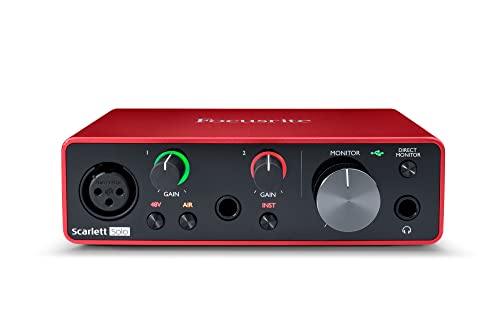
- XLR mic preamp with Air mode
- 24-bit/192 kHz recording
- Includes recording and production software
Best For: Home vocal recording with software-based EQ
Rack-Mount Frequency Control

- 15 bands per channel with ±12 dB range
- Low-cut control for unwanted low end
- XLR and 1/4-inch TRS connectivity
Best For: Stereo rack systems and live or studio vocal signal chains
Professional Vocal Enhancer

- Bass, treble, and low-contour controls
- Balanced XLR and TRS connectivity
- Low-latency rack-mount processing
Best For: Studio racks, live vocals, and karaoke systems needing broad tonal enhancement
Precision Graphic EQ

- 31-band independent frequency tuning
- Real-time spectrum analyzer
- 12 modes with auto-save presets
Best For: Recording studios and vocalists needing detailed, repeatable EQ adjustments
Karaoke Vocal Processor

- 13-band EQ with vocal enhancement
- Echo, reverb, key shift, and anti-feedback DSP
- Multiple mic, source, and XLR outputs
Best For: Karaoke, livestreaming, and live vocal systems needing effects and feedback control
Visual Control Pick

- 31-band EQ with real-time LED spectrum display
- 10 presets, bypass, and intelligent noise reduction
- Bluetooth, USB, XLR, and TRS connectivity
Best For: Studios and live audio setups needing visual EQ control
Vocal Effects Pick

- 24-bit DSP processing with 99 preset programs
- 199 effects including reverb, delay, and chorus
- Dual-channel processing and automatic noise reduction
Best For: Vocal setups requiring effects and repeatable presets
Flexible Rack Pick

- 31-band DSP EQ with spectrum analyzer display
- 10 presets, noise reduction, and fast bypass switching
- Bluetooth, USB, XLR, TRS, and adjustable subwoofer output
Best For: Versatile studio and live systems with rack integration
Programmable Precision – Source Audio EQ2
For musicians seeking audio equalizers for recording vocals, the Source Audio EQ2 offers detailed digital shaping across the full 20 Hz–20 kHz spectrum. Its programmable presets, stereo signal path, and adjustable graphic or parametric bands make it especially useful when repeatable vocal processing is important.
Best For: Musicians and vocalists who need programmable, stereo EQ control in a pedalboard-friendly format.
Pros:
- Ten fully adjustable bands with up to ±18 dB of boost or cut.
- True stereo operation with independent EQ curves for left and right channels.
- Presets, MIDI support, noise gate, limiter, adjustable Q, and built-in tuner.
Cons:
- Its pedal-style design may be less convenient for rack-based studio workflows.
- Advanced editing relies on the free Neuro editor for deeper tools.
The EQ2 is a flexible choice when hands-on control and recallable settings matter. It is best suited to users comfortable integrating a digital pedal into their recording or performance setup.
All-in-One Vocal Shaping – PreSonus StudioChannel
The PreSonus StudioChannel combines a tube preamp, compressor, and three-band EQ in one rack unit, making it a practical option among audio equalizers for recording vocals. Its variable-Q mid band and selectable high- and low-frequency shelving or peak filters allow focused tonal shaping before the signal reaches your recording system.
Best For: Project and professional studios that want vocal preamplification, compression, and EQ in a single rack-mounted channel strip.
Pros:
- High-voltage Class A 12AX7 tube preamplifier provides gain and tube-drive controls.
- Three-band EQ includes a variable-Q parametric mid band.
- Built-in VCA compressor offers auto attack/release and soft- or hard-knee options.
- Supports mic, instrument, and line inputs in a rugged 1U chassis.
Cons:
- At 10.5 pounds, it is less portable than compact recording hardware.
- Its broader channel-strip feature set may be more than needed for EQ-only applications.
For vocal recording, the StudioChannel can streamline the front end by handling gain, dynamics, and tonal balance together. It is a strong fit when you want hardware processing rather than a standalone equalizer.
Recording Interface Foundation – Focusrite Scarlett Solo 3rd Gen
The Focusrite Scarlett Solo is not a dedicated equalizer, but it provides the clean recording path needed to use software audio equalizers for recording vocals. Its XLR mic preamp, Air mode, 24-bit/192 kHz conversion, and included recording software make it a straightforward starting point for vocal production.
Best For: Home-recording users who want to capture vocals cleanly and shape them with EQ inside compatible recording software.
Pros:
- One XLR mic preamp with a 56 dB gain range and switchable Air mode.
- Records at up to 24-bit/192 kHz through USB-C connectivity.
- Gain Halos help monitor input levels and avoid unwanted clipping.
- Includes software such as Pro Tools Intro+, Ableton Live Lite, and Cubase LE.
Cons:
- It does not provide onboard hardware EQ controls.
- Only one XLR mic input is available.
The Scarlett Solo makes sense when your vocal EQ will happen in a DAW rather than through external hardware. Its compact interface design and included software keep the recording setup simple while leaving tonal shaping to plugins.
Rack-Mount Frequency Control – EQX-215S 15-Band Stereo EQ
The EQX-215S is a dual-channel, 15-band graphic equalizer designed for detailed system-wide tonal adjustment. For users comparing audio equalizers for recording vocals, its low-cut control, balanced XLR connections, and rack-mount format can help integrate vocal processing into a larger studio or live-sound chain.
Best For: Rack-based studio, live, and home-audio systems requiring independent stereo graphic EQ and low-frequency control.
Pros:
- Provides 15 adjustable bands per channel with ±12 dB control.
- Dual-channel design supports stereo signal shaping.
- Low-cut control helps reduce unwanted low-end noise.
- Offers XLR balanced and 1/4-inch TRS connections plus a dedicated bass output.
Cons:
- Its graphic EQ format provides less focused parametric control than a variable-Q channel strip.
- The 1U rack-mount design is less suitable for compact, portable vocal rigs.
The EQX-215S is a practical choice when you need broad, visible control over multiple frequency bands and stereo routing. It is most appropriate after the microphone preamp or interface in a rack-oriented signal chain.
Professional Vocal Enhancer – 882I Sonic Maximizer
For recording vocals, the 882I is best viewed as a two-channel enhancement processor rather than a traditional multi-band equalizer. Its independent bass and treble controls, low-contour adjustment, and BBE processing can help add vocal clarity and low-end definition while keeping distortion low.
Best For: Studio racks, live vocal systems, karaoke setups, and users who want broad bass-and-treble enhancement with balanced connections.
Pros:
- Independent bass, treble, and low-contour controls for practical tonal shaping.
- Balanced XLR and 1/4-inch TRS inputs and outputs support stereo or dual-mono operation.
- Low-latency processing, up to +23dBu output, and stated THD below 0.025% in process mode.
- Rugged 19-inch rack-mount design with 10Hz–50kHz frequency response.
Cons:
- Offers broad bass and treble adjustment rather than detailed, 31-band vocal sculpting.
- Its rack-mount chassis is less convenient for portable or desktop-only setups.
The 882I makes sense when you need clean, hardware-based enhancement across a vocal signal chain. Choose it for clarity, harmonic richness, and system integration rather than precise frequency-by-frequency correction.
Precision Graphic EQ – 31-Band Stereo Equalizer
This 31-band graphic equalizer is the most adjustment-focused choice for audio equalizers for recording vocals. Its independent band tuning, real-time spectrum monitoring, customizable modes, and noise-and-echo reduction features give you more control over vocal warmth, midrange clarity, and treble balance.
Best For: Recording studios, home audio systems, live setups, and vocalists or podcasters who want detailed frequency shaping.
Pros:
- 31-band adjustment supports more precise vocal EQ than broad tone controls.
- Real-time spectrum analyzer helps visualize frequency changes while tuning.
- Offers 12 customizable modes with auto-save presets for quick setup changes.
- Supports optical, coaxial, USB, and other system connections for flexible integration.
Cons:
- The feature-rich interface may require more setup than a simple analog equalizer.
- The supplied notes do not specify detailed input/output connector counts or exact frequency bands.
For vocal recording, the 31-band layout provides the finest control of these three products. It is a strong fit when you want to make targeted tonal adjustments and save different EQ curves for recording, performance, or playback.
Karaoke Vocal Processor – DSP-11 Mixer Equalizer
The DSP-11 combines a 13-band EQ with vocal effects and feedback control, making it a practical option for audio equalizers for recording vocals when microphone processing is part of the setup. One-touch vocal enhancement, echo, reverb, key shifting, and feedback suppression are designed for singing, hosting, and live use.
Best For: Karaoke systems, vocal performances, livestreaming, events, and home or professional setups that need microphone effects alongside EQ.
Pros:
- 13-band EQ provides useful vocal tone adjustment without requiring a separate equalizer.
- DSP processing includes vocal enhancement, echo, reverb, key shifting, and feedback suppression.
- Two microphone inputs and four XLR outputs support flexible system configurations.
- Bluetooth, USB, optical, coaxial, AUX, and RCA connections accommodate multiple sources.
Cons:
- Its feature set is geared toward karaoke and live vocal processing rather than purely studio EQ.
- With 13 bands, it offers less detailed frequency control than the 31-band equalizer.
- The supplied notes do not identify dedicated recording-software integration.
The DSP-11 is the most versatile choice when vocal EQ must work alongside effects, source switching, and anti-feedback tools. It is particularly useful for performance-oriented chains, while studio users seeking surgical EQ may prefer a higher-band-count unit.
Visual Control Pick – 31-Band Digital Equalizer
For shoppers comparing audio equalizers for recording vocals, this rack-mount digital model offers detailed 31-band adjustment, real-time spectrum feedback, and intelligent noise reduction. Its presets and bypass switch can also simplify repeat setups and quick troubleshooting.
Best For: Studios, live applications, DJs, KTV venues, and home theater systems needing visual EQ control and flexible connectivity.
Pros:
- 31-band adjustment with real-time, four-color LED spectrum indication.
- Includes 10 preset modes, independent high/mid/bass adjustment, and EQ bypass.
- Supports Bluetooth 5.2, USB playback, XLR balanced, and 1/4-inch TRS connections.
- Provides an independently adjustable bass output and standard rack-mount installation.
Cons:
- The extensive controls may be more than needed for simple vocal setups.
- The supplied notes do not specify vocal-focused presets or microphone inputs.
This is a versatile choice when you want to watch frequency changes while shaping a vocal signal, though you will need compatible upstream and downstream audio equipment.
Vocal Effects Pick – DSP Multi-Effects Processor
If your search for audio equalizers for recording vocals includes ambience and effects, this DSP processor adds reverb, delay, chorus, and noise reduction alongside its equalizer-oriented controls. Its preset-based design is suited to setups that need repeatable vocal sounds for recording or performance.
Best For: Vocalists, studios, live performers, DJs, karaoke systems, and users who want multiple effects in one rack unit.
Pros:
- Uses 24-bit signal processing and a DSP chip for studio-oriented processing.
- Offers 99 preset programs and access to 199 sound effects.
- Dual-channel processing can handle two sources or combined effects.
- Automatic noise reduction targets hiss, hum, and ambient noise.
Cons:
- It is a multi-effects processor rather than a dedicated 31-band graphic equalizer.
- The supplied notes do not list specific input/output connector types.
Choose this model when vocal character and effects are as important as basic tonal shaping. Its rack-mount format and large preset library can reduce the need for several separate effect units.
Flexible Rack Pick – 31-Band Graphic Equalizer
For audio equalizers for recording vocals, this 1U rack-mount graphic EQ combines precise 31-band adjustment with a live spectrum display and noise reduction. Its presets, bypass control, and broad I/O make it practical for studios that also support live, DJ, or home audio systems.
Best For: Studio, live-stage, DJ, KTV, and home audio users who need detailed EQ, flexible connections, and adjustable low-end output.
Pros:
- Provides 31-band DSP equalization with real-time four-color LED monitoring.
- Stores up to 10 custom presets and includes independent high/mid/low control.
- Offers Bluetooth 5.2, USB lossless playback, XLR, and 1/4-inch TRS I/O.
- Dedicated subwoofer output has an adjustable 50Hz–250Hz frequency range.
Cons:
- The dedicated subwoofer output may be unnecessary in a vocal-only chain.
- The supplied notes do not identify microphone preamp functionality.
This model stands out for system flexibility: it can provide detailed vocal tonal shaping while also accommodating broader playback and sound-reinforcement duties. Confirm that its line-level connections match your recording interface or mixer.
How We Picked the Best Audio Equalizers for Recording Vocals
We evaluated these products by looking at the type of EQ they provide, how they fit into a vocal recording chain, available connections, control flexibility, and suitability for home, project, karaoke, DJ, and studio environments. We also considered whether each unit is designed for precise corrective work, tonal shaping, vocal enhancement, or broader system processing.
A dedicated EQ is not automatically the best choice for every singer. Some users will benefit more from a channel strip with preamp and compression, while others need an audio interface that includes reliable microphone conversion and software-based EQ.
Quick Comparison
| Best For | Look For | Typical Product Type |
|---|---|---|
| Detailed studio shaping | Parametric control, low noise, accurate metering | Programmable EQ or channel strip |
| Simple live or rack-system control | Multiple bands, clear bypass, balanced I/O | Graphic equalizer |
| Recording beginners | Mic preamp, USB connectivity, software support | Audio interface |
| Vocal performance and karaoke | DSP effects, anti-feedback, reverb, delay | Vocal processor or mixer |
Key Buying Factors for Audio Equalizers for Recording Vocals
EQ Type and Control
Parametric EQs provide adjustable frequency, gain, and bandwidth, making them useful for removing resonances and shaping a vocal precisely. Graphic EQs are faster to understand and useful for broad tonal changes, but their fixed bands offer less surgical control. Digital units may add presets, spectrum displays, and recallable settings.
Signal Chain and Connectivity
Confirm whether the unit belongs before or after your microphone preamp, and check for XLR, TRS, RCA, USB, or other required connections. A channel strip can combine preamp, EQ, and dynamics, while an interface may handle microphone input and conversion but rely on plug-ins for detailed processing.
Noise, Headroom, and Gain Staging
Vocals expose hiss, hum, and clipping quickly. Look for clean preamps, sensible input and output levels, balanced connections where possible, and enough headroom for strong singers. Avoid boosting several frequency bands aggressively, since large boosts can increase noise and reduce available headroom.
Features That Match the Use Case
For studio recording, prioritize precision, low noise, bypass controls, and repeatable settings. For live vocals, feedback control, easy access, rugged controls, and suitable outputs may matter more. Reverb, delay, exciters, and enhancers can add polish, but they should not replace clean microphone technique and balanced EQ.
Who Should Buy Which Audio Equalizers for Recording Vocals?
Choose a programmable or parametric unit if you already own a quality interface and want detailed vocal shaping. Choose a channel strip if you want microphone gain and analog-style processing in one device. A USB interface is the most practical starting point for beginners who need to record directly into a computer.
Graphic equalizers are best for users managing a rack, PA, home audio system, or live vocal setup and who prefer immediate visual control. Digital karaoke mixers and multi-effects processors suit performance-focused buyers who need vocal effects, anti-feedback tools, or multiple presets. Before buying, verify compatibility with your microphone type, interface, mixer, rack space, and recording software.