Sending one video source to multiple displays, recorders, monitors, or capture devices requires more than a basic passive splitter. The right distribution amplifier preserves signal quality while matching your studio’s connector type, resolution, and routing needs.
This roundup compares 10 options spanning SDI, HDMI, BNC, composite RCA, and antenna-style distribution. Use the buying guide below to narrow the choices by workflow, compatibility, and output count.
Best 10 Video Distribution Amplifiers for Home Studios Picks for 2026
Professional SDI Hub
Blackmagic Mini Converter SDI Distribution

- Eight re-clocked SDI outputs
- Supports SD, HD, and 3G-SDI
- Handles embedded audio and ancillary data
Best For: SDI-based home studios and broadcast-style setups
Analog CCTV Splitter
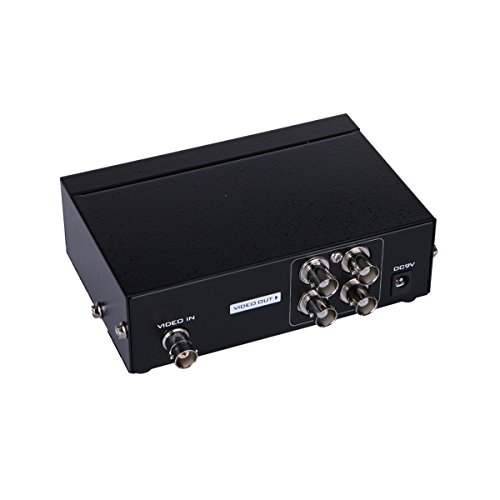
- One BNC input and four outputs
- Supports PAL, NTSC, and SECAM
- Plug-and-play metal enclosure
Best For: Analog CCTV and BNC monitoring systems
4K HDMI Multiview Hub
KanexPro 1x8 4K HDMI Distribution Amplifier

- Sends one HDMI source to eight displays
- Supports 4K UHD and 1080p
- HDCP 2.2 and advanced audio support
Best For: Multi-display 4K HDMI studio and media setups
RCA Audio-Video Duplicator
DTECH Powered 8-Way RCA Splitter

- One 3-RCA input to eight outputs
- Amplified analog video and audio signal
- Includes 9V adapter and metal housing
Best For: Legacy composite video, audio, and dubbing setups
Best SDI Long-Run Pick
SDI 1×4 Distribution Amplifier

- Automatic HD/SD/3G-SDI input detection
- Reclocked outputs for longer runs
- Four outputs with wall-mounting bracket
Best For: SDI home studios with extended cable runs
Best RCA Studio Duplicator

- One RCA A/V input to four outputs
- Powered amplification for longer connections
- Compact metal housing with color-coded ports
Best For: Analog RCA video and stereo-audio setups
Best High-Output Analog Pick

- Distributes one BNC source to eight displays
- Powered buffering supports stable multi-screen feeds
- Metal housing suits continuous operation
Best For: Analog BNC surveillance and monitoring systems
Simple RCA Distribution
MT-VIKI 4-Way Composite Splitter
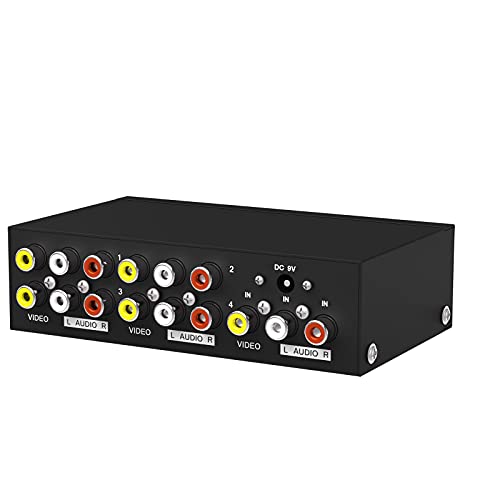
- Mirrors one RCA audio/video input to four outputs
- Plug-and-play design with no software
- Compatible with RCA-equipped TVs and DVRs
Best For: Basic composite video and stereo RCA distribution
Multi-Display Antenna Distribution
Reliable LSA48 8-Port Amplifier

- Distributes one antenna or cable line to eight devices
- Offers a stated +4 dB boost per port
- Compact design includes power supply and terminators
Best For: OTA antenna or standard cable distribution to multiple TVs
Adjustable RCA Audio Routing
5-Way Stereo Distribution Amplifier

- Splits one stereo RCA input into five outputs
- Adds independent volume control per output
- Provides a stated +6 dB gain boost
Best For: Multi-output RCA audio setups needing separate level control
Professional SDI Hub – Blackmagic Mini Converter SDI Distribution
For home studios built around SDI equipment, this Blackmagic Design unit is a capable choice among video distribution amplifiers for home studios. It accepts SD, HD, and 3G-SDI signals and provides eight re-clocked outputs for sending one source to multiple devices.
Best For: Home studios using SDI cameras, monitors, recorders, or other broadcast-oriented gear.
Pros:
- Supports switchable SD, HD, and 3G-SDI formats.
- Provides eight re-clocked SDI outputs.
- Supports ASI, ancillary data, and embedded audio.
- Includes redundant SDI input capability for critical workflows.
Cons:
- Designed for SDI rather than HDMI, composite, or RCA connections.
- Requires a 12-volt power supply.
Its automatic format switching and re-clocking make it a strong fit when several SDI devices need a stable shared feed. Choose it only if your studio workflow uses compatible SDI connections.
Analog CCTV Splitter – 4-Port BNC Video Splitter Box
This AuviPal unit is a straightforward option among video distribution amplifiers for home studios that use analog BNC video. It splits one CVBS input to four outputs and supports up to 1080p at 60Hz for compatible analog monitoring systems.
Best For: Analog CCTV, surveillance, and small monitoring systems using BNC-connected displays.
Pros:
- Splits one BNC input to four outputs.
- Supports PAL, NTSC, and SECAM analog formats.
- Plug-and-play setup with included power adapter.
- Durable metal housing supports continuous operation.
Cons:
- Not compatible with SDI or digital signals.
- Requires cameras to be set to CVBS mode.
This is a practical, compact choice for distributing analog composite video without configuration. Confirm that every connected source and display uses compatible CVBS/BNC signaling before buying.
4K HDMI Multiview Hub – KanexPro 1×8 4K HDMI Distribution Amplifier
For HDMI-based production or entertainment setups, this KanexPro model distributes one 4K HDMI source to as many as eight displays. It is one of the more suitable video distribution amplifiers for home studios that need modern HDMI compatibility alongside high-quality audio support.
Best For: Home studios, presentation spaces, and media systems feeding multiple 4K HDMI displays.
Pros:
- Distributes one HDMI source to up to eight displays.
- Supports 4K UHD and Full HD 1080p signals.
- HDCP 2.2 compliant for compatible protected content.
- Supports Dolby Digital, DTS-HD, and Dolby TrueHD audio.
Cons:
- Limited to HDMI-connected equipment.
- Does not provide SDI, BNC, or RCA connectivity.
Its eight outputs and 4K support make it useful when one HDMI feed must reach many screens. Verify the source, displays, and content chain support the desired resolution and HDCP requirements.
RCA Audio-Video Duplicator – DTECH Powered 8-Way RCA Splitter
This powered DTECH splitter is designed for analog composite workflows that use three RCA connections. As a flexible option among video distribution amplifiers for home studios, it sends one video-and-stereo-audio source to eight destinations, making it useful for monitors, receivers, and dubbing projects.
Best For: Composite video and stereo-audio distribution for legacy media, gaming, capture, and dubbing setups.
Pros:
- Splits one 3-RCA source to eight outputs.
- Built-in amplification helps with longer connections.
- Color-coded jacks and LED indicator simplify setup.
- Includes a 9V power adapter and durable metal housing.
Cons:
- Limited to analog RCA composite video and audio.
- Requires AC power for operation.
The powered design is a useful match for distributing legacy audio-video signals across multiple destinations. It is not the right choice for HDMI or SDI systems, but it offers a simple solution for compatible RCA equipment.
Best SDI Long-Run Pick – SDI 1×4 Distribution Amplifier
For home studios built around SDI cameras, monitors, or other professional video gear, this compact amplifier is one of the more capable video distribution amplifiers for home studios. It accepts HD-, SD-, and 3G-SDI signals automatically, provides four outputs, and reclocks each output for more dependable long-distance transmission.
Best For: SDI-based home studios needing four feeds and extended cable runs.
Pros:
- Supports HD/SD/3G-SDI signals up to 1080p at 60Hz.
- Signal reclocking helps maintain transmission quality over longer runs.
- Rated transmission distances reach 400m for SD, 200m for HD, and 120m for 3G-SDI.
- Includes a detachable wall-mounting bracket and three-year warranty.
Cons:
- Uses SDI connections, so it is not suited to RCA composite systems.
- Requires a 17V DC power input.
The SD1141 is the strongest fit here when your studio uses SDI and cable distance matters. Its four outputs and reclocking make it more installation-friendly than a basic passive splitter.
Best RCA Studio Duplicator – DTECH 4-Way RCA A/V Splitter
If your home studio uses analog composite video and stereo RCA audio, this powered unit offers a straightforward way to distribute one source to four destinations. It amplifies the RCA signal, uses color-coded ports, and fits easily behind a monitor or inside a rack.
Best For: Analog RCA setups connecting a console, capture card, TV, projector, or speakers.
Pros:
- Splits one three-RCA audio/video source into four outputs.
- Powered signal amplification supports clearer video and audio over longer connections.
- Metal housing, anti-skid feet, and LED status indicator suit compact installations.
- Includes a 9V AC power adapter and requires no software.
Cons:
- Limited to analog RCA composite video and standard stereo audio.
- Does not provide SDI or digital HD connectivity.
- Outputs are fixed rather than switchable.
The DTECH is a practical choice for older or budget-oriented gear. Choose it when your workflow already uses yellow, white, and red RCA connections rather than modern SDI or digital interfaces.
Best High-Output Analog Pick – TNP BNC 1×8 Video Amplifier
For surveillance-style home studios or monitoring rooms that need many analog feeds, this TNP unit distributes one BNC composite source to eight displays. Its powered circuitry buffers the signal rather than simply dividing it, while the metal housing is intended for continuous operation.
Best For: Analog BNC monitoring systems with multiple displays, DVRs, cameras, or multiplexers.
Pros:
- Provides one input and eight simultaneous outputs.
- Active amplification helps reduce distortion and interference in multi-display setups.
- Plug-and-play operation requires no software or configuration.
- Metal housing supports heat dissipation and continuous-use installations.
Cons:
- Designed for standard analog BNC composite equipment.
- Not compatible with SDI or digital HD formats.
- Its eight-output design may be more than a small studio requires.
The TNP stands out when output count is the priority. It is a useful analog alternative among video distribution amplifiers for home studios, but SDI users should choose a purpose-built digital model instead.
Simple RCA Distribution – MT-VIKI 4-Way Composite Splitter
For basic video distribution amplifiers for home studios, the MT-VIKI 104AV provides a straightforward way to duplicate one composite video and stereo RCA audio source across four outputs. Its plug-and-play design requires no software, making it suitable for compatible RCA-equipped displays and devices.
Best For: Home studios or media setups that need one RCA audio/video source mirrored to four destinations.
Pros:
- Duplicates one RCA audio/video input to four outputs.
- Plug-and-play operation with no software required.
- Works with devices using standard RCA inputs, including TVs and DVRs.
Cons:
- Composite RCA connectivity is less versatile than newer digital formats.
- May pick up noise if placed near routers, TVs, power supplies, or other transmitters.
- Ground-loop issues can cause noise with some device combinations.
This is a practical choice when your studio workflow is built around legacy composite video and RCA audio. Careful placement and proper grounding are important for the cleanest signal.
Multi-Display Antenna Distribution – Reliable LSA48 8-Port Amplifier
The Reliable LSA48 is an eight-port distribution amplifier for setups that route one OTA antenna or cable line to multiple televisions. It supplies a stated +4 dB boost per port and includes a power supply and F59 terminators, helping address signal loss across several connected locations.
Best For: Home studios or properties distributing an OTA antenna or standard cable signal to as many as eight devices.
Pros:
- Connects up to eight devices from one antenna or cable line.
- Provides a stated +4 dB boost per port.
- Compact form factor supports installation in confined spaces.
- Includes a power supply and F59 terminators.
Cons:
- Not compatible with satellite TV, amplified antennas, or preamp-based installations.
- Connection cables are sold separately.
- Included power supply is for indoor use only.
Choose this model when your distribution task involves OTA or standard cable RF rather than RCA studio signals. Confirm system compatibility first, especially if your antenna already includes amplification or your installation is outdoors.
Adjustable RCA Audio Routing – 5-Way Stereo Distribution Amplifier
Among video distribution amplifiers for home studios, the AU-105RCA is focused on stereo RCA audio routing rather than video. It splits one RCA stereo input across five outputs, with separate volume controls and a stated +6 dB gain boost for flexible connections to speakers, amplifiers, headphones, or other RCA equipment.
Best For: Home studios needing independent level control for up to five RCA stereo audio destinations.
Pros:
- Splits one stereo RCA input into five stereo outputs.
- Provides an independent volume knob for each output.
- Includes a stated +6 dB gain compensation boost.
- Uses a dual-rail circuit and six NJM4580 dual operational amplifiers.
Cons:
- It distributes stereo audio only, not video.
- Requires the included 12V DC power adapter.
- Designed around RCA connections, so adapters may be needed for other interfaces.
This is the most control-oriented option of the three for analog audio routing. Its five independent level controls make it useful when connected destinations need different listening levels, provided your equipment uses RCA stereo connections.
How We Picked These Video Distribution Amplifiers for Home Studios
We focused on the requirements that matter most in a home production environment: dependable signal distribution, useful output counts, format compatibility, and straightforward installation. The selection covers active amplifiers and distribution boxes for SDI, HDMI, composite video, BNC security-video systems, stereo RCA audio, and TV antenna signals.
Because these products serve different workflows, specifications should be compared within the same signal category. An SDI unit is not a substitute for an HDMI amplifier, and an RCA duplicator cannot distribute a digital 4K signal. Power requirements, supported standards, connector layout, and cable distance were treated as practical buying considerations rather than assuming one format is universally best.
Quick Comparison
| Best For | Recommended Type | Typical Strength | Watch For |
|---|---|---|---|
| Professional camera and broadcast rigs | SDI distribution amplifier | Longer cable runs and locking BNC connections | Matching SD, HD, or 3G-SDI standards |
| Modern 4K displays and monitors | HDMI 1xN amplifier | High-resolution digital distribution | HDCP and HDMI-version compatibility |
| Legacy cameras, consoles, and AV gear | Composite RCA or BNC amplifier | Simple analog routing | Resolution and connector limitations |
| Multiple speakers or analog audio destinations | RCA audio distribution box | Convenient line-level duplication | It does not distribute video |
| TV antenna feeds | Powered RF distribution amplifier | Multiple coaxial outputs | Correct F-connectors and signal-level limits |
Key Buying Factors for Video Distribution Amplifiers for Home Studios
Signal Format and Connectors
Start with the source and destination connections. HDMI is common for computers, cameras, and consumer displays; SDI is preferred for many production cameras and monitors; composite RCA and BNC are suited to older or specialty equipment. Avoid relying on adapters to solve a format mismatch unless the product explicitly supports the required conversion.
Resolution, Standards, and Copy Protection
For digital systems, verify the maximum resolution and refresh rate, then check HDCP support if protected content or consumer playback devices are involved. SDI buyers should confirm whether the unit supports SD-SDI, HD-SDI, 3G-SDI, or another required standard. A higher output count does not compensate for incompatible signal standards.
Output Count and Power
Choose enough outputs for current destinations plus modest expansion. Active, powered amplifiers generally provide more reliable distribution than passive splitters, especially across several outputs or longer cables. Confirm the included power adapter, operating voltage, and whether every output is simultaneously active.
Installation and Cable Length
Check enclosure size, connector spacing, mounting options, and cable requirements before buying. Keep cable runs within the manufacturer’s recommended limits, use appropriate-quality cables, and avoid confusing a distribution amplifier with a signal booster: amplification does not automatically repair a weak or noisy source.
Who Should Buy Which Video Distribution Amplifiers for Home Studios?
Choose an SDI distribution amplifier if your studio uses SDI cameras, switchers, or professional monitors. Select a powered 4K HDMI model for a modern digital workflow requiring one source on several displays. Composite RCA or BNC models make more sense for legacy video, CCTV, gaming, and analog monitoring systems.
For basic analog audio routing, use an RCA audio distribution unit rather than a video model. If the goal is to feed several televisions from one antenna connection, choose an RF distribution amplifier with the correct coaxial connectors. In every case, prioritize format compatibility and dependable power over the largest advertised output count.