Printing at home can introduce odors, ultrafine particles, and volatile organic compounds into your workspace. The right air purifier can help reduce airborne contaminants without adding excessive noise or taking over your bench.
This roundup compares 10 options for different workshop layouts, printer types, and budgets—from compact activated-carbon units designed for resin printers to larger HEPA systems for enclosed or multi-printer spaces.
Best 10 3d Printer Air Purifiers for Home Workshops Picks for 2026
Compact Resin Odor Pick
Mini Activated Carbon Purifiers

- Two rechargeable units for flexible placement
- Activated carbon targets resin odor
- At least 24 hours of operation per charge
Best For: Small resin-printing setups needing localized odor control
Whole-Room Coverage Pick

- H13 HEPA filtration for fine airborne particles
- Coverage listed up to 2,700 square feet
- Wi-Fi app and automatic air-quality mode
Best For: Large workshops needing general room air purification
Resin Printer Integration Pick
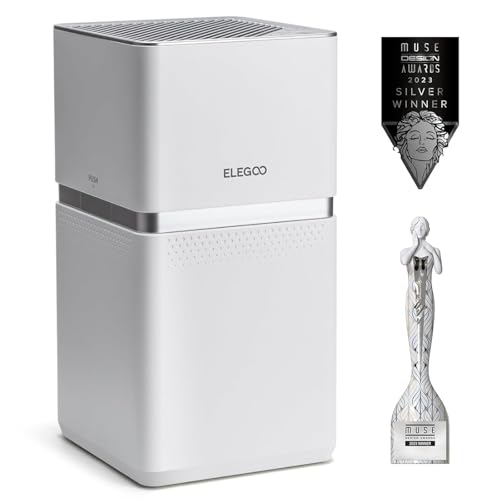
- Designed for listed ELEGOO resin printers
- VOC sensor and up to 95% TVOC removal claim
- Quiet 35 dB operation at 6 watts
Best For: ELEGOO resin setups with a compatible extension port
Enclosed FDM Filtration Pick

- Triple-layer pre-filter, HEPA, and carbon design
- Default connector for Bambu Lab P1S and X1C
- Quick-swap filters and airflow up to 60 m³/h
Best For: Enclosed FDM printers needing particle and fume filtration
Quiet Resin-Printer Filtration
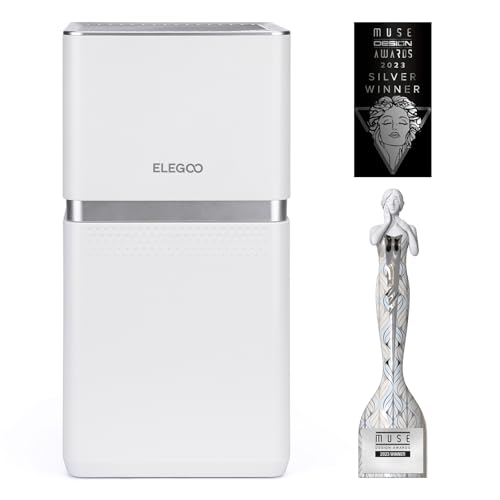
- 35 dB low-noise operation
- VOC and filter-life reminders
- Large activated-carbon design
Best For: Quiet filtration around compatible resin 3D printers
Enclosed FDM Emission Control
3D Printer Filtration System V1

- Triple-layer HEPA and carbon filtration
- Targets common FDM filament emissions
- Up to 60 m³/h airflow
Best For: Enclosed P1S/X1C FDM printing with varied filaments
Large-Room Workshop Air Cleaning

- Coverage stated up to 2,200 sq. ft.
- PM2.5 display with auto mode
- 26 dB sleep operation
Best For: Large shared workshop and home spaces needing general air cleaning
Best Compact Pick
Anycubic Mini Resin Purifier 2-Pack
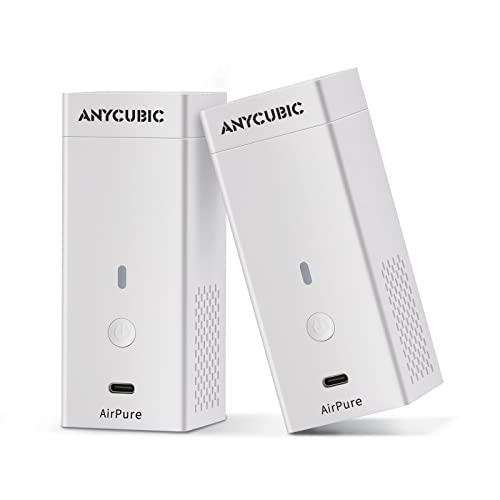
- Tiny footprint suits cramped printer stations.
- High-density carbon targets resin odors.
- Two-pack with replaceable filters lasting about 3–6 months.
Best For: Compact Anycubic LCD/DLP resin-printing setups
Best Easy-Install Alternative
- HEPA H13 and carbon filtration covers particles and VOCs.
- 60 m³/h airflow supports enclosed-printer use.
- Complete kit includes tools, adapter components, and instructions.
Best For: Multi-brand enclosed-printer workshops seeking a complete kit
Compact Resin Odor Pick – Mini Activated Carbon Purifiers
For shoppers comparing 3d printer air purifiers for home workshops, this two-pack offers a compact way to address resin odor near LCD, DLP, and MSLA printers. Each rechargeable unit uses activated carbon and can run for at least 24 hours per charge.
Best For: Resin-printing setups that need small, portable odor-control units for one or more printers.
Pros:
- Activated carbon targets irritant resin odors.
- Two purifiers are included for flexible placement.
- Rechargeable 2,000mAh battery provides at least 24 hours of continuous operation.
- Low listed noise level of 10 dB.
Cons:
- Designed for resin odor, not broad particle filtration.
- Carbon blocks require replacement approximately every three to six months.
- Replacement carbon must be purchased separately.
This is a practical choice when space and portability matter more than whole-room purification. Its activated-carbon design is best viewed as localized odor control rather than a replacement for ventilation.
Whole-Room Coverage Pick – Puro²xygen H13 Smart Purifier
Among 3d printer air purifiers for home workshops, this smart room purifier stands out for its broad coverage and H13 HEPA filtration. It is designed for spaces up to 2,700 square feet and adds Wi-Fi control, automatic operation, and a washable pre-filter.
Best For: Large workshops, offices, or multipurpose rooms where general airborne-particle and odor filtration is a priority.
Pros:
- H13 HEPA filtration is rated to capture 99.97% of particles as small as 0.3 microns.
- Large-room coverage is listed at up to 2,700 square feet.
- Wi-Fi app enables remote control, timers, fan adjustments, and air-quality monitoring.
- Child lock, washable pre-filter, and filter-health indicator support easier maintenance.
Cons:
- Its 50 dB noise rating may be more noticeable than a small localized purifier.
- The supplied notes do not specify a 3D-printer-specific connection or enclosure integration.
- It is a plug-in room unit rather than a compact printer-mounted device.
This model makes sense when a workshop doubles as a living or working area and you want room-scale air cleaning with smart controls. For direct resin-fume capture at the printer, pair room purification with appropriate ventilation.
Resin Printer Integration Pick – ELEGOO MARSMATE Air Purifier
For resin-focused 3d printer air purifiers for home workshops, the ELEGOO MARSMATE is built around photocuring equipment and compatible printer extension ports. Its activated-carbon filter, internal VOC sensor, and automatic fan modes target odor and VOC management in a dedicated printer setup.
Best For: ELEGOO resin-printer owners who want a larger, plug-in purifier with automatic operation and filter reminders.
Pros:
- Designed for multiple listed ELEGOO Mars, Saturn, and Jupiter resin-printer models.
- Activated-carbon filtration is rated to remove up to 95% of TVOC.
- VOC sensor provides alerts when the filter needs attention.
- 35 dB operation and 6-watt power use support relatively quiet, efficient running.
Cons:
- The built-in carbon filter is listed for up to two months of use.
- Its larger 16.14-inch height requires more workspace than a mini purifier.
- Compatibility depends on having an appropriate printer extension port.
MARSMATE is a stronger fit than a generic room purifier when your priority is resin-printer integration and VOC-focused operation. Check the printer-port compatibility and allow room for its taller enclosure before buying.
Enclosed FDM Filtration Pick – H13 HEPA Carbon System
For enclosed FDM printers, this purpose-built system combines a pre-filter, True HEPA H13 layer, and chemically activated carbon bed. It is supplied with a connector for Bambu Lab P1S and X1C printers and can be adapted to other listed enclosed models with adapter kits or printed connectors.
Best For: Home workshops using enclosed printers such as the Bambu Lab P1S or X1C and seeking combined particle and odor filtration.
Pros:
- Triple-layer design includes pre-filter, H13 HEPA, and activated carbon.
- HEPA filtration is specified to capture more than 99.97% of particles down to 0.3 microns.
- Targets printer-related particles and fumes associated with materials such as PLA, PETG, ABS, ASA, and Nylon.
- Tool-free quick-swap filter modules simplify maintenance.
Cons:
- Default connector compatibility is specifically stated for Bambu Lab P1S and X1C.
- Other printer models may require separately obtained adapter kits or printed connectors.
- The supplied notes do not provide a filter-replacement interval or noise rating.
This is the most specialized option here for enclosed FDM printing because it addresses both ultrafine particles and VOC-related fumes. Verify the connector arrangement for your printer and plan for periodic filter replacement.
Quiet Resin-Printer Filtration – ELEGOO Marsmate Air Purifier
For shoppers comparing 3d printer air purifiers for home workshops, the ELEGOO Marsmate is a large, purpose-built option for photocuring printers. Its activated-carbon filter, selectable fan speeds, and low 35 dB operating noise make it practical for a resin-printing workspace where quieter operation matters.
Best For: Resin-printer users who want a quiet, large-format purifier with VOC and filter-life reminders.
Pros:
- Runs at a stated noise level as low as 35 dB.
- Offers low and high fan speeds, plus automatic switching.
- Built-in sensing can flag VOC levels above 1.4 PPM or filter use beyond 1,440 hours.
- Large 210 x 247 x 410 mm body is designed for photocuring applications.
Cons:
- Uses an activated-carbon filter rather than a listed HEPA stage.
- Its compatibility is strongest with listed ELEGOO resin-printer families and printers with suitable expansion interfaces.
- The larger 14-pound design may require dedicated workspace.
Marsmate stands out when quiet operation and resin-printing compatibility are priorities. Confirm your printer has the required interface before buying, particularly if you use a brand outside the listed ELEGOO models.
Enclosed FDM Emission Control – 3D Printer Filtration System V1
Among 3d printer air purifiers for home workshops, this filtration system is aimed at enclosed FDM printers rather than general room cleaning. Its pre-filter, H13 HEPA layer, and activated carbon stage target particles and selected filament byproducts while maintaining airflow against filter backpressure.
Best For: P1S and X1C owners printing materials such as ABS, ASA, nylon, PLA, PETG, or TPU in enclosed setups.
Pros:
- Uses a three-stage system with pre-filter, H13 HEPA, and activated carbon filtration.
- Designed to address particles from PLA and PETG and fumes associated with ABS, ASA, and nylon.
- Centrifugal fan provides airflow rated up to 60 m³/h against filtration resistance.
- Compact external housing has quick-swap filter modules for serviceability.
Cons:
- Primarily designed for P1S and X1C enclosures.
- Other printer brands may require printed connectors and adaptation.
- The supplied notes do not specify operating noise or room-size coverage.
This is the most focused choice for enclosed FDM emission management, especially when using engineering filaments. Check connector requirements and printer compatibility before planning an installation.
Large-Room Workshop Air Cleaning – MOOKA PR1 Air Purifier
If your workshop doubles as a living area, the MOOKA PR1 is a general-purpose option among 3d printer air purifiers for home workshops. It is rated for spaces up to 2,200 square feet and combines a washable pre-filter, PM2.5 sensing, multiple fan speeds, and a low-noise sleep mode.
Best For: Large shared rooms where you want broad air cleaning, particle monitoring, and washable pre-filter maintenance alongside 3D printing.
Pros:
- Wide air intake and stated coverage up to 2,200 square feet.
- Four-stage filtration includes a washable pre-filter, according to the supplied product notes.
- PM2.5 sensor supports real-time air-quality display and automatic fan adjustment.
- Sleep mode is rated as low as 26 dB, with six operating modes overall.
Cons:
- It is a general home air purifier, not a dedicated 3D-printer enclosure filter.
- The supplied notes do not identify the specific activated-carbon or HEPA configuration for printer-fume control.
- Replacement filters are recommended every 3–6 months, depending on use.
The PR1 makes sense when workshop air cleaning also needs to cover pets, smoke, dust, or a large room. For concentrated emissions inside an enclosed printer, pair its broad room coverage with a printer-specific filtration solution.
Best Overall – Enclosed Printer HEPA H13 Filter System
For shoppers comparing 3d printer air purifiers for home workshops, this enclosed-printer system offers a more complete approach than an odor-only unit. Its pre-filter, HEPA H13 stage, and activated carbon bed target dust, ultrafine particles, VOCs, and printing odors from materials including PLA, PETG, ABS, ASA, and nylon.
Best For: Enclosed Bambu Lab and other compatible printers used with varied filaments in home workshops, offices, or studios.
Pros:
- Triple-layer filtration combines a pre-filter, HEPA H13 filter, and thick activated carbon bed.
- 60 m³/h airflow and a centrifugal fan provide stable pressure through the filter stages.
- Compact design, quick-swap filter modules, and included Bambu Lab P1S/X1C connector simplify installation and maintenance.
- Printable adapters support compatibility with several Creality, Prusa, Elegoo, Anycubic, and other enclosed printers.
Cons:
- Not recommended for open-frame printers without an enclosure.
- Reduces emissions but does not replace room ventilation, particularly with ABS, ASA, or nylon.
- Adapters for some printer models may need to be printed separately.
This is the strongest all-around option here for users who want both particle and odor control in an enclosed setup. Its broad filament coverage and serviceable filter design are useful for regular workshop printing, provided normal ventilation is maintained.
Best Compact Pick – Anycubic Mini Resin Purifier 2-Pack
If space and noise are your main concerns when choosing 3d printer air purifiers for home workshops, the Anycubic Mini Purifier is an especially small option. It uses a high-density activated carbon filter to absorb resin odors and comes as a two-pack for placement with compatible LCD or DLP printers.
Best For: Anycubic LCD/DLP resin printing setups that need compact, low-noise odor control.
Pros:
- Very compact 4.5-by-1.8-by-1.8-inch design can sit on or beside a printer.
- High-density 18 mm activated carbon filter is designed to absorb resin odors.
- Fan operates at up to 5,000 rpm with stated noise of 40 dB or less in the product features.
- Two units are included, and each replaceable filter is intended to last about three to six months.
Cons:
- Activated carbon focuses on odors; the supplied notes do not describe a HEPA particle-filtration stage.
- Designed especially for LCD/DLP and Anycubic printers rather than broad enclosed-printer compatibility.
- Battery-powered operation requires attention to charging or battery availability.
This two-pack is best viewed as a convenient resin-odor accessory rather than a comprehensive workshop air-cleaning system. Its tiny footprint makes it practical where a larger external filter will not fit, but users should still provide suitable ventilation.
Best Easy-Install Alternative – Mintion V1 3D Printer Filter
The Mintion V1 is a practical choice for shoppers seeking 3d printer air purifiers for home workshops with several enclosed printer brands. Its three-stage system combines a pre-filter, HEPA H13 filter, and activated carbon filter, while the external design and included accessories are intended to make installation straightforward.
Best For: Multi-brand enclosed-printer owners who want HEPA and carbon filtration with a complete installation kit.
Pros:
- Three-stage filtration addresses particles, VOCs, and odors from PLA, PETG, ABS, ASA, and nylon.
- 60 m³/h radial-fan airflow is designed to maintain pressure stability during operation.
- Factory configuration for P1S/X1C and optional printed adapters broaden compatibility.
- Package includes a power adapter, sealing cap, screws, tools, and instructions.
Cons:
- Adapters for some brands may need to be printed separately.
- The supplied notes do not provide a specific noise rating.
- Like comparable printer filters, it should supplement rather than replace room ventilation.
Choose the Mintion V1 when compatibility and included installation hardware matter as much as filtration. It closely matches the feature set of a full enclosed-printer system, with a useful emphasis on broad brand support and accessible filter replacement.
How We Picked the Best 3d Printer Air Purifiers for Home Workshops
We focused on filtration design, compatibility, airflow, noise, form factor, and practical maintenance. Products with activated carbon were considered for odor and VOC reduction, while HEPA-equipped systems were evaluated for particle filtration. We also separated printer-mounted or enclosure-specific units from general room purifiers, since they solve different problems.
Compatibility matters as much as headline performance. Some filters are designed for specific Bambu Lab or ELEGOO enclosures, while others fit near resin printers or operate as standalone room units. We also looked for replaceable or washable filters, accessible controls, and specifications that indicate how well each purifier fits a small workshop.
Quick Comparison
| Best For | Recommended Type | What to Prioritize |
|---|---|---|
| Resin printer beside your workbench | Compact carbon purifier | Printer compatibility, quiet operation, replacement filters |
| Enclosed FDM printer | HEPA and carbon enclosure filter | Airflow, sealing, filter stages, mounting method |
| Several printers or a larger room | Standalone room purifier | Coverage, clean-air delivery, carbon quantity, controls |
| Budget-conscious occasional printing | Small dedicated filter | Low upfront cost and affordable consumables |
Key Buying Factors for 3d Printer Air Purifiers for Home Workshops
Filtration and Carbon Capacity
HEPA filtration is useful for capturing particles, but it does not replace activated carbon for odors and many VOCs. For resin, ABS, ASA, and other odor-producing materials, choose a unit with a meaningful carbon layer rather than relying on a thin carbon-coated sheet alone.
Airflow and Placement
A compact purifier works best close to the emission source, especially inside or beside an enclosure. A room purifier needs enough airflow for the entire space and should not be hidden behind equipment or pushed against a wall. Ventilation to the outdoors remains important when practical.
Noise, Maintenance, and Running Costs
Quiet operation matters when a printer runs for hours in a home office or studio. Check replacement-filter availability and expected service intervals before buying. Washable prefilters can reduce maintenance costs, but they do not eliminate the need to replace HEPA or carbon media.
Compatibility and Safety
Verify dimensions, mounting points, power requirements, and enclosure compatibility. A purifier should not obstruct cooling, interfere with printer movement, or create a heat buildup issue. Follow the printer and purifier manufacturers’ instructions, and avoid treating filtration as a substitute for safe material handling.
Who Should Buy Which 3d Printer Air Purifiers for Home Workshops?
Choose an ELEGOO or ANYCUBIC mini purifier if you need a simple, low-profile solution for a compatible resin printer. Select a dedicated HEPA-and-carbon enclosure system if you print frequently with an enclosed Bambu Lab or similar FDM machine. A larger standalone unit such as a room purifier makes more sense for a workshop containing multiple printers or for spaces where contaminants can spread beyond one enclosure.
For the best overall setup, match source control with room cleaning: use an enclosure or near-printer filter, keep the room ventilated, and run a suitably sized purifier after printing. Replace filters on schedule and select the model whose coverage and maintenance requirements fit your actual printing routine.