Classroom 3D printing can support hands-on learning, but particles, odors, and resin or plastic emissions deserve careful air-quality planning. The right purifier can help reduce airborne contaminants around printers and enclosures.
We selected 10 options ranging from compact carbon-filter units to high-capacity HEPA air scrubbers, so schools can match filtration, airflow, noise, and operating costs to their makerspace setup.
Best 10 3d Printer Air Purifiers for Schools Picks for 2026
Heavy-Duty Choice
Shield-550 Commercial Air Scrubber

- 550 CFM commercial airflow
- MERV-10, HEPA, and carbon filtration
- 10-year limited warranty
Best For: School maker spaces and larger fabrication rooms
High-Airflow Monitor
Creality 360° Printer Purifier

- Up to 250 m³/h airflow
- Real-time PM2.5 display
- Long-rated standard and carbon filters
Best For: Busy school print labs needing airflow and visible monitoring
Quiet Compact Pick
Mintion V1 Printer Filter System

- HEPA H13 and activated-carbon stages
- 60 m³/h stable, quieter airflow
- Includes adapters and installation hardware
Best For: Enclosed-printer classrooms and compact school labs
Best Resin-Printer Pick
Quiet VOC Monitoring for Classrooms
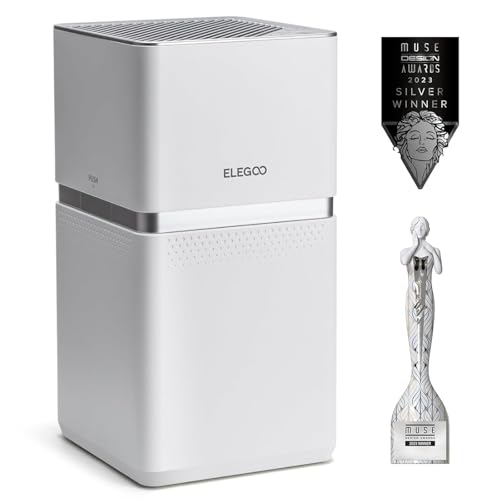
- Up to 95% TVOC removal
- 35 dB operation and 6W power use
- Built-in VOC and filter reminders
Best For: Compatible resin-printing classrooms and makerspaces
Best FDM Option
High-Capacity Filtration for School Makerspaces

- Five-stage filtration for FDM printing
- 250 m³/h airflow with 1700 Pa suction
- Touchscreen PM2.5 and filter monitoring
Best For: Schools with busy desktop FDM printing areas
Best Quiet Alternative
Large Marsmate for Resin Printers
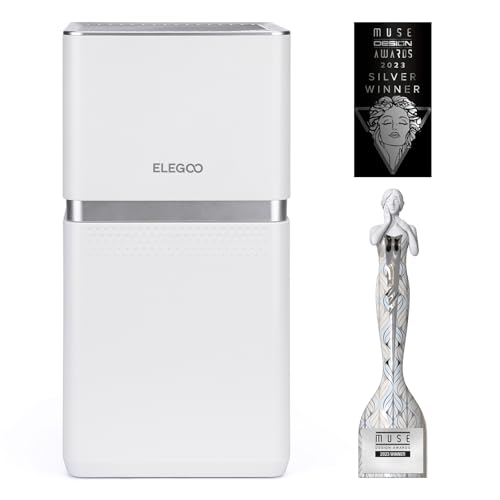
- 35 dB operating noise
- Low, high, and automatic fan modes
- VOC and filter-life reminders
Best For: Quiet resin-printing classrooms using compatible Mars or Saturn printers
Best Overall Extraction

- H13 HEPA and activated-carbon filtration
- 60W motor with three-speed control
- Compact design rated at 55dB
Best For: School makerspaces with enclosed 3D printers and other desktop equipment
Best for Compact Resin Stations
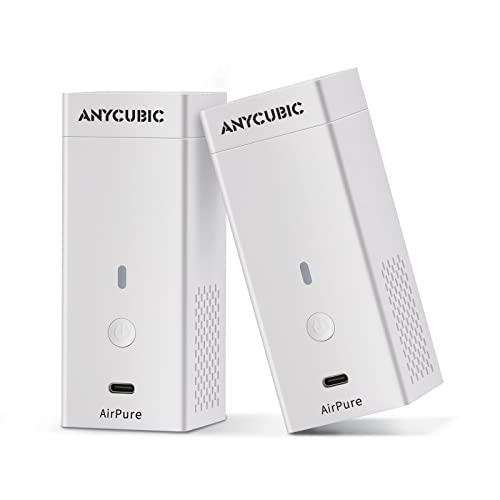
- Two ultra-compact units for resin printers
- High-density activated-carbon odor filter
- Replaceable filter lasts about 3–6 months
Best For: Small resin-printing stations needing localized odor control
Best for Long Battery Runtime
ELEGOO Mini Air Purifier 2-Pack

- Two rechargeable mini purifiers included
- At least 24 hours of runtime per charge
- Activated carbon targets resin odors
Best For: Multiple resin-printer stations needing portable odor control
Heavy-Duty Choice – Shield-550 Commercial Air Scrubber
For schools comparing 3d printer air purifiers for schools, the CADPXS Shield-550 is a commercial-grade option suited to larger rooms, workshops, and maker spaces. Its three-stage setup combines a MERV-10 pre-filter, HEPA filtration, and activated carbon to address dust, fine particles, odors, and VOCs.
Best For: School maker spaces, construction or fabrication areas, and larger rooms needing high-airflow filtration.
Pros:
- 550 CFM airflow is designed for commercial and restoration use.
- Three-stage filtration targets larger dust, fine particles, odors, and VOCs.
- HEPA filtration is rated to remove 99.97% of particles at 0.3 micrometers or larger.
- Includes a 10-year limited warranty and is ETL and CARB certified.
Cons:
- At 33.5 pounds and roughly 24 by 23 by 15 inches, it is less portable than compact printer-mounted systems.
- The listed 65 dB noise level may be noticeable in a quiet classroom.
- Its broad commercial design may be more capacity than a single enclosed printer requires.
The Shield-550 makes the most sense when a school wants one robust air scrubber for a workshop or shared fabrication room rather than a small unit dedicated to one printer. Its carbon stage is useful where printing is combined with paint, adhesives, or other fumes.
Enclosed-Printer Specialist – H13 HEPA Carbon Filter System
This dedicated system is a focused choice for schools seeking 3d printer air purifiers for schools with enclosed printers. It uses a pre-filter, HEPA H13 media, and a thick activated-carbon bed to reduce ultrafine particles, odors, and VOCs associated with materials such as ABS, ASA, and nylon.
Best For: Classrooms or labs with enclosed Bambu Lab, Creality, Prusa, Elegoo, or Anycubic printers.
Pros:
- H13 HEPA filtration is specified to capture 99.97% of ultrafine particles.
- Activated carbon targets odors and compounds such as styrene and caprolactam.
- 60 m³/h airflow and stable centrifugal-fan pressure are designed not to affect print quality or chamber temperature.
- Compact, lightweight design uses quick-swap filter modules without tools.
Cons:
- It is not recommended for open-frame printers without an enclosure.
- Adapters may be needed for printer models beyond the default Bambu Lab P1S/X1C connection.
- The manufacturer notes that it reduces emissions but does not replace room ventilation.
For an enclosed-printer station, this system offers a practical balance of targeted filtration, compact sizing, and easy maintenance. Schools printing ABS, ASA, or nylon should still provide suitable room ventilation alongside the filter.
High-Airflow Monitor – Creality 360° Printer Purifier
Creality’s unit is a feature-rich option for schools evaluating 3d printer air purifiers for schools and wanting visible air-quality feedback. Its 360-degree airflow design, five-stage filtration, and real-time PM2.5 display are aimed at sustained printing sessions and spaces where staff want to monitor particulate levels.
Best For: School print labs that value high airflow, real-time PM2.5 readings, and longer filter service intervals.
Pros:
- Provides up to 250 m³/h airflow and 1700 Pa of suction.
- Five-stage filtration is specified to remove 99.99% of dust and odors.
- Real-time PM2.5 display gives a visible indication of particulate levels.
- Standard filters are rated for up to 1,000 hours, while the V-Fold carbon filter is rated for up to 1,500 hours.
Cons:
- The supplied details list particle retention at 2.5 micrometers rather than the finer 0.3-micrometer specification given for some HEPA systems.
- At 28 pounds, it is substantially heavier than compact enclosed-printer filter systems.
- The notes identify dust and odors as filtration capabilities without providing specific VOC-removal performance.
This is a compelling choice for a shared lab where airflow and a visible PM2.5 readout matter. Before purchase, schools should confirm that its form factor and filtration specifications match the printers and materials used in the room.
Quiet Compact Pick – Mintion V1 Printer Filter System
The Mintion V1 is a compact, printer-focused option for schools shopping for 3d printer air purifiers for schools. Its pre-filter, HEPA H13 filter, and activated carbon stage are designed for common filaments, while the external form and optional adapters support a range of enclosed printer brands.
Best For: Classrooms, studios, and school labs using enclosed printers with PLA, PETG, ABS, ASA, or nylon.
Pros:
- Three-stage filtration addresses particles, odors, and VOCs including styrene and caprolactam.
- Supports common enclosed printers and is factory configured for Bambu Lab P1S/X1C.
- 60 m³/h airflow is paired with a radial fan for stable, quieter operation.
- Includes a power adapter, sealing cap, screws, tools, and instructions.
Cons:
- Its 60 m³/h airflow is lower than the listed capacity of the larger Creality unit.
- Adapters may be required for brands other than the factory-configured models.
- The supplied notes do not specify a filter replacement interval.
The Mintion V1 is a sensible fit when space and classroom noise are important considerations. It delivers printer-specific HEPA and carbon filtration in a small package, but schools should verify enclosure compatibility and maintain normal room ventilation.
Best Resin-Printer Pick – Quiet VOC Monitoring for Classrooms
For schools looking for 3d printer air purifiers for schools, the ELEGOO MARSMATE is a practical fit for resin and photocuring work. Its activated carbon filter, built-in VOC sensor, and low 35 dB operating noise support a quieter printing area.
Best For: School makerspaces using compatible ELEGOO resin printers and prioritizing quiet operation with VOC reminders.
Pros:
- Activated carbon filtration is designed to remove up to 95% of TVOC.
- VOC sensing can alert staff when the filter needs attention.
- Uses only 6W and operates at approximately 35 dB.
- Large housing supports longer-lasting purification, while the filter is replaceable.
Cons:
- The supplied compatibility list focuses on resin and photocuring printers with an extension port.
- The activated carbon filter may need replacement about every two months.
- Its large 14-pound form may require dedicated shelf space.
The MARSMATE is a sensible classroom option when quiet operation and straightforward VOC monitoring matter most. Confirm that your printers have a compatible extension port before buying.
Best FDM Option – High-Capacity Filtration for School Makerspaces
Among 3d printer air purifiers for schools, the Creality model stands out for FDM-focused filtration and real-time monitoring. Its five-stage system combines a pre-filter with dense activated carbon and provides touchscreen PM2.5 and filter-status readings.
Best For: School makerspaces running most desktop FDM printers and needing stronger airflow with visible air-quality information.
Pros:
- Designed specifically for FDM printing and compatible with most desktop FDM printers.
- Five-stage filtration includes a G4 pre-filter and high-density activated carbon mesh.
- 360-degree airflow provides 250 m³/h of clean-air delivery and 1700 Pa suction.
- Filters are rated for up to 1,000 hours, or 1,500 hours with the V-IFold carbon filter.
Cons:
- The supplied notes do not provide an operating noise rating.
- Its listed package dimensions and 34.4-pound weight suggest a substantial classroom footprint.
- Confirm the exact filter configuration and replacement availability before purchase.
This is the strongest match of the three for schools centered on FDM printing. The touchscreen and long filter ratings can simplify oversight in shared labs, provided the unit’s larger size fits the workspace.
Best Quiet Alternative – Large Marsmate for Resin Printers
The ELEGOO Marsmate is a quiet choice among 3d printer air purifiers for schools with compatible resin printers. It offers low and high fan modes, automatic switching, activated carbon filtration, and VOC-based replacement reminders.
Best For: Resin-printing classrooms that want a quiet, large-format purifier for compatible Saturn and Mars models.
Pros:
- Operates at about 35 dB to minimize disruption during lessons.
- Two fan speeds and automatic switching let staff adjust purification to the workload.
- Built-in sensing can remind users when VOC concentration or filter usage reaches the stated threshold.
- Large ABS housing is designed for compatible Saturn and Mars series printers.
Cons:
- It is primarily designed for photocuring and resin-printing applications.
- Compatibility depends on an expansion interface, especially for non-ELEGOO printers.
- The supplied details do not state a filtration percentage or airflow rate.
This Marsmate model makes sense when a school values quiet operation and simple automated reminders over published airflow figures. Check printer compatibility and available placement space before adding it to a lab.
Best Overall Extraction – NT-X1 H13 HEPA Fume Extractor
For schools seeking 3d printer air purifiers for schools, the NT-X1 is a more substantial extraction option for enclosed 3D printers and other desktop maker equipment. Its H13 HEPA and activated-carbon filtration, adjustable airflow, and compact footprint make it suited to classrooms or labs that need targeted fume control.
Best For: School makerspaces using 3D printer enclosures alongside compatible laser equipment.
Pros:
- Combines H13 HEPA filtration with activated carbon for particles, smoke, and odors.
- 60W motor and three-speed airflow control support targeted extraction.
- Compact 6.9 x 9.84 x 7.87-inch design and stated 55dB operating level.
- Separate primary and high-efficiency filters can reduce replacement costs.
Cons:
- Its laser-extraction capabilities may be more than needed for a basic 3D printer station.
- The supplied information does not specify an air-cleaning capacity for an entire classroom.
The NT-X1 is the strongest all-around choice here when a school needs a dedicated, enclosure-focused extractor rather than a tiny odor-control unit. It should still be used with appropriate ventilation and school safety procedures.
Best for Compact Resin Stations – Anycubic Mini Purifier 2-Pack
The Anycubic Mini Purifier is a convenient pick for schools needing compact 3d printer air purifiers for schools at individual resin-printing stations. This two-pack uses replaceable high-density activated carbon filters to target resin odors while taking up very little space.
Best For: Small resin printers where quiet, low-profile odor control is the priority.
Pros:
- Two compact purifiers measure about 4.5 x 1.8 x 1.8 inches each.
- 18mm, 17g activated-carbon filter is designed to absorb resin odors.
- Fan operates at up to 5,000 rpm with a stated noise level of 40dB or less in the product notes.
- Replaceable filters are intended to last about three to six months.
Cons:
- Activated carbon focuses on odors; the supplied notes do not establish HEPA particle filtration.
- Designed for localized printer use rather than whole-room purification.
- Compatibility is emphasized for LCD printers, so schools should verify fit with their specific equipment.
This Anycubic pair is easy to distribute across multiple small resin-printing setups. It is best viewed as supplemental, printer-level odor control—not a substitute for ventilation or a classroom air-management plan.
Best for Long Battery Runtime – ELEGOO Mini Air Purifier 2-Pack
Schools comparing 3d printer air purifiers for schools may appreciate the ELEGOO Mini Air Purifier for its rechargeable design and two-unit format. It uses activated carbon to target resin odors and can operate for at least 24 hours after charging, making it practical for individual LCD, DLP, or MSLA printer stations.
Best For: Classrooms that want portable, rechargeable odor control for multiple resin printers.
Pros:
- Two purifiers are included, with a universal adaptor supplied.
- Activated carbon targets irritant resin odors.
- 2000mAh battery provides at least 24 hours of continuous operation per charge.
- Replaceable carbon filter is designed for roughly three to six months of use.
Cons:
- Carbon filtration is intended for resin odor and does not indicate broad particle removal.
- Filters must be purchased separately for replacement.
- Small units are intended for printer-level use, not whole-room purification.
The ELEGOO is a sensible classroom accessory when portability and runtime matter more than high-capacity air cleaning. Pair it with enclosure practices and suitable room ventilation for a more complete school setup.
How We Picked the Best 3d Printer Air Purifiers for Schools
We evaluated these models for the needs of classrooms, libraries, STEM labs, and makerspaces: filtration type, stated airflow, compatibility with printer enclosures, noise-conscious operation, filter accessibility, footprint, and likely maintenance demands. HEPA filtration is especially useful for reducing fine particles, while activated carbon helps address odors and some volatile organic compounds. Neither should replace source control, ventilation, or safe material-handling procedures.
Because the selection includes both compact printer-mounted devices and larger air scrubbers, we considered practical use rather than treating every purifier as interchangeable. A small unit may suit one enclosed printer, while a busy lab may need greater airflow or multiple purifiers.
Quick Comparison
| Type | Best for | What to check |
|---|---|---|
| Compact carbon purifier | Single printer or resin workstation | Filter size, replacement availability, and coverage |
| HEPA and carbon system | Enclosed FDM or resin printers | Sealing, airflow, and compatibility |
| High-capacity air scrubber | Busy classrooms or shared makerspaces | CFM, noise, placement, and filter cost |
| Laser-capable extractor | Labs using printers and enclosed laser equipment | Fume ratings, hose connections, and approved uses |
Key Buying Factors for 3d Printer Air Purifiers for Schools
Filtration and Materials
Choose a true HEPA-rated stage when fine-particle reduction is a priority, and look for substantial activated carbon when odor or VOC control matters. Resin printing and materials such as ABS or ASA may require more robust enclosure and ventilation practices than PLA.
Airflow and Room Coverage
Compare the purifier’s stated airflow with the enclosure, printer count, and room size. A compact purifier designed for one machine should not be expected to clean an entire classroom. For multiple printers, consider several source-level units or a higher-CFM scrubber.
Noise, Safety, and Maintenance
Excessive fan noise can interfere with instruction, so quieter operation is valuable in classrooms. Check whether filters are easy to replace, whether replacements are stocked, and whether the unit has stable placement, protected controls, and a clear operating schedule.
Compatibility and Installation
Verify dimensions, power requirements, enclosure connections, and printer compatibility before ordering. A purifier built for a specific resin-printer format may not fit another model, while a general air scrubber may need careful positioning near the emission source.
Who Should Buy Which 3d Printer Air Purifiers for Schools?
Choose a compact activated-carbon model for a single enclosed printer, occasional classroom demonstrations, or a resin printer with limited space. Select a HEPA-and-carbon system when fine particles and odors both need attention at the printer enclosure. A larger air scrubber is the better fit for a high-use makerspace, several active printers, or a room that needs broader air circulation. Schools operating laser engravers as well as 3D printers should consider a purpose-built fume extractor only when its ratings and connections match the equipment.
Whichever option you choose, pair it with enclosed printing where possible, local exhaust or room ventilation, low-emission materials, supervised operation, and a documented filter-replacement schedule. These products can support safer classroom practices, but they are not a substitute for an institution’s occupational-health guidance or adequate ventilation.