The best audio mixers make it easier to combine microphones, instruments, playback devices, and effects while giving you control over levels and routing. The right choice depends on whether you need a compact analog board, USB connectivity, wireless playback, or flexible digital mixing.
We’ve gathered 10 audio mixers covering home recording, streaming, gaming, DJ use, rehearsals, and small live setups. Use the guide below to narrow the options by inputs, features, workflow, and budget.
Best 10 Audio Mixers Picks for 2026
Best Digital Mixer
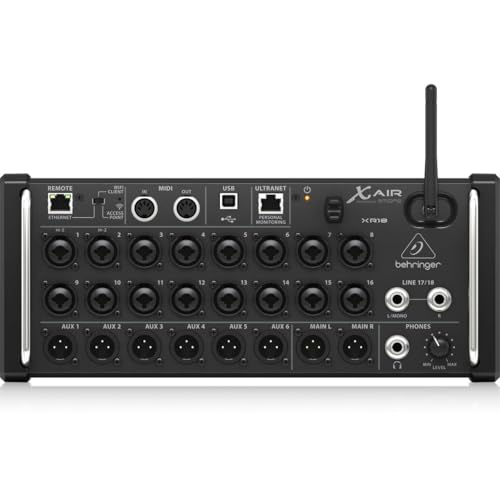
- 18 channels for live or studio setups
- 16 programmable MIDAS-designed preamps
- Built-in Wi-Fi and 18x18 USB interface
Best For: Tablet-controlled live sound and multichannel recording
Best Effects Mixer

- 10 inputs with USB connectivity
- Built-in SPX digital effects
- D-PRE preamps and one-knob compressors
Best For: Compact live rigs and home recording setups
Best Compact Mixer

- Eight-channel compact analog design
- Phantom power for condenser microphones
- Three-band EQ on every channel
Best For: Small wired studio, rehearsal, and live setups
Best Streaming Mixer

- Eight-input analog mixer with USB
- Mixes PC and gaming audio into streams
- Stereo USB connection for computers or mobile devices
Best For: Streaming, podcasting, and basic recording
Compact Line Routing Pick

- Combines up to four audio sources
- Mono/stereo switching with 3.5mm and 6.35mm support
- Low-noise design in a compact body
Best For: Small sub-mixing and audio-routing setups
Streaming Setup Pick

- XLR input with 48V phantom power
- Sound pads, voice effects, noise reduction, and loopback
- RGB lighting and broad streaming-platform compatibility
Best For: Gaming streamers and new content creators
Live Performance Pick

- Eight channels with XLR and 1/4-inch inputs
- Bluetooth, USB MP3, DSP, and 3-band channel EQ
- Steel chassis with +48V phantom power
Best For: DJing, karaoke, live gigs, and small-stage mixing
Best for Advanced Recording

- 10 channels with six outputs
- ASIO support for low-latency DAW use
- Four compressors, effects, Bluetooth 5.3
Best For: Musicians, streamers, and home studios
Best for Karaoke and Streaming

- Four XLR inputs with 48V phantom power
- Bluetooth and USB playback support
- Three-band EQ plus 16 DSP effects
Best For: Karaoke, small gigs, and streaming
Best Slim Design

- Eight channels in a slim chassis
- Bluetooth 5.0 and MP3/USB playback
- Reverb, recording, and 48V phantom power
Best For: Karaoke, events, and space-conscious setups
Best Digital Mixer – Behringer X AIR XR18
The Behringer X AIR XR18 is a versatile choice among audio mixers for live sound and studio work. It offers tablet control, 18 channels, programmable MIDAS preamps, built-in Wi-Fi, and an 18×18 USB interface for multichannel recording.
Best For: Live performers, studios, and users who want wireless tablet-based mixing with extensive input capacity.
Pros:
- 18-channel design supports larger setups.
- Includes 16 programmable MIDAS-designed mic preamps.
- Built-in tri-mode Wi-Fi enables direct tablet operation.
- 18×18 bidirectional USB interface supports direct multichannel recording.
Cons:
- Requires a corded power source.
- Tablet-based control may not suit users seeking traditional onboard controls.
Choose the XR18 when flexible remote control and extensive digital routing matter more than a compact analog layout. Its channel count and USB connectivity make it particularly capable for complex live or recording applications.
Best Effects Mixer – Yamaha MG10XU
The Yamaha MG10XU is a practical 10-input option among audio mixers, combining USB connectivity with SPX digital effects. Its D-PRE preamps, three-band EQ, high-pass filters, and one-knob compressors provide straightforward control for vocals and instruments.
Best For: Home studios, small live setups, and users who want built-in effects with easy analog-style controls.
Pros:
- 10-input layout suits compact mixing systems.
- Includes USB connectivity and SPX digital effects.
- D-PRE preamps use a discrete Class A design.
- One-knob compressors simplify dynamic control.
Cons:
- Offers fewer inputs than larger digital mixers.
- Uses a corded electric power source.
The MG10XU balances familiar hands-on mixing with useful digital features. It is a strong fit when you need manageable channel capacity, onboard effects, and simple compression without moving to a fully software-controlled mixer.
Best Compact Mixer – Mackie Mix8
The Mackie Mix8 is a compact, straightforward option among audio mixers. It provides eight channels, two mic/line inputs with phantom power, stereo line inputs, three-band EQ on every channel, and an aux send with stereo returns.
Best For: Small studio, rehearsal, and basic live setups that need simple wired mixing.
Pros:
- Compact eight-channel design is easy to integrate.
- Two mic/line inputs include phantom power for condenser microphones.
- Three-band EQ is available on all channels.
- Includes an aux send and stereo returns.
Cons:
- Uses wired connectivity rather than USB.
- Provides fewer advanced features than digital mixers.
- Only two inputs are dedicated to mic/line sources.
The Mix8 is best when reliable, uncomplicated analog control is the priority. Its compact footprint and core channel features make it suitable for smaller systems that do not require USB recording or wireless operation.
Best Streaming Mixer – Behringer XENYX 802S
Behringer XENYX 802S Premium Analog 8-Input Mixer with USB Streaming Interface
Check Price On AmazonThe Behringer XENYX 802S is an eight-input analog mixer designed for streaming, podcasting, and recording. It combines analog mixing and equalization with a stereo USB interface, allowing computer or mobile-device connection and direct mixing of PC or gaming audio into the stream output.
Best For: Streamers, podcasters, and creators who need simple computer or mobile audio integration.
Pros:
- Combines analog mixing with USB connectivity.
- Supports direct mixing of PC and gaming sounds into the streaming output.
- Stereo USB interface connects to computers or mobile devices.
- Designed for streaming, podcasting, and recording.
Cons:
- Eight-input capacity is more limited than larger digital mixers.
- USB interface is stereo rather than multichannel.
- Uses a corded electric power source.
The XENYX 802S is a sensible choice for content creators who want physical analog controls and straightforward USB streaming. It focuses on practical computer-audio integration rather than extensive digital routing.
Compact Line Routing Pick – Mini 4-Channel Audio Mixer
If you need a straightforward way to combine several sources, this compact option is one of the more flexible audio mixers for small setups. It accepts up to four sources, supports 3.5mm and 6.35mm connections, and can operate in mono or stereo mode.
Best For: Sub-mixing keyboards, electronic drums, guitars, computers, CD players, or gaming consoles into one output.
Pros:
- Combines up to four audio sources into a single mono or stereo output.
- Designed for low-noise operation with an MPS power-management chip and six low-noise op-amps.
- Supports both 3.5mm and 6.35mm TS/TRS connections without adapters.
- Compact body is suitable for expanding a small audio setup.
Cons:
- Power adapter is sold separately.
- It is a line mixer rather than a full-featured microphone mixing console.
This LZSIG mixer is a practical choice when your main goal is clean, simple signal combining. Its compact size and dual connector support make it useful for basic routing, though buyers needing microphone preamps or extensive controls should consider a larger mixer.
Streaming Setup Pick – MAONO G1 Neo Gaming Mixer
For gamers and new streamers, the MAONO G1 Neo combines audio mixing with streaming-focused controls. Among gaming audio mixers, it stands out for its XLR input, 48V phantom power, sound pads, voice effects, Bluetooth accompaniment, loopback, and customizable RGB lighting.
Best For: Gaming streams, voice chats, and content creation with an XLR microphone and compatible streaming software.
Pros:
- Built-in preamp and 48V phantom power support compatible XLR condenser microphones.
- Includes one-click noise reduction, mute, direct monitoring, and loopback controls.
- Offers voice changing, custom sound pads, reverb, and sidechain effects.
- Works with phones, computers, tablets, PS4, PS5, OBS, Discord, Twitch, and other listed platforms.
Cons:
- Not compatible with USB microphones, Xbox, or MAONO devices according to the supplied notes.
- Users must keep 48V phantom power off when using XLR dynamic microphones.
- Its feature set is oriented toward streaming rather than general-purpose live mixing.
The G1 Neo is best suited to creators who want hands-on streaming effects and simplified controls in one compact unit. Check microphone compatibility and follow the included setup guidance before connecting your equipment.
Live Performance Pick – Pyle 8-Channel DJ Mixer
The Pyle PMXU83BT is a versatile choice for buyers who need more inputs and traditional mixer controls. This 8-channel model combines Bluetooth streaming, XLR and 1/4-inch inputs, 3-band EQ on all channels, USB MP3 playback, DSP processing, and +48V phantom power.
Best For: DJ use, live gigs, karaoke, and small stage setups requiring multiple inputs and wireless playback.
Pros:
- Provides eight channels with XLR and unbalanced 1/4-inch input support.
- Includes Bluetooth audio streaming from a smartphone.
- Offers +48V phantom power, 3-band EQ on all channels, LED peak indicators, and a 16-bit DSP processor.
- Rugged steel chassis and multi-voltage power supply support worldwide use.
Cons:
- The supplied information does not specify a warranty.
- At 4 pounds and roughly 10.8 inches wide, it is less portable than a mini mixer.
- The notes do not detail the specific DSP effects included.
This Pyle mixer makes sense for users who want a larger control surface and a broad collection of connections at a value-oriented price point. Its channel count and Bluetooth support are useful for performance applications, while the steel chassis is suited to regular handling.
Best for Advanced Recording – Donner DAM-1000
For creators who need flexible audio mixers for recording, streaming, or live sound, the Donner DAM-1000 offers 10 channels, USB connectivity, and ASIO driver compatibility. Its four independent compressors, built-in effects, Bluetooth 5.3, and 48V phantom power provide useful control for more involved setups.
Best For: Musicians, streamers, and home-studio users who want low-latency DAW integration and detailed signal control.
Pros:
- 10 input channels and six output channels support versatile setups.
- ASIO driver compatibility is designed for low-latency DAW use.
- Includes four independent compressors, built-in effects, and 48V phantom power.
- Bluetooth 5.3 supports wireless audio input.
Cons:
- Its broader feature set may be more than casual users need.
- It requires corded power.
With a 105dB signal-to-noise ratio and -80dB THD+N specification, the DAM-1000 is positioned as the most production-focused option here. Choose it when channel capacity and hands-on processing matter more than simplicity.
Best for Karaoke and Streaming – 6-Channel Bluetooth Mixer
This 6-channel mixer is a practical choice for karaoke, live gigs, streaming, and basic recording. It combines four XLR inputs with 48V phantom power, Bluetooth playback, USB functionality, a three-band EQ, and 16 built-in DSP effects.
Best For: Users who need an accessible mixer for microphones, instruments, wireless playback, karaoke, or small performances.
Pros:
- Four XLR inputs support condenser or dynamic microphones.
- Bluetooth and USB support wireless streaming and USB playback.
- Three-band EQ and 16 DSP effects offer hands-on sound shaping.
- Six input channels accommodate multiple connected devices.
Cons:
- The included warranty is listed as 90 days.
- The product notes warn that operating errors can result in no sound.
- Its 16-bit DSP specification is less focused on high-resolution production than the Donner model.
This is one of the more feature-packed budget-oriented audio mixers for casual performance and entertainment setups. It makes the most sense if Bluetooth playback, karaoke effects, and microphone connectivity are priorities.
Best Slim Design – FULUODE CT-80S
The FULUODE CT-80S is a slim 8-channel option for audio mixers buyers who want broad connectivity without a deep console. It includes MP3/USB playback and recording, Bluetooth 5.0, reverb, 48V phantom power, and support for wired, wireless, and condenser microphones as well as instruments.
Best For: Home KTV, karaoke, conferences, campus activities, and live music setups where a thin mixer is useful.
Pros:
- Eight channels provide more input capacity than a basic six-channel board.
- Ultra-thin 1.57-inch design suits space-conscious setups.
- Bluetooth, MP3/USB playback, and USB recording add flexible media options.
- Supports 48V phantom power, reverb, microphones, and instruments.
Cons:
- The listed voltage is 110V with an American plug.
- At 3.3 kg, it is heavier than the six-channel mixer listed above.
- The supplied notes provide fewer detailed audio-performance specifications.
The CT-80S stands out for combining eight channels with a notably thin chassis and a large LED display. It is a sensible fit for entertainment and event use when space-saving design and playback features are more important than advanced studio specifications.
How We Picked These Audio Mixers
We selected models across several common use cases rather than treating every mixer as interchangeable. Our comparison considers channel count, input types, microphone preamps, phantom power, effects, Bluetooth and USB connectivity, monitoring options, portability, and ease of operation. Digital models are especially useful when remote control, extensive routing, or recallable settings matter, while analog mixers can be faster to operate and simpler to troubleshoot.
Because specifications and package contents can vary, confirm the current manufacturer listing before buying—particularly for included cables, software, wireless features, and power requirements.
Quick Comparison
| Best For | What to Prioritize | Most Suitable Mixer Type |
|---|---|---|
| Home recording | USB interface, clean preamps, phantom power | USB analog or digital mixer |
| Livestreaming and gaming | Easy monitoring, vocal effects, mute controls | Compact streaming mixer |
| DJs and playback | Bluetooth, USB playback, effects, stereo inputs | DJ-focused analog mixer |
| Small live performances | Enough microphone channels, EQ, reliable outputs | Analog or digital mixer |
| Complex setups | Remote control, flexible routing, scene recall | Digital mixer |
Key Buying Factors for Audio Mixers
Inputs and Channel Layout
Count the sources you use simultaneously, not just the number of advertised channels. Microphones generally need XLR inputs, while keyboards, phones, and media players often use line-level stereo inputs. Leave some spare capacity for future equipment.
Phantom Power and Preamps
Condenser microphones require 48V phantom power, but not every compact mixer provides it or applies it independently per channel. Preamps also affect usable gain and noise performance, especially with quiet microphones.
USB, Bluetooth, and Recording Features
USB can provide computer recording, playback, or streaming, but implementation varies. Some mixers send a simple stereo mix, while digital units may offer more flexible routing. Bluetooth is convenient for background playback, though it is not a substitute for low-latency wired monitoring.
Effects, Monitoring, and Control
Built-in reverb and delay can simplify vocals and live presentations. Check whether effects can be adjusted per channel and whether the mixer includes a headphone output, monitor output, mute controls, and usable level meters.
Analog Versus Digital Operation
Analog boards usually offer immediate hands-on control and a shorter learning curve. Digital mixers can pack more processing and routing into a smaller chassis, but they may depend on an app, network connection, or more involved setup.
Who Should Buy Which Audio Mixers?
Choose a Compact Analog Mixer
Pick a small analog model if you need straightforward control for a few microphones, instruments, or playback sources at a desk, rehearsal space, or small venue.
Choose a USB or Streaming Mixer
Streaming creators, podcasters, and home musicians should prioritize USB connectivity, headphone monitoring, easy level control, and suitable microphone inputs. Built-in effects can be useful, but clean routing and dependable monitoring matter more.
Choose a Digital Mixer
A digital unit makes the most sense for bands, venues, and engineers who need many inputs, remote control, detailed processing, or saved setups. Allow time to learn the app and configure the network before a live event.
Choose a DJ-Oriented Mixer
DJs and casual playback users should look for stereo line inputs, Bluetooth or USB playback, a crossfader or channel faders, effects, and outputs that match the amplifier or powered speakers.