Choosing a camera capture card with dual HDMI can make a huge difference if you stream with two cameras, run a live show, or want cleaner switching between sources.
The best options balance low latency, stable software support, and the right input/output setup for your workflow.
Best 10 Camera Capture Card with Dual HDMI Picks for 2026
Dual-Source 4K Simplicity

- Dual HDMI inputs for two-source capture
- USB 3.1 with plug-and-play setup
- Compatible with Windows, macOS, and Linux
Best For: Dual-camera streaming and easy external recording
PCIe Dual-Input Performance
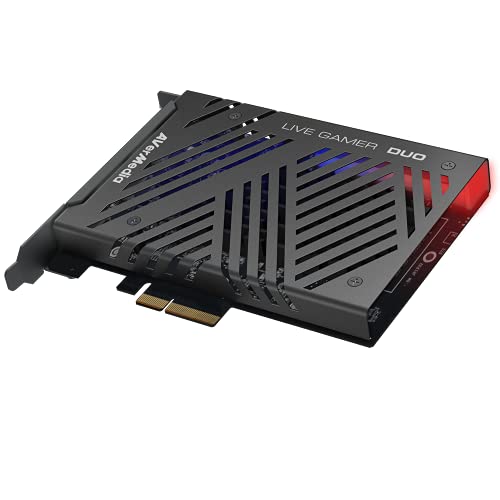
- Dual HDMI inputs in a PCIe x4 card
- Simultaneous uncompressed 1080p60 capture
- Zero-lag pass-through for live monitoring
Best For: Desktop streamers using cameras and consoles
Four-Input Production Hub
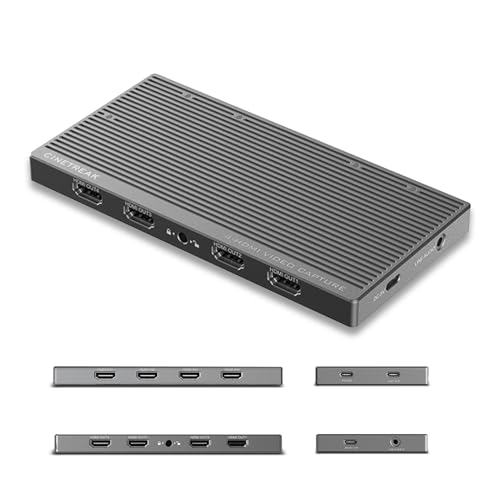
- Four HDMI inputs for simultaneous capture
- USB 3.2 Gen 2 UVC plug-and-play
- Includes pro audio input and 100W PD charging
Best For: Multi-camera production and live streaming
Portable USB Capture Pick
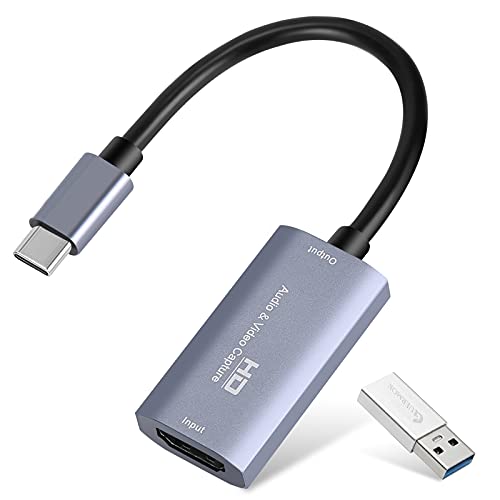
- USB 3.0 capture with compact aluminum build
- Supports 1080p60 output and 4K30 input
- Wide compatibility with OBS, Zoom, and many devices
Best For: Portable streaming and recording on the go
Dual-Input 4K Choice
ORICO IS6 4K Portable HDMI Capture Card

- Dual 4K@60Hz inputs with source switching
- 4K/60Hz passthrough with VRR support
- 3.5mm audio port and plug-and-play setup
Best For: Multi-device streams, gaming broadcasts, and hybrid presentations
Simple 1080p Starter

- 1080p 60fps capture with low latency
- HDMI loop-out for real-time monitoring
- Mic-in support and plug-and-play setup
Best For: Entry-level streaming, teaching, and basic HD capture
Switcher-Friendly Dual Input
VIXLW Dual 4K HDMI Capture Card

- Two 4K60 HDMI input ports
- PiP, PBP, and screen switching support
- USB 3.0 with built-in audio ports
Best For: Dual-source streaming, monitoring, and conference-style layouts
Budget-friendly USB 3.0 Camera Capture Card
4K Loop-Out USB Capture Card with Mic-In

- 4K 60Hz input and loop-out
- Captures up to 1080p 60fps or 2K 30fps
- Mic-in port for voice commentary
Best For: Budget-minded streamers needing simple capture and commentary support
Dual-Input Streaming Switcher Capture Card
Dual 4K HDMI Input Capture Card with PIP/PBP

- Two 4K60 HDMI inputs
- 1080p 60fps output over USB 3.0
- PIP and PBP layouts with source switching
Best For: Creators who want dual-source streaming control and built-in layout options
Compact 4K-Input USB-C Capture Card
UGREEN 4K Input USB Capture Card
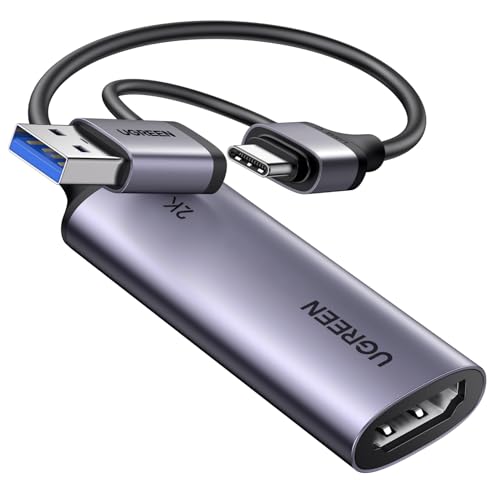
- 4K@30Hz input with 2K@30Hz output
- USB-A and USB-C connectivity
- Driver-free, low-latency operation
Best For: Portable streamers and recorders who want broad USB compatibility
Dual-Source 4K Simplicity – ezcap Dual 4K HDMI Capture
If you want a camera capture card with dual HDMI for two-source streaming, this ezcap model is built for straightforward dual-input workflows. It captures from two HDMI sources at once, supports 4K30 and 1080p60 recording, and connects over USB 3.1 for smooth, low-latency use across Windows, macOS, and Linux.
Best For: Dual-camera live streaming, recording, and gaming setups that need easy plug-and-play operation.
Pros:
- Dual HDMI input supports two sources simultaneously.
- USB 3.1 interface is designed for fast, reliable performance.
- Plug-and-play setup avoids extra driver installation.
- Works across Windows, macOS, and Linux.
Cons:
- Listed capture resolution is 1080p in the detailed specs.
- Not aimed at users who need PCIe expansion.
- Best suited to straightforward capture rather than advanced internal workflows.
Overall, this is a practical choice if your priority is simple dual HDMI capture with broad OS compatibility and minimal setup. It is especially appealing for creators who want an external, portable solution for streaming or recording.
PCIe Dual-Input Performance – AVerMedia Live Gamer Duo
This camera capture card with dual HDMI is aimed at creators who want an internal PCIe option with strong pass-through features. The AVerMedia Live Gamer Duo supports two HDMI inputs, records both in uncompressed Full HD 1080p60, and adds zero-lag pass-through for a responsive gameplay or camera setup.
Best For: Streamers using DSLR, mirrorless cameras, or consoles who want dual-input PCIe capture.
Pros:
- Dual HDMI inputs capture two sources in one slot.
- Records simultaneously from both inputs in uncompressed 1080p60.
- Zero-lag pass-through supports responsive monitoring.
- Compatible with popular tools like OBS, vMix, XSplit, and Streamlabs.
Cons:
- Requires a PCIe x4 slot and Windows 10 or later.
- Capture is limited to 1080p rather than 4K.
- Best fit is a desktop streaming rig, not portable use.
For creators building a PC-based production setup, this model offers a polished mix of dual-source capture and reliable pass-through. Its onboard processing and software compatibility make it a strong fit for more serious streaming workflows.
Four-Input Production Hub – CineTreak CT-4 4K Capture
If you need a camera capture card with dual HDMI and then some, the CineTreak CT-4 is built for multi-source production. It supports four HDMI inputs at once, works with UVC plug-and-play setups, and connects over USB 3.2 Gen 2 for high-speed capture in OBS, vMix, Zoom, and similar software.
Best For: Multi-camera live streaming and video production setups that need four simultaneous HDMI sources.
Pros:
- Captures four HDMI inputs simultaneously.
- UVC plug-and-play works with Windows, macOS, and Android.
- Includes a pro audio input for external sound gear.
- USB 3.2 Gen 2 connection supports high-speed transmission.
Cons:
- More capture capacity than many simple dual-input users need.
- Detailed specs list 1080p capture resolution despite the 4K30 feature callout.
- Best suited to production-oriented workflows rather than casual capture.
This is a strong pick when your workflow has outgrown basic two-source capture and you want room for more angles. The added audio input and charging support make it more flexible for studio-style live production.
Portable USB Capture Pick – Guermok 4K HDMI to USB-C
For buyers who want a compact camera capture card with dual HDMI-style versatility through broad device support, this Guermok model focuses on portability and everyday capture. It takes HDMI input over USB 3.0, supports up to 1080p60 output, and is designed for plug-and-play recording, live streaming, online meetings, and game capture.
Best For: Portable HDMI capture for streaming, recording, and conferencing on common laptops and mobile setups.
Pros:
- Plug-and-play design with no external power supply.
- Supports 1080p60 capture and up to 4K30 input.
- Works with a wide range of platforms and devices, including OBS and Zoom.
- Compact aluminum-alloy build is easy to carry.
Cons:
- One-way transmission only from HDMI to USB-C.
- Requires capture software to function.
- Not intended for direct screen casting to a monitor or TV.
This is a sensible option if you value portability and broad compatibility over advanced multi-input features. It covers the basics well for creators who need a lightweight external capture solution they can move between setups.
Dual-Input 4K Choice – ORICO IS6 4K Portable HDMI Capture Card
If you want a camera capture card with dual HDMI-style flexibility for switching between sources, the ORICO IS6 is built for that workflow. It supports dual 4K@60Hz inputs, letting you toggle between HDMI and Type-C sources without restarting your software, which is especially useful for live streams, hybrid presentations, and multi-device setups.
Best For: Streamers and creators who need quick source switching between two devices
Pros:
- Dual 4K@60Hz inputs with switchable HDMI and Type-C source selection
- 4K/60Hz passthrough with VRR support for smoother gameplay capture
- 3.5mm audio interface for direct analog audio input
- Plug-and-play on Windows and Mac with USB-C 3.0 connectivity
Cons:
- 1080p 60FPS capture is the emphasized creator target, not 4K capture recording detail
- Best suited to setups that can use its dual-input switching rather than a simple single-source workflow
The ORICO IS6 stands out if source switching matters more than basic capture alone. With its dual-input design, VRR support, and included cables, it’s a practical pick for users who want a more flexible camera capture card with dual HDMI-style input options.
Simple 1080p Starter – Newhope HDMI Capture Card
The Newhope HDMI capture card is a straightforward option if you need a camera capture card with dual HDMI routing basics handled by a single HDMI loop-out workflow. It captures at 1080p 60fps with low latency, making it a practical fit for gaming, teaching, conferencing, and other HD source capture jobs.
Best For: Budget-minded users who want easy 1080p capture with loop-out monitoring
Pros:
- 1080p 60fps capture with low latency
- HDMI loop-out for real-time external display monitoring
- Mic-in support for adding commentary during recordings
- Works with Windows, macOS, Linux, and iPadOS 17+
Cons:
- No 4K capture specification in the supplied notes
- Mic input is limited to 3.5mm TRS standard microphone headset use
For users who mainly need reliable 1080p capture rather than advanced switching features, this Newhope model keeps the setup simple. It focuses on low-latency capture, loop-out monitoring, and broad device compatibility at an easy-to-use level.
Switcher-Friendly Dual Input – VIXLW Dual 4K HDMI Capture Card
If your priority is a camera capture card with dual HDMI inputs and built-in switching, the VIXLW model is designed for that kind of content workflow. It offers two 4K60 HDMI input ports, 1080p 60fps output, and PiP/PBP layouts, making it a useful fit for live streaming, presentations, and side-by-side source monitoring.
Best For: Creators who want dual-source capture with PiP, PBP, and screen switching
Pros:
- Dual 4K60 HDMI input ports for connecting two sources at once
- Screen switching plus PiP and PBP layout options
- USB 3.0 transmission with ultra-low latency
- Built-in 3.5mm audio input/output for commentary
Cons:
- Output is listed as 1080p 60fps rather than 4K recording output
- Feature set is more complex than a basic single-purpose capture card
This VIXLW unit is the most feature-packed of the group for users who need dual-source management. If you want switching, PiP/PBP, and integrated audio in one box, it delivers a more flexible capture and monitoring setup than a standard one-input card.
Budget-friendly USB 3.0 Camera Capture Card – 4K Loop-Out USB Capture Card with Mic-In
If you want a camera capture card with dual HDMI-style flexibility for streaming and recording, this XIIXMASK model is built for practical, everyday use. It supports 4K 60Hz input and loop-out while capturing up to 1080p 60fps or 2K 30fps over USB 3.0, making it a simple fit for game capture, camera feeds, and live calls.
Best For: Streamers and creators who want a low-cost capture card with mic-in support and broad device compatibility.
Pros:
- 4K 60Hz HDMI input and loop-out with 1080p 60fps/2K 30fps capture
- Mic-in support for adding commentary during streams or recordings
- USB 3.0 connection with wide support for OBS, Zoom, VLC, and more
- Works with PS5, Switch, cameras, PCs, and multiple operating systems
Cons:
- Party chat is not recorded through the mic-in port
- Requires restarting OBS after audio setup to avoid no sound output
Overall, this is a straightforward capture solution if you need strong compatibility and a useful loop-out feature without moving into a more advanced multi-input setup. It emphasizes stability, low latency, and basic commentary support rather than extra production features.
Dual-Input Streaming Switcher Capture Card – Dual 4K HDMI Input Capture Card with PIP/PBP
This camera capture card with dual HDMI inputs is designed for creators who want to switch between two sources while keeping the workflow simple. The Osee GoStream M2 accepts two 4K60 HDMI inputs and outputs 1080p 60fps, making it useful for gaming, camera setups, and live conferencing in OBS or similar software.
Best For: Live streamers who need dual HDMI inputs, PIP/PBP layouts, and easy source switching.
Pros:
- Two 4K60 HDMI inputs for connecting two sources at once
- 1080p 60fps output with USB 3.0 low-latency performance
- PIP and PBP modes with multiple layouts for flexible production
- Built-in mic and audio I/O for voice commentary
Cons:
- Compatibility details in the notes emphasize Windows support
- Heavier and larger than simpler single-input dongle-style capture cards
For users who need more than basic capture, the dual-input design and display modes make this a more versatile streaming hub. It stands out most when you want to switch between sources or build a picture-in-picture layout without extra gear.
Compact 4K-Input USB-C Capture Card – UGREEN 4K Input USB Capture Card
If you need a camera capture card with dual HDMI-style usefulness in a compact form, this UGREEN model focuses on clean, driver-free capture from HDMI sources. It accepts 4K@30Hz input and outputs up to 2K@30Hz or 1080p 60fps over USB 3.0, which makes it a practical choice for gameplay, camera footage, and PC recording.
Best For: Users who want a lightweight, portable capture card with USB-A and USB-C support.
Pros:
- 4K@30Hz input with 2K@30Hz output and 1080p 60fps backward compatibility
- USB-A and USB-C interfaces for broad device matching
- Driver-free operation with support for OBS, XSplit, PotPlayer, and more
- Aluminum alloy casing helps with heat dissipation and signal stability
Cons:
- Only supports HDMI input to USB output, so it is unidirectional
- iPadOS compatibility requires version 17 or later
- HDCP must be turned off for PS5, PS4, Xbox, and Switch use
This is a strong pick if you value portability, modern port compatibility, and simple plug-and-play capture. It does not try to be a full production switcher, but it covers the basics very well for streaming and recording.
How We Picked the Best Camera Capture Card with Dual HDMI
For this roundup, we focused on dual-HDMI models that fit real-world creator needs: dependable capture quality, simple setup, useful pass-through support, and compatibility with common platforms such as Windows, macOS, Linux, and USB-C workflows. We also looked for cards that make sense for both beginners and more advanced live production setups.
Quick Comparison
Not every Camera Capture Card with Dual HDMI serves the same job. Some are built for straightforward dual-camera streaming, while others add switching, loop-out, PCIe installation, or multi-input production features. If you want the easiest plug-and-play experience, look for USB UVC models. If you need maximum stability and higher bandwidth, PCIe or 10Gbps USB options may be better.
Key Buying Factors for Camera Capture Card with Dual HDMI
Input Count and Switching Needs
Two HDMI inputs are ideal for dual-camera interviews, tutorials, and live demos. If you expect to grow into more sources, consider whether the device supports switching, multi-channel capture, or expansion beyond two inputs.
Resolution, Frame Rate, and Pass-Through
Pay attention to both capture and pass-through. Many creators only need 1080p60 capture, but pass-through may support 4K60 or higher for a smoother monitoring experience. Match the card to the resolution of your camera, console, or production gear so you do not overpay for performance you will not use.
Connection Type and Compatibility
USB 3.0, USB 3.1, USB-C, and PCIe each have trade-offs. USB models are easier to move between systems, while PCIe cards can offer a more permanent, stable workstation setup. Always verify compatibility with your operating system, streaming app, and camera sources before buying.
Audio and Latency
Good audio input options matter if you are mixing microphones, game audio, or external mixers. Low latency is also important for live switching and monitoring, especially in interviews, church production, esports, and hybrid events.
Who Should Buy Which Camera Capture Card with Dual HDMI?
Beginners and mobile creators should lean toward plug-and-play USB capture cards with dual HDMI and simple setup. Streamers who use a desktop rig and want maximum reliability may prefer PCIe or higher-bandwidth capture solutions. If you are producing shows, podcasts, or multi-camera content, prioritize models with better audio support, stable switching, and the resolution you need for live delivery rather than only recorded output.
In short, the right choice depends on how many sources you need, how you connect them, and whether your setup is built for easy portability or a dedicated production workflow.