Choosing the best channel strip with parametric equalizer can simplify recording by combining microphone preamplification, tone shaping, dynamics control, and monitoring in one unit. The right model can add clarity and character before a signal reaches your interface or mixer.
This roundup includes tube channel strips, compact parametric EQ options, car-audio processors, and rackmount equalizers. Use the guide below to match features, connectivity, and workflow to your studio, live rig, or listening system.
Best 10 Channel Strip with Parametric Equalizer Picks for 2026
Tube Control Room Pick
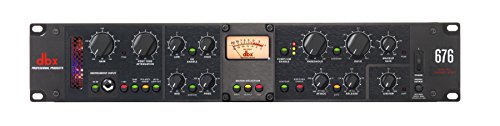
- Class-A tube preamp
- Compressor/limiter and 3-band parametric EQ
- XLR, 1/4-inch, instrument input, and side-chain insert
Best For: Recording and live rigs needing an all-in-one tube channel strip
Pedalboard Precision Pick

- Three-band boost/cut EQ
- Highpass, lowpass, and shelving filters
- 30 dB boost with sweepable Q
Best For: Portable instrument tone shaping and pedalboard integration
Digital Studio Expansion Pick
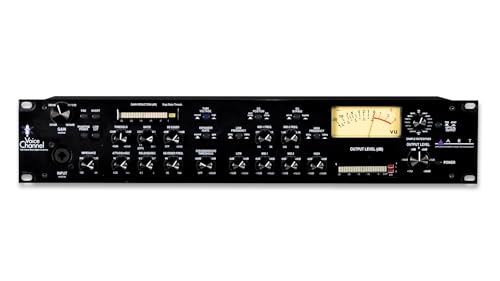
- Tube preamp for warmth and definition
- Compressor, expander, de-esser, and gate
- ADAT, AES/EBU, S/PDIF, TOSLink, and USB outputs
Best For: Recording studios needing flexible dynamics and digital connectivity
Car Audio Tuning Pick
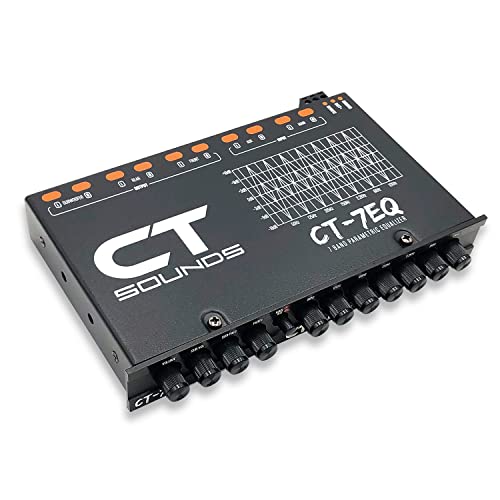
- Seven bands across 20 Hz–20 kHz
- Bass, mid, treble, and sub-bass controls
- 1/2-DIN design with installation hardware
Best For: Vehicle audio systems needing compact multi-band tuning
Tube-Controlled Tone

- 12AX7 Class A tube preamp with drive
- Parametric mid EQ and flexible high/low bands
- VCA compressor with automatic timing controls
Best For: Studio engineers wanting an all-in-one tube channel strip
Rack EQ Hub
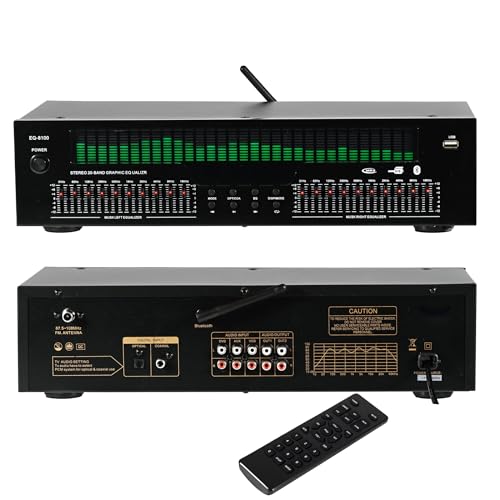
- 20-band stereo graphic EQ
- 31-band spectrum analyzer display
- Optical, coaxial, USB, Bluetooth, and RCA connectivity
Best For: Stereo, DJ, stage, and rack-system EQ monitoring
Optical Tube Compression

- Vacuum-tube microphone, instrument, and line preamp
- Built-in EQ and optical compressor
- Single-channel design with XLR input
Best For: Single-source recording with tube tone and optical compression
Dual-Band System Control

- Dual 31-band constant-Q graphic EQ
- Low/high-cut filtering and subwoofer output
- Balanced I/O with bypass and LED metering
Best For: Live sound and installed-system tuning
Tube Channel Processing

- Mono tube channel strip
- 4-band semi-parametric EQ
- Selectable opto/FET compression voicings
Best For: Vocal and instrument recording chains
Reliable Dual-Channel EQ
dbx 231s Dual 31-Band Equalizer

- Dual 31-band constant-Q graphic EQ
- Selectable ±6 dB or ±12 dB range
- Balanced XLR/TRS I/O and LED monitoring
Best For: Two-channel PA and live-sound correction
Tube Control Room Pick – dbx 676FX Channel Strip
The dbx 676FX is a practical channel strip with parametric equalizer control for recording and live setups. Its high-voltage Class-A tube preamp, compressor/limiter, sweepable-mid EQ, and XLR/1/4-inch connectivity cover the key stages of front-end processing in one rackmount unit.
Best For: Home studios, project studios, and live rigs needing tube coloration plus integrated dynamics and EQ.
Pros:
- High-voltage Class-A tube design supports warm, clear, or driven tones.
- Includes compressor/limiter and a 3-band parametric EQ with sweepable mids.
- Offers front-panel instrument input, XLR and 1/4-inch connections, side-chain insert, and VU metering.
Cons:
- Its 2U rackmount format requires dedicated rack or desktop space.
- At 13 pounds, it is less convenient to transport than a pedal or compact interface.
The 676FX is the most complete traditional channel-strip option here, especially when you want preamp character, compression, and frequency shaping without assembling separate units.
Pedalboard Precision Pick – Empress ParaEq MKII Deluxe
The Empress ParaEq MKII Deluxe is a compact pedal option for players who want channel strip with parametric equalizer-style frequency control in a pedalboard format. It combines three-band boost/cut EQ with highpass and lowpass filters, fully sweepable Q, shelving filters, and a separate 30 dB boost section.
Best For: Guitarists and other instrumentalists shaping a pedalboard signal with detailed analog EQ and boost control.
Pros:
- Three-band EQ provides up to 15 dB of boost or cut.
- Includes highpass and lowpass filters plus shelving options.
- Separate 30 dB boost section and fully sweepable Q offer broad tone-shaping flexibility.
Cons:
- It is an EQ and boost pedal rather than a complete mic channel strip.
- Its 1/4-inch pedal connectivity is less suited to rack-based studio routing.
The ParaEq MKII Deluxe is a focused choice when portability and precise instrument tone shaping matter more than tube preamplification or integrated dynamics processing.
Digital Studio Expansion Pick – ART VoiceChannel
The ART VoiceChannel is a tube channel strip designed for recording applications, pairing an ART tube preamp with compressor, expander, de-esser, and gate processing. Its extensive digital connectivity, including ADAT, AES/EBU, S/PDIF, TOSLink, and USB, makes it useful for studios that need flexible routing and conversion options.
Best For: Recording setups that prioritize tube preamp warmth, vocal dynamics control, and digital integration.
Pros:
- Tube preamp design is intended to provide warmth and definition.
- Provides compressor, expander, de-esser, and gate processing.
- Supports multiple digital outputs plus USB direct connection to a computer or laptop.
Cons:
- The supplied notes do not specify a parametric EQ section, so it is not a direct EQ-focused match.
- Its feature set may be more extensive than needed for a basic single-input setup.
The VoiceChannel is best viewed as a versatile tube recording front end with strong digital connectivity. Choose it when dynamics processing and digital outputs are more important than a documented onboard parametric equalizer.
Car Audio Tuning Pick – CT Sounds CT-7EQ 7-Band EQ
The CT Sounds CT-7EQ is a 1/2-DIN car audio channel strip with parametric equalizer-style frequency control, dividing 20 Hz to 20 kHz across seven bands. Its bass, mid, treble, and sub-bass adjustments are aimed at tuning an in-car system rather than recording microphones or instruments.
Best For: Car audio installations needing seven-band frequency shaping in a compact 1/2-DIN chassis.
Pros:
- Seven bands cover frequencies from 20 Hz to 20 kHz.
- Provides separate bass, mid, and treble adjustments plus sub-bass selections.
- Includes installation brackets and hardware.
Cons:
- It is designed for car audio and is not a microphone channel strip.
- It does not include a preamp, compressor, or limiter according to the supplied notes.
The CT-7EQ makes sense for vehicle-system tuning and offers more bands than the other dedicated EQ option here. It is not the right fit for studio recording workflows that require input gain or dynamics processing.
Tube-Controlled Tone – PreSonus StudioChannel
The PreSonus StudioChannel is a versatile channel strip with parametric equalizer functionality, combining a Class A 12AX7 tube preamp, VCA compressor, and three-band EQ in a rack-mountable chassis. Its mic, instrument, and line inputs make it practical for shaping vocals, instruments, keyboards, and synths.
Best For: Project and professional studios that want tube preamp character, compression, and flexible EQ in one unit.
Pros:
- Class A 12AX7 tube preamp offers adjustable gain and tube drive.
- Three-band EQ includes a variable-Q parametric mid band plus shelving or peak options for the high and low bands.
- VCA compressor includes automatic attack and release settings with soft and hard knee options.
- Supports mic, instrument, and line sources, with phantom power, polarity reverse, and a -20 dB pad.
Cons:
- Its 10.5-pound, 1U rack format is less convenient for compact or portable setups.
- The tube-based design may be more functionality than users seeking only basic EQ need.
Choose this model when you want a complete front-end channel for recording and tone shaping rather than a standalone equalizer. The combination of parametric mid control, compression, and tube drive gives it broad studio utility.
Rack EQ Hub – EQ8100 20-Band Equalizer
The EQ8100 is primarily a stereo graphic equalizer and spectrum analyzer, not a traditional channel strip with parametric equalizer. It may suit buyers who need broad multi-band signal shaping, visual frequency monitoring, and digital or analog connectivity for home stereo, DJ, stage, or studio-rack systems.
Best For: Users who prioritize graphic EQ control, spectrum display, and flexible system connectivity over preamp and compressor features.
Pros:
- Provides 20-band graphic EQ control with a real-time 31-band spectrum analyzer.
- Accepts optical, coaxial, USB, and Bluetooth connections, with RCA outputs listed.
- Offers an ultra-thin 1U chassis, color-coded controls, and auto-save presets.
- Includes customizable modes intended for feedback and noise management.
Cons:
- It does not include the microphone preamp or compressor expected from a conventional channel strip.
- The supplied specifications describe graphic EQ rather than parametric EQ.
- Its listed 19-inch dimensions may be impractical for some compact racks.
This is a better match for system-wide stereo tuning and visual monitoring than for recording a microphone through a complete channel strip. Confirm that graphic EQ meets your workflow before choosing it for a channel-strip application.
Optical Tube Compression – Universal Audio LA-610 Mk II
The Universal Audio LA-610 Mk II is a single-channel tube strip built around a vacuum-tube microphone, instrument, and line preamp with an optical compressor and EQ. For buyers comparing a channel strip with parametric equalizer, it is worth noting that the supplied specifications do not identify the EQ as parametric or provide detailed EQ controls.
Best For: Recording setups seeking a tube preamp and optical compression path for one microphone, instrument, or line source.
Pros:
- Combines a vacuum-tube preamp, EQ, and optical compressor in one channel.
- Accepts microphone, instrument, and line-level applications.
- Uses an XLR audio input and has a listed two-year warranty.
Cons:
- It is a single-channel unit, limiting simultaneous source processing.
- The supplied information does not confirm parametric EQ functionality or describe its available bands.
- At 15.7 pounds, it may be less convenient for portable setups.
The LA-610 Mk II is a strong candidate when tube coloration and optical compression are central to your recording chain. If precise parametric equalization is essential, verify the EQ design and controls before buying.
Dual-Band System Control – Rockville REQ231 V2
The Rockville REQ231 V2 is a rack-mount system equalizer rather than a channel strip with parametric equalizer controls, but it offers precise two-channel tone shaping for live sound and installed systems. Its dual 31-band, 1/3-octave constant-Q filters cover 20 Hz–20 kHz, with selectable boost/cut ranges and useful filtering for system cleanup.
Best For: Live sound, installed systems, and main/subwoofer tuning.
Pros:
- Dual 31-band graphic EQ with constant-Q filters and selectable ±6 dB or ±12 dB range.
- Variable low-cut and high-cut filters help manage rumble and extreme frequencies.
- Dedicated subwoofer output, balanced connections, LED metering, and true bypass.
Cons:
- Graphic EQ design is less targeted than a true parametric equalizer.
- Rack-oriented size and 110V AC power may be excessive for compact setups.
Choose the REQ231 V2 when broad, repeatable system shaping and subwoofer integration matter more than channel-strip processing such as compression or tube coloration.
Tube Channel Processing – ART Pro Channel III
The ART Pro Channel III is the closest match here to a channel strip with parametric equalizer functionality. This mono tube channel strip combines selectable microphone impedance, switchable opto/FET compression voicings, and a 4-band semi-parametric EQ for shaping an individual microphone or instrument path.
Best For: Mono vocal, microphone, and instrument recording chains.
Pros:
- Includes a 4-band semi-parametric EQ for focused tonal adjustments.
- Switchable opto/FET compression voicings provide two processing approaches.
- Tube channel-strip design and selectable microphone impedance add front-end flexibility.
Cons:
- Mono processing limits it to one channel path at a time.
- The supplied specifications do not indicate a fully parametric EQ with separate controls for every band.
For buyers specifically seeking channel-strip workflow, the Pro Channel III is the strongest fit in this group, especially when compression and microphone input options are as important as EQ.
Reliable Dual-Channel EQ – dbx 231s Dual 31-Band Equalizer
The dbx 231s is a dual-channel 31-band graphic equalizer, not a channel strip with parametric equalizer controls. It is designed for straightforward system EQ, providing constant-Q 1/3-octave bands, switchable boost/cut ranges, front-panel bypass, and balanced XLR and 1/4-inch TRS connectivity.
Best For: Two-channel PA, rack, and live-sound frequency correction.
Pros:
- Dual 31-band constant-Q EQ provides detailed adjustments across the audio spectrum.
- Selectable ±6 dB or ±12 dB boost/cut ranges accommodate different correction needs.
- Balanced XLR and TRS inputs and outputs, plus output-level LED ladders.
Cons:
- Graphic EQ sliders are less surgical than a true parametric equalizer.
- It does not include microphone preamp, compression, or other channel-strip processing.
The 231s makes sense for buyers who need dependable dual-channel system shaping and monitoring, but it is not the right substitute for a complete recording channel strip.
How We Picked the Best Channel Strip with Parametric Equalizer Options
We compared the selected products by looking at their signal-processing roles, input and output connections, EQ flexibility, dynamics features, tube or solid-state design, rack or pedal format, and intended application. Because “channel strip” can describe several types of hardware, this list includes complete recording strips as well as specialized equalizers that may suit particular systems.
For studio recording, we prioritized microphone preamps, useful midrange control, compression, limiting, metering, and integration with an audio interface. For live, home audio, and car-audio use, we emphasized channel count, frequency-band control, installation format, and practical operation.
Quick Comparison
| Best For | Look For | Typical Format |
|---|---|---|
| Vocal and instrument recording | Mic preamp, parametric EQ, compressor, phantom power | Rackmount channel strip |
| Tube tone and character | Tube gain stage, output control, metering | Rackmount studio unit |
| Precise tone shaping | Adjustable frequency, bandwidth, and boost/cut | Pedal or rack unit |
| Live sound and system tuning | Multiple bands, balanced I/O, bypass, reliable metering | Dual-channel rackmount EQ |
| Car-audio systems | Compact installation, multiple bands, vehicle-compatible connections | Half-DIN or in-dash processor |
Key Buying Factors for a Channel Strip with Parametric Equalizer
Signal Path and Core Functions
Decide whether you need a complete front-end or only EQ. A full channel strip typically combines a mic preamp, equalizer, compressor, limiter, and output stage. If your interface already has a strong preamp and dynamics processing, a dedicated EQ or boost unit may be more practical.
EQ Control
Parametric EQ is valuable because it lets you adjust frequency, gain, and bandwidth or Q. This makes it easier to remove room resonance, soften harsh vocals, add presence, or shape an instrument without affecting a broad range unnecessarily. Graphic EQs offer faster visual adjustment but generally provide less precise control.
Connectivity and Installation
Check for XLR microphone inputs, ¼-inch line or instrument connections, balanced outputs, inserts, digital outputs, and phantom power as needed. Confirm rack depth and mounting requirements for studio or live installations. Pedal-format units are easier to place in an instrument chain but are not substitutes for a microphone preamp.
Noise, Headroom, and Metering
Look for adequate headroom, low noise, clear gain staging, and meters that make clipping easy to identify. Tube circuits can provide desirable saturation, while clean solid-state designs may be preferable when transparent processing and maximum control are priorities.
Who Should Buy Which Channel Strip with Parametric Equalizer?
Choose a full tube or hybrid channel strip if you record vocals, voiceover, bass, or instruments and want preamp, EQ, and compression before conversion. Choose a parametric pedal if you need focused tone shaping or a boost for an instrument rig. A multi-band rack EQ is better for live systems, PA tuning, or broad frequency correction. Car-audio buyers should select a compact vehicle-specific processor rather than a studio rack unit. For home stereo or event use, prioritize the required inputs, display visibility, and simple hands-on adjustment over recording features.