The right channel strip can turn a basic home-studio signal chain into a more controlled, polished recording setup. By combining preamp, EQ, compression, and other processing in one unit, it simplifies tracking vocals, instruments, and voiceover.
These 10 options cover practical USB interfaces, flexible analog processors, and high-end tube designs. The best choice depends on your microphone, recording style, available rack space, and how much hands-on control you want before the signal reaches your DAW.
Best 10 Channel Strips for Home Studio Picks for 2026
Vocal Control Hub

- One-channel mic and instrument preamp
- Compression, de-esser, enhancer, and gate
- Rackmount design with loop-out support
Best For: Vocal and spoken-word recording
Project Studio Command Center

- 24-channel analog mixing platform
- USB multitrack and SD stereo recording
- Onyx preamps, EQ, effects, and Bluetooth
Best For: Large home-studio and live recording sessions
Tube-Tone Recording Front End
- Tube preamp for warmth and definition
- Compressor, expander, de-esser, and gate
- USB plus multiple digital output formats
Best For: Tube-flavored vocal and instrument recording
Compact USB Voice Chain

- One-channel mic/line preamp and USB interface
- Built-in compressor, gate/expander, and de-esser
- Supports Windows and Mac systems
Best For: Simple computer-based vocal and streaming setups
Tube-Controlled Versatility

- Class A 12AX7 tube preamp with tube drive
- VCA compressor with auto attack/release
- Parametric mid EQ and 1U rack format
Best For: Home-studio vocals and instruments needing integrated tone shaping
Streamlined Mono Control

- Mic and instrument preamp in a mono strip
- Compression and limiting with output metering
- Three-band EQ plus de-esser
Best For: Mono vocal and instrument recording chains
High-Voltage Tube Power
- 250-volt Class A tube preamp
- Compressor/limiter with side-chain insert
- Sweepable-mid parametric EQ and VU meter
Best For: Serious home studios and live setups needing tube tone
Flexible Tube Control

- Mono tube channel strip with selectable microphone impedance
- Opto and FET compression voicings
- 4-band semi-parametric EQ
Best For: Home studios needing flexible single-channel tone shaping
Classic Tube Dynamics

- Vacuum-tube microphone, instrument, and line preamp
- Integrated EQ and optical compressor
- Single-channel design with 2-year warranty description
Best For: Tube-based tracking of vocals and individual instruments
Class A Harmonic Detail

- Class A mic/line preamp with custom transformer outputs
- Silk harmonic enhancement and compressor
- 8-segment LED meters for level monitoring
Best For: Single-channel recording with harmonic shaping and metering
Vocal Control Hub – dbx 286s Channel Strip
For home-studio builders comparing channel strips for home studio use, the dbx 286s is a focused one-channel solution for microphones and instruments. It combines a mic preamp with compression, de-essing, enhancement, and expander/gate processing, while its metering and rack-ready design suit a permanent recording setup.
Best For: Vocalists, podcasters, and home-studio users who want hands-on voice processing before recording or mixing.
Pros:
- Includes compression, de-esser, enhancer, and expander/gate sections.
- Accepts XLR microphone input plus 1/4-inch line-level sources.
- Loop-out and insert connections support additional external processing.
- Status LEDs provide quick monitoring of levels and processor activity.
Cons:
- It is a single-channel processor rather than a multi-channel mixer.
- Its corded, 1U rackmount format may be more hardware than casual users need.
The dbx 286s is a practical choice when the priority is shaping one vocal or instrument signal with familiar analog-style controls and clear front-panel monitoring.
Project Studio Command Center – Mackie Onyx24 Mixer
Among channel strips for home studio workflows, the Mackie Onyx24 takes a broader mixer-based approach. Its 24-channel analog layout combines Onyx mic preamps, British-style EQ, USB multitrack recording, SD stereo recording, effects, and Bluetooth channel streaming for larger sessions.
Best For: Home studios recording bands, multiple microphones, live performances, or content projects that need many inputs.
Pros:
- Provides 24 channels for larger recording and mixing setups.
- Supports 96kHz/24-bit multitrack recording to Mac or PC over USB.
- Records and plays stereo material directly to and from an SD card.
- Includes Onyx preamps, sweepable-mid EQ, digital effects, and Bluetooth streaming.
Cons:
- Its mixer format is much larger than a dedicated one-channel strip.
- At 28.6 pounds, it is less convenient for portable setups.
The Onyx24 makes the most sense when your definition of a channel-strip setup includes a full routing and recording hub rather than a single vocal-processing chain.
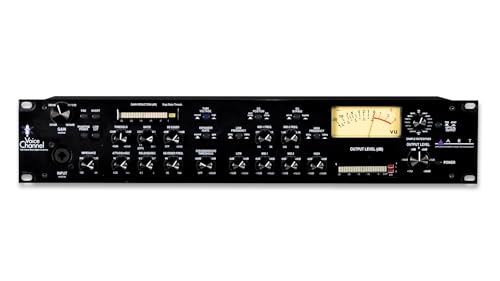
Tube-Tone Recording Front End – ART VoiceChannel Tube Strip
The ART VoiceChannel is a one-channel option for channel strips for home studio recording when tube coloration and extensive connectivity matter. Its tube preamp is paired with compressor, expander, de-esser, and gate controls, plus digital outputs and USB computer connection.
Best For: Engineers recording vocals or instruments who want tube-preamp character and flexible digital integration.
Pros:
- Uses an ART Tube Preamp design for warmth and definition.
- Provides compressor, expander, de-esser, and gate processing.
- Offers ADAT, AES/EBU, S/PDIF, and TOSLink digital outputs.
- Supports USB direct connection and sample rates up to 192kHz.
Cons:
- It is limited to one channel.
- The range of digital connections may be unnecessary for a basic interface-only setup.
Choose the VoiceChannel if you want a dedicated recording front end that can feed both a computer and several types of digital hardware while adding tube-based preamp character.
Compact USB Voice Chain – Behringer UV1 Channel Strip
For straightforward channel strips for home studio systems, the Behringer Ultravoice UV1 combines a one-channel mic/line preamp with USB audio connectivity and essential voice-processing tools. Its compressor, gate/expander, and de-esser functions cover the core needs of a simple spoken-word or vocal chain.
Best For: Home vocalists, streamers, and computer-based users who want one channel with built-in dynamics and USB connection.
Pros:
- Combines a one-channel mic/line preamp and USB audio interface.
- Includes compressor, gate/expander, and de-esser processing.
- Supports Windows 10 and Mac OS X 10.4 or later.
- Supports sample rates up to 192kHz.
Cons:
- It provides only one channel.
- The supplied notes do not specify broader analog or digital I/O beyond its USB connectivity.
The UV1 is a sensible streamlined pick when you need a single processed input to connect directly with a computer, without the larger routing options of a mixer or multi-format channel strip.
Tube-Controlled Versatility – PreSonus StudioChannel
For home studios seeking channel strips for home studio recording, the PreSonus StudioChannel combines a Class A 12AX7 tube preamp, VCA compressor, and three-band EQ in a single rack unit. Its mic, instrument, and line inputs support a range of recording sources.
Best For: Home-studio vocals, instruments, keyboards, and synths where tube drive and integrated dynamics control are useful.
Pros:
- High-voltage Class A tube preamp with adjustable tube drive
- VCA compressor includes auto attack/release and soft or hard knee options
- Three-band EQ offers a variable-Q parametric mid band plus shelving or peak low and high bands
- Includes mic, instrument, and line inputs in a rugged 1U rack-mountable chassis
Cons:
- Its 10.5-pound rack format may be more hardware than a compact setup needs
- The one-year warranty applies only to the original purchaser from an authorized dealer
The StudioChannel is a flexible all-in-one choice when you want preamp color, compression, and EQ before recording, with enough connectivity for varied home-studio sources.
Streamlined Mono Control – SPL Track One MK3
The SPL Track One MK3 is a mono channel strip for home studio setups that need several recording tools in one unit. It combines a mic/instrument preamp with compression, limiting, metering, three-band EQ, and de-essing.
Best For: Mono vocal or instrument recording chains that benefit from preamp, dynamics, EQ, and de-essing in one processor.
Pros:
- Combines mic and instrument preamp functions with compression and limiting
- Includes three-band EQ and a dedicated de-esser
- Output metering provides a way to monitor the processed signal
Cons:
- It is a mono channel strip, so stereo sources require additional equipment or processing
- Its listed 10.26-pound weight and larger product dimensions may not suit small workspaces
Choose the Track One MK3 if your priority is a focused mono recording path with core dynamics, tonal shaping, and sibilance control rather than a broader multi-channel setup.
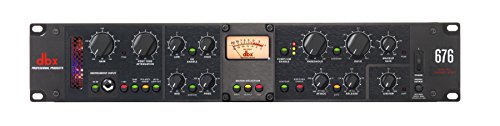
High-Voltage Tube Power – dbx 676FX Tube Channel Strip
The dbx 676FX is a 2U channel strip for home studios that want tube preamp character alongside compression, limiting, and EQ. Its 250-volt Class A tube design, front-panel instrument input, VU meter, and XLR or 1/4-inch connectivity support both recording and live applications.
Best For: Serious home-studio or live setups needing tube coloration, hands-on dynamics control, and sweepable midrange EQ.
Pros:
- 250-volt Class A tube preamp can deliver warm, clear, or richly dirty tones
- Integrated compressor/limiter is based on the dbx 266sx design
- Three-band parametric EQ includes sweepable mids
- Offers front-panel instrument input, side-chain insert, VU meter, and XLR or 1/4-inch connections
Cons:
- The 2U rack format occupies more rack space than a 1U channel strip
- At 13 pounds, it is the heaviest of these listed options
The 676FX stands out for users who want extensive hardware control and tube-based tonal flexibility, especially when sweepable mid EQ and side-chain access matter in the signal path.
Flexible Tube Control – ART Pro Channel III
The ART Pro Channel III is a versatile option for home studio owners comparing channel strips for home studio recording. Its mono tube design combines microphone impedance selection, two compressor voicings, and a 4-band semi-parametric EQ for shaping a single source.
Best For: Home studios that want flexible tube-based tracking and hands-on tone shaping for one channel.
Pros:
- Switchable microphone impedance expands input-matching options.
- Selectable opto and FET compression voicings provide two approaches to dynamics control.
- 4-band semi-parametric EQ supports detailed tonal adjustments.
Cons:
- Mono design handles one channel at a time.
- Its 10.61-pound weight and larger dimensions may require dedicated rack or desktop space.
Choose this model if compressor flexibility and adjustable EQ are priorities in your home studio signal chain. It is a particularly practical fit when you want several shaping tools in one mono unit.
Classic Tube Dynamics – Universal Audio LA-610 Mk II
The Universal Audio LA-610 Mk II is a single-channel tube option for home studio owners seeking channel strips for home studio vocal, instrument, or line recording. It combines a vacuum-tube preamp with EQ and an optical compressor in one unit.
Best For: Recording setups that want tube preamplification and optical compression on microphone, instrument, or line sources.
Pros:
- Supports microphone, instrument, and line preamp applications.
- Combines vacuum-tube gain, EQ, and optical compression.
- Includes a 2-year warranty description.
Cons:
- It is a one-channel unit, so stereo processing requires additional hardware.
- At 15.7 pounds, it is the heaviest model in this comparison.
The LA-610 Mk II makes sense when a focused, tube-based recording path is more important than multiple channels. Its preamp, EQ, and optical compressor provide a compact front end for individual sources.
Class A Harmonic Detail – Newton Channel Strip
The Newton Channel Strip is a mono choice for home studio users evaluating channel strips for home studio recording. It pairs a Class A mic/line preamp with custom transformer outputs, Silk harmonic enhancement, compressor control, and 8-segment LED metering.
Best For: Home studios seeking Class A preamp character, transformer outputs, harmonic enhancement, and visible level monitoring on one channel.
Pros:
- Class A mic/line preamp supports both microphone and line sources.
- Custom transformer outputs and Silk provide harmonic-shaping options.
- Compressor and 8-segment LED meters add dynamics control and level feedback.
Cons:
- Mono design limits processing to one channel at a time.
- Its 9.2-pound weight and larger footprint may need dedicated placement.
This model is a strong fit when preamp architecture, harmonic enhancement, and metering are central to your workflow. Consider it for single-source recording where you want both tone options and straightforward visual level monitoring.
How We Picked These Channel Strips for Home Studio Use
We focused on the features that matter during real-world tracking: preamp quality, useful dynamics control, EQ flexibility, connectivity, metering, workflow, and value. The selection includes compact voice-focused processors, full-featured analog channel strips, tube-based designs, and units with USB or digital outputs.
We also considered how easily each model can fit into a typical home setup. A channel strip should improve recording efficiency without creating unnecessary routing or monitoring complications. Models with dedicated compression, de-essing, gating, or enhancer sections can be especially useful when recording spoken word or vocals, while broader EQ and dynamics sections suit musicians who want more control over individual sources.
Quick Comparison
- Best for voice and streaming: dbx DBX286S and Behringer UV1.
- Best for hands-on analog control: ART Pro Channel III and SPL Track One MK3.
- Best for tube character: Universal Audio LA-610 Mk II, ART VoiceChannel, and dbx DBX676FX.
- Best for integrated studio connectivity: Mackie Onyx mixer and Behringer UV1.
- Best for a straightforward recording chain: PreSonus StudioChannel and Newton Channel Strip.
Key Buying Factors for Channel Strips for Home Studio
Preamp Type and Gain
Check whether the unit uses a solid-state, tube, or hybrid preamp. Condenser microphones generally need phantom power, while low-output dynamic and ribbon microphones benefit from ample clean gain. Tube designs can add harmonic color, but they may be less neutral than transparent solid-state options.
Processing Controls
Decide which tools you will actually use. A compressor can smooth vocal levels, a de-esser can reduce harsh sibilance, and an expander or gate can help manage room noise. Parametric EQ is more flexible than simple shelving controls when you need to correct resonance or shape a source precisely.
Connections and Routing
Look for balanced XLR or quarter-inch connections, inserts, line outputs, and digital or USB connectivity if you want a shorter path into your computer. A USB-equipped model can be convenient for solo recording, while a traditional analog strip may integrate better with an existing audio interface.
Metering, Format, and Workflow
Clear meters make gain staging easier, particularly when tracking through compression. Consider whether you need a rack-mountable unit, desktop controls, or a mixer-based format. Also check power requirements and available space before buying.
Who Should Buy Which Channel Strips for Home Studio?
Choose the dbx DBX286S or Behringer UV1 if you mainly record podcasts, streaming content, or spoken vocals and want accessible voice processing. Pick the Mackie Onyx mixer if you need multiple inputs and flexible computer-based recording.
For singers and musicians who want analog shaping at the tracking stage, the ART Pro Channel III, SPL Track One MK3, or PreSonus StudioChannel offer useful control without requiring separate processors. If tube warmth is the priority, consider the Universal Audio LA-610 Mk II, ART VoiceChannel, or dbx DBX676FX. The Newton Channel Strip is worth considering when you want a dedicated, streamlined front end with a less complicated workflow.