The right channel strip can make a spoken-word microphone sound clearer, more controlled, and easier to mix. These 10 picks cover practical podcast setups, home studios, mobile recording, and professional rack or 500 Series workflows.
We compare preamp quality, dynamics control, voice-shaping tools, connectivity, and ease of use so you can choose a processor that fits your microphone, room, and recording setup.
Best 10 Channel Strips for Podcasting Picks for 2026
Best All-Around Choice

- Compression, de-esser, enhancer, and expander/gate
- XLR and TRS connections with loop-out
- Rackmountable 1U design
Best For: Hands-on vocal processing in a studio setup
Best USB-Ready Option

- One-channel mic/line preamp
- Built-in USB audio interface
- Compression, gate, expander, and de-esser
Best For: Simple single-microphone computer recording
Best Digital Connectivity

- Tube preamp for warmth and definition
- Compressor, expander, de-esser, and gate
- ADAT, AES/EBU, S/PDIF, TOSLink, and USB
Best For: Studios needing flexible digital outputs
Best 500-Series Pick
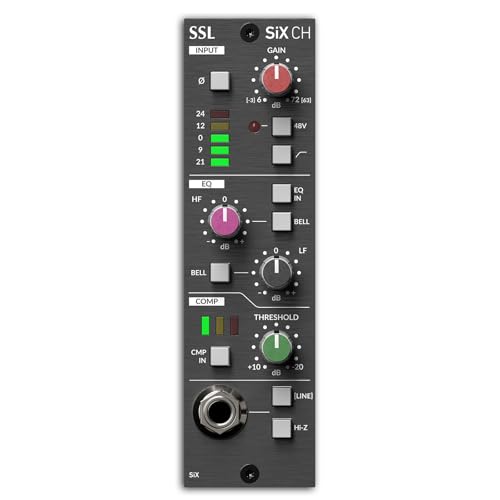
- 500-series mic pre, EQ, and compressor
- +48V phantom power and 75 Hz high-pass filter
- Front-panel TRS input with Hi-Z switch
Best For: Modular 500-series podcast recording rigs
Tube Tone Control

- 12AX7 tube preamp with adjustable drive
- VCA compressor with automatic attack/release
- Variable-Q EQ and multiple input types
Best For: Podcasters seeking tube character and detailed channel processing
All-in-One Voice Processing

- Mic/instrument preamp in a mono channel strip
- Compressor/limiter, three-band EQ, and de-esser
- Output metering for signal monitoring
Best For: Single-channel podcast vocal processing
Classic Tube Flexibility
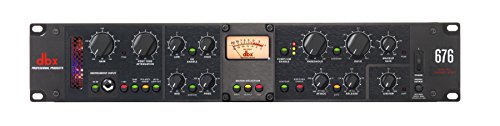
- 250-volt Class-A tube preamp
- Compressor/limiter with side-chain insert
- Sweepable-mid parametric EQ and VU meter
Best For: Rack-based podcast studios wanting extensive analog control
Versatile Tube Control

- Mono tube channel strip
- Selectable Opto/FET compression
- 4-band semi-parametric EQ
Best For: Hands-on vocal shaping and flexible podcast signal processing
Analog Noise Control

- Reduces ambient and preamp noise
- Fully analog, near-zero-latency design
- Compact unit with XLR-to-TRS cable
Best For: Home-studio podcast noise reduction after a mic preamp
Class A Vocal Processing

- Class A mic/line preamp
- Custom transformer outputs and Silk enhancement
- Compressor with 8-segment LED metering
Best For: Characterful mono vocal chains with built-in compression
Best All-Around Choice – dbx 286s Mic Channel Strip
The dbx 286s is a practical pick among channel strips for podcasting when you want microphone preamplification and several voice-focused processing tools in one rackmount unit. Its compressor, de-esser, enhancer, and expander/gate provide useful control over dynamics, sibilance, tone, and unwanted noise.
Best For: Podcasters who want hands-on vocal processing without relying entirely on software.
Pros:
- Includes compression, de-essing, enhancement, and expander/gate processing.
- Offers XLR microphone and 1/4-inch TRS inputs, plus a loop-out for additional processors.
- Status LEDs make audio levels and processor activity easy to monitor.
- Rackmountable 1U design suits permanent studio setups.
Cons:
- It is a single-channel, corded unit rather than a USB audio interface.
- Its 1U rack format may be less convenient for compact desktop setups.
The 286s stands out for straightforward, dedicated voice processing and flexible connections. It is especially useful when you already have an audio interface or mixer and want a familiar hardware channel strip in front of it.
Best USB-Ready Option – Behringer Ultravoice UV1
The Behringer Ultravoice UV1 combines a one-channel mic/line preamp with a USB audio interface, making it a convenient option among channel strips for podcasting. It also includes compression, gating, and an expander/de-esser section for shaping a spoken-word signal.
Best For: Podcasters who want a single-channel preamp and USB connection in one device.
Pros:
- Combines microphone/line preamplification with USB audio connectivity.
- Provides compression, gate, expander, and de-esser processing.
- Supports sample rates up to 192 kHz.
Cons:
- It has only one channel.
- The supplied details list Windows 10 and Mac OS X 10.4 or higher compatibility, without broader platform information.
The UV1 is a focused solution for a one-person recording chain. Its integrated USB interface can simplify the path from microphone processing to a computer, while the onboard dynamics tools help reduce the need for separate processors.
Best Digital Connectivity – ART VoiceChannel
The ART VoiceChannel is a tube-based channel strip for podcasting and other recording applications, pairing its preamp design with compressor, expander, de-esser, and gate processing. Its broad digital output selection is useful if your studio setup uses ADAT, AES/EBU, S/PDIF, TOSLink, or USB connections.
Best For: Recordists who want tube preamp character and multiple digital connection options.
Pros:
- Uses a proven ART tube preamp design for warmth and definition.
- Includes compressor, expander, de-esser, and gate controls.
- Offers ADAT, AES/EBU, S/PDIF, TOSLink, and USB connectivity.
- Supports Windows, macOS, and Linux systems according to the supplied details.
Cons:
- It is a single-channel unit.
- The supplied weight is 5.5 kg, so it is not an especially lightweight option.
The VoiceChannel is a versatile choice when digital integration matters as much as analog processing. Its combination of tube preamp design and extensive outputs gives it a strong fit in more developed recording rigs.
Best 500-Series Pick – SSL SiX Channel Strip
Solid State Logic SiX Channel Strip 500 Series | Mic-Pre, EQ, and Single Knob Compressor
Check Price On AmazonThe Solid State Logic SiX Channel Strip is a compact 500-series module for podcasting setups built around a compatible chassis. It combines a mic preamp, EQ, high-pass filter, and single-knob compressor, with phantom power and a front-panel line input for added flexibility.
Best For: 500-series users who want a streamlined SSL channel strip for one microphone path.
Pros:
- Combines mic preamp, EQ, and compressor functions in one module.
- Provides +48V phantom power for compatible condenser microphones.
- Includes a switchable 12 dB/octave, 75 Hz high-pass filter.
- Front-panel TRS line input includes a 1 MΩ Hi-Z switch.
Cons:
- Requires a compatible 500-series chassis.
- It is a single-channel module.
- The compressor uses a single-knob control, offering less adjustment than more elaborate designs.
The SiX Channel Strip is best suited to an existing modular rack rather than a standalone podcast desk. Its focused control set can keep a vocal chain efficient while providing essential filtering, EQ, compression, and phantom power.
Tube Tone Control – PreSonus StudioChannel
For podcasters comparing channel strips for podcasting, the PreSonus StudioChannel combines a Class A 12AX7 tube preamp, VCA compressor, and three-band EQ in one rackmount unit. Its high-pass filter, pad, phantom power, and polarity reverse add useful control for different microphones and recording environments.
Best For: Podcasters who want tube coloration plus hands-on compression and EQ in a single channel.
Pros:
- High-voltage Class A 12AX7 tube preamplifier with adjustable tube drive.
- VCA compressor includes automatic attack/release and soft or hard knee options.
- Three-band EQ features a variable-Q parametric mid band and shelving or peak options.
- Supports mic, line, and instrument inputs in a rugged 1U rackmount chassis.
Cons:
- At 10.5 pounds, it is less portable than a compact desktop interface.
- Its broad studio feature set may be more control than a simple voice-only setup requires.
The StudioChannel is a flexible choice when you want to shape voice tone before it reaches your recording interface, especially if tube warmth and detailed dynamics control are priorities.
All-in-One Voice Processing – SPL Track One MK3
The SPL Track One MK3 is a mono channel strip for podcasting that brings mic or instrument preamplification, compression, limiting, EQ, de-essing, and output metering together in one unit. It is designed for a focused single-channel recording setup where vocal processing and monitoring are central.
Best For: Podcasters who need dedicated mono voice processing with compression, de-essing, and metering.
Pros:
- Combines a mic/instrument preamp, compressor/limiter, three-band EQ, and de-esser.
- Output metering provides a dedicated way to monitor the processed signal.
- Mono format suits a single-host or single-microphone recording chain.
Cons:
- It is a mono channel strip, so multi-microphone setups require additional channels.
- The supplied notes do not specify rack size, input connectivity, or detailed control options.
With its voice-focused combination of dynamics control, EQ, de-essing, and metering, the Track One MK3 is a straightforward option for podcasters building a dedicated single-channel front end.
Classic Tube Flexibility – dbx 676FX Tube Channel Strip
For channel strips for podcasting, the dbx 676FX offers a high-voltage Class-A tube mic preamp alongside a compressor/limiter, three-band parametric EQ, and VU meter. Its XLR and quarter-inch connectivity, front-panel instrument input, and side-chain insert make it adaptable to studio or live recording workflows.
Best For: Podcasters who want tube preamp character, traditional VU monitoring, and extensive analog processing options.
Pros:
- 250-volt vacuum-tube design supports warm, clear, or deliberately dirty tones.
- Includes compressor/limiter based on the dbx 266sx design and a side-chain insert.
- Three-band parametric EQ includes sweepable mids for targeted tonal shaping.
- Offers XLR and quarter-inch inputs and outputs plus a front-panel instrument input.
Cons:
- The 2U rackmount format and 13-pound weight require more rack space than a compact unit.
- Its extensive connectivity and processing may be unnecessary for a minimal podcast rig.
The 676FX is a strong fit when you value analog-style control and tube coloration, particularly if you want a VU meter and side-chain flexibility alongside core vocal processing.
Versatile Tube Control – ART Pro Channel III
For creators comparing channel strips for podcasting, the ART Pro Channel III combines a mono tube channel strip with selectable compression voicings and a flexible four-band EQ. Its microphone impedance selection can help accommodate different microphones and recording setups.
Best For: Podcasters who want hands-on tube character, compression choices, and detailed EQ control in one mono channel strip.
Pros:
- Tube-based mono channel strip design
- Selectable Opto and FET compression voicings
- Four-band semi-parametric EQ for tonal shaping
- Switchable microphone impedance selection
Cons:
- At 10.61 pounds, it is relatively heavy for a compact podcast setup
- The 21.9-inch width may require dedicated rack or desk space
The ART Pro Channel III is a feature-rich choice when you want more control than a basic preamp offers. Its larger footprint and weight are worth considering before adding it to a small home-studio workspace.
Analog Noise Control – Rodweil RO05 Noise Gate
The Rodweil RO05 is a specialized option among channel strips for podcasting, designed to reduce ambient background noise and preamp floor noise in analog signal chains. It uses a fully analog, balanced circuit and should be placed after a microphone preamp or elsewhere at line level.
Best For: Home-studio podcasters seeking analog noise gating after a mic preamp without relying on a software noise-reduction subscription.
Pros:
- Designed to reduce ambient and preamp floor noise
- Fully analog processing with no signal conversion
- Expander/gate operation is intended to preserve smoother vocal continuity
- Compact 3.35-inch design and includes an XLR-to-TRS cable
Cons:
- It is not a microphone preamp and should not be connected directly to a microphone
- The unit may use more power and can produce a slight circuit echo when powering off
- Its noise-control focus is narrower than a full channel strip with EQ and compression
The RO05 can be useful when background noise is the main recording problem, particularly in a home studio. Plan the signal chain carefully: it needs a preamp or line-level connection to work properly.
Class A Vocal Processing – Newton Channel Strip
The Newton Channel Strip gives podcasters a mono Class A mic/line preamp with custom transformer outputs, Silk harmonic enhancement, LED metering, and a compressor. For channel strips for podcasting, it is aimed at users who want preamp character and core dynamics control in one unit.
Best For: Podcasters seeking a Class A mic/line preamp with transformer output character, harmonic enhancement, metering, and compression.
Pros:
- Class A mic/line preamp
- Custom transformer outputs for its signal path
- Silk harmonic enhancement for added tonal character
- Includes an 8-segment LED meter and compressor
Cons:
- Mono channel-strip design may be limiting for stereo applications
- At 9.2 pounds, it adds substantial weight to a compact setup
- The supplied details do not list an EQ section
The Newton is a focused choice for voice chains that benefit from preamp color, metering, and compression. If extensive equalization is important to your workflow, confirm that your setup includes a separate EQ stage.
How We Picked the Best Channel Strips for Podcasting
We focused on the features that matter most for spoken-word recording: clean microphone gain, dependable compression, de-essing, expansion or gating, useful EQ, and low-noise operation. We also considered workflow. Some models are simple front ends for a single microphone, while others add USB connectivity, digital outputs, tube coloration, 500 Series compatibility, or broader studio routing.
Because podcast studios vary widely, the list includes budget-friendly processors alongside more advanced channel strips. A good choice should match your microphone sensitivity, interface inputs, available rack or desktop space, and willingness to adjust multiple controls.
Quick Comparison
| Best For | Look For |
|---|---|
| Simple voice processing | Mic preamp, compressor, de-esser, and gate |
| Computer-free or streamlined setups | USB audio or digital outputs |
| Warm, colored vocals | Tube preamp or tube-processing stage |
| Modular studios | 500 Series format |
| Professional rack systems | Balanced I/O, metering, and flexible routing |
Key Buying Factors for Channel Strips for Podcasting
Preamp Gain and Noise
Dynamic microphones often need substantial clean gain, particularly low-output broadcast models. Check the available gain and look for a quiet signal path. A noisy preamp can become more obvious when compression raises low-level room sound.
Compression and De-Essing
Compression helps keep speech at a consistent level, but controls should be easy to set without making the voice sound flattened. A dedicated de-esser is useful for reducing harsh “s” and “sh” sounds, especially with bright condenser microphones.
Gate, Expander, and EQ Controls
An expander or gate can reduce computer fans, HVAC noise, and room ambience between phrases. EQ is valuable for removing muddiness or adding presence, but broad, musical controls are usually easier for beginners than highly complex parametric sections.
Connections and Format
USB models can simplify a one-microphone computer setup. Analog channel strips require an audio interface unless the interface is built in, while digital outputs may require compatible equipment. Also confirm whether you need a desktop unit, rackmount chassis, or 500 Series module.
Who Should Buy Which Channel Strips for Podcasting?
Choose a straightforward voice processor if you want faster setup and reliable speech shaping with minimal routing. A USB-equipped channel strip is a strong fit for solo podcasters who want fewer separate components. Tube models suit buyers who specifically want a warmer, more characterful sound, while transparent solid-state designs are better for preserving the microphone’s natural tone.
For a growing studio, prioritize flexible I/O, dependable metering, and controls you will still use as your production becomes more advanced. If you record multiple guests, remember that one mono channel strip processes one microphone at a time; you may need additional channels or a separate mixer and interface.