The best compact stage monitors make it easier to hear vocals, instruments, and backing tracks without filling the stage with oversized cabinets. The models in this roundup range from personal vocal monitors to higher-output floor wedges for bands, DJs, churches, and small venues.
We focused on powered designs that balance useful output, portability, connectivity, and feedback control. Use the guide below to narrow the choices by performance needs, stage space, and budget.
Best 10 Compact Stage Monitors Picks for 2026
Best All-in-One Monitor
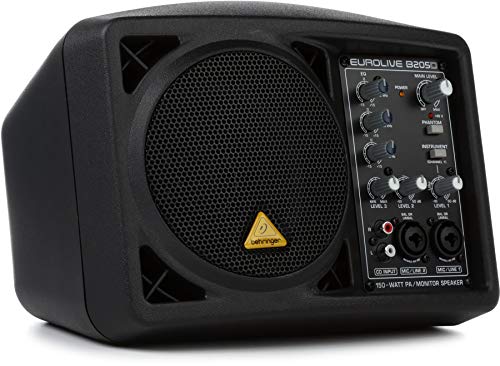
- 150-watt active speaker with a three-channel mixer
- Phantom-powered mic preamps and instrument input
- Lightweight 7.05-pound compact design
Best For: Solo performers, presenters, and home studios needing flexible inputs
Best Passive Pair
SA-10M.3 10-Inch Floor Monitors

- Pair of passive 10-inch two-way monitors
- 100 watts RMS and 200 watts peak per speaker
- Metal grilles, pocket handles, and dual ports
Best For: Bands and venues with a separate amplifier
Best Powered 8-Inch Option

- 350-watt bi-amplified 8-inch powered speaker
- Bluetooth, two-channel mixer, and mix output
- Wedge monitor and pole-mount configurations
Best For: Small gigs, DJs, presentations, and Bluetooth-enabled monitoring
Best Personal PA

- Portable 150-watt Class-D personal PA
- XLR mic and line inputs for mic-plus-music setups
- Built-in limiter and pole-mount or tabletop use
Best For: Solo vocals, speaking, classrooms, meetings, and busking
Premium Coaxial Power
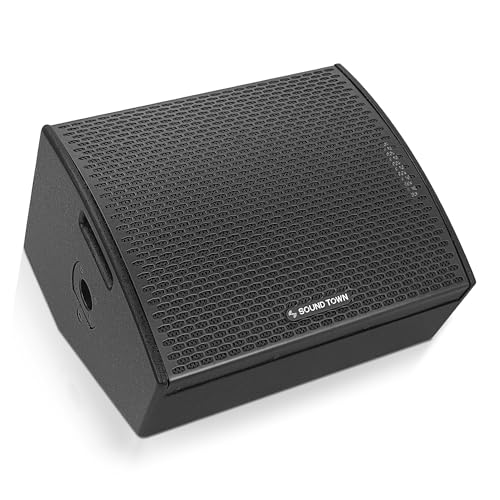
- 10-inch coaxial driver for focused, even coverage
- 200W continuous Class-D amplification
- DSP presets and flexible XLR/1/4-inch connectivity
Best For: Live sound, DJs, churches, and low-profile installations
Compact All-Purpose Monitor

- Lightweight active monitor with 150W output
- Four-channel mixer with three-band EQ
- Built-in USB MP3 player
Best For: Vocal, keyboard, presentation, and intimate-gig monitoring
Personal Nearfield Monitoring

- Ultra-compact 3-inch, 25W personal monitor
- Stand/wall mount included
- 24VDC phantom power and 18VDC supply
Best For: Personal monitoring and small mounted installations
Power Pick

- 1000W peak output with 12-inch woofer
- XLR/TRS inputs and adjustable EQ
- Rugged enclosure with carry handles
Best For: High-output live monitoring and DJ events
Small-Space Choice

- Lightweight 8.2-pound compact design
- Bluetooth and USB MP3 playback
- Three-channel mixer with three-band EQ
Best For: Home studios, presentations, and low-volume monitoring
Feedback-Control Option

- 250-watt powered monitor with 12-inch woofer
- Adjustable feedback filter and integrated limiter
- XLR, TRS, RCA, and Speakon connections
Best For: Live performance monitoring with feedback control
Best All-in-One Monitor – Behringer Eurolive B205D
The Behringer Eurolive B205D is a versatile choice among compact stage monitors, combining a 150-watt powered speaker with a three-channel mixer. Its small footprint, lightweight design, microphone preamps, phantom power, and instrument input make it practical for vocal monitoring, keyboards, presentations, or home recording.
Best For: Vocalists, keyboard players, presenters, and home studios that need built-in mixing and flexible inputs.
Pros:
- Integrated three-channel mixer with three-band EQ
- Two microphone preamps with phantom power
- Instrument-ready input requires no DI box
- Compact 7.05-pound design with a 5.25-inch full-range driver
Cons:
- Its 5.25-inch driver is better suited to focused monitoring than bass-heavy playback
- Single-speaker design is not intended for wide stereo coverage
The B205D stands out when convenience matters as much as output. It is especially useful for solo performers and small setups that benefit from direct control over microphones and instruments.
Best Passive Pair – SA-10M.3 10-Inch Floor Monitors
This pair of passive 10-inch floor monitors offers a straightforward option for bands, DJs, churches, karaoke setups, and other users who already have an amplifier. With 100 watts RMS per speaker, dual ports, and a piezo horn tweeter, the set provides more coverage than ultra-small compact stage monitors while remaining easy to position on the floor.
Best For: Bands, DJs, churches, karaoke hosts, and drummers with a separate power amplifier.
Pros:
- Includes two 10-inch passive monitors
- 100 watts RMS and 200 watts peak per speaker
- Two 1/4-inch inputs on each monitor
- Metal grilles, corners, and pocket handles support regular handling
Cons:
- Requires a separate amplifier
- Larger and heavier to transport than compact powered monitor designs
- Passive setup offers less built-in control
Choose this pair when you want two matching wedges and already have compatible amplification. The 10-inch drivers and 40-to-20,000 Hz stated frequency response make them a practical fit for broader stage coverage.
Best Powered 8-Inch Option – ALTO TX408
The ALTO TX408 is a compact powered PA speaker designed for stage monitoring, small gigs, DJs, home studios, and presentations. Its 350-watt bi-amplified system pairs an 8-inch woofer with a titanium-diaphragm compression driver, while Bluetooth, a two-channel mixer, and a mix output add useful flexibility for modern setups.
Best For: Small live performances, DJs, presenters, fitness instructors, and users who want Bluetooth alongside wired inputs.
Pros:
- 350 watts of Class-D bi-amplified power
- Built-in mixer supports microphone, line-level, and Bluetooth sources
- Bluetooth True Wireless Stereo enables cable-free stereo pairing
- Wedge-monitor configuration, pole socket, handles, and metal grille support flexible use
Cons:
- Not water resistant
- Requires corded power
- At 5.9 kg, it is less lightweight than the smallest personal monitors
The TX408 is a strong middle ground for buyers who want compact stage monitors with substantially more output than personal PA units. Bluetooth and the integrated mixer are particularly useful when music playback and a microphone need to run together.
Best Personal PA – Mackie SRM150
The Mackie SRM150 is a highly portable personal PA for one microphone plus music in small rooms, classrooms, meetings, busking, and close-range monitoring. Its 150-watt Class-D amplifier, 5.25-inch full-range driver, XLR microphone input, line input, and built-in limiter make it simple to carry and set up, though it is not intended as a full-band PA.
Best For: Solo vocalists, public speakers, classrooms, meetings, buskers, and small-scale audio production.
Pros:
- One-hand portable design weighing 7.6 pounds
- 150-watt Class-D power with a 5.25-inch driver
- XLR microphone and line inputs for a mic plus music source
- Built-in limiter helps protect the driver at high volume
Cons:
- Not designed to serve as a full-band PA
- 100 Hz to 17.5 kHz response provides lighter bass than a subwoofer system
- Best suited to small rooms and close-range use
The SRM150 is a sensible pick when portability and quick setup are priorities. It delivers focused vocal reinforcement without the size of a conventional PA, but buyers needing deep bass or full-band coverage should choose a larger system.
Premium Coaxial Power – Sound Town CARME-S10MPW
The Sound Town CARME-S10MPW is a compact stage monitor for performers and venues that need focused, even coverage without a bulky cabinet. Its powered 10-inch coaxial design, DSP presets, and flexible balanced connections make it suitable for live sound, DJ setups, bars, and churches.
Best For: Live performers, DJs, churches, and installed venues needing a powerful low-profile monitor.
Pros:
- 10-inch coaxial driver combines a woofer and compression driver for consistent coverage.
- Built-in Class-D amplifier provides 200W continuous and 400W peak power.
- Two combo inputs, switchable XLR output, EQ presets, and bass/treble controls support flexible system integration.
- Rugged plywood cabinet, metal grille, and PowerCon daisy-chaining support regular stage use.
Cons:
- Heavier-duty construction may be more than needed for small personal monitoring setups.
- It is corded and does not provide wireless communication.
- The speaker is not waterproof.
Choose this model when output, coverage, and connection flexibility matter more than achieving the smallest possible footprint. Its low-profile enclosure helps reduce visual impact while retaining professional PA features.
Compact All-Purpose Monitor – Behringer EUROLIVE B207MP3
Behringer EUROLIVE B207MP3 Active 150 Watt 6.5" PA/Monitor Speaker System with MP3 Player
Check Price On AmazonThe Behringer EUROLIVE B207MP3 is a lightweight compact stage monitor with a 6.5-inch driver, built-in 150-watt amplification, and a USB MP3 player. It fits vocal and keyboard monitoring, intimate gigs, meetings, home recording, and other applications where portability and built-in playback are useful.
Best For: Vocalists, keyboard players, small venues, presentations, and portable monitoring setups.
Pros:
- Lightweight active design is easier to transport than larger PA monitors.
- Four-channel mixer includes a three-band EQ for basic sound shaping.
- Built-in MP3 player supports audio playback from a USB stick.
- XLR and 1/4-inch TRS connectivity supports common audio sources.
Cons:
- Its 6.5-inch driver and 150-watt output are less substantial than larger stage monitors.
- The compact cabinet is better suited to intimate applications than high-output stages.
- Wireless and Bluetooth details in the supplied specifications may vary by configuration.
This is a practical choice for buyers prioritizing a small, multifunctional enclosure. The integrated mixer and MP3 player make it more self-contained than a basic powered monitor.
Personal Nearfield Monitoring – Galaxy Audio NSPA Nano Spot
The Galaxy Audio NSPA Nano Spot is an especially compact personal monitor for spaces where a small speaker is more practical than a conventional wedge. Its 3-inch ceramic driver, 25-watt output, included stand/wall mount, and 24VDC phantom-power capability suit personal monitoring and restaurant installations.
Best For: Personal monitoring, restaurant installations, and applications requiring a very small mounted speaker.
Pros:
- Extremely compact 3-inch monitor weighs about 16 ounces.
- Included stand/wall bracket and rubber feet support flexible placement.
- 25-watt output and 150Hz–17kHz frequency response suit nearfield monitoring.
- Supports 24VDC phantom power and includes an 18VDC power supply.
Cons:
- The 3-inch driver and 25-watt output are not intended for large-stage coverage.
- Its listed frequency response does not extend as low as larger monitors.
- The speaker is not waterproof.
Consider the NSPA when space and mounting flexibility are the main priorities. It is a specialized compact stage monitor rather than a high-output PA wedge, making it best for close-range personal use.
Power Pick – Rockville RSM12A V2
If you need compact stage monitors with enough output for gigs, rehearsals, or DJ events, the Rockville RSM12A V2 combines a 12-inch woofer with a 1-inch titanium compression driver. Its XLR and TRS inputs, adjustable EQ, and built-in handles make it practical for flexible setups and transport.
Best For: Live performers, DJs, and small venues that need high-output monitoring.
Pros:
- 1000W peak output and 250W RMS for powerful sound
- 12-inch woofer and titanium horn cover a 45Hz–20kHz range
- XLR/TRS connectivity, adjustable EQ, and ergonomic handles
- Rugged steel grille and MDF enclosure
Cons:
- At 33 pounds, it is heavier than ultra-compact monitor options
- Corded operation requires access to mains power
- Not waterproof
The RSM12A V2 is a strong choice when output and durability matter more than minimum size. It offers useful connection options and straightforward positioning for mobile stage setups.
Small-Space Choice – Behringer EUROLIVE B105D
Among compact stage monitors, the Behringer EUROLIVE B105D stands out for its small footprint and broad feature set. This 50-watt speaker supports vocal and keyboard monitoring while also offering Bluetooth streaming, USB MP3 playback, and a three-channel mixer with three-band EQ.
Best For: Home studios, presentations, vocal monitoring, and small multimedia setups.
Pros:
- Ultra-compact design weighs 8.2 pounds
- Bluetooth audio streaming and USB MP3 playback
- Three-channel mixer with three-band EQ
- Class-D amplification delivers light, efficient operation
Cons:
- 50 watts is better suited to small spaces than loud stages
- 5-inch woofer has less low-frequency reach than 12-inch monitors
- Not water resistant
The B105D prioritizes convenience and portability over maximum volume. Its built-in playback and mixer features make it especially useful when a simple, compact monitoring or presentation system is the goal.
Feedback-Control Option – Behringer EUROLIVE F1220D
The Behringer EUROLIVE F1220D is a practical pick for buyers comparing compact stage monitors that can handle live-performance duties. Its 12-inch woofer, 250-watt powered design, adjustable feedback filter, and integrated limiter provide a useful balance of output and system control.
Best For: Live performers and playback setups that need feedback management and flexible wired connections.
Pros:
- 250-watt powered monitor with a 12-inch woofer
- Adjustable feedback filter helps manage troublesome frequencies
- Integrated limiter supports speaker protection
- Accepts XLR, 1/4-inch, RCA, and Speakon connections
Cons:
- At 23.6 pounds, it is less portable than the smallest monitors
- Wired operation requires a power connection
- Not waterproof
The F1220D is well suited to stage users who value connection flexibility and feedback control. It delivers more substantial monitoring than miniature units while remaining lighter than some larger high-output alternatives.
How We Picked These Compact Stage Monitors
We selected models across several common live-sound situations rather than treating maximum wattage as the only priority. The lineup includes ultra-compact personal monitors, small powered PA speakers that can work as wedges, and larger 10- or 12-inch cabinets for performers who need more headroom.
Our comparisons emphasize practical factors: speaker size, powered operation, portability, input flexibility, monitoring position, feedback management, and suitability for vocals, instruments, playback, or full-band use. Features such as Bluetooth, MP3 playback, DSP, and multiple inputs can be valuable, but only when they match the way you perform.
Quick Comparison
For tight spaces: The Behringer B105D, B205D, B207MP3, Mackie SRM150, and Galaxy Audio Nano Spot are easier to place on crowded stages or near a performer.
For general-purpose PA monitoring: The Alto TX408 and Sound Town CARME 10-inch model offer a useful middle ground between portability and output.
For louder bands and larger stages: The Rockville RSM12A V2 and Behringer F1220D provide larger cabinets and drivers that can deliver more projection and low-frequency support.
For multiple performers: A pair of 10-inch floor monitors can provide broader coverage than a single personal monitor, particularly for bands, karaoke setups, and church stages.
Key Buying Factors for Compact Stage Monitors
Output and Headroom
Choose enough output to stay clear over drums, guitar amplifiers, and venue noise. Smaller monitors work well for vocals, speech, acoustic instruments, and close-range listening. Larger 10- and 12-inch models are generally better when you need more volume or distance from the wedge.
Driver Size and Frequency Balance
A 5- or 6.5-inch speaker is compact and focused, while an 8-inch model offers a useful compromise. Ten- and 12-inch monitors typically provide stronger low-mid energy, which can help full-band mixes sound more complete but adds size and weight.
Inputs, Playback, and Controls
Check whether the monitor accepts the connections your setup requires, such as microphone, line, instrument, or mixer outputs. Bluetooth and MP3 playback are convenient for rehearsals and breaks, but they should not replace the core inputs you need for live performance.
Feedback Control and Placement
Feedback performance depends on both the speaker and its position. Look for a feedback filter, DSP, or useful EQ controls, then aim the monitor toward the performer’s ears and away from microphones. A compact cabinet is only helpful if it can be placed at the correct angle.
Portability and Durability
Consider cabinet handles, weight, wedge shape, mounting options, and how often the monitor will be transported. Powered speakers reduce the need for separate amplifiers, but they still require power cables and careful cable management on stage.
Who Should Buy Which Compact Stage Monitors?
Singers, presenters, and solo performers: Choose a personal or ultra-compact model when clear near-field vocals matter more than room-filling bass.
Acoustic acts and small ensembles: An 8-inch powered monitor is a practical balance of clarity, output, and manageable size.
DJs, karaoke hosts, and church setups: Prioritize flexible inputs, playback features, and enough headroom for changing performers and program material.
Full bands and louder stages: Select a larger 10- or 12-inch wedge, or use a pair of monitors, so performers can hear a consistent mix without pushing a small cabinet into distortion.