The best desktop AV receivers bring switching, amplification, wireless connectivity, and speaker control into one practical component. The right choice depends on whether you need simple stereo playback, a compact surround system, or a modern home theater with advanced HDMI support.
This roundup covers 10 options across those use cases, including stereo receivers, 5.1- and 5.2-channel models, and 7.2-channel AV receivers with networking, Dolby Atmos, 4K, or 8K features.
Best 10 Desktop Av Receivers Picks for 2026
Best Value Surround Receiver

- 5.2-channel surround sound
- 4K HDR pass-through
- Bluetooth and four HDMI inputs
Best For: Affordable home-theater setups with 4K HDR sources
Best Simple Stereo Receiver
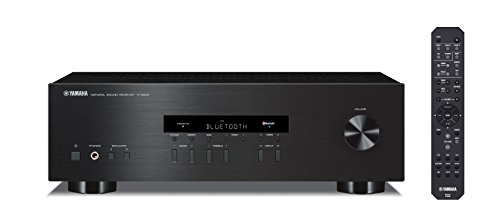
- Two-channel stereo output
- Bluetooth music streaming
- Speaker selector for two systems
Best For: Music-focused stereo systems and simple living-room setups
Best Advanced Home Theater Receiver

- 7.2-channel immersive audio
- 8K HDMI 2.1 connectivity
- Wi-Fi and multi-service streaming
Best For: Expandable Dolby Atmos and DTS:X home theaters
Best Flexible Input Selection

- 5.2-channel speaker support
- Phono, USB, Bluetooth, and digital inputs
- 4K HDR pass-through
Best For: Mixed analog and digital setups with a turntable
Best Entry-Level Surround Pick

- 5.1-channel surround with 100W output
- 4K HDR and Dolby Vision support
- YPAO calibration and Bluetooth
Best For: Small home theaters and simple surround setups
Best for Gaming and Expansion

- 7.2-channel surround configuration
- 4K/120Hz, VRR, ALLM, and QFT
- 8K support and eARC audio
Best For: Gamers and expandable home theater systems
Best for Karaoke and Multi-Speaker Audio

- Four independently controlled channels
- Bluetooth 5.3, USB, optical, and coaxial inputs
- Dual microphone inputs with echo and Talk Over
Best For: Karaoke, parties, announcements, and stereo multi-speaker audio
Best 8K Value

- Four HDMI 2.1 inputs with 8K support
- Dolby Vision, HDR10+, VRR, and QFT
- Bluetooth streaming and guided setup
Best For: Compact home theater and gaming setups
Best Stereo Receiver

- Phono input for turntables
- Bluetooth and four stereo RCA inputs
- 100 watts per channel with A/B speakers
Best For: Traditional two-channel music systems
Best Immersive Audio

- Dolby Atmos and DTS Virtual:X
- 4K/120 and 8K/60 HDMI support
- Automatic room correction and Bluetooth Multipoint
Best For: Immersive home theater and gaming
Best Value Surround Receiver – Sony STR-DH590
The Sony STR-DH590 is a practical choice among desktop av receivers for users building a straightforward 5.2-channel home theater. It combines 4K HDR pass-through, Bluetooth streaming, four HDMI inputs, and virtual surround processing in a relatively conventional receiver design.
Best For: Movie and TV viewers who want an affordable 5.2-channel receiver with 4K HDR support and Bluetooth.
Pros:
- Supports 5.2-channel surround sound and S-Force PRO virtual surround with two speakers.
- Offers 4K HDR pass-through with HDCP 2.2 support.
- Includes four HDMI inputs, Bluetooth, FM radio, and a headphone jack.
Cons:
- Does not include built-in Wi-Fi network streaming.
- Its 5.2-channel layout is less expandable than higher-channel alternatives.
The STR-DH590 makes sense when core home-theater connectivity matters more than advanced networking or immersive audio formats. Its HDMI, Bluetooth, and 4K HDR features cover the needs of many smaller entertainment setups.
Best Simple Stereo Receiver – Yamaha R-S202BL
The Yamaha R-S202BL is a simple two-channel option for shoppers comparing desktop av receivers for music listening and basic stereo systems. Its Bluetooth connectivity, FM/AM preset tuning, dual-system speaker selector, and clean brushed-aluminum design keep the setup focused and uncomplicated.
Best For: Stereo music systems, conventional bookshelf speakers, and listeners who prefer simple controls over surround features.
Pros:
- Provides 85 watts of output power across two channels.
- Supports Bluetooth streaming from compatible devices.
- Can manage two speaker systems and includes 40 FM/AM presets.
- Features a headphone terminal and automatic power standby.
Cons:
- It is a two-channel stereo receiver rather than a multichannel AV receiver.
- It does not provide the 4K HDMI home-theater feature set highlighted by the other models.
Choose the R-S202BL if your priority is dependable stereo playback and easy wireless music streaming. It is less suited to surround-sound theaters, but its straightforward layout may be preferable for music-first systems.
Best Advanced Home Theater Receiver – Onkyo TX-NR6100
The Onkyo TX-NR6100 is the most feature-rich choice among these desktop av receivers, with 7.2-channel processing, THX Select certification, Dolby Atmos and DTS:X playback, and HDMI 2.1 connectivity. Built-in Wi-Fi, Bluetooth, streaming-service support, and discrete Zone 2 audio and video make it suitable for a more ambitious system.
Best For: Home-theater builders who want immersive audio, 8K-capable HDMI 2.1 connections, and network music features.
Pros:
- Supports 7.2-channel audio and 5.2.2-channel Dolby Atmos and DTS:X playback.
- Includes three HDMI 2.1 inputs with 40Gbps support and 8K capability.
- Provides Wi-Fi, Bluetooth, and access to services including Spotify, TIDAL, Pandora, and Amazon Music.
- Offers THX Select certification and discrete Zone 2 audio and video.
Cons:
- Its larger feature set may be unnecessary for a basic two-channel setup.
- It is likely a more involved choice to configure than a simple stereo receiver.
The TX-NR6100 is the strongest fit for a modern, expandable theater system. Its combination of immersive formats, HDMI 2.1, networking, and Zone 2 support gives it more long-term flexibility than the simpler receivers here.
Best Flexible Input Selection – Donner MAMP8
The Donner MAMP8 stands out among desktop av receivers for its broad selection of physical inputs and adjustable sound controls. It supports a 5.2-channel speaker arrangement, 4K pass-through, Bluetooth 5.3, USB, phono, optical, coaxial, RCA, and FM inputs, making it adaptable for mixed home-entertainment and listening setups.
Best For: Users who need phono and multiple digital, analog, USB, and wireless inputs in one receiver.
Pros:
- Supports up to five speakers and two active subwoofers in a 5.2-channel arrangement.
- Offers Bluetooth 5.3, USB, phono, RCA, optical, coaxial, HDMI, ARC, and FM inputs.
- Provides 4K HDR pass-through for compatible video sources.
- Allows treble, midrange, bass, and other EQ adjustments from the receiver or remote.
Cons:
- Dolby and DTS decoding are not supported.
- It has only two HDMI ports.
- Its audio output mode is stereo despite the 5.2-channel speaker support.
The MAMP8 is a versatile connectivity-focused receiver, especially for systems that include a turntable alongside newer digital sources. However, shoppers seeking decoded Dolby or DTS soundtracks should consider another model.
Best Entry-Level Surround Pick – Yamaha RX-V385
For buyers comparing desktop av receivers for a straightforward home theater, the Yamaha RX-V385 combines 5.1-channel surround sound with 4K video support, Bluetooth, and automatic speaker calibration. Its four HDMI inputs make it a practical fit for a modest TV and source setup.
Best For: Small home theaters and buyers wanting simple 5.1 surround sound with easy setup.
Pros:
- 5.1-channel surround sound with up to 100 watts of output power.
- Supports 4K Ultra HD, HDR10, Dolby Vision, Hybrid Log-Gamma, and BT.2020.
- YPAO auto-calibration helps optimize speaker sound.
- Includes Bluetooth and four HDMI inputs.
Cons:
- Limited to a 5.1-channel configuration.
- Does not offer the expanded gaming and immersive-audio feature set of newer 7.2-channel models.
The RX-V385 is a sensible choice when uncomplicated connectivity and traditional surround sound matter more than advanced gaming features or additional amplifier channels.
Best for Gaming and Expansion – Onkyo TX-NR5100
The Onkyo TX-NR5100 is one of the more feature-rich desktop av receivers in this group, pairing 7.2-channel sound with 8K video support and gaming-focused HDMI 2.1 functions. It also supports modern TV audio through eARC and wireless playback services.
Best For: Gamers and home theater users who want 7.2-channel flexibility and modern HDMI features.
Pros:
- 7.2-channel configuration supports a more expandable speaker system.
- HDMI 2.1 features include 4K/120Hz HDR pass-through, VRR, ALLM, and QFT.
- eARC supports high-bitrate formats including Dolby Atmos and DTS:X.
- Includes Chromecast built-in, AirPlay 2, and DTS Play-Fi support.
Cons:
- Provides four HDMI ports.
- Its 80-watt output rating is lower than the Yamaha’s listed 100 watts.
Choose the TX-NR5100 if gaming responsiveness and compatibility with newer displays are priorities. Its 7.2-channel design also leaves more room for a larger surround setup than a basic 5.1 receiver.
Best for Karaoke and Multi-Speaker Audio – Donner MAMP5
The Donner MAMP5 takes a different approach from traditional home theater desktop av receivers, focusing on stereo amplification, multi-speaker control, and karaoke features. It offers Bluetooth 5.3, USB, optical, coaxial, RCA, FM, and dual microphone inputs, but it does not include HDMI.
Best For: Karaoke, announcements, parties, and multi-speaker stereo audio.
Pros:
- Four independently controlled channels can support up to four speaker groups.
- Offers Bluetooth 5.3, USB, RCA, AUX, FM, optical, and coaxial inputs.
- Dual 1/4-inch microphone inputs include echo and Talk Over functions.
- Provides adjustable treble, midrange, and bass controls.
Cons:
- No HDMI input, so it is less suitable for HDMI-based home theater systems.
- Its listed 25W × 4 RMS rating is more informative for continuous output than the 1000W peak figure.
- Remote batteries are not included.
The MAMP5 is best viewed as a flexible home audio amplifier rather than a conventional surround-sound receiver. Its microphone inputs and independent channel controls make it especially useful for social events and karaoke.
Best 8K Value – Denon AVR-S570BT
The Denon AVR-S570BT is a practical choice among desktop av receivers when you want modern HDMI connectivity, 8K support, and straightforward 5.1 surround sound. Its four HDMI 2.1 inputs, eARC support, and gaming features make it suitable for compact entertainment setups.
Best For: Home theater and gaming setups that need 8K video support, Bluetooth streaming, and simple guided installation.
Pros:
- Four HDMI 2.1 inputs support 8K video, while the HDMI output supports eARC.
- Supports Dolby Vision, HDR10+, HLG, VRR, and QFT for movies and gaming.
- Built-in Bluetooth, app control, and an on-screen setup assistant simplify daily use.
Cons:
- Its 5.2-channel configuration is less expandable than larger home theater receivers.
- Bluetooth is the listed wireless streaming option; built-in Wi-Fi is not specified.
Choose the Denon when current HDMI features and easy setup matter more than a large number of amplifier channels. It offers a balanced feature set for a modest surround system.
Best Stereo Receiver – Sony STRDH190
The Sony STRDH190 is a straightforward two-channel option for desktop av receivers buyers who primarily want music playback rather than surround sound. It combines Bluetooth with a phono input, multiple RCA inputs, and A/B speaker switching.
Best For: Stereo music listeners using a turntable, Bluetooth devices, or multiple conventional audio sources.
Pros:
- Phono input makes it easy to connect a turntable.
- Bluetooth supports wireless streaming from compatible devices.
- 100 watts per channel and A/B switching support flexible stereo speaker arrangements.
- Low-profile 5¼-inch design fits many conventional AV cabinets.
Cons:
- Two-channel stereo does not provide home theater surround processing.
- Connectivity is primarily analog, with no HDMI inputs listed.
The Sony is a sensible pick for a traditional stereo system with vinyl playback and wireless convenience. It is less appropriate if you need HDMI video switching or immersive surround formats.
Best Immersive Audio – Yamaha RX300A
The Yamaha RX300A stands out among desktop av receivers for combining Dolby Atmos, room correction, and current HDMI video features in a 5.2-channel design. It supports 4K/120 and 8K/60 sources while adding Bluetooth Multipoint for convenient streaming between two devices.
Best For: Home theater users who want immersive sound, automated calibration, and gaming-ready HDMI connectivity.
Pros:
- Dolby Atmos and DTS Virtual:X provide dimensional surround sound, including 3.1.2-channel layouts.
- Supports 4K/120, 8K/60, Dolby Vision, HDR10+, ALLM, VRR, and eARC.
- Included setup microphone automatically measures the room and optimizes sound.
- Bluetooth Multipoint allows two source devices to be paired and switched easily.
Cons:
- Five amplifier channels limit expansion compared with larger AV receivers.
- Its 70-watt output is aimed at moderate systems rather than very demanding speaker setups.
The RX300A is the strongest fit here for an immersive, gaming-friendly system that benefits from automatic room correction. Its combination of HDMI features and Dolby Atmos makes it more versatile than a basic stereo receiver.
How We Picked These Desktop Av Receivers
We selected models that cover the main desktop and compact-room use cases: two-channel music systems, entry-level surround setups, and feature-rich home theaters. We compared channel counts, HDMI capabilities, wireless connectivity, network features, speaker flexibility, and the type of listening each receiver is designed to support.
Because “desktop” can mean anything from a nearfield computer setup to a small living-room theater, this list includes both traditional stereo receivers and multichannel AV receivers. Check the specifications carefully before buying, especially if you plan to connect a turntable, powered speakers, a subwoofer, or a next-generation game console.
Quick Comparison
- Best for simple stereo: Two-channel Yamaha and Sony receivers are straightforward choices for passive speakers, Bluetooth playback, and everyday music.
- Best for compact surround: Five-channel models from Sony, Yamaha, and Denon suit smaller theaters and TV-focused systems.
- Best for expansion: Onkyo’s 7.2-channel receivers provide more speaker and source flexibility for growing systems.
- Best for advanced video: Look to models listing 8K, 4K/120Hz, HDR, and modern HDMI support if gaming or premium video is a priority.
- Best for basic amplification: Donner units emphasize accessible connectivity and amplification, but verify their inputs, power ratings, and surround features against your equipment.
Key Buying Factors for Desktop Av Receivers
Channels and Speaker Layout
A two-channel receiver is appropriate for left-and-right bookshelf speakers, while 5.1 or 5.2-channel models add center, surround, and one or two subwoofer connections. Choose 7.2 channels if you want additional surround speakers or a more upgradeable system. Dolby Atmos support matters only when the receiver has the required processing and you will install compatible height speakers.
HDMI, Resolution, and Gaming
For a TV, console, or streaming device, confirm the number of HDMI inputs and outputs. 4K HDR is sufficient for many systems; 8K and 4K/120Hz support are more relevant to current gaming hardware and future upgrades. Also check support for eARC if you want to send TV audio back to the receiver through HDMI.
Music and Network Features
Bluetooth is useful for quick playback, while network streaming, Wi-Fi, and Ethernet can provide broader access to music services and multiroom features. Turntable owners should choose a model with a phono input or plan to add a separate phono preamp.
Size, Power, and Connections
Measure the available shelf or desktop space, and leave ventilation room above the receiver. Compare impedance requirements and realistic power specifications with your speakers. Avoid assuming a peak-watt figure equals sustained performance, particularly with compact budget amplifiers.
Who Should Buy Which Desktop Av Receivers?
Choose a Sony STR-DH190 or Yamaha R-S202BL for uncomplicated two-channel music. For a first home theater, consider the Sony STR-DH590, Yamaha RX-V385, or Denon AVR-S570BT. Buyers planning a larger, networked setup should prioritize the Onkyo TX-NR6100 or TX-NR5100. The Yamaha RX300A is a strong fit for shoppers seeking Dolby Atmos and newer HDMI video features. Donner models may suit budget-conscious users who value flexible basic inputs, but they deserve closer specification matching before purchase.