Choosing the right desktop computer for podcasting is less about raw gaming power and more about quiet, stable performance. You want enough CPU headroom for recording, editing, plugins, and live streaming without glitches.
The best picks also make it easy to connect audio interfaces, microphones, storage, and multiple monitors, so your workflow stays simple as your show grows.
Best 10 Desktop Computer for Podcasting Picks for 2026
Compact Power Pick
ACEMAGIC M5 Mini PC for multitasking
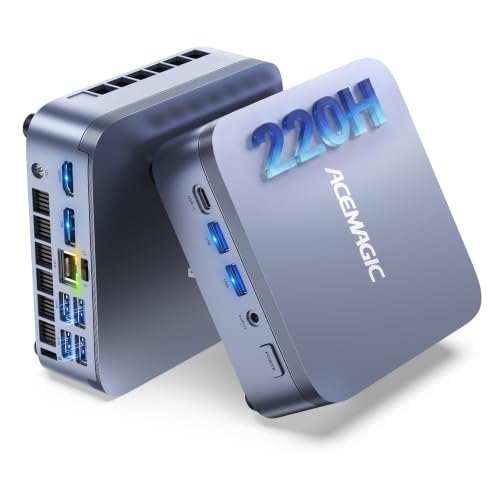
- Intel Core 5 220H with 12-core H-series performance
- 24GB LPDDR5 and dual SSD slots for smooth multitasking
- Tiny footprint with VESA mount support
Best For: Podcasters who want a space-saving Windows mini PC for recording and production work
Performance Desktop Choice
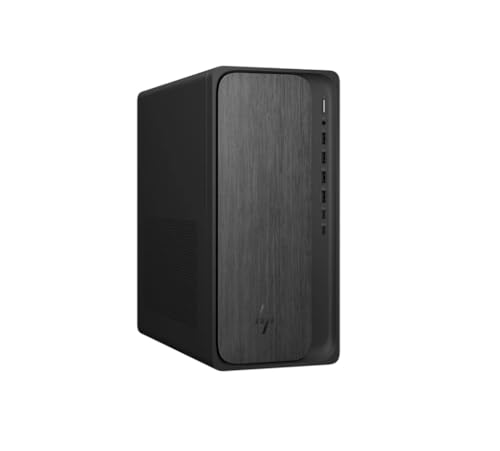
- Ryzen 7 8700G and 32GB DDR5 for responsive multitasking
- 1TB NVMe SSD provides fast, roomy storage
- Includes keyboard, mouse, Wi‑Fi 6, and Bluetooth 5.4
Best For: Podcasters who want a fast tower with lots of storage and memory
Upgradeable Business Tower

- Intel Core Ultra 7 with built-in AI support
- 32GB DDR5 and tool-less access for easy upgrades
- Supports multiple-monitor setups for busy workflows
Best For: Podcasters who want a secure tower with easy upgrades and multi-monitor support
All-in-One Budget Desk Setup

- All-in-one design with 21.5-inch FHD display
- Built-in webcam, speakers, and Wi‑Fi 6 for convenience
- Windows 11 Pro suits basic business and remote work
Best For: Podcasters who want a simple, space-saving setup for light work
Business-Ready Compact Tower
Dell 2026 Edition Tower Desktop Computers

- 14th Gen Intel Core i3-14100
- 8GB DDR5 RAM and 512GB NVMe SSD
- Dual 4K monitor support with modern ports
Best For: Solo podcasters who want a practical Windows 11 Pro desktop
Space-Saving Office Desktop
HP ProDesk SFF Business Desktop Computer
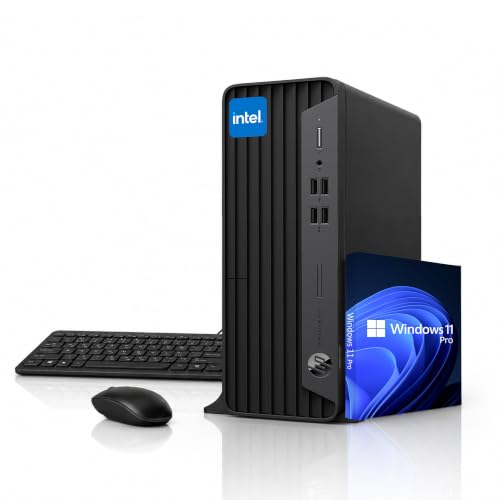
- 32GB RAM and 1TB SSD included
- Small Form Factor saves desk space
- Dual 4K display support with Windows 11 Pro
Best For: Podcasters who want a compact desktop with strong memory and storage
High-Multitasking Business Tower
ASUS V500 Business Tower Desktop Computer

- 10-core Intel Core i7-13620H processor
- 16GB DDR5 and 1TB combined storage
- Wi‑Fi 6, Bluetooth 5.4, and dual-monitor support
Best For: Creators who want the fastest multitasking option here
Refurbished Workhorse Bundle
Dell OptiPlex 5050 With 24" Monitor

- 32GB RAM and 512GB NVMe SSD
- Includes new 24-inch 1080p monitor
- Wi-Fi 6, Bluetooth 5.2, Windows 11 Pro
Best For: Podcasters who want a bundled desktop and monitor with easy setup
Modern Creator Tower

- Core Ultra 5 225 with Intel AI Boost
- 16GB DDR5 RAM and 1TB NVMe SSD
- Wi-Fi 6, Bluetooth 5.4, wired peripherals included
Best For: Podcasters who want newer hardware and fast storage in a clean tower
Compact Business Pick
HP ProDesk G7 SFF for Podcasting

- Small form factor fits tight desks
- Dual 4K display support
- 16GB RAM with SSD plus HDD storage
Best For: Podcasters who need a compact PC with dual-monitor support and upgrade room
Compact Power Pick – ACEMAGIC M5 Mini PC for multitasking
If you want a desktop computer for podcasting that keeps a small footprint while handling recording, editing, and browser-heavy prep work, the ACEMAGIC M5 is a strong fit. Its Intel Core 5 220H H-series chip, 24GB of fast LPDDR5 memory, and dual SSD support make it better suited to steady multitasking than basic entry-level mini PCs.
Best For: Podcasters who need a compact Windows desktop for recording workflows, note-taking, and everyday production tasks.
Pros:
- Intel Core 5 220H with 12 cores and 45W system power for sustained performance
- 24GB LPDDR5 memory helps with multitasking across apps, tabs, and tools
- Dual M.2 SSD slots support expandable storage up to 4TB total
- Very compact design with VESA mounting to save desk space
Cons:
- Factory memory is soldered and not upgradable
- No included mention of dedicated audio or creator-specific features
- Mini PC form factor may require external peripherals and audio gear
Overall, this is a practical pick if desk space matters and your podcast setup depends more on stable multitasking than specialized media hardware. It offers a good balance of size, speed, and connectivity for a clean home studio desk.
Performance Desktop Choice – HP OmniDesk with Ryzen 7
This desktop computer for podcasting is a good choice if you want more headroom for editing sessions, multitasking, and future growth. The HP OmniDesk pairs a Ryzen 7 8700G, 32GB of DDR5 memory, and a 1TB NVMe SSD, giving you a responsive Windows setup for running recording software, show notes, browsers, and file storage without feeling cramped.
Best For: Podcasters who want a fast, roomy tower for editing, multitasking, and storing audio projects.
Pros:
- AMD Ryzen 7 8700G with 8 cores for strong everyday performance
- 32GB DDR5 memory helps with heavier multitasking
- 1TB PCIe Gen4 NVMe SSD offers plenty of fast storage
- Includes keyboard and mouse, plus Wi‑Fi 6 and Bluetooth 5.4
Cons:
- Integrated Radeon 780M graphics are not aimed at demanding creative workloads
- Windows 11 Home lacks the Pro features found on some business desktops
- Tower size takes more space than a mini PC or all-in-one
For podcast creators who value speed and storage over a tiny footprint, this HP desktop has the specs to feel comfortable for day-to-day production. It is especially appealing if you prefer a ready-to-use tower with room for larger projects.
Upgradeable Business Tower – Dell Core Ultra 7 Desktop
If you are shopping for a desktop computer for podcasting and want something that feels built for long-term use, this Dell tower is worth a look. Its Intel Core Ultra 7 processor, 32GB of DDR5 memory, and easy-access chassis make it a solid choice for handling editing, file management, and multitasking in a straightforward office-style setup.
Best For: Podcasters who want a secure, upgrade-friendly Windows tower for editing and office-style production.
Pros:
- Intel Core Ultra 7 processor with built-in AI support
- 32GB DDR5 memory for smooth multitasking
- Tool-less entry and removable side panel make upgrades easier
- Supports multiple monitors, including up to four FHD displays or two 4K displays
Cons:
- Integrated graphics are not designed for high-end visual workloads
- Windows 11 Home instead of Pro
- Tower format is less space-efficient than a mini PC
For podcasters who want a practical workstation with upgrade flexibility and strong monitor support, this Dell desktop stands out. It is especially useful if your workflow includes editing, research, and a lot of window switching across screens.
All-in-One Budget Desk Setup – HP 22-inch Win11 Pro AIO
This all-in-one desktop computer for podcasting is best if you want a simple, tidy setup with the screen and PC built into one unit. The HP 22-inch AIO uses an Intel N100 processor, 8GB of DDR5 memory, and Windows 11 Pro, making it suitable for lighter podcast tasks, video calls, and general office work rather than demanding editing jobs.
Best For: Podcasters who need an affordable, clutter-free workstation for basic recording, calls, and admin tasks.
Pros:
- All-in-one design keeps the desk setup compact and simple
- 21.5-inch Full HD anti-glare display with built-in stereo speakers
- HD webcam with privacy shutter is useful for interviews and calls
- Windows 11 Pro adds business-grade features and remote desktop support
Cons:
- Intel N100 is aimed at everyday use, not heavy production workloads
- 8GB RAM is modest for larger editing or multitasking sessions
- 128GB internal storage is limited without relying on external expansion
As a podcasting desktop for basic setups, this HP all-in-one focuses on convenience over raw power. It makes the most sense when you want an integrated display, webcam, and speakers in a single affordable package.
Business-Ready Compact Tower – Dell 2026 Edition Tower Desktop Computers
If you want a desktop computer for podcasting that can handle recording sessions, editing, and everyday business work, this Dell tower offers a practical mix of speed and connectivity. The 14th Gen Intel Core i3, DDR5 memory, and PCIe NVMe SSD should keep the system responsive while you run audio software, browser tabs, and file transfers.
Best For: Solo podcasters and small creators who want an affordable Windows 11 Pro tower with modern ports and dual-monitor support.
Pros:
- 14th Gen Intel Core i3-14100 processor with Windows 11 Pro for business-focused use
- 8GB DDR5 RAM and 512GB PCIe NVMe SSD for quick everyday responsiveness
- Supports dual 4K monitors via HDMI 2.1 and DisplayPort 1.4a
- Includes Wi‑Fi 6, Bluetooth, USB-C, USB-A, Ethernet, and audio jack
Cons:
- 8GB RAM may feel limited for heavier multitasking or larger projects
- Integrated graphics only, so it is not aimed at creative visual workloads
- Compact tower is practical, but not a high-end performance workstation
Overall, this Dell is a sensible pick if you need a dependable desktop for podcasting without paying for extra power you may not use. It emphasizes stability, storage speed, and useful connectivity over premium creator features.
Space-Saving Office Desktop – HP ProDesk SFF Business Desktop Computer
This HP ProDesk is a compact desktop computer for podcasting if your priority is a small footprint and dependable day-to-day performance. With 32GB of RAM and a 1TB SSD, it has plenty of room for audio files, editing tools, and multitasking across recording, communication, and office apps.
Best For: Podcasters and home office users who want a compact SFF system with generous memory and storage.
Pros:
- 32GB DDR4 RAM and 1TB SSD for smooth multitasking and fast boot times
- Small Form Factor design saves desk space
- Dual 4K display support via HDMI and DisplayPort
- Includes Windows 11 Pro plus keyboard and mouse
Cons:
- Pentium Gold G5905 is a basic processor, not a high-power creator chip
- Integrated Intel UHD Graphics 610 is limited to everyday visuals
- Compact business hardware is better for reliability than heavy production workloads
For a podcasting setup that values storage, memory, and a tidy desk, this HP makes sense. It is not the fastest machine in the group, but its larger RAM allocation and compact chassis are appealing for straightforward recording and editing workflows.
High-Multitasking Business Tower – ASUS V500 Business Tower Desktop Computer
If your desktop computer for podcasting needs to handle heavier multitasking, the ASUS V500 stands out with a 10-core Intel Core i7-13620H and DDR5 memory. It is built for fast app switching, quick file access, and a roomy setup that can support recording, editing, and other business tasks at the same time.
Best For: Podcasters and creators who want a more powerful Windows 11 tower for multitasking and future upgrades.
Pros:
- 10-core Intel Core i7-13620H with up to 4.9GHz turbo speed
- 16GB DDR5 RAM and 1TB of combined storage for responsive workflow
- Dual-monitor support through HDMI and DisplayPort
- Wi‑Fi 6, Bluetooth 5.4, and seven USB ports for peripherals
Cons:
- 16GB RAM is good, but power users may still want more headroom
- Integrated graphics mean it is not intended for graphics-heavy workloads
- Includes Windows 11 Home rather than Pro
As a podcasting PC, the ASUS V500 offers the strongest performance profile in this set. Its faster processor and DDR5 memory make it the best fit when you need a desktop that can keep up with recording sessions, editing, and day-to-day productivity.
Refurbished Workhorse Bundle – Dell OptiPlex 5050 With 24" Monitor
If you want a desktop computer for podcasting that can handle editing software, multitasking, and a simple all-in-one setup, this Dell OptiPlex 5050 bundle is a practical pick. It pairs a professionally renewed tower with 32GB of RAM, a 512GB NVMe SSD, Wi-Fi 6, Bluetooth 5.2, and a new 24-inch 1080p monitor, so you get a ready-to-go workspace without extra shopping.
Best For: Podcasters who want a bundled desktop and monitor with strong memory, fast storage, and easy setup.
Pros:
- 32GB DDR4 RAM and a 512GB M.2 NVMe SSD support smooth multitasking and fast boot times.
- Includes a new 24-inch Full HD monitor, which simplifies setting up a podcast editing station.
- Wi-Fi 6 and Bluetooth 5.2 make wireless networking and accessory pairing easy.
- Windows 11 Pro comes pre-installed for a straightforward out-of-box experience.
Cons:
- It uses an older Intel i7-6700 processor rather than a newer-generation chip.
- Integrated graphics are fine for productivity, but not aimed at heavy creative workloads.
Overall, this bundle is strongest as an affordable, plug-and-play desktop computer for podcasting where convenience matters as much as performance. The included monitor and generous RAM make it especially appealing if you want a simple editing and production setup.
Modern Creator Tower – Dell ECT1250 With AI Copilot
For a desktop computer for podcasting with a more modern platform, the Dell ECT1250 brings a newer Intel Core Ultra 5 processor, 16GB of DDR5 memory, and a 1TB NVMe SSD. It also adds Wi-Fi 6, Bluetooth 5.4, and both DisplayPort and HDMI 2.1, making it a flexible tower for recording, editing, and general studio use.
Best For: Podcasters who want newer hardware, fast storage, and a clean tower for a home studio.
Pros:
- Intel Core Ultra 5 225 and Intel AI Boost NPU provide a newer processor platform.
- 16GB DDR5 5600 MHz memory and a 1TB NVMe SSD give you fast everyday responsiveness.
- Wi-Fi 6 and Bluetooth 5.4 support modern wireless connectivity.
- Includes a wired Dell keyboard and mouse for a ready-to-use setup.
Cons:
- Only integrated Intel UHD Graphics, so it is not built for graphics-heavy work.
- It ships with Windows 11 Home rather than Pro.
This tower is a strong fit if you want a newer, more future-facing desktop computer for podcasting without moving into a high-end workstation. Its fast storage, DDR5 memory, and current wireless standards make it a sensible choice for a streamlined production desk.
Compact Business Pick – HP ProDesk G7 SFF for Podcasting
If your goal is a compact desktop computer for podcasting, the HP ProDesk G7 SFF is built around space-saving practicality. It offers an Intel processor, 16GB of RAM, a 1TB HDD plus 256GB SSD combo, Wi-Fi, Bluetooth, and support for dual 4K displays, which can be useful for keeping editing timelines, notes, and recording tools visible at once.
Best For: Podcasters who need a small, business-style PC with dual-monitor support and room to upgrade.
Pros:
- Small form factor design helps it fit neatly on or under a cramped desk.
- Dual 4K display support is helpful for organizing editing and production workflows.
- 16GB RAM plus SSD storage improves responsiveness over a hard-drive-only system.
- Upgrade support for up to 64GB RAM and up to 2TB storage adds flexibility.
Cons:
- The storage setup includes a 1TB HDD, which is slower than a larger SSD-only configuration.
- It uses an unspecified Intel CPU, so exact processor performance is less clear from the listing.
For podcasters who value a tidy footprint and future upgrade options, this HP is an appealing workstation-style choice. It is less focused on headline specs and more on practical day-to-day usability for recording and editing tasks.
How We Picked These Desktop Computer for Podcasting Options
We focused on systems that are practical for real podcast workflows: dependable processors, at least modest-to-strong RAM, fast SSD storage where possible, and enough ports for audio gear. We also prioritized desktops that should run quietly, handle multitasking well, and offer a good path for future upgrades.
For podcasting, a machine does not need top-tier graphics. What matters more is responsive everyday performance, low-latency handling of recording software, and stability during long sessions.
Quick Comparison: What Matters Most
In a Desktop Computer for Podcasting, CPU strength and memory usually matter more than anything else. Entry-level systems can work for simple recording, but more demanding editing, remote interviews, and effect-heavy sessions benefit from stronger processors and 16GB to 32GB of RAM. SSD storage is strongly preferred for faster boot times and smoother project loading.
Mini PCs and small-form-factor desktops are great when desk space is tight. Tower desktops are better if you want easier upgrades, more ports, or room for expansion as your show setup gets larger.
Key Buying Factors for Desktop Computer for Podcasting
Processor and Multitasking
Look for a modern Intel Core or AMD Ryzen processor that can handle recording software, browser tabs, communication tools, and editing apps at the same time. For heavier editing or frequent video podcast work, aim higher on CPU capability.
Memory and Storage
16GB RAM is a comfortable starting point for most podcasters, while 32GB is better if you edit often or run multiple apps during sessions. A 512GB SSD can work for smaller libraries, but 1TB is a safer choice if you store many raw audio files, exports, or project backups locally.
Ports and Connectivity
Make sure the desktop has enough USB ports for your interface, microphone accessories, webcam, stream deck, and external drives. Wi-Fi, Bluetooth, and dual-monitor support can also be helpful for modern recording and production workflows.
Noise, Size, and Upgrades
A quieter system is always better in a recording space. Compact desktops save room, but towers usually offer better cooling and easier upgrades. If you plan to keep the same system for years, upgrade-friendly hardware can be worth paying for.
Who Should Buy Which Desktop Computer for Podcasting?
If you want the simplest setup for solo recording and light editing, a compact mini PC or basic all-in-one may be enough. If you edit regularly, use lots of plugins, or record with multiple sources, a stronger tower with 16GB to 32GB RAM and an SSD is the safer long-term choice.
For creators who also want streaming, video calls, or workflow expansion, a desktop with modern connectivity and upgrade room is the smartest investment. That balance is what makes the best Desktop Computer for Podcasting feel fast today and still capable later.