Choosing the right DJ mixer starts with understanding your setup, software, and performance goals. Some DJs need a traditional two-channel mixer, while others will get more flexibility from an all-in-one system or controller with integrated effects and performance pads.
We selected 10 standout options for different skill levels and use cases, from compact beginner-friendly controllers to advanced four-channel systems and standalone performance gear.
Best 10 Dj Mixer Picks for 2026
Best Beginner Club-Style Pick

- Two-channel club-style workflow
- Free rekordbox DVS unlock
- Dedicated filters and Magvel Fader
Best For: Learning beatmatching and building a home separates setup
Best Budget Party Controller
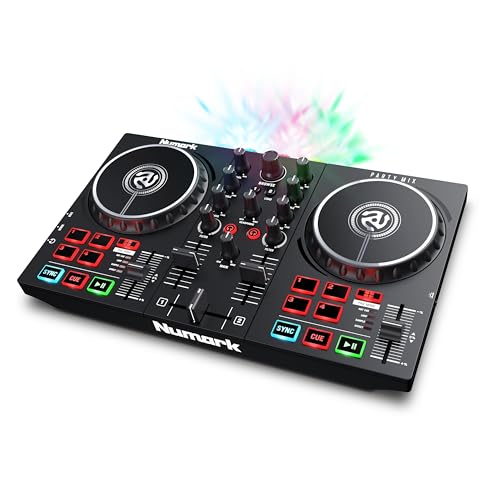
- Serato DJ Lite and USB connectivity
- Built-in synced party lights
- Two decks with jog wheels and performance pads
Best For: Beginner laptop DJing and casual parties
Best Standalone Performance System

- Standalone USB playback without a laptop
- 10.1-inch touchscreen and CDJ-style layout
- Beat FX, Sound Color FX, and 16 pads
Best For: Home, mobile, and small-venue performances
Best Versatile Audio Mixer

- Ten inputs with USB connectivity
- SPX effects, EQ, and high-pass filters
- One-knob compressors for live sources
Best For: Small live setups combining DJ playback, vocals, and instruments
Flagship Performance

- Four-channel layout with club-style workflow
- Track Separation for live mashups
- Rekordbox, Serato, and DMX lighting support
Best For: Serious hobbyists, mobile DJs, and professionals
Beginner-Friendly Portable Pick
Hercules DJControl Inpulse 200 MK3
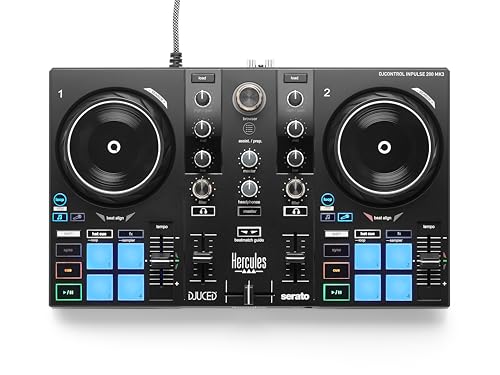
- Step-by-step tutorials and Serato Lite included
- Lightweight two-channel portable design
- Beatmatch guidance, stem separation, and music streaming
Best For: New DJs practicing at home or traveling to small events
Standalone All-in-One
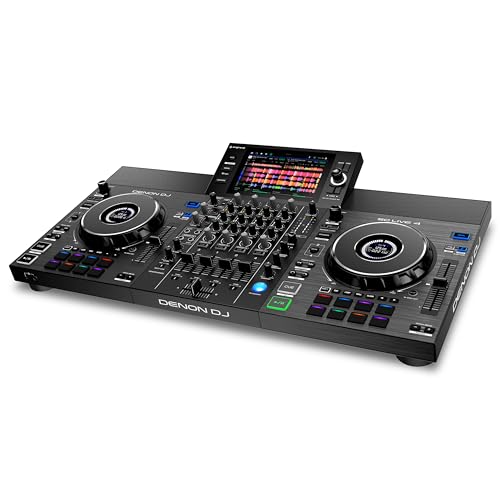
- Laptop-free four-deck Engine DJ operation
- Seven-inch touchscreen and wireless streaming
- Built-in speakers with extensive DJ connectivity
Best For: Mobile, streaming, and standalone performers
Best Overall DJ Mixer
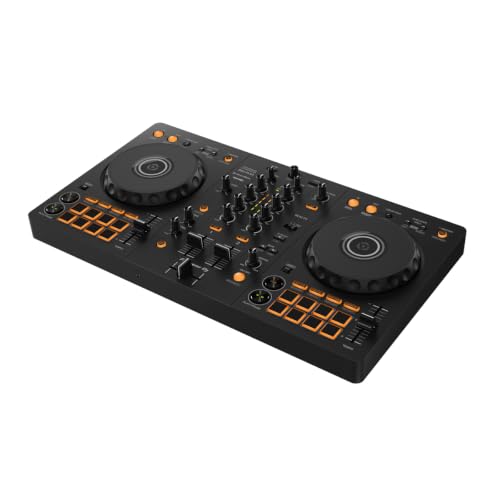
- Smart Fader helps with volume, bass, and BPM matching.
- 16 pads support cues, effects, beat jumps, and samples.
- Connects to computers, mobile devices, and streaming setups.
Best For: Beginners wanting a flexible controller for learning and streaming
Best for Scratching

- Battle-style layout supports scratch-focused practice.
- Tall pitch faders and quick effects suit hip-hop techniques.
- Includes Serato DJ Lite for PC and Mac.
Best For: Hip-hop and scratch beginners
Best Compact DJ Mixer
AlphaTheta Pioneer DJ DDJ-FLX2

- USB-C bus power supports phone, tablet, and computer use.
- Smart Fader simplifies beginner beatmatching.
- Compact design offers flexible speaker and headphone playback.
Best For: First-time DJs who prioritize portability and simple setup
Best Beginner Club-Style Pick – Pioneer DJM-250MK2
The Pioneer DJM-250MK2 is a focused dj mixer for learning the layout and techniques used in professional club booths. Its two-channel design, dedicated filters, USB connectivity, and rekordbox DVS unlock make it a practical choice for a separates setup at home.
Best For: Beginners who want a straightforward, club-style mixer for beatmatching, digital vinyl, and light scratching.
Pros:
- Two-channel layout mirrors a standard club workflow.
- Includes a free rekordbox DVS unlock for mixing digital files with compatible turntables or media players.
- Dedicated Sound Color FX Filter on each channel.
- Magvel Fader is designed for smooth blending and light scratching.
Cons:
- Two channels may limit larger or more complex setups.
- Its no-fuss design offers fewer integrated performance features than an all-in-one system.
The DJM-250MK2 is a sensible foundation for developing core mixing skills. Choose it when hands-on mixer control and future DVS use matter more than built-in decks or lighting.
Best Budget Party Controller – Numark Party Mix II
The Numark Party Mix II is an accessible dj mixer and controller for beginners who want a plug-and-play way to start mixing from a Mac or Windows computer. It combines two decks, an integrated audio interface, Serato DJ Lite, performance pads, and built-in party lights.
Best For: New DJs, casual home users, and party-focused beginners who want an affordable computer-based setup.
Pros:
- Plug-and-play USB connectivity with Serato DJ Lite included.
- Two decks feature touch-sensitive jog wheels, pitch sliders, filters, and library controls.
- Built-in LED lighting effects sync with the mix.
- Performance pads provide Effect, Cue, Loop, and Sampler functions.
Cons:
- Uses a 1/8-inch main output, which may be less flexible for some speaker setups.
- Plastic construction is less substantial than a club-oriented mixer.
For first-time users, the Party Mix II keeps the essential controls approachable while adding visual flair. It is best suited to laptop-based practice and informal parties rather than advanced standalone performance.
Best Standalone Performance System – Pioneer DJ XDJ-RX3
The Pioneer DJ XDJ-RX3 is a full-featured dj mixer and all-in-one system for performers who want to play prepared rekordbox sets from USB drives without a laptop. Its 10.1-inch touchscreen, CDJ-style layout, performance pads, and effects provide a familiar path from home practice to small-venue sets.
Best For: DJs who need a standalone, gig-ready system with pro-style controls and flexible software support.
Pros:
- Runs prepared rekordbox sets directly from USB drives.
- 10.1-inch touchscreen and CDJ-style layout support a club-standard workflow.
- Includes Beat FX, Sound Color FX, and 16 performance pads.
- Supports rekordbox Performance mode and Serato DJ Pro computer control.
Cons:
- Its 21-pound weight and large footprint make it less portable than compact controllers.
- Offers a two-channel layout rather than a larger multi-channel mixer arrangement.
The XDJ-RX3 is the strongest choice here for DJs who value standalone operation and performance depth. It costs more space and weight than a beginner controller, but its workflow is well suited to serious home use, mobile work, and small venues.
Best Versatile Audio Mixer – Yamaha MG10XU
The Yamaha MG10XU is a 10-input audio mixer with USB connectivity and SPX digital effects. While it is not a dedicated DJ deck controller, its three-band EQ, high-pass filters, one-knob compressors, and microphone-focused inputs make it useful when a dj mixer must also handle vocals, instruments, or broader live sound duties.
Best For: DJs, performers, and small setups that need flexible live audio mixing alongside USB recording or playback.
Pros:
- Ten input channels provide more capacity than a basic two-channel DJ unit.
- USB connectivity and SPX digital effects expand its utility.
- Three-band EQ and high-pass filters support detailed sound shaping.
- One-knob compressors simplify control of vocals and instruments.
Cons:
- It lacks DJ-specific features such as jog wheels, crossfader-focused deck control, or performance pads.
- Its TRS output and XLR audio inputs reflect a live-audio workflow rather than a typical DJ controller setup.
The MG10XU makes the most sense when versatility and input capacity are priorities. Choose it for mixed live-audio duties, but select a dedicated DJ model if beatmatching controls and DJ effects are your main requirements.
Flagship Performance – Pioneer DJ DDJ-FLX10
The Pioneer DJ DDJ-FLX10 is a serious dj mixer and performance controller for open-format sets, mobile work, and advanced home setups. Its four-channel layout, track separation, and compatibility with rekordbox and Serato DJ Pro support a club-style workflow with room for live remixing.
Best For: Serious hobbyists, mobile DJs, and professionals who want a future-ready four-channel controller.
Pros:
- Track Separation isolates vocals, drums, and instruments for live mashups.
- Four-channel design and pro FX mirror a CDJ and DJM booth workflow.
- Large jog wheels include multicolor displays for waveforms, artwork, and playing parts.
- Works with rekordbox and Serato DJ Pro and includes DMX lighting output.
Cons:
- At 14.8 pounds, it is less convenient for frequent transport than compact controllers.
- Its advanced feature set may be more than a beginner needs.
The DDJ-FLX10 is a strong choice when performance control and long-term flexibility matter more than a minimal setup. It is especially compelling for DJs moving toward professional booth-style operation.
Beginner-Friendly Portable Pick – Hercules DJControl Inpulse 200 MK3
The Hercules DJControl Inpulse 200 MK3 is a compact dj mixer controller designed to help new DJs start quickly. Its two-channel layout, guided beatmatching features, included Serato Lite, and streaming access make it practical for bedroom practice, small parties, and entry-level live sets.
Best For: Beginners who want guided learning, portability, and access to streamed music.
Pros:
- Includes professional software and step-by-step DJ Academy tutorials.
- Lightweight 2.2-pound design fits easily into a backpack.
- Beatmatch Guide LEDs and Intelligent Music Assistant help with transitions.
- Supports stem separation and streaming from services including Spotify, TIDAL, and SoundCloud GO+.
Cons:
- Its two-channel design is less suited to complex, multi-deck performances.
- The compact format offers fewer controls than advanced professional controllers.
The Inpulse 200 MK3 focuses on reducing the learning curve without sacrificing useful creative features. It is a sensible starting point for anyone who values portability and guided practice over a larger club-style layout.
Standalone All-in-One – Denon DJ SC LIVE 4
The Denon DJ SC LIVE 4 is a four-deck standalone dj mixer controller for performers who want to work without a laptop. With Engine DJ OS, a seven-inch touchscreen, wireless streaming, built-in speakers, and extensive outputs, it can serve mobile, streaming, and practice setups.
Best For: Mobile and streaming DJs who want standalone operation, wireless music access, and built-in monitoring.
Pros:
- Engine DJ OS enables laptop-free performances using SD cards and two USB inputs.
- Seven-inch touchscreen simplifies library browsing and track selection.
- Supports streaming services including Amazon Music Unlimited, Apple Music, TIDAL, and Beatport.
- Includes built-in speakers, Bluetooth and Wi-Fi, microphone inputs, and XLR main output.
Cons:
- Its 28.3-inch width and 13.6-pound weight make it less compact than beginner controllers.
- The broad feature set may require more setup familiarity than a basic USB controller.
The SC LIVE 4 stands out for combining four-deck control with genuine standalone flexibility. It is a practical option for DJs who want fewer dependencies on a computer and need connectivity for varied performance environments.
Best Overall DJ Mixer – Pioneer DJ DDJ-FLX4
The Pioneer DJ DDJ-FLX4 is a versatile dj mixer controller for beginners who want a straightforward setup with room to develop. Its familiar Pioneer DJ layout, Smart Fader, 16 performance pads, and support for multiple platforms make it a strong all-around choice for home practice, streaming, and early performances.
Best For: Beginners seeking an adaptable controller for learning, streaming, and two-deck mixing.
Pros:
- Smart Fader can automatically adjust volume, bass, and BPM while mixing.
- 16 performance pads support Hot Cues, Pad FX, Beat Jump, and Sampler functions.
- Works with PC, Mac, iPhone, iPad, and Android devices through USB or Bluetooth.
- Supports music services including Apple Music, Tidal, and Beatport through compatible software.
Cons:
- Its two-channel layout is focused on entry-level, two-deck mixing.
- At 21.3 inches deep and 13.3 inches wide, it needs more setup space than the most compact controllers.
The DDJ-FLX4 balances beginner-friendly automation with useful controls for continued learning. Choose it if you want one dj mixer controller that can handle practice, streaming, and gradual skill development.
Best for Scratching – Pioneer DJ DDJ-REV1
The Pioneer DJ DDJ-REV1 is a compact dj mixer controller built around a battle-style layout. With tall pitch faders, quick effect controls, and Serato DJ Lite included, it gives hip-hop, scratch, and open-format beginners a focused way to start performing.
Best For: Beginners prioritizing scratching, battle techniques, and hip-hop mixing on PC or Mac.
Pros:
- Battle-style design mirrors a classic turntable and battle mixer arrangement.
- Tall pitch faders and accessible effect controls suit scratch-focused practice.
- Tracking Scratch can trigger scratch routines with a single motion.
- Includes access to Serato DJ Lite for starting without an additional software purchase.
Cons:
- Compatibility is listed for PC and Mac rather than mobile platforms.
- The controller has one USB port.
- Its specialized battle layout may be less suitable for users seeking a general-purpose arrangement.
The DDJ-REV1 is a practical choice when scratching and battle-style control matter more than broad connectivity. Its compact design and included Serato DJ Lite software keep the entry point simple.
Best Compact DJ Mixer – AlphaTheta Pioneer DJ DDJ-FLX2
The AlphaTheta Pioneer DJ DDJ-FLX2 is a lightweight dj mixer controller designed for first-time users who want to mix from a phone, tablet, or computer. USB-C bus power, Smart Fader, streaming support, and flexible audio options make it especially convenient for casual practice and portable setups.
Best For: New DJs who want the lightest, most compact option for mobile or desktop mixing.
Pros:
- Smart Fader automatically matches volume, BPM, and bass as the crossfader moves.
- Runs from USB-C bus power supplied by a phone, tablet, or PC/Mac.
- Supports music from Apple Music, Spotify, Tidal, and other compatible services.
- Can play through a device speaker, external speakers via 3.5 mm output, or headphones.
Cons:
- Its compact two-channel design is aimed at starting out rather than advanced expansion.
- Software and streaming features depend on compatible apps such as rekordbox, djay, or Serato DJ Lite.
The DDJ-FLX2 stands out for portability and simple setup. Pick it if you want to begin DJing with the devices and music services you already use, without carrying a larger controller.
How We Picked the Best Dj Mixer Options
We evaluated these products by matching their features to real-world DJ needs rather than treating every model as the same type of equipment. Our comparison considers channel count, software compatibility, controls, effects, portability, connectivity, learning curve, and suitability for home practice, parties, mobile performances, and club-style setups.
The list includes conventional mixers, DJ controllers, standalone systems, and one general-purpose audio mixer. That distinction matters: a traditional Dj Mixer is designed to blend sources such as media players or turntables, while a controller typically combines mixing controls with decks and software control.
Quick Comparison
| Best For | Recommended Type | What to Prioritize |
|---|---|---|
| First-time DJs | Two-channel controller | Simple layout, bundled software, guided features |
| Home practice and parties | Compact controller | Portability, USB connectivity, performance pads |
| Club-style mixing | Standalone mixer or four-channel controller | Channel flexibility, professional connections, effects |
| Mobile entertainers | All-in-one DJ system | Standalone playback, screen, reliability, transportability |
| Live audio mixing | General-purpose stereo mixer | Inputs, microphone support, effects, routing |
Key Buying Factors for a Dj Mixer
Choose the Right Format
Decide whether you need a standalone mixer, a software controller, or an all-in-one DJ system. Controllers are usually the easiest entry point, while standalone units reduce dependence on a laptop. A traditional mixer makes the most sense when you already own media players, turntables, or other external sources.
Check Channels and Performance Controls
Two channels are sufficient for basic transitions and most beginner practice. Four channels provide room for layered sets, extra decks, microphones, or future expansion. Performance pads, dedicated looping controls, track separation, and hot cues can also improve live creativity, but they may add complexity.
Review Software and Connectivity
Confirm compatibility with your preferred platform, such as Serato DJ or rekordbox, and check whether the required software is included. Look for USB-C or USB connectivity, balanced outputs when possible, booth outputs, microphone inputs, headphone cueing, and connections for external players.
Match Portability to Your Routine
Compact controllers are convenient for bedrooms, small parties, and travel. Larger systems offer more hands-on control but require more storage and transport planning. If you perform away from a computer, prioritize a unit with standalone playback and a clear built-in display.
Who Should Buy Which Dj Mixer?
Beginners should start with a straightforward two-channel controller that includes accessible software and clearly labeled controls. DJs who want to practice club-style techniques should consider a dedicated mixer or a four-channel controller with more advanced effects and deck control.
For parties and mobile gigs, an all-in-one system can provide the best balance of portability and independence. Experienced performers who want creative transitions, stems, or expanded layering should look for advanced performance controls and additional channels. If your priority is microphones, instruments, or general event audio rather than DJ transitions, a Yamaha-style audio mixer may be the more appropriate choice.