The best field monitor for directors makes it easier to judge framing, focus, exposure, and playback in the middle of a busy production. The right model can also improve client viewing, camera coordination, and on-set decision-making.
This roundup covers compact touchscreen monitors, wireless receiver displays, and larger daylight-viewable production screens with SDI, HDMI, HDR, and multi-view capabilities.
Best 10 Field Monitor for Directors Picks for 2026
Best Multi-View Director Monitor
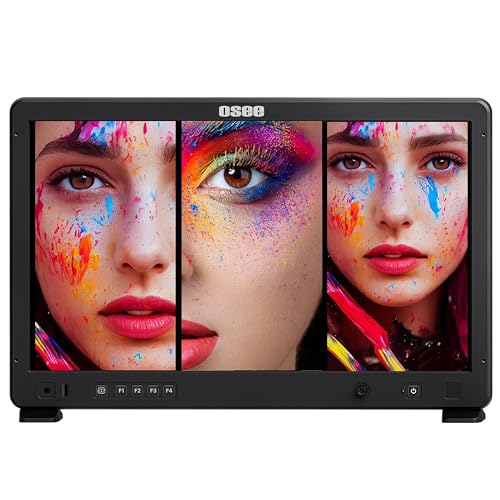
- 1500-nit display with sun hood for bright sets
- Multi-view layouts with horizontal/vertical rotation
- Six total HDMI and SDI inputs plus loop outputs
Best For: Multi-camera outdoor productions and client monitoring
Best Wireless Director Monitor
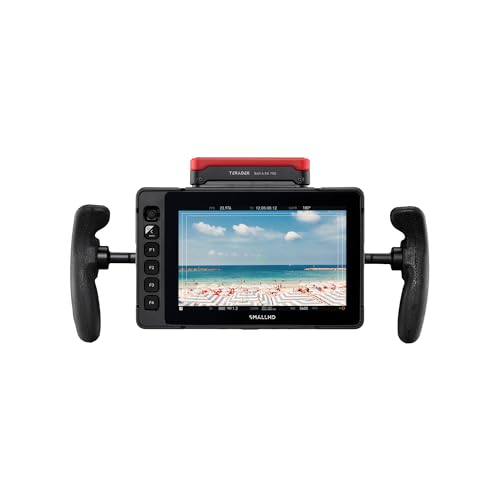
- Integrated zero-delay Bolt 6 wireless receiver
- 2300-nit touchscreen for daylight viewing
- Rugged IP53-rated design with 4K-capable I/O
Best For: Portable wireless monitoring on professional sets
Best Portable Director Monitor
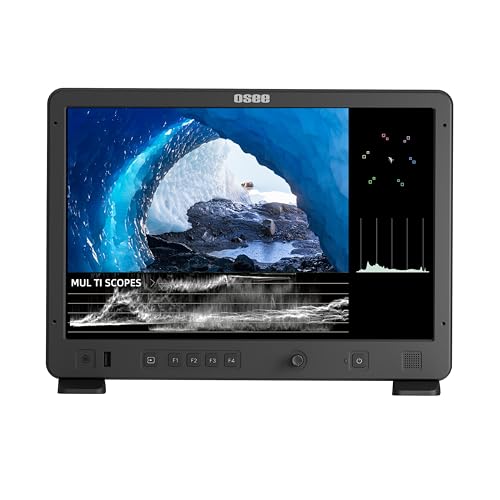
- 1500-nit 10-bit IPS display for outdoor monitoring
- 3G-SDI and 4K HDMI connectivity with V-Mount power
- Includes C-stand adapter, soft hood, and calibration tools
Best For: Portable commercial and film production setups
Best Budget Multi-Input Monitor

- Four 4K HDMI inputs and outputs for multi-view use
- 15.6-inch IPS display with 170-degree viewing angle
- Focus, false color, and pixel-to-pixel monitoring tools
Best For: Indoor live streaming and HDMI broadcast setups
Best Sunlight-Ready Production Monitor

- 1500-nit 21.5-inch IPS display for daylight viewing
- 4K HDMI, 3G-SDI, HDR, and 10-bit color processing
- Includes sunhood, C-stand adapter, battery plate, and case foam
Best For: Large-scale outdoor production and shared on-set monitoring
Best Carry-On Broadcast Monitor

- 17.3-inch 1920x1080 display for shared viewing
- 3G-SDI, HDMI, composite, and component connectivity
- Includes tally lights, suitcase, sunshade, and V-mount plate
Best For: Portable broadcast workflows and mixed-source production
Best Compact Touchscreen Monitor

- 2000-nit 10.1-inch touchscreen for daylight use
- Waveform, vectorscope, histogram, peaking, and false color tools
- Dual HDMI inputs and dual NP-F battery plates
Best For: Portable camera-side and director monitoring
Best SDI Desktop Monitor

- 17.3-inch Full HD screen with 400cd/m² brightness
- 3G-SDI, HDMI, YPbPr, video, audio, and DVI-I inputs
- Metal cabinet, tally lights, sunshade, and V-mount plate
Best For: Broadcast and studio monitoring with broad input support
Best Multi-Camera Monitor

- Four 4K HDMI inputs and four loop outputs
- 15.6-inch IPS Full HD display with 170° viewing angle
- Focus peaking, false color, pixel-to-pixel, and other tools
Best For: Multi-camera HDMI production and live studio workflows
Best High-Brightness Monitor

- 21.5-inch Full HD screen with 1000-nit brightness
- HDMI and 3G-SDI connectivity for production equipment
- Waveform, vectorscope, false color, focus assist, and 3D LUTs
Best For: Outdoor shoots and detailed exposure or color monitoring
Best Multi-View Director Monitor – osee Mega 22S4
For directors who need a field monitor for directors that can handle multiple camera feeds, the osee Mega 22S4 combines a bright 21.5-inch display with extensive HDMI and SDI connectivity. Its horizontal/vertical rotation and split-screen layouts are especially useful for commercial, social, and multi-camera productions.
Best For: Outdoor productions and teams monitoring several video sources at once.
Pros:
- 1500-nit daylight-viewable IPS display with included sun hood
- Supports horizontal or vertical orientation and single, dual, triple, quad, and PIP/PBP views
- Three 4K HDMI and three 3G-SDI inputs, with loop outputs for team monitoring
- Includes waveform, vectorscope, false color, focus peaking, and custom 3D LUT support
Cons:
- At 9.5 kg, it is less convenient for lightweight solo setups
- Native resolution is Full HD rather than 4K
- Hard case is not included
The Mega 22S4 is a strong choice when shared viewing and flexible signal routing matter more than portability. Its dual battery-plate compatibility also suits professional on-location power systems.
Best Wireless Director Monitor – SmallHD Ultra 7 Bolt 6 RX
SmallHD Ultra 7 Bolt 6 RX 7-inch Touchscreen Camera Monitor with Integrated Wireless Video Receiver
Check Price On AmazonThe SmallHD Ultra 7 Bolt 6 RX is a compact field monitor for directors who need wireless video on demanding sets. Its integrated Teradek Bolt 6 receiver, 2300-nit touchscreen, and rugged IP53-rated chassis make it well suited to handheld or camera-mounted monitoring in changing conditions.
Best For: Directors and operators who need bright, wireless monitoring in a portable form.
Pros:
- Integrated Bolt 6 750 RX wireless receiver with zero-delay video reception
- 2300-nit 7-inch touchscreen with 10-bit color processing
- IP53-rated chassis designed to resist water, dirt, heat, cold, and drops
- Supports 6G-SDI 4K ingest, HDMI input/output, and multiple power options
Cons:
- The 7-inch screen is smaller than the other monitors in this roundup
- Wireless features may be unnecessary for simple wired setups
- Its professional feature set may be more than basic shoots require
Choose this model when wireless flexibility and durability are priorities. PageOS tools, multi-view support, focus assistance, and exposure controls give directors quick access to essential monitoring adjustments.
Best Portable Director Monitor – osee Mega 15S
The osee Mega 15S offers a practical middle ground for anyone shopping for a field monitor for directors. Its 15.4-inch 1500-nit display remains viewable outdoors, while the built-in V-Mount plate, C-stand adapter, and production-focused analysis tools support flexible on-location setups.
Best For: Directors, DITs, and cinematographers who want a bright, portable monitor with professional exposure tools.
Pros:
- 1500-nit 10-bit IPS display with reflection-reducing coating
- Dual 3G-SDI inputs/outputs and a 4K HDMI input for flexible routing
- Hardware auto color calibration, 3D LUT importing, and HLG/PQ HDR preview
- Includes V-Mount plate, C-stand adapter, soft hooded carrying case, and mounting threads
Cons:
- Only one HDMI input is provided
- At 15.4 inches, it offers less viewing area than the Mega 22S4
- Glossy screen finish may be less forgiving than a matte panel in some lighting
For productions that need a bright shared monitor without moving up to a much larger unit, the Mega 15S is well balanced. Its included mounting and carrying accessories make it particularly convenient for field work.
Best Budget Multi-Input Monitor – SEETEC ATEM156
The SEETEC ATEM156 is a straightforward field monitor for directors working with ATEM Mini or similar HDMI-based live-production systems. Its four HDMI inputs and outputs enable multi-view monitoring, while focus and exposure aids help with basic production checks.
Best For: Live streaming, broadcasting, and HDMI-based setups that need multiple inputs at an accessible size.
Pros:
- Four 4K HDMI inputs and outputs for multi-view and signal switching workflows
- 15.6-inch Full HD IPS panel with a 170-degree viewing angle
- Includes peaking focus, false color, and pixel-to-pixel monitoring functions
- Supports 12V DC power and a V-Mount battery plate
Cons:
- 250-nit brightness is less suited to direct sunlight than the brighter models here
- Connectivity is HDMI-only
- Battery is not included with the package
The ATEM156 makes the most sense for indoor or controlled-lighting environments where multi-input HDMI monitoring is the main requirement. It is less appropriate for bright outdoor cinematography, but its simple controls and included U-shaped bracket support practical broadcast use.
Best Sunlight-Ready Production Monitor – Osee Mega 22S
The Osee Mega 22S is a strong field monitor for directors who need a large, highly visible screen for outdoor production. Its 1500-nit display, HDR support, SDI and HDMI connectivity, and built-in color self-calibration make it well suited to on-set viewing and client monitoring.
Best For: Directors and production teams needing a large, sunlight-viewable monitor with advanced color and monitoring tools.
Pros:
- 1500-nit, 21.5-inch IPS display is designed for daylight viewing.
- Supports 4K HDMI input, 3G-SDI, HDR formats, camera logs, and 10-bit color processing.
- Built-in color self-calibration reduces the need for a computer-based calibration workflow.
- Includes a sunhood, C-stand adapter, battery plate, and custom foam for a Pelican 1600 case.
Cons:
- At 22 pounds, it is substantially less portable than compact camera-mounted monitors.
- The 1920×1080 native resolution is lower than the maximum 4K HDMI input resolution.
- Its production-focused setup may be more equipment than a small crew needs.
The Mega 22S prioritizes viewing scale, daylight visibility, and transport protection over portability. It is a practical choice when directors, clients, and crew need to evaluate the image together on location.
Best Carry-On Broadcast Monitor – SEETEC P173-9HSD-CO
The SEETEC P173-9HSD-CO is a practical field monitor for directors who want a larger screen with broadcast-friendly connections and a transport case. Its 17.3-inch 1080p display, focus assist, tally lights, and SDI, HDMI, composite, and component support cover a broad range of production setups.
Best For: Directors working with broadcast cameras or mixed video sources who need a portable monitor with tally functionality.
Pros:
- 17.3-inch 1920×1080 screen provides a useful shared viewing area.
- Focus assist, check field, image freeze, image flip, markers, and safe-frame tools support accurate monitoring.
- Includes 3G-SDI, HDMI, composite, and component inputs and outputs.
- Front and rear three-color tally lights help indicate recording status.
Cons:
- Its 400-nit brightness is lower than the ultra-bright alternatives in this roundup.
- The supplied specifications list a 1920×1080 display rather than a higher-resolution native panel.
- It is less compact than a small camera-top field monitor.
The P173-9HSD-CO is particularly useful when connection flexibility and production signaling matter more than maximum brightness. The included suitcase, sunshade, V-mount plate, and tally kit make it a ready-to-transport option.
Best Compact Touchscreen Monitor – FEELWORLD LUT11
The FEELWORLD LUT11 is a compact field monitor for directors who need strong daylight visibility without carrying a large production display. Its 2000-nit touchscreen, waveform and scope tools, dual HDMI inputs, custom LUT support, and dual NP-F battery plates make it useful for camera-side or director monitoring.
Best For: Directors and camera teams wanting a bright, lightweight touchscreen monitor with extensive image-assistance tools.
Pros:
- 2000-nit brightness and a built-in light sensor support outdoor viewing.
- Touchscreen controls provide quick access to waveform, vectorscope, histogram, peaking, false color, and audio-level tools.
- Loads up to 50 custom 3D LUTs and supports HDR signals.
- Dual HDMI inputs, one HDMI output, and two NP-F battery plates support flexible setups.
Cons:
- The 10.1-inch screen is smaller than the shared-view displays in this roundup.
- Connectivity is HDMI-based, without the supplied notes indicating SDI support.
- The glossy screen finish may be less desirable in some reflective environments.
The LUT11 balances brightness, portability, and hands-on control. It is a good fit when a director needs sophisticated exposure and focus aids in a compact package rather than a large client monitor.
Best SDI Desktop Monitor – P173-9HSD
For directors who need a dependable field monitor for directors with broad connectivity, the SEETEC P173-9HSD combines a 17.3-inch Full HD display with 3G-SDI, HDMI, YPbPr, video, audio, and DVI-I inputs. Its metal cabinet, tally lights, sunshade, and V-mount battery plate support demanding production setups.
Best For: Broadcast monitoring, studio use, and productions needing SDI connectivity and a larger on-set screen.
Pros:
- 17.3-inch 1920×1080 Full HD display with 400cd/m² brightness.
- Supports 3G-SDI, HDMI, YPbPr, video, audio, and DVI-I connections.
- Includes tally lights, sunshade, U bracket, and V-mount battery plate.
- Full metal cabinet is designed for impact resistance and interference reduction.
Cons:
- 40ms response time is slower than many modern production displays.
- 600:1 contrast ratio is modest for detailed shadow evaluation.
- At 3.3kg, it is better suited to a supported setup than lightweight handheld use.
This is a practical choice when connection flexibility, physical durability, and screen size matter more than advanced exposure tools or ultra-fast response.
Best Multi-Camera Monitor – ATEM156-CO
The SEETEC ATEM156-CO is a field monitor for directors managing multiple HDMI sources. It offers four 4K HDMI inputs and loop outputs, plus a 15.6-inch IPS Full HD panel with focus and exposure tools that can help streamline multi-camera shooting.
Best For: Live production, studio work, and directors monitoring up to four HDMI camera or computer feeds.
Pros:
- Four 4K HDMI inputs and four HDMI outputs support multi-source workflows.
- 15.6-inch IPS Full HD display with a 170-degree viewing angle.
- Includes peaking focus, false color, pixel-to-pixel, waveform-related markers, and other monitoring functions.
- Supports 12V DC power and includes a V-mount battery plate and carry suitcase.
Cons:
- 250cd/m² brightness may be less suitable for direct sunlight.
- Battery is not included.
- The listed 7.25kg weight makes it relatively heavy for portable field work.
With quad HDMI routing and production-focused image tools, this monitor is especially useful when a director needs to compare or distribute several HDMI signals from one position.
Best High-Brightness Monitor – FEELWORLD FVM215
For outdoor sets and brightly lit locations, the FEELWORLD FVM215 is a field monitor for directors built around a 21.5-inch, 1000-nit Full HD screen. It combines HDMI and 3G-SDI connectivity with waveform, vectorscope, false color, focus assist, and 3D LUT support for more controlled image evaluation.
Best For: Outdoor production, bright locations, and directors who need larger-screen exposure, focus, and color-monitoring tools.
Pros:
- 1000-nit brightness helps maintain visibility in strong lighting conditions.
- 21.5-inch 1920×1080 display offers a large viewing area.
- Includes focus assist, false color, waveform, RGB parade, vectorscope, and 3D LUT loading.
- Provides HDMI and 3G-SDI connections with a V-mount battery plate included.
Cons:
- Its 21.5-inch size and 9.4-pound weight make it less compact than smaller field monitors.
- It has a 25ms response time, which is not especially fast for motion handling.
- The supplied information lists Full HD resolution rather than a 4K native panel.
The FVM215 stands out when screen visibility and professional monitoring scopes are priorities, making it a strong fit for directors working outdoors or overseeing detailed image adjustments.
How We Picked the Best Field Monitor for Directors
We selected these monitors based on the features that matter most on professional and independent sets: screen brightness, size, input flexibility, resolution support, portability, viewing tools, and power options. We included both compact camera-mounted displays and larger director or client monitors so you can match the monitor to your workflow.
We also considered practical production details such as SDI and HDMI connectivity, touchscreen controls, wireless video support, portrait or landscape operation, carry-on designs, sun hoods, battery plates, and included mounting accessories. A monitor can have excellent specifications yet be a poor choice if it is difficult to power, transport, or view outdoors.
Quick Comparison
- Best for large on-set viewing: The 21.5- and 22-inch production monitors provide more comfortable viewing for directors, clients, and assistants.
- Best for camera operators: The SmallHD Ultra 7 and FEELWORLD LUT11 offer compact formats with touchscreen control and useful monitoring tools.
- Best for bright outdoor sets: Look for 1,000 nits or more; the brightest options here are better suited to daylight and exterior production.
- Best for multi-camera workflows: The osee Mega 22S4 stands out with multi-view support and a large display.
- Best for transport: Carry-on models and smaller 15.4- to 17.3-inch monitors balance viewing area with easier packing.
Key Buying Factors for a Field Monitor for Directors
Brightness and Viewing Environment
Brightness is one of the most important specifications. A 250-nit monitor may work well indoors, while a 1,000- or 2,000-nit display is more suitable for exterior sets. A sun hood can further improve visibility by reducing reflections and glare.
Screen Size and Placement
Choose a compact 7- or 10.1-inch display for camera-side use. For a director, client, or focus-pulling station, a 15.6-, 17.3-, 21.5-, or 22-inch screen is easier to share and inspect from a short distance. Confirm that the monitor supports the mounting orientation and stand or C-stand setup you use.
Inputs, Resolution, and Signal Compatibility
Check whether your cameras output HDMI, 3G-SDI, or both. SDI is often preferable for longer cable runs, while HDMI is common on mirrorless and cinema cameras. 4K input support is useful even when the panel is lower resolution, but verify supported frame rates and conversion limits before buying.
Monitoring Tools and Power
Touchscreen controls, LUT support, waveform and exposure tools, focus assistance, HDR compatibility, and multi-view options can make a bigger difference than resolution alone. Also confirm the battery plate, power input, runtime expectations, and whether accessories such as a sun hood or mounting adapter are included.
Who Should Buy Which Field Monitor for Directors?
Choose a large bright production monitor if you direct from a station, regularly share the image with clients, or work outdoors. Pick a compact touchscreen model if you need camera-mounted mobility and fast access to focus and exposure tools. A wireless receiver monitor is ideal when reducing cable runs is a priority. For studios, interviews, and controlled interiors, a lower-brightness 15.6- or 17.3-inch display can deliver practical monitoring without the added cost and power demands of an ultra-bright panel.