A field monitor with HDR can make it easier to judge exposure, color, focus, and framing when a camera’s built-in display falls short. The right model can also add practical tools such as waveform monitoring, false color, 3D LUT support, touchscreen control, and HDMI or SDI connectivity.
We compared 10 bright camera monitors across screen size, HDR support, resolution, ports, power options, and production features to help you choose a model that fits your camera rig and shooting environment.
Best 10 Field Monitor with Hdr Picks for 2026
Bright Outdoor Control

- 3000-nit touchscreen for bright locations
- 3G-SDI and 4K HDMI input/output
- Camera control and dynamic focus tracking
Best For: Outdoor filmmakers needing a bright, feature-rich control monitor
OLED HDR Toolkit

- 1200-nit 1080p OLED touchscreen
- 4K HDMI loop-out and 3G-SDI I/O
- Includes two NP-F750 batteries
Best For: Videographers wanting OLED contrast and comprehensive monitoring tools
Director-Size Production View
Osee Mega 15S 15.4-inch HDR Monitor
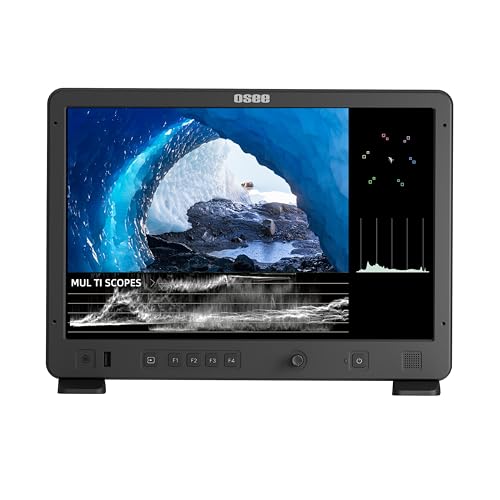
- 15.4-inch 10-bit, 1500-nit IPS display
- HDR preview and hardware color calibration
- Dual 3G-SDI I/O plus 4K HDMI input
Best For: Directors and DITs needing a large, daylight-viewable production monitor
Compact Outdoor Framing
FEELWORLD F5 PROX 5.5-inch Monitor

- 1600-nit screen for sunny locations
- Waveform, histogram, false color, and peaking
- Compact design for gimbals and camera rigs
Best For: Solo shooters needing a bright, portable framing and exposure monitor
Best HDR Detail

- 1500-nit 10-bit HDR/SDR display
- Scopes, false color, and LUT support
- Lightweight 210g portable design
Best For: Portable daylight monitoring and LUT-based workflows
Best Built-In Battery

- 6-inch 1200-nit IPS touchscreen
- Built-in 3300mAh rechargeable battery
- Waveform, focus assist, and 3D LUTs
Best For: Mobile creators seeking self-contained outdoor monitoring
Best Large Bright Screen

- 2000-nit 7-inch touchscreen
- 4K HDMI loop in and out
- Extensive scopes and custom LUT support
Best For: Bright, large-format monitoring on professional camera rigs
Compact HDR Pick
Desview A5 5.5-inch Field Monitor

- Lightweight 5.5-inch touchscreen with HDR-ready visuals
- 4K HDMI input/output plus waveform, histogram, and vectorscope
- 3D LUT support with NP-F550 or DC power options
Best For: Portable filming and studio monitoring
Daylight HDR Pick

- 1200-nit touchscreen with included sunshade hood
- 4K HDMI loop in/out and custom 3D LUT support
- Includes NP-F550 battery and multiple power options
Best For: Outdoor DSLR, mirrorless, and cinema shooting
High-Brightness HDR Pick

- 2000-nit 7-inch touchscreen for bright shooting conditions
- 4K HDMI loop in/out with HDR and extensive monitoring scopes
- Includes rechargeable 5200mAh NP-F750 battery
Best For: Outdoor production and larger supported camera rigs
Bright Outdoor Control – Osee G7 Pro 7-inch Monitor
If you need a field monitor with HDR for bright-location production, the Osee G7 Pro combines a 3000-nit touchscreen with HDR-capable 3D-LUT processing. Its camera-control features, SDI and HDMI connectivity, and built-in analysis tools make it suited to demanding camera rigs.
Best For: Outdoor filmmakers and camera operators who want touchscreen camera control, focus tracking, and detailed exposure analysis.
Pros:
- Very bright 3000-nit display with reflection-reducing coating for outdoor viewing.
- Supports 3G-SDI and 4K HDMI input/output.
- Touch focus, dynamic focus tracking, and supported camera controls can streamline operation.
- Includes waveform, histogram, vectorscope, false color, and 3D-LUT support.
Cons:
- Camera-control functionality requires a supported camera and NP-F battery power.
- Battery is not included.
- SDI is limited to signals up to 1080p60.
The G7 Pro is a strong choice when sunlight visibility and hands-on camera control matter more than keeping the monitor especially small. Confirm camera compatibility before relying on its control and tracking features.
OLED HDR Toolkit – NEEWER F700U 7-inch Monitor
The NEEWER F700U is a field monitor with HDR built around a 7-inch OLED display, 1200-nit brightness, and a 100,000:1 contrast ratio. It also provides HDMI loop-out, 3G-SDI connectivity, audio monitoring, and a broad set of exposure and focus tools.
Best For: Videographers who want OLED contrast, professional monitoring scopes, and flexible HDMI/SDI connectivity.
Pros:
- OLED panel offers 1920×1080 resolution, 1200-nit brightness, and high contrast.
- 4K HDMI input and loop-out can feed another display.
- 3G-SDI input/output supports HD formats up to 1920×1080.
- Includes HDR, waveform, vectorscope, false color, audio levels, and LUT support.
Cons:
- SDI cable and DC 12V adapter are not included.
- Its 1200-nit brightness is lower than some brighter outdoor-focused monitors.
- Custom LUTs require an SD card, which is not included.
With two NP-F750 batteries included, the F700U is a practical production package for crews that need strong contrast and extensive monitoring aids without stepping up to a larger production display.
Director-Size Production View – Osee Mega 15S 15.4-inch HDR Monitor
For productions that need a large field monitor with HDR, the Osee Mega 15S offers a 15.4-inch 10-bit IPS display with 1500-nit brightness and HDR preview for HLG/PQ. Its dual 3G-SDI inputs/outputs, 4K HDMI input, V-Mount plate, and stand-mounting options suit larger on-set monitoring setups.
Best For: Directors, DITs, and cinematographers who need a large daylight-viewable screen for commercial, film, or multi-camera work.
Pros:
- Large 15.4-inch 1920×1200 10-bit IPS display with 1500-nit brightness.
- Supports HDR preview, 3D LUTs, and hardware auto color calibration.
- Dual 3G-SDI inputs/outputs and a 4K HDMI input support complex routing.
- Includes a pre-installed V-Mount plate and C-stand/light-stand mounting accessories.
Cons:
- Much larger and less camera-rig-friendly than compact field monitors.
- V-Mount battery is not listed as included.
- Its HDMI connectivity provides one HDMI input rather than HDMI output.
The Mega 15S is best treated as a portable production or client-viewing monitor rather than a small on-camera accessory. Its size, calibration features, and signal-routing flexibility are valuable when image evaluation is a shared on-set task.
Compact Outdoor Framing – FEELWORLD F5 PROX 5.5-inch Monitor
The FEELWORLD F5 PROX is a compact field monitor with HDR-oriented LUT preview and a 1600-nit screen for outdoor framing. Its focus peaking, waveform, histogram, and false color tools help DSLR, mirrorless, and cinema-camera users judge focus and exposure more confidently.
Best For: Solo shooters, vloggers, gimbal operators, and filmmakers who need a bright, lightweight monitor for camera rigs.
Pros:
- 1600-nit display is designed for visibility in direct sunlight.
- Focus peaking, waveform, histogram, and false color support practical exposure checks.
- Compact 5.5-inch format suits handheld, gimbal, tripod, and cage setups.
- Includes a required lithium-ion battery.
Cons:
- Supplied notes do not specify HDMI, SDI, or other signal-format details.
- Smaller screen provides less viewing area than 7-inch and production monitors.
- Supplied notes do not list HDR signal formats or advanced connectivity.
The F5 PROX emphasizes portability and sunlight visibility over extensive production routing. It is a sensible fit for creators who mainly need a brighter, larger-than-camera display with essential focus and exposure aids.
Best HDR Detail – Atomos Shinobi GO
If you want a compact field monitor with HDR for daylight shooting, the Atomos Shinobi GO combines a 1500-nit 10-bit HDR/SDR display with practical exposure and focus tools. Its 5-inch screen, 210g weight, and multiple power options make it easy to add to a lightweight camera rig.
Best For: Videographers and photographers who need bright, portable monitoring with LUT preview and professional scopes.
Pros:
- 1500-nit 10-bit HDR/SDR display with anti-reflective, anti-fingerprint coating
- Built-in waveform, histogram, false color, RGB parade, and analysis tools
- Supports 1D and 3D LUTs, including custom .cube files via SD card
- Lightweight 210g design with NP-F, USB-C PD, and optional AC power
Cons:
- Its 5-inch screen is smaller than the displays on the other monitors here
- AC power requires a separately sold Atomos battery eliminator
The Shinobi GO is a strong choice when portability and outdoor visibility matter more than screen size. Its locking HDMI system and broad monitoring toolkit also make it well suited to dependable on-set use.
Best Built-In Battery – FEELWORLD P6XL
The FEELWORLD P6XL is a practical field monitor with HDR-oriented waveform tools, a 6-inch Full HD IPS touchscreen, and a built-in 3300mAh battery. Its 1200-nit display is designed for outdoor visibility, while the included cables and mounting hardware help simplify camera-rig setup.
Best For: Vloggers, filmmakers, and event shooters who want a larger touchscreen without relying immediately on an external battery.
Pros:
- 6-inch 1200-nit IPS display for clearer outdoor monitoring
- Built-in 3300mAh battery offers up to about 3 hours at 60% brightness
- Includes waveform, vectorscope, histogram, focus assist, and 3D LUT support
- Full touchscreen interface and 1/4-20 mounting threads support flexible setups
Cons:
- Battery runtime decreases to about 2.2 hours at full brightness
- The supplied specifications do not identify a native display resolution beyond Full HD video support
Choose the P6XL if a built-in battery and straightforward touch control are priorities. It offers useful exposure and color tools in a relatively lightweight 6-inch package for outdoor and mobile production.
Best Large Bright Screen – NEEWER F700
For creators who prefer a larger viewing area, the NEEWER F700 is a 7-inch field monitor with HDR functions, a 2000-nit touchscreen, and 4K HDMI loop-through. It provides extensive exposure, focus, audio, and LUT tools, though its battery-equipped setup is substantially heavier than the smaller options.
Best For: Filmmakers and camera operators who value maximum outdoor brightness, a large screen, and extensive monitoring controls.
Pros:
- Bright 2000-nit 7-inch IPS display with manual and automatic backlight control
- 4K HDMI loop input and output with a 3.5mm headphone jack for audio monitoring
- Includes waveform, vectorscope, false color, zebras, HDR, and focus tools
- Supports up to 60 custom 3D LUT files and multiple NP-F battery options
Cons:
- Weighs 445g without batteries and up to 857g with two batteries
- Its glossy screen finish may be less glare-resistant than a matte display
- DC power cable and SD card are not included
The F700 is the most capable pick here for a large, highly visible monitoring surface. Its extensive connections and tools suit more elaborate rigs, but its size and battery weight are worth factoring into handheld or gimbal setups.
Compact HDR Pick – Desview A5 5.5-inch Field Monitor
The Desview A5 is a practical field monitor with HDR for shooters who want a lightweight, touchscreen setup with professional exposure and color tools. Its 5.5-inch Full HD display, 600-nit brightness, 4K HDMI input/output, and 3D LUT support suit handheld filming and studio work.
Best For: Filmmakers who prioritize portability, touchscreen control, and essential monitoring scopes.
Pros:
- Compact 340g design with a 5.5-inch IPS touchscreen and 178-degree viewing angle
- Supports HDR-compatible monitoring, 3D LUTs, waveform, RGB histogram, and vectorscope
- Provides 4K HDMI input/output and a 3.5mm headphone jack for audio monitoring
- Works with NP-F550-series batteries or a 12V DC adapter
Cons:
- Battery and DC adapter are not included
- Its 600-nit brightness is lower than the brighter monitors in this selection
- Not compatible with LP-E6 batteries
The A5 is a strong choice when you need a small, capable field monitor with HDR without adding much weight to a camera rig. Its useful scopes and LUT support make it more versatile than a basic preview screen, while the included protective bag and cables add convenience.
Daylight HDR Pick – VILTROX DC-550 Pro II Monitor
The VILTROX DC-550 Pro II is a field monitor with HDR built for bright shooting environments. Its 1200-nit 5.5-inch touchscreen, sunshade hood, 4K HDMI loop-through, and extensive exposure and focus tools make it a well-equipped option for DSLR, mirrorless, and cinema camera setups.
Best For: Outdoor shooters who need high brightness, touchscreen operation, and flexible power choices.
Pros:
- 1200-nit display with anti-glare IPS touchscreen for improved daylight visibility
- Includes 4K HDMI input/output, REC-709 color calibration, HDR, and custom 3D LUT support
- Offers waveform, vectorscope, histogram, false color, and focus-assist functions
- Includes an NP-F550 battery, sunshade hood, cables, cold shoe adapter, and carry case
Cons:
- Native display resolution is Full HD rather than 4K
- At 1.1 pounds, it is heavier than the compact Desview option
- Its 160-degree viewing-angle specification is narrower than some competing models
The DC-550 Pro II offers a balanced combination of brightness, monitoring tools, and included accessories. It is particularly appealing if you want to start shooting immediately with a supplied battery and need a screen that is better suited to outdoor production.
High-Brightness HDR Pick – NEEWER F700 7-inch Monitor
The NEEWER F700 is a large field monitor with HDR for production teams that want strong daylight visibility and a broad set of on-screen analysis tools. Its 7-inch 2000-nit touchscreen, 4K HDMI loop in/out, included 5200mAh NP-F750 battery, and adjustable mounting design make it suited to demanding field setups.
Best For: Outdoor video production, director monitoring, and users who want maximum screen brightness.
Pros:
- Very bright 2000-nit, 7-inch IPS touchscreen with manual and automatic backlight control
- Supports HDR, 4K HDMI loop in/out, and simultaneous headphone audio monitoring
- Includes waveform, vectorscope, false color, zebras, histogram, oscillogram, and focus peaking
- Includes a rechargeable 5200mAh NP-F750 battery and supports NP-F, DC, and USB-C power
Cons:
- Its 654g weight with the battery is substantially heavier than compact 5.5-inch monitors
- Native screen resolution is 1920×1080 despite accepting 4K HDMI signals
- Headphones, DC power cable, and SD card for LUT uploads are not included
The F700 is the most compelling choice here when brightness and screen size matter more than a lightweight rig. The included high-capacity battery and extensive monitoring tools add practical value, although its larger, heavier design is better suited to supported camera builds than minimalist handheld setups.
How We Picked the Best Field Monitor with Hdr
We focused on monitors designed for use on camera rigs, carts, and small production setups. The comparison considers brightness, HDR compatibility, screen technology, resolution, input and output options, touch controls, LUT support, focus and exposure tools, battery requirements, and overall portability.
Peak brightness matters particularly for outdoor work, but it is not the only specification that determines usability. A monitor should also provide a clear image, responsive controls, useful scopes, and connections that match your camera and accessories. Models with HDMI loop-through or SDI can be more useful in multi-device workflows, while smaller monitors are often better for lightweight handheld rigs.
Quick Comparison
For maximum daylight visibility, look at the Osee G7 Pro, NEEWER F700, and osee Mega 15S. The Mega 15S is the largest option and is better suited to a production cart or studio than a compact camera rig. The G7 Pro combines very high brightness with 3G-SDI, 4K HDMI, touchscreen control, and touch focus tracking.
The Atomos Shinobi GO is a strong choice for creators who prioritize a lightweight HDR touchscreen and an efficient field workflow. The FEELWORLD and Desview models offer compact alternatives, while the VILTROX DC-550 provides a straightforward 5.5-inch monitoring setup with a sunshade and 3D LUT support. Check the listings carefully where two NEEWER F700 configurations appear, since brightness, panel type, and included features may vary.
Key Buying Factors for a Field Monitor with Hdr
Brightness and Outdoor Visibility
A rating of 1,000 nits or more is generally more practical in daylight, especially when the monitor includes a sun hood. Extremely bright displays can improve visibility outdoors, but they may consume more power and cost more.
HDR, Color, and Monitoring Tools
HDR support is useful only when the monitor can display the relevant signal properly and provides suitable image controls. Look for waveform, vectorscope, histogram, false color, zebras, focus peaking, and 3D LUT support if you need reliable exposure and color decisions on set.
Ports and Camera Compatibility
Confirm whether your camera outputs HDMI or SDI and check the supported resolution and frame rates. HDMI loop-through is useful for sending the feed to another display or recorder. SDI is typically preferable for longer cable runs and more demanding production environments.
Size, Power, and Mounting
A 5.5- or 6-inch monitor keeps a handheld setup compact, while a 7-inch screen is easier to inspect at a distance. A 15.4-inch monitor is more practical for a director or focus station. Also verify battery type, runtime expectations, charging options, mounting points, and whether a sunshade is included.
Who Should Buy Which Field Monitor with Hdr?
Choose the Osee G7 Pro if you need very high brightness, professional connectivity, and touchscreen camera-control features. Choose the osee Mega 15S for studio, cart, or video-village monitoring where a large screen is more important than portability.
The Atomos Shinobi GO suits filmmakers who want a lightweight, polished HDR monitoring workflow. The NEEWER F700 models are worth considering for buyers who want a bright 7-inch display at a practical size, while FEELWORLD’s F5 Prox and P6XL are better matches for compact DSLR or mirrorless rigs. Choose the Desview or VILTROX models when a smaller HDR-capable monitor with touchscreen and LUT-oriented tools fits your budget and setup.