The best field recorders make it easier to capture clean, dependable audio away from a studio. Whether you need a compact lavalier recorder, a handheld stereo unit, or a multitrack setup with multiple inputs, the right model depends on your workflow.
We’ve selected 10 field recorders for filmmakers, musicians, podcasters, and content creators, covering simple two-channel recording through advanced production rigs.
Best 10 Field Recorders Picks for 2026
Best Professional Run-and-Gun Recorder

- 32-bit float recording helps prevent clipped takes
- Two locking XLR/TRS inputs
- Compact design with flexible power options
Best For: Run-and-gun filmmakers and location recordists
Best Wearable Lavalier Recorder

- Includes a lavalier microphone and accessories
- 32-bit float recording without gain adjustment
- Up to 15 hours on two AAA batteries
Best For: Interviews, weddings, vlogs, and on-camera recording
Best Flexible Four-Track Recorder
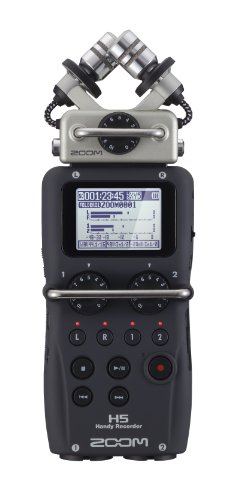
- Interchangeable input capsule system
- Four-track simultaneous recording
- Two XLR/TRS inputs with phantom power
Best For: Filmmakers and musicians needing adaptable inputs
Best High-Input Professional Recorder
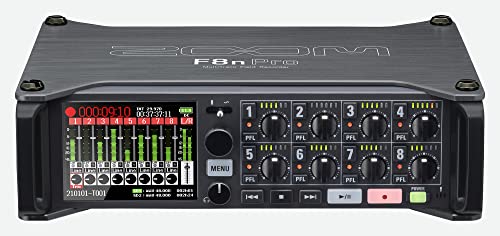
- Eight inputs and ten-track recording
- Dual SD slots for redundant recording
- Accurate 0.2ppm timecode and 32-bit float
Best For: Professional film crews and complex location audio
Versatile Field Recording Pick

- 32-bit float, four-track recording
- Stereo mics plus two XLR/TRS inputs
- USB-C recording with SD backup
Best For: Flexible music, podcast, interview, and video recording
Portable Layering Workstation

- Four-track recording with bounce workflow
- 32-bit float capture and two combo inputs
- Built-in effects and 80-plus rhythm patterns
Best For: Mobile songwriting, demos, and layered music sessions
Professional On-Location Choice

- Large 19.4mm X/Y stereo microphones
- 32-bit float and dedicated gain knobs
- Up to four tracks at 192kHz WAV
Best For: Filmmaking and detailed portable music recording
Best XLR Field Recorder

- Two locking XLR/TRS inputs
- 32-bit float/96kHz recording
- OLED waveform display
Best For: Filmmakers, podcasters, and musicians using external microphones or instruments
Best Multitrack Field Recorder

- Up to six tracks plus stereo mix
- 32-bit float recording
- Microphones handle up to 140 dB SPL
Best For: Multitrack film, music, and demanding location sessions
Best Easy-Use Field Recorder

- Three mics with nine patterns
- 32-bit float recording without gain adjustment
- USB microphone and SD recording
Best For: Journalists, podcasters, and field recordists using built-in microphones
Best Professional Run-and-Gun Recorder – Zoom F3
The Zoom F3 is one of the most capable compact field recorders for filmmakers and musicians who need dependable audio in unpredictable conditions. Its 32-bit float recording helps capture quiet dialogue and sudden peaks without constant level adjustments.
Best For: Run-and-gun filmmakers, location recordists, and musicians who need clean audio from professional microphones.
Pros:
- 32-bit float recording with dual A/D converters helps provide clip-free audio.
- Two locking XLR/TRS inputs keep microphone connections secure.
- Ultra-low-noise preamps support clean recordings in demanding environments.
- Supports battery-powered, USB, and standalone recording workflows.
Cons:
- Only two inputs are available for larger microphone setups.
- It does not include a dedicated lavalier microphone.
The F3 is a strong choice when portability, reliable gain handling, and secure XLR connections matter more than having many channels. Its small 8.48-ounce body also suits compact production kits.
Best Wearable Lavalier Recorder – Zoom F2
The Zoom F2 is a highly portable field recorder designed to be worn with a lavalier microphone. Its 32-bit float recording eliminates the need to adjust gain during interviews, vlogs, weddings, and other mobile productions.
Best For: Journalists, wedding videographers, content creators, and on-camera talent who need discreet body-pack recording.
Pros:
- Includes an omnidirectional lavalier microphone with windscreen and lapel clip.
- 32-bit float recording supports clip-free audio at changing volume levels.
- Runs for up to 15 hours on two AAA batteries.
- REC Hold helps prevent accidental stops, while the precision clock supports sync workflows.
Cons:
- Its single lavalier-focused design is less suitable for multi-microphone recording.
- It records at 44.1kHz or 48kHz rather than offering higher sample rates.
Choose the F2 when a small, wearable recorder and included lavalier microphone are more useful than multiple inputs. Support for microSD cards up to 512GB also makes it practical for extended sessions.
Best Flexible Four-Track Recorder – Zoom H5
The Zoom H5 is a versatile handheld option among field recorders, combining an interchangeable microphone capsule system with two XLR/TRS combo inputs. It can record up to four tracks simultaneously and also work as a multichannel USB audio interface.
Best For: Filmmakers and musicians who want expandable microphone options, multiple inputs, and a handheld recording format.
Pros:
- Interchangeable input capsules allow the recording setup to be adapted.
- Includes a detachable X/Y capsule with shock-mounted microphones.
- Two XLR/TRS inputs offer selectable phantom power and a -20dB pad.
- Supports four-track recording and USB audio interface operation.
Cons:
- Recording to SD/SDHC is limited to cards up to 32GB.
- Its listed digital recording time is up to 10 hours.
The H5 is a practical middle ground for users who need more flexibility than a basic stereo recorder but do not require the eight inputs of a larger production unit. Its capsule compatibility is particularly useful for changing recording scenarios.
Best High-Input Professional Recorder – Zoom F8n Pro
The Zoom F8n Pro is built for professional film and field audio workflows that require many connected microphones and dependable recording redundancy. It provides eight inputs, ten tracks, 32-bit float recording, accurate timecode, and dual SD card slots.
Best For: Professional film crews, production sound mixers, and complex location-recording setups.
Pros:
- Eight-channel, ten-track recording accommodates complex productions.
- 32-bit float recording and dual A/D converters help protect against clipping.
- Dual SD slots support redundant recording, with capacities up to 1TB each.
- Provides 0.2ppm timecode accuracy and can operate as an 8-in/4-out USB interface while recording.
Cons:
- At 1.8kg, it is substantially heavier than compact field recorders.
- Its listed battery life is up to 8.5 hours.
- The extensive professional feature set may be more than simple stereo recording requires.
The F8n Pro is the most suitable choice here for productions where input count, timecode, redundancy, and preamp performance are priorities. It is less convenient for lightweight personal recording but well matched to serious multi-microphone work.
Versatile Field Recording Pick – Zoom H4 Essential
The Zoom H4 Essential is a practical choice among field recorders for creators who need to capture interviews, music, podcasts, video audio, or live performances. Its built-in stereo microphones, two XLR/TRS inputs, four-track recording, and 32-bit float capture provide flexibility for changing recording conditions.
Best For: Musicians, podcasters, filmmakers, and interview recordists who want built-in mics plus external-input flexibility.
Pros:
- 32-bit float recording helps provide clip-free audio without constant gain adjustments.
- Built-in stereo microphones and two XLR/TRS inputs support varied sources.
- Can record to a connected device over USB-C while saving a backup to an SD card.
- Spoken menu guidance can make operation more accessible and easier to navigate.
Cons:
- Runs on two AA batteries, so portable sessions require spare batteries or a suitable power plan.
- Its four-track design may be limiting for projects that need more simultaneous tracks.
The H4 Essential stands out as an adaptable all-rounder. Choose it when you want one compact recorder for both standalone field work and USB-based recording or streaming.
Portable Layering Workstation – Zoom R4 Multi-Track Recorder
The Zoom R4 is one of the more music-focused field recorders in this lineup. It combines four-track recording with bouncing, built-in effects, and more than 80 rhythm patterns, making it useful for developing song ideas away from a computer.
Best For: Musicians who want a battery-powered recorder for layering tracks, practicing, and building arrangements on the go.
Pros:
- Records, layers, and bounces tracks so you can continue adding parts.
- 32-bit float recording helps reduce concern about clipping during spontaneous takes.
- Two XLR/TS combo inputs accommodate microphones, instruments, keyboards, and other sources.
- Includes over 80 rhythm patterns and works as a 2-in/2-out USB audio interface.
Cons:
- Its music-production features may be more than needed for simple interviews or basic ambience recording.
- Requires four AA batteries for battery-powered operation.
The R4 is best viewed as a compact songwriting and multi-track tool rather than a straightforward stereo recorder. Its bounce workflow and rhythm section are particularly useful for building complete ideas without a full computer setup.
Professional On-Location Choice – Zoom H5 Studio
The Zoom H5 Studio is designed for demanding on-location work where detailed sound and quick manual control matter. Its large 19.4mm X/Y microphones, 32-bit float recording, dedicated gain knobs, and support for up to four simultaneous tracks make it a strong option among field recorders for filmmakers and musicians.
Best For: Filmmakers and musicians who need detailed stereo capture, hands-on level control, and portable multi-track recording.
Pros:
- Large 19.4mm X/Y microphones are designed to deliver detailed audio and a wide dynamic range.
- 32-bit float recording helps provide clip-free takes in changing environments.
- Dedicated gain knobs enable quick, precise level adjustments.
- Records up to four tracks simultaneously at up to 192kHz in WAV format.
Cons:
- At 14.4 ounces, it is heavier than the H4 Essential listed here.
- Its four-AA-battery power requirement may add to the gear needed for extended location sessions.
The H5 Studio is the most specification-focused choice of these three recorders. Select it when microphone quality, tactile gain control, and high-resolution WAV recording take priority over the lightest possible setup.
Best XLR Field Recorder – Zoom H1 XLR
The Zoom H1 XLR is a practical choice among field recorders for filmmakers, musicians, and podcasters who need external microphone or instrument connections. Its 32-bit/96kHz recording, waveform display, and compact 6.4-ounce design support straightforward recording on location.
Best For: Filmmakers, podcasters, musicians, and interviews requiring two external inputs.
Pros:
- Two locking XLR/TRS combo inputs accommodate microphones and instruments.
- 32-bit float recording helps deliver clip-free audio.
- OLED waveform display provides a quick visual level check.
- Supports SDXC cards up to 1TB and offers up to 10 hours of battery life.
Cons:
- Requires two AA batteries.
- Its two-channel design is less suitable for larger multitrack setups.
The H1 XLR balances flexible connectivity with a simple interface. Choose it when you want a compact recorder with professional input options rather than a recorder built around multiple tracks.
Best Multitrack Field Recorder – Zoom H6 Studio
The Zoom H6 Studio is designed for demanding field recording, film, and music sessions. It can capture up to six individual tracks plus a stereo mix, while its 32-bit float recording and look-ahead limiters help maintain clean audio during changing sound levels.
Best For: Filmmakers, musicians, and location recordists who need multitrack flexibility and high sound-pressure handling.
Pros:
- Records up to six individual tracks plus a stereo mix.
- 32-bit float recording supports a wide dynamic range.
- 19.4mm microphones handle sound levels up to 140 dB SPL.
- Offers recording rates from 44.1 to 192kHz and up to 15 hours on four AA batteries.
Cons:
- At 1.05 pounds, it is heavier than the compact recorders in this roundup.
- Its larger feature set may be more than needed for basic stereo recording.
The H6 Studio is the strongest fit here for complex productions and loud environments. Its multitrack workflow and protective processing make it a capable option when a session demands more control than a basic handheld recorder.
Best Easy-Use Field Recorder – Zoom H2 Essential
The Zoom H2 Essential is one of the most versatile field recorders for users who want built-in microphones and minimal level adjustment. Three microphones provide nine selectable patterns, while 32-bit float recording supports clip-free capture for interviews, podcasts, music, and soundscapes.
Best For: Journalists, podcasters, musicians, and field recordists who prefer built-in microphones and automatic gain convenience.
Pros:
- Three built-in microphones offer nine recording patterns.
- Records up to 32-bit float/96kHz without manual gain adjustment.
- Can work as a USB microphone while recording to an SD card.
- Provides up to 20 hours of battery life and Bluetooth timecode synchronization.
Cons:
- Built-in microphones do not provide the external XLR/TRS inputs found on the H1 XLR.
- Requires two AA batteries.
The H2 Essential stands out for flexible pickup options and a low-intervention workflow. It is a strong choice when you need to move quickly between focused recordings, stereo sources, and wider surround-style applications.
How We Picked These Field Recorders
We considered recording quality, input options, portability, ease of use, monitoring features, power requirements, and suitability for real-world production. The selection includes dedicated lavalier recorders, handheld units with built-in microphones, and multitrack models for larger film or music setups.
32-bit float recording receives particular attention because it can provide extra protection against unexpectedly loud or quiet sources when compatible software and workflow are used. However, microphone choice, placement, room acoustics, and gain structure still have a major effect on the final result.
Quick Comparison
| Best For | Recommended Type | What to Look For |
|---|---|---|
| Interviews and dialogue | Lavalier or compact recorder | Small size, reliable attachment, easy file transfer |
| Music and rehearsals | Handheld stereo recorder | Quality built-in microphones, input flexibility, overdub or multitrack features |
| Independent filmmaking | Two- to six-input recorder | External microphone support, headphone monitoring, time-saving gain features |
| Professional location sound | Multitrack field recorder | Multiple preamps, track capacity, rugged controls, dependable power options |
Key Buying Factors for Field Recorders
Inputs and Track Count
Count the microphones and sources you expect to record at the same time. A two-channel recorder is often enough for a single microphone and backup feed, while productions with multiple dialogue mics, booms, or instruments benefit from additional XLR/TRS inputs and independent tracks.
Microphones and Connectivity
Built-in stereo microphones are useful for ambience, rehearsals, meetings, and quick demos. XLR or combo inputs offer more flexibility for professional microphones, mixers, wireless receivers, and line-level equipment. Check phantom-power support if you use condenser microphones.
Recording Format and Headroom
Choose a recorder that supports the resolution and file format required by your editing software. 32-bit float models can simplify level management, but standard 24-bit recording remains fully capable when levels are set carefully.
Size, Power, and Controls
Smaller units are easier to hide on talent or carry during a shoot. Larger recorders generally provide more inputs and physical controls. Also check battery life, USB power support, memory-card compatibility, screen visibility, and headphone output quality.
Who Should Buy Which Field Recorders?
Choose a compact lavalier recorder if discreet dialogue capture is your priority. A basic handheld model suits musicians, students, podcasters, and anyone who wants fast stereo recording with minimal setup. Step up to a more capable handheld recorder when you need external microphones, multiple inputs, or multitrack flexibility.
Filmmakers working with several microphones should consider a recorder with more inputs and independent tracks. For demanding location sound, larger multitrack Field Recorders offer the routing, preamps, monitoring, and expansion needed for complex productions. Before buying, match the recorder to your microphones, expected channel count, editing workflow, and portability requirements rather than choosing solely by maximum specifications.