Digitizing old negatives and slides is easier when your scanner can reduce dust, scratches, and cleanup time from the start.
These picks focus on film scanners with dust removal that help preserve image detail while making archive projects faster and more manageable.
Best 10 Film Scanners with Dust Removal Picks for 2026
Pro Flatbed Archive Pick
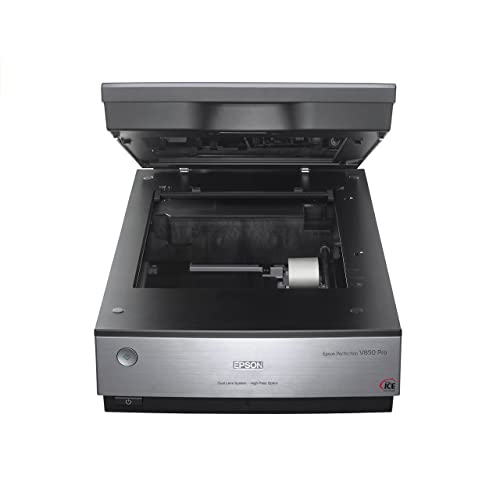
- 6400 dpi with dual lens system
- Digital ICE helps reduce dust and scratches
- Strong 4.0 Dmax tonal range
Best For: Premium film and photo archiving with dust removal support
35mm Dust-Removal Specialist

- 7200 dpi scanning for 35mm film and slides
- Infrared channel supports automatic dust removal
- Bundled SilverFast and Quick Scan software
Best For: 35mm archiving when dust and scratch cleanup matters most
All-Purpose Film Flatbed
Epson Perfection V600 Photo Scanner

- 6400 x 9600 dpi for detailed scans
- DIGITAL ICE helps reduce dust and scratches
- Handles slides, negatives, photos, and documents
Best For: General-purpose home scanning with film dust removal
Standalone Fast Film Converter
Magnasonic FS71 24MP Film Scanner

- Scans 35mm, 110, 126, and Super 8 film
- Standalone operation with 5-inch LCD and SD slot
- Onboard brightness and RGB color adjustments
Best For: Quick, computer-free digitizing of mixed legacy film formats
Flatbed Film Restoration Pick
Epson Perfection V550 Film & Photo Scanner

- Digital ICE reduces visible dust and scratches on film.
- 6400 dpi optical resolution for sharp enlargements.
- Scans slides, negatives, photos, and documents.
Best For: Home archiving with flexible film and photo scanning
Easy-to-Use Slide Digitizer
KODAK Slide N Scan Max Film Scanner

- Supports 135mm, 110mm, and 126mm film.
- Saves directly to SD/SDHC cards.
- Simple one-touch editing and tray-fed scanning.
Best For: Casual digitizing without a computer
Dust-Crunching 35mm Specialist
Plustek OpticFilm 8200i SE 35mm Film Scanner

- Integrated infrared channel helps remove dust and scratches.
- 7200 dpi resolution for 35mm negatives and slides.
- Includes SilverFast SE Plus 9 and QuickScan software.
Best For: Dedicated 35mm archiving with infrared defect removal
Simple home scanner
KODAK Slide N Scan 22MP 5" LCD

- Supports 135, 110, 126, and 50mm slides
- 5-inch LCD for previewing and editing
- Includes holders, brush, USB, and HDMI cables
Best For: Casual archiving of mixed slide and negative formats
Detail-first 35mm scanner
Plustek OpticFilm 135i 7200 dpi

- 7200 dpi for 35mm negatives and slides
- Infrared enhancer helps detect dust and scratches
- Batch scans four slides or six frames at once
Best For: High-resolution 35mm scanning with infrared cleanup support
Portable quick-convert scanner
ClearClick QuickConvert 2.0 portable scanner
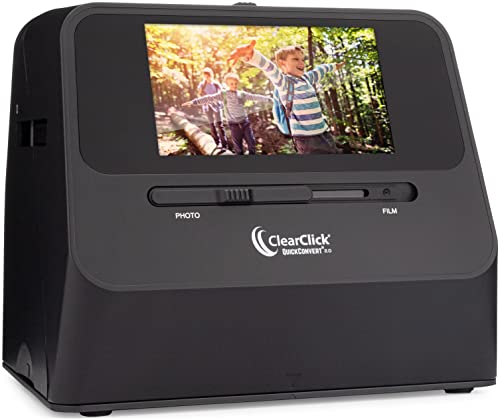
- No computer or drivers required
- Built-in battery and 5-inch preview screen
- Scans 4x6 photos plus 35mm, 110, and 126 film
Best For: Fast, portable scanning without a computer
Pro Flatbed Archive Pick – Epson V850 Pro Photo Scanner
If you want film scanners with dust removal and also need a versatile flatbed for prints, the Epson Perfection V850 Pro is built for high-end digitizing work. Its 6400 dpi resolution, dual lens system, and Digital ICE support make it a strong fit for users who care about both detail and cleanup on film and photos.
Best For: Photographers and archivists who want premium flatbed scanning with dust-removal support and very fine tonal detail.
Pros:
- 6400 dpi scanning with a dual lens system for optimized results
- Digital ICE support helps reduce dust and scratches in scans
- 4.0 Dmax offers smooth gradations and strong shadow detail
- Works with Windows and Mac systems listed in the specs
Cons:
- Large, 20.9-pound scanner is not very portable
- Flatbed design is less specialized than dedicated film-only units
The V850 Pro stands out when you want a scanner that can handle more than just film, while still delivering the optical quality and dust-removal features needed for serious archive work.
35mm Dust-Removal Specialist – Plustek OpticFilm 8300i SE
Among film scanners with dust removal, the Plustek OpticFilm 8300i SE is aimed squarely at 35mm negatives and slides. It combines 7200 dpi scanning with an infrared channel and SilverFast iSRD, so it can automatically detect and remove dust or scratches while keeping the workflow focused on film digitizing.
Best For: 35mm slide and negative users who want built-in dust and scratch removal with bundled software.
Pros:
- 7200 dpi resolution with 3.91 Dmax and Multi-Exposure support
- Built-in infrared channel works with SilverFast iSRD for dust and scratch removal
- Includes SilverFast 9 SE Plus and Plustek Quick Scan Plus
- Supports Windows and Mac systems listed by the manufacturer
Cons:
- Designed for 35mm film and slides, so it is less flexible than a flatbed
- Setup and software workflow may be more involved than a simple standalone scanner
This model makes sense if your priority is extracting the best-looking scans from fragile 35mm media while minimizing manual cleanup later.
All-Purpose Film Flatbed – Epson Perfection V600 Photo Scanner
The Epson Perfection V600 is a practical choice if you need film scanners with dust removal plus a scanner that also handles prints and documents. Its built-in transparency unit supports slides and negatives, and Epson’s DIGITAL ICE technology helps clean up dust and scratches for more accurate digital output.
Best For: Home users who want an easy-to-use flatbed for film, slides, photos, and document scanning.
Pros:
- 6400 x 9600 dpi resolution for detailed film and photo scans
- Built-in transparency unit handles slides and negatives
- DIGITAL ICE technology helps remove dust and scratches
- Includes software for image enhancement and faded photo restoration
Cons:
- Bulkier flatbed design is less compact than dedicated film scanners
- Best suited to standard film sizes rather than specialized formats
For buyers who want one scanner for both film cleanup and general photo digitizing, the V600 offers a balanced feature set without overcomplicating the process.
Standalone Fast Film Converter – Magnasonic FS71 24MP Film Scanner
If you want film scanners with dust removal in a simple, no-computer setup, the Magnasonic FS71 is built for quick conversion of film and slides to JPEG files. It scans 35mm, 110, 126, and Super 8 formats, and lets you adjust brightness and RGB color correction directly on the scanner for faster cleanup.
Best For: Users who want a fast standalone scanner for mixed legacy film formats without needing a computer.
Pros:
- Converts multiple film and slide formats, including 35mm, 110, 126, and Super 8
- 24MP output with simple onboard adjustments for brightness and color
- 5-inch LCD screen and HDMI support make previewing easy
- SD card slot supports convenient standalone saving
Cons:
- Does not list infrared dust-removal hardware like some dedicated film scanners
- Lower power and simpler feature set than pro archival scanners
The FS71 is a good fit if speed and convenience matter more than advanced post-processing, especially when you want to digitize a variety of older formats with minimal setup.
Flatbed Film Restoration Pick – Epson Perfection V550 Film & Photo Scanner
If you want film scanners with dust removal that can also handle everyday documents and photos, the Epson Perfection V550 is built for mixed home archiving. Its 6400 dpi optical resolution, built-in transparency unit, and Digital ICE technology make it a practical choice for scanning slides, negatives, and prints with fewer visible dust and scratch marks.
Best For: Home users who want a versatile flatbed scanner for film, photos, and documents with dust removal.
Pros:
- Digital ICE technology helps reduce the appearance of dust and scratches on film.
- 6400 dpi optical resolution supports large, detailed enlargements.
- Built-in transparency unit scans 35mm slides, negatives, and film.
- ReadyScan LED means no warmup time and faster start-up.
Cons:
- Heavier and larger than dedicated film scanners.
- Uses a flatbed design, so it is less specialized for 35mm-only workflows.
The V550 is a strong all-around pick if you need dust reduction plus the flexibility to scan more than just film. It trades dedicated-film speed for broader usefulness, but the image-quality and restoration features are a real advantage for home archiving.
Easy-to-Use Slide Digitizer – KODAK Slide N Scan Max Film Scanner
For buyers comparing film scanners with dust removal, the KODAK Slide N Scan Max is best understood as a simple, high-speed digitizer rather than a restoration-focused tool. It supports common film formats like 135mm, 110mm, and 126mm, saves directly to SD cards, and uses a smooth-moving tray to keep scanning moving without constant repositioning.
Best For: Casual users who want a simple standalone scanner for slides and negatives.
Pros:
- Works with 135mm, 110mm, and 126mm film formats.
- Direct SD/SDHC saving removes the need for a computer.
- One-touch editing keeps the workflow simple.
- Compact and lightweight for easy storage.
Cons:
- No dust-removal feature is listed in the supplied specs.
- Lower native resolution than dedicated high-end film scanners.
This model makes sense if convenience matters more than advanced cleanup tools. It is a straightforward way to digitize old film, but shoppers who specifically want dust and scratch removal should look at more restoration-focused scanners.
Dust-Crunching 35mm Specialist – Plustek OpticFilm 8200i SE 35mm Film Scanner
If dust cleanup is your top priority, this Plustek model is one of the most focused film scanners with dust removal in the lineup. The OpticFilm 8200i SE uses an integrated infrared channel to detect dust and scratches on 35mm negatives and mounted slides, while its 7200 dpi resolution and 48-bit input help preserve fine detail during archiving.
Best For: Photographers and archivists who want dedicated 35mm scanning with infrared dust and scratch removal.
Pros:
- Integrated infrared channel detects dust and scratches on film surfaces.
- 7200 x 7200 dpi resolution for detailed 35mm scans.
- Supports 48-bit input and 24/48-bit output for flexible file handling.
- Includes SilverFast SE Plus 9 and Plustek QuickScan software.
Cons:
- Limited to 35mm negatives and mounted slides.
- Dedicated workflow makes it less versatile than a flatbed scanner.
This is the most specialized option here for cleaning up old film in software and hardware at scan time. If you mainly work with 35mm and want infrared-based defect removal, the OpticFilm 8200i SE is the strongest match.
Simple home scanner – KODAK Slide N Scan 22MP 5" LCD
If you want film scanners with dust removal, the KODAK Slide N Scan is a practical desktop option for quickly turning old negatives and slides into digital files. It supports 135, 110, 126, and 50mm slides, and its 5-inch LCD makes previewing, editing, and saving images straightforward without a complicated setup.
Best For: Families and casual users who want an easy, self-contained way to scan mixed slide and negative formats.
Pros:
- 22MP output with a CMOS sensor for digital conversion
- 5-inch LCD with gallery mode for previewing and simple editing
- Includes film holders, cleaning brush, USB, and HDMI cables
- Easy-load tray design helps keep scanning moving quickly
Cons:
- SD or SDHC card is not included
- Uses onboard editing rather than advanced software tools
- Supports Windows 7 minimum system requirements for computer connection
This scanner is a good fit if you value convenience and broad format support over pro-level control. It keeps the workflow simple, which makes it especially appealing for home archiving projects.
Detail-first 35mm scanner – Plustek OpticFilm 135i 7200 dpi
Among film scanners with dust removal, the Plustek OpticFilm 135i stands out for users who want high-detail 35mm scanning and infrared-based dust and scratch detection. It is built for batch work, with holders that let you scan multiple slides or film frames at once, and it also supports third-party editing software export.
Best For: Serious 35mm shooters who want higher-resolution scans and infrared dust-scratch handling.
Pros:
- 7200 dpi resolution for 35mm negatives and mounted slides
- Infrared enhancer designed to improve dust and scratch detection
- Batch scanning support with holders for four slides or six frames
- Supports panoramic and half-frame 35mm film types
Cons:
- Designed specifically for 35mm formats
- Panoramic film holder is optional
- Requires a Windows 7 minimum system for use
This is the strongest option here for users focused on image quality and cleanup-oriented scanning. It is less universal than all-in-one units, but it offers a more specialized workflow for 35mm film.
Portable quick-convert scanner – ClearClick QuickConvert 2.0 portable scanner
The ClearClick QuickConvert 2.0 is a portable choice for people comparing film scanners with dust removal features and wanting a fast, no-computer workflow. It scans photos, slides, and negatives one at a time, saves JPEGs to an SD card, and includes a built-in rechargeable battery plus a 5-inch preview screen.
Best For: Quick at-home digitizing of photos, slides, and negatives without needing a computer.
Pros:
- No computer or drivers required
- Built-in rechargeable battery for cord-free scanning
- 5-inch LCD preview screen for easy checking
- Supports 4×6 photos, 35mm, 110, and 126 film
Cons:
- Scans one item at a time, so it is not an autofeeder
- Does not support 5×7 photos
- Interpolated resolution is higher than its native scan quality
This model is best when speed and simplicity matter more than advanced scanning workflows. It is especially useful for home users who want to digitize mixed media without setting up a computer.
How We Picked the Best Film Scanners with Dust Removal
We focused on scanners that offer practical dust-reduction tools, strong optical resolution, dependable film handling, and a workflow that suits either computer-based editing or standalone scanning. We also weighed scan speed, software support, and whether the scanner is better for occasional home use or larger archiving jobs.
Quick Comparison
Flatbed models tend to be the most versatile for photos, documents, slides, and film, while dedicated film scanners usually deliver better detail for 35mm negatives and slides. Standalone units are often the easiest to use, but they may trade some image quality and software control for convenience.
Key Buying Factors for Film Scanners with Dust Removal
Dust and Scratch Reduction Method
Look for infrared-based systems such as Digital ICE or integrated infrared dust/scratch removal when scanning color film and slides. These features can significantly reduce manual cleanup. Keep in mind that performance varies by film type, and some tools work best on color negatives rather than black-and-white film.
Resolution and Detail
For preserving fine grain, text, and small slide details, optical resolution matters more than headline scan numbers. Dedicated 35mm scanners often outperform all-in-one units for film-only projects, while high-resolution flatbeds are better if you want one device for multiple media types.
Batch Workflow and Ease of Use
If you have hundreds of frames to digitize, consider automatic feeders, multi-frame support, or simple standalone controls. Faster batch processing can matter more than maximum resolution when the goal is to finish large archives efficiently.
Software and File Control
Some Film Scanners with Dust Removal include bundled editing software, while others rely on third-party programs. If you want maximum control over color, exposure, and sharpening, choose a model with broad software compatibility and professional workflow support.
Who Should Buy Which Film Scanners with Dust Removal?
If you are archiving a mixed photo collection, a high-quality flatbed is usually the safest choice. If your priority is 35mm negatives and slides, a dedicated film scanner will usually deliver better results and more effective dust cleanup. If convenience matters most, a standalone scanner with a built-in screen is the easiest way to digitize without a computer. For the best results, match the scanner to your film type, volume, and how much editing you want to do after the scan.