A good headphone amplifier should add control, clarity, and useful headroom without introducing hiss or hum. The right model depends on your headphones, source equipment, listening habits, and available connections.
This roundup compares 10 headphone amplifiers with low noise, including compact desktop DAC amps, high-power models, bass-boost options, and rechargeable portable designs.
Best 10 Headphone Amplifiers with Low Noise Picks for 2026
Versatile Desktop Pick
Fosi Audio Q4 DAC Headphone Amp

- USB, optical, and coaxial inputs
- 16Ω–200Ω headphone support
- Bass and treble controls
Best For: Plug-and-play desktop audio setups
Shared Monitoring Choice
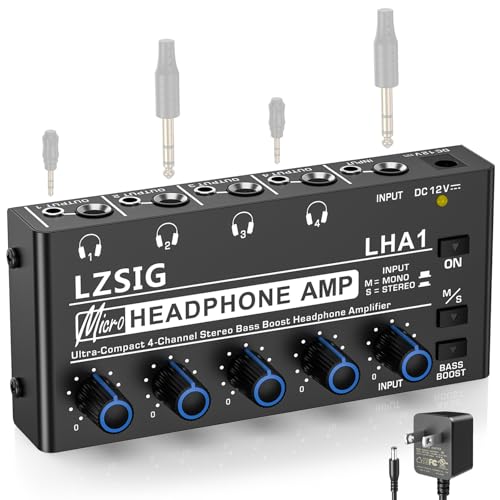
- Four independent headphone outputs
- Low-noise stereo circuitry
- Bass boost and stereo/mono switch
Best For: Studios and shared headphone monitoring
Ultra-Low-Noise Hi-Fi Pick

- Specified 0.3uV ultra-low noise
- Three selectable gain settings
- Supports IEMs to demanding headphones
Best For: Quiet hi-fi and component audio systems
Portable Bass-Control Option
XU09 Rechargeable Headphone Amp

- 16Ω–600Ω support with gain switch
- Adjustable bass control
- 1350mAh rechargeable battery
Best For: Portable wired listening and gaming
Best Desktop Value
Douk Audio U3 Class A Headphone Amp
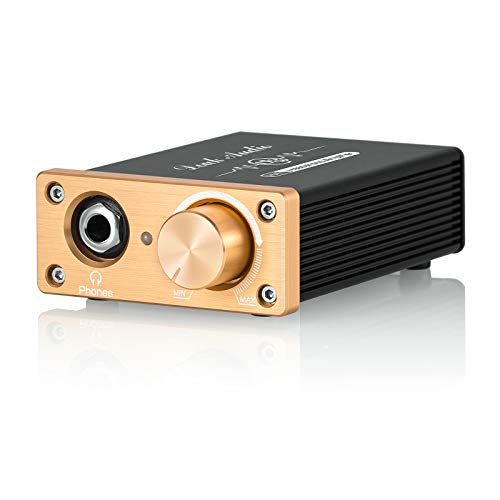
- Excellent stated background-noise performance
- Class A output for a warm, detailed presentation
- Replaceable op-amp socket for customization
Best For: Desktop listeners wanting affordable, tunable amplification
Best Portable Choice
Rechargeable 16–300Ω HiFi Headphone Amp
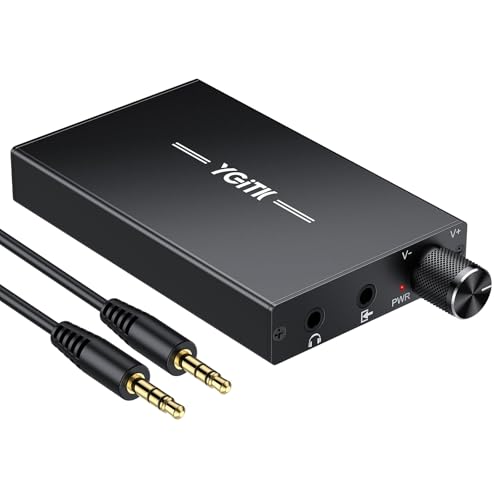
- Claims 120dB SNR and 0.0005% THD+N
- Two-stage gain for IEMs and studio headphones
- Up to 10 hours of rechargeable playback
Best For: Portable wired listening with low-noise amplification
Best High-Impedance Drive

- Drives headphones from 18Ω to 600Ω
- Up to 1500mW at 32Ω with voltage boosting
- RCA, AUX, 3.5mm, and 6.35mm connections
Best For: Powerful desktop amplification across varied headphones
Portable Low-Noise Pick
Neoteck Bass-Boost Headphone Amp

- SNR above 100 dB and THD+N of 0.0005%
- Switchable bass boost and 16–600Ω support
- More than 8 hours of rechargeable battery life
Best For: Travelers using 3.5mm headphones and portable audio devices
Desktop Gaming Choice
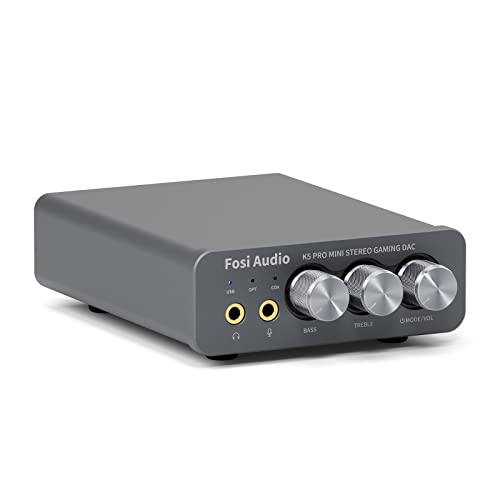
- Low-noise circuit with SNR of at least 110 dB
- USB-C, optical, and coaxial input options
- Mic input plus bass, treble, and volume controls
Best For: PS5, PC, and Mac desktop gaming setups
Professional Monitoring Pick

- High-power amplification for professional headphones
- XLR and TRS inputs with stereo/mono switching
- Up to 12 hours of rechargeable battery life
Best For: Performers using portable in-ear or on-ear monitors
Versatile Desktop Pick – Fosi Audio Q4 DAC Headphone Amp
The Fosi Audio Q4 is a practical entry-level choice for shoppers seeking headphone amplifiers with low noise for a computer, TV, or desktop stereo setup. Its USB, optical, and coaxial inputs support several digital sources, while 3.5mm and RCA outputs connect headphones, powered speakers, or an amplifier.
Best For: Desktop listeners who want plug-and-play DAC functionality, adjustable tone controls, and broad source compatibility.
Pros:
- Supports USB, optical, and coaxial inputs.
- Drives headphones rated from 16Ω to 200Ω.
- Offers bass and treble controls in a compact metal housing.
- Supports 24-bit/192kHz audio and includes setup cables.
Cons:
- It does not include a microphone input.
- Its stated headphone range may not suit every high-impedance model.
The Q4 stands out as a flexible desktop DAC and headphone amp rather than a specialized high-power amplifier. Choose it when easy connections and tone adjustment matter as much as a compact footprint.
Shared Monitoring Choice – LZSIG LHA2 Four-Channel Amp
For group listening or studio monitoring, the LZSIG LHA2 is one of the more purpose-built headphone amplifiers with low noise. It distributes one stereo input to four headphone outputs, with independent level controls so each listener can set a comfortable volume.
Best For: Home studios, rehearsals, and shared monitoring where up to four people need separate headphone volume control.
Pros:
- Provides four independently controlled headphone outputs.
- Supports both 3.5mm and 6.35mm headphone plugs.
- Uses low-noise operational amplifiers for stereo monitoring.
- Includes bass boost and stereo/mono switching.
Cons:
- It is a headphone distributor, not a mixer.
- The listed support is aimed at headphones from 32Ω to 100Ω.
The LHA2 is best evaluated as a compact multi-user monitoring hub, not as a source-switching DAC. Its durable metal chassis and independent controls make it especially practical for repeated studio or stage use.
Ultra-Low-Noise Hi-Fi Pick – TOPPING L30II NFCA Amp
The TOPPING L30II is a strong fit for listeners prioritizing headphone amplifiers with low noise and wide headphone compatibility. Its NFCA design is specified at 0.3uV noise, with three gain settings and both 6.35mm and 3.5mm headphone support.
Best For: Hi-fi listeners and gamers who want a quiet background, flexible gain, and enough drive for sensitive IEMs through demanding full-size headphones.
Pros:
- Specifies an ultra-low 0.3uV noise level.
- Offers -9.9dB, 0dB, and 9.5dB gain settings.
- Supports 6.35mm and 3.5mm headphone connections.
- Can function as a preamplifier for active monitors.
Cons:
- It requires a separate source or DAC for digital audio.
- Its input and output connections are RCA-based.
The L30II is the most technically focused option in this group for minimizing amplifier noise. It makes particular sense in a component-based setup, especially when paired with a DAC or used as a preamp.
Portable Bass-Control Option – XU09 Rechargeable Headphone Amp
The XU09 is a portable option for shoppers comparing headphone amplifiers with low noise for everyday wired listening. It connects through 3.5mm AUX, supports a broad stated 16Ω–600Ω range, and adds adjustable bass, high/low gain, and a rechargeable battery.
Best For: Phone, laptop, and gaming-controller users who want portable amplification with tone adjustment and USB-C charging.
Pros:
- Supports headphones rated from 16Ω to 600Ω.
- Provides adjustable bass and high/low gain settings.
- Offers a 1350mAh battery with stated 8–10-hour operation.
- Uses an aluminum alloy housing and USB-C charging.
Cons:
- It uses a wired 3.5mm connection rather than digital inputs.
- The specifications list noise control as none.
- Its single 3.5mm headphone jack may not suit users needing multiple outputs.
The XU09 emphasizes portability and user-adjustable bass more than specialized low-noise engineering. It is a sensible choice for mobile wired setups, but buyers specifically focused on minimizing noise should note the listed absence of noise control.
Best Desktop Value – Douk Audio U3 Class A Headphone Amp
The Douk Audio U3 is a compact desktop pick for listeners seeking headphone amplifiers with low noise. Its Class A design, wide 5–20V input range, and stated excellent background-noise performance pair with enough output to handle many demanding headphones.
Best For: Home or office desktop systems, especially users who want a warm presentation and replaceable op-amp flexibility.
Pros:
- Designed for excellent background-noise performance, with low distortion and good dynamic range.
- 1300mA Class A output transistor provides strong drive power for many headphones, including models up to high impedance.
- Pluggable op-amp socket supports future upgrades and DIY experimentation.
- Compact enclosure includes both 3.5mm and 6.35mm headphone connections.
Cons:
- Requires a separate DC power source and is intended for stationary desktop use.
- Its warm, mellow sound may not suit listeners seeking a strictly neutral presentation.
The U3 is a practical value choice when clean desktop amplification, broad headphone compatibility, and a tunable design matter more than portability.
Best Portable Choice – Rechargeable 16–300Ω HiFi Headphone Amp
This rechargeable model is a convenient option among headphone amplifiers with low noise, offering a claimed 120dB signal-to-noise ratio and 0.0005% THD+N. Its two-stage gain switch is designed to accommodate both sensitive IEMs and higher-impedance headphones.
Best For: Mobile listeners who want wired amplification for phones, tablets, PCs, game consoles, and headphones rated from 16Ω to 300Ω.
Pros:
- Claims ultra-low distortion and zero audible noise through its advanced circuit design.
- Two-stage gain control helps match output to different headphone impedances and sensitivities.
- 1500mAh battery provides up to 10 hours of playback, with USB-C charging.
- Aluminum-alloy construction provides a lightweight enclosure with RF/EMI shielding.
Cons:
- Not recommended for use while charging because power interference may cause noise.
- Its 3.5mm wired connectivity does not provide wireless playback.
With a compact design, rechargeable battery, and adjustable gain, this amp is well suited to clean portable listening when you can avoid using it during charging.
Best High-Impedance Drive – Douk Audio U3 PRO Desktop Amp
The Douk Audio U3 PRO targets listeners who need powerful desktop amplification and headphone amplifiers with low noise. Its voltage-boost circuit maintains ±14V from a 5V input, while the manufacturer states that the design delivers ultra-low distortion and can drive headphones from 18Ω to 600Ω.
Best For: Desktop headphone users with a wide range of headphones, including high-impedance models and setups needing multiple input and output options.
Pros:
- Up to 1500mW at 32Ω and compatibility with headphones rated from 18Ω to 600Ω.
- OP+BUF architecture and voltage-boost circuit are designed for powerful, low-distortion output.
- Replaceable op-amp socket supports customization with compatible upgrade options.
- Offers RCA and 3.5mm inputs plus both 3.5mm and 6.35mm headphone outputs.
Cons:
- Requires a DC 5V power connection and is not designed as a battery-powered portable amp.
- Its small control layout may be less convenient for users who need extensive front-panel adjustment.
The U3 PRO stands out for power and connectivity, making it a strong desktop match for listeners who rotate between efficient headphones and demanding high-impedance models.
Portable Low-Noise Pick – Neoteck Bass-Boost Headphone Amp
The Neoteck is a practical choice for listeners seeking headphone amplifiers with low noise in a compact, travel-friendly design. Its stated SNR above 100 dB and THD+N of 0.0005% are aimed at delivering louder, cleaner stereo sound, while the switchable bass boost adds extra low-end emphasis when desired.
Best For: Portable listening with compatible 16–600Ω headphones, phones, laptops, MP3 players, and other devices with 3.5mm connections.
Pros:
- High stated SNR and very low THD+N for a cleaner listening experience.
- Switchable bass boost for added low-frequency impact.
- Supports a broad 16–600Ω headphone range.
- Rechargeable battery provides more than 8 hours of use.
Cons:
- Uses 3.5mm AUX input and output rather than digital inputs.
- The manufacturer does not recommend using it while charging.
Choose the Neoteck if you want a small analog amplifier with clearly stated noise and distortion figures, broad headphone compatibility, and a simple bass-control feature for commuting or travel.
Desktop Gaming Choice – Fosi Audio K5 Pro DAC Amp
The Fosi Audio K5 Pro combines a DAC, headphone amplifier, and microphone input for a flexible desktop setup. It belongs among headphone amplifiers with low noise thanks to its optimized circuit, stated SNR of at least 110 dB, and THD of no more than 0.003%, with USB-C, optical, and coaxial inputs for gaming and media systems.
Best For: PS5, PC, Mac, and desktop users who want headphone amplification, source switching, tone controls, and microphone connectivity in one unit.
Pros:
- Low-noise circuit design with stated SNR of at least 110 dB.
- Supports USB-C, optical, and coaxial inputs, plus RCA and 3.5mm outputs.
- Provides master volume, bass, and treble controls.
- Offers up to 1000 mW at 16Ω and drives headphones from 16Ω to 300Ω.
Cons:
- Its desktop connections and controls are less suited to portable use.
- Headphone output range is specified up to 300Ω, narrower than some portable alternatives.
The K5 Pro is the more versatile pick for a gaming or computer desk, particularly when you need digital inputs, a microphone connection, and adjustable bass and treble alongside low-noise amplification.
Professional Monitoring Pick – Donner EM1 Portable Amp
The Donner EM1 is designed for personal monitoring with in-ear and on-ear headphones rather than broad home-audio connectivity. For shoppers comparing headphone amplifiers with low noise, its emphasis is on high-power output and audio reproduction for monitoring, with XLR and TRS inputs feeding a 3.5mm stereo output.
Best For: Musicians and performers using professional in-ear or on-ear monitors who need a compact, rechargeable belt-pack amplifier.
Pros:
- High-power design intended for high-impedance professional headphones.
- XLR and TRS inputs include a locking mechanism.
- Stereo/mono source switch accommodates different cable connections.
- Runs for up to 12 hours on a rechargeable Li-ion battery.
Cons:
- Does not support microphones.
- Its professional XLR/TRS inputs are less convenient for ordinary phone-based listening.
- The supplied notes do not provide specific SNR or THD figures.
The EM1 makes the most sense when reliable personal monitoring and stage-friendly connections matter more than digital inputs or published noise specifications. Its belt-clip format and 12-hour battery rating support mobile performance use.
How We Picked These Headphone Amplifiers with Low Noise
We selected models across several use cases rather than focusing only on maximum output. The lineup includes desktop headphone amps, DAC-and-amplifier combinations, portable rechargeable units, multi-output designs, and models with bass or gain controls. We considered connection types, headphone impedance support, output power claims, control layout, portability, and suitability for sensitive headphones.
Low noise is especially important with efficient in-ear monitors and other sensitive headphones, while high-impedance full-size headphones typically benefit more from voltage headroom. Because real-world performance varies with the source, cables, headphones, and gain setting, buyers should treat specifications as a starting point and choose a model with appropriate input and output connections.
Quick Comparison
| Best For | What to Look For | Recommended Type |
|---|---|---|
| PC or desktop audio | USB or digital input, compact controls | DAC headphone amp |
| High-impedance headphones | Higher voltage output and gain control | Powerful desktop amp |
| Sensitive IEMs | Low background noise and low gain | Clean, adjustable amp |
| Gaming | Simple volume access, bass control, useful inputs | Desktop DAC amp |
| Travel | Rechargeable battery and small enclosure | Portable headphone amp |
Key Buying Factors for Low-Noise Headphone Amplifiers
Noise Floor and Gain
Choose the lowest practical gain setting and avoid using more amplification than your headphones require. Excessive gain can make hiss easier to hear and reduce usable volume-control range. Sensitive headphones and IEMs generally need a particularly quiet output stage.
Power, Impedance, and Headroom
Check both the supported impedance range and the type of output power listed. High-impedance headphones often need more voltage, while low-impedance models may benefit from current delivery and a clean, controlled output. More power is not automatically better if it also makes volume adjustment difficult.
Inputs and Outputs
Confirm whether you need USB, optical, RCA, or an analog 3.5mm input. A DAC amp can simplify a computer setup, while an analog amplifier may be better for an existing DAC or stereo source. Also check whether the unit offers 3.5mm, 6.35mm, or line-level outputs.
Features and Build
Bass boost, gain switches, multiple outputs, and a front-panel volume knob can improve convenience, but they should not replace clean amplification. For desktop use, consider footprint, power requirements, and whether the amplifier can remain connected to speakers or other equipment.
Who Should Buy Which Headphone Amplifiers with Low Noise?
Choose a DAC headphone amp if you mainly listen from a PC and want fewer boxes or cleaner digital-to-analog conversion. Choose a higher-power desktop model for demanding high-impedance headphones or listeners who want more headroom. Choose a portable rechargeable amp when you need extra drive away from a desk. Choose a bass-boost or gain-adjustable model if you want convenient sound shaping, but use those controls carefully with already bass-heavy headphones.
For the quietest result, match the amplifier to the headphones first, start at low gain, keep cables away from power adapters, and use a reliable source. This approach is more likely to deliver a clean, hiss-free listening experience than simply choosing the highest wattage specification.