If you want to turn negatives and slides into clean digital files, the right scanner makes a huge difference. The best models capture fine grain, preserve color, and save time during cleanup.
This roundup focuses on high-resolution film scanners for serious home archiving, photo enthusiasts, and anyone digitizing old family film with better detail and fewer compromises.
Best 10 High Resolution Film Scanners Picks for 2026
Pro Flatbed Detail
Epson V850 Pro 6400 dpi flatbed scanner
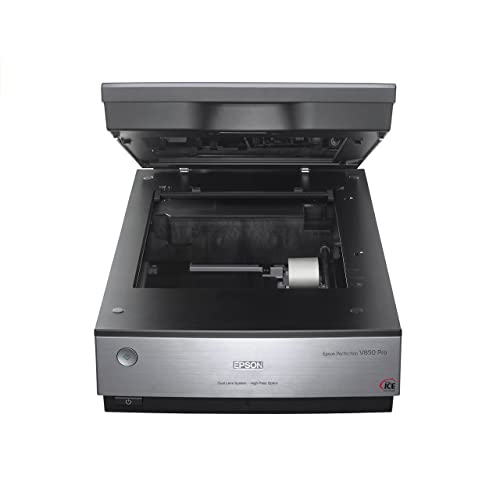
- 6400 dpi scanning for fine detail
- Dual lens system for optimized results
- 4.0 Dmax and Digital ICE for film quality
Best For: Photographers and archivists needing a premium flatbed for film and photos
35mm Film Specialist
Plustek 8300i Ai 7200 dpi 35mm scanner
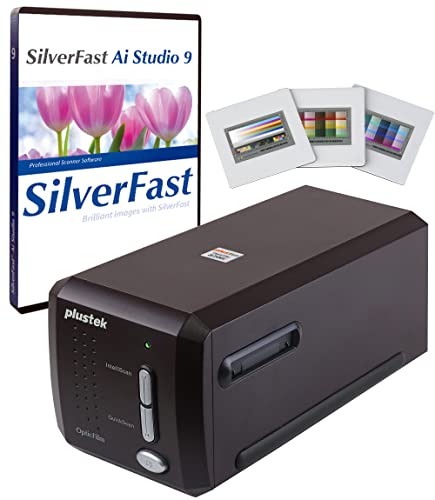
- 7200 resolution for 35mm film
- SilverFast 9 Ai Studio bundled
- IT8 target included for calibration
Best For: 35mm film users who want a dedicated scanner with pro software
Versatile Film Flatbed
Epson V550 6400 dpi film and document scanner

- 6400 dpi optical resolution
- Built-in transparency unit for film
- Digital ICE and ReadyScan LED included
Best For: Homes or studios that scan film, photos, and documents
New-Gen 35mm Scanner
Plustek 9000i Ai 7200 dpi 35mm film scanner
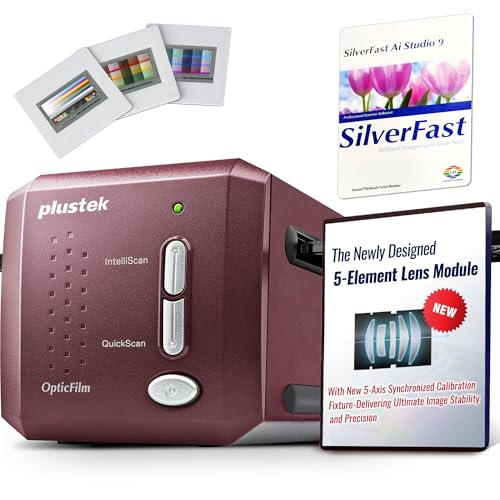
- True optical resolution up to 7200 dpi
- 5-axis calibration for consistent focus
- SilverFast iSRD and IT8 target included
Best For: Serious photographers and studios digitizing 35mm negatives and slides
Premium 35mm Detail
Nikon Super CoolScan 5000 ED Film Scanner

- 4,000 dpi optical resolution
- Digital ICE4 correction tools
- Fast preview and full scan times
Best For: Photographers and archivists scanning 35mm film and slides
Highest Resolution 35mm

- 7200 dpi output for 35mm film
- Infrared dust and scratch removal
- Includes SilverFast SE Plus 9
Best For: Users who want maximum detail from 35mm negatives and slides
Classic 35mm Scanner
Nikon CoolScan V LS-50 ED Film Scanner

- 4,000 dpi optical resolution
- Digital ICE4 image correction
- USB with PC and Mac support
Best For: People scanning 35mm slides who want dependable detail and cleanup
Plustek Precision Detail

- 7200 DPI output with 69 MP resolution
- 48-bit color depth and CCD sensor
- SilverFast SE Plus software bundle
Best For: 35mm film users who want high-detail scans for large prints
Kodak Convenience Scan

- Supports 135mm, 110mm, and 126mm formats
- Saves directly to SD/SDHC cards
- 13MP sensor with 22MP interpolation
Best For: Casual users who want simple standalone film scanning
HP Touchscreen Versatility
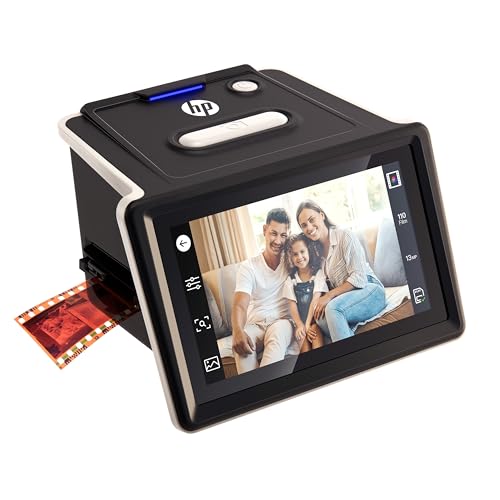
- 5-inch touchscreen with on-device preview
- Supports 135, 126, and 110 film
- USB-C powered with SD card saving
Best For: Users who want a convenient touchscreen scanner for home archiving
Pro Flatbed Detail – Epson V850 Pro 6400 dpi flatbed scanner
If you want one of the most capable high resolution film scanners for mixed photo and film work, the Epson V850 Pro is built for serious detail capture. Its 6400 dpi class scanning, dual lens system, and 4.0 Dmax support are aimed at users who care about tonal smoothness, shadow detail, and consistent results from negatives, slides, and prints.
Best For: Photographers and archivists who need a premium flatbed for film, slides, and photo scanning with strong detail and tonal range.
Pros:
- 6400 dpi resolution helps capture fine detail from film and photos
- Dual lens system selects the best optical path for the scan
- 4.0 Dmax supports smooth gradations and fine shadow detail
- Digital ICE helps reduce dust and scratch visibility on film
Cons:
- Larger desktop footprint and 20.9-pound weight
- Focused on photo and film scanning rather than general document use
The V850 Pro is a strong choice if you want a high-end flatbed that balances resolution, tonal depth, and restoration features. It is especially appealing when you need flexibility for more than just 35mm strips.
35mm Film Specialist – Plustek 8300i Ai 7200 dpi 35mm scanner
The Plustek OpticFilm 8300i Ai is a focused option among high resolution film scanners for 35mm slides and negatives. With 7200 resolution, included SilverFast 9 Ai Studio software, and an IT8 calibration target, it is designed for users who want dedicated film scanning with color management and built-in dust and defect handling tools.
Best For: 35mm film shooters and home archivists who want a dedicated scanner with professional software and calibration tools.
Pros:
- 7200 resolution captures fine film detail from 35mm media
- SilverFast 9 Ai Studio and Quick Scan Plus are included
- IT8 target supports more accurate scanner color calibration
- Infrared, iSRD, HDRi, and Multi-Exposure tools improve scans
Cons:
- Designed specifically for 35mm slides and film, not broad-format scanning
- Best results depend on software workflow and calibration
This scanner makes sense if your priority is dedicated 35mm digitizing rather than a general-purpose flatbed. The bundled software and calibration target add real value for users who want better color control and restoration options.
Versatile Film Flatbed – Epson V550 6400 dpi film and document scanner
The Epson V550 is a practical choice if you want high resolution film scanners that also handle documents and everyday photo work. Its 6400 dpi optical resolution, built-in transparency unit, and Digital ICE support make it useful for scanning negatives, slides, and prints while still keeping a broad feature set for mixed tasks.
Best For: Users who want one scanner for film, photos, and documents without moving up to a heavier pro model.
Pros:
- 6400 dpi optical resolution is strong for film and photo enlargements
- Built-in transparency unit supports slides, negatives, and film
- Digital ICE helps remove dust and scratches from film scans
- ReadyScan LED means fast scanning with no warmup time
Cons:
- Single-sheet capacity limits batch handling
- Not as specialized as dedicated film-only scanners
The V550 is a solid middle-ground scanner when you need good film capability without giving up document scanning. It offers a balanced feature set for homes and studios that digitize a mix of media.
New-Gen 35mm Scanner – Plustek 9000i Ai 7200 dpi 35mm film scanner
For buyers comparing high resolution film scanners, the Plustek OpticFilm 9000i Ai stands out as a modern 35mm model with a strong emphasis on precision and workflow speed. It offers true optical resolution up to 7200 dpi, a 3rd-generation 5-element lens, factory 5-axis alignment, and SilverFast iSRD for more accurate dust and scratch removal.
Best For: Serious photographers and studios that want a premium 35mm scanner with calibration and infrared cleanup features.
Pros:
- True optical resolution up to 7200 dpi for fine detail
- 3rd-gen lens and 5-axis calibration focus on consistency
- Infrared channel with SilverFast iSRD helps remove dust and scratches
- Includes SilverFast Ai Studio, QuickScan Plus, and IT8 target
Cons:
- Built for 35mm negatives and slides rather than larger formats
- Requires compatible Windows or macOS versions for use
The 9000i Ai looks like the most refined option here for dedicated 35mm digitizing. Its combination of optics, calibration, and bundled software is aimed at users who want repeatable results and less manual cleanup.
Premium 35mm Detail – Nikon Super CoolScan 5000 ED Film Scanner
If you want a high resolution film scanner built for serious 35mm work, the Nikon Super CoolScan 5000 ED is a strong pick. Its 4,000 dpi optical resolution, CCD sensor, and Digital ICE4 correction tools make it well suited to preserving detail while helping reduce dust and scratch issues on slides and negatives.
Best For: Photographers and archivists who want fast, high-quality 35mm scans with strong image correction features.
Pros:
- 4,000 dpi optical resolution for detailed film scans
- Digital ICE4 image correction helps reduce dust and scratch artifacts
- Preview scans in about 11 seconds and full scans as fast as 20 seconds
- USB connectivity with PC and Mac compatibility
Cons:
- Designed for film and slide media rather than general-purpose scanning
- Maximum resolution is lower than some newer 35mm film scanners
- Requires a compatible Windows or Mac setup
Overall, this Nikon model is best when scan speed, correction tools, and reliable 35mm capture matter more than chasing the highest possible spec sheet number. It remains a focused option for users who want a proven film-scanning workflow.
Highest Resolution 35mm – Plustek OpticFilm 8200i SE
The Plustek OpticFilm 8200i SE is a high resolution film scanner aimed at users who want maximum detail from 35mm negatives and mounted slides. With 7200 dpi output, integrated infrared dust and scratch removal, and included SilverFast SE Plus 9 software, it offers a feature set built around image quality and cleanup.
Best For: Detail-focused users who scan 35mm film and want strong dust-removal support and bundled software.
Pros:
- 7200 x 7200 dpi resolution for 35mm negatives and mounted slides
- Built-in infrared channel helps detect dust and scratches
- Enhanced Multi-Exposure function for improved image quality
- Includes Plustek QuickScan and SilverFast SE Plus 9
Cons:
- Primarily built for 35mm film and slides, not larger formats
- Best results depend on using the included software and workflow
- Requires driver support from Plustek for setup on supported systems
For buyers prioritizing sheer scanning resolution, this Plustek stands out in the high resolution film scanners category. It is especially appealing if you want a compact unit with dust removal and software included.
Classic 35mm Scanner – Nikon CoolScan V LS-50 ED Film Scanner
The Nikon CoolScan V LS-50 ED is a practical high resolution film scanner for photographers working with 35mm slides. It delivers 4,000 dpi optical resolution, CCD-based capture, and Digital ICE4 correction technology, giving it a balanced mix of detail, cleanup, and usability.
Best For: Users who want a straightforward 35mm film scanner with proven image correction and solid scan speed.
Pros:
- 4,000 dpi optical resolution for detailed film scans
- Digital ICE4 helps correct dust and scratches
- Scan speeds as fast as 38 seconds
- USB interface with PC and Mac compatibility
Cons:
- Built for film and slides rather than broader media types
- Resolution is lower than 7200 dpi alternatives
- Requires a compatible computer setup
This Nikon is a sensible middle-ground choice if you want dependable 35mm scanning without the higher complexity of more specialized systems. It is best viewed as a focused tool for slide and film digitizing rather than a general office scanner.
Plustek Precision Detail – OpticFilm 8100 35mm Scanner
If you want a high resolution film scanner focused on 35mm negatives and slides, the Plustek OpticFilm 8100 is built for detail-first archiving. Its 7200 DPI output and 48-bit color depth make it a strong pick when preserving fine grain, shadow detail, and print-ready image quality matters more than speed.
Best For: 35mm film shooters and slide archivers who want maximum detail for large prints.
Pros:
- 7200 DPI scanning with 69 MP output for very detailed 35mm digitizing
- 48-bit color depth and CCD sensor for strong shadow and highlight capture
- Includes SilverFast SE Plus software bundle for scanning and image processing
- Supports Windows and Mac, and includes a carry bag for storage and travel
Cons:
- Limited to 35mm negatives and slides, so it is not a multi-format scanner
- Requires a computer workflow rather than standalone SD card saving
For users who care most about scan fidelity, this Plustek stands out as a purpose-built archival tool. It is less about convenience features and more about extracting the best possible image quality from 35mm film.
Kodak Convenience Scan – Slide N Scan Max
The KODAK Slide N Scan Max is aimed at people who want a straightforward high resolution film scanner experience without a computer-dependent setup. It handles multiple common film formats and saves directly to SD cards, making it a practical choice for quick home archiving.
Best For: Casual archivists who want an easy standalone scanner for mixed family film.
Pros:
- Supports 135mm, 110mm, and 126mm film plus slides and negatives
- Direct SD/SDHC saving keeps the workflow simple and portable
- 13MP CMOS sensor with up to 4208 x 3120 output and 22MP interpolation
- One-touch editing makes basic resizing and adjustment easy
Cons:
- 24-bit color depth is lower than more pro-oriented film scanners
- Uses interpolation for higher claimed resolution rather than a higher native sensor count
This model is a strong fit if ease of use matters more than advanced manual control. It offers a quick path from old film to digital files, especially for users who want to scan and save without extra software steps.
HP Touchscreen Versatility – HPFS500 Film & Slide Scanner
The HPFS500 is a practical high resolution film scanner for people who want an easy standalone workflow with modern convenience. Its touchscreen interface, SD card saving, and support for common film formats make it a flexible choice for digitizing negatives and slides at home.
Best For: Home users who want a touchscreen scanner with simple on-device preview and editing.
Pros:
- 5-inch all-angle LCD touchscreen for previewing and editing on the device
- Supports 135, 126, and 110 film strips and positive slides
- 13MP CMOS sensor with 22MP interpolation for clear digital output
- USB-C power and SD card saving simplify setup and use
Cons:
- Lower native resolution than true high-end dedicated film scanners
- Requires compatible Windows 10+/macOS 10.15+ systems for computer use
If you want a scanner that feels easy to operate and does not rely on a complicated computer workflow, this HP model is appealing. It is best suited to everyday archiving rather than maximum-detail professional reproduction.
How We Picked the Best High Resolution Film Scanners
We focused on scan resolution, optical quality, film-format support, dust and scratch handling, software workflow, and overall value. For High Resolution Film Scanners, real-world results matter more than headline numbers, so we favored models with proven detail capture, reliable transport, and useful correction tools.
Quick Comparison
Flatbed scanners such as the Epson V850 Pro and V550 are more flexible for mixed media and larger originals, while dedicated 35mm film scanners from Plustek and Nikon usually deliver sharper results on film. Basic consumer slide scanners are easier to use and more affordable, but they typically trade away dynamic range, color control, and maximum detail.
Key Buying Factors for High Resolution Film Scanners
Resolution and Optical Design
Look for true optical resolution, not just interpolated figures. Dedicated film scanners often outperform flatbeds on 35mm film, especially when you need crisp grain rendering and strong edge detail.
Film Formats and Workflow
Check whether the scanner supports 35mm negatives, mounted slides, medium format, or reflective originals. If you plan to digitize a large archive, consider batch handling, carrier design, and scanning speed.
Dust, Scratch, and Color Correction
Infrared cleanup tools such as Digital ICE can reduce retouching on color film. Software quality also matters: good software can improve exposure control, color balance, and consistent output across large batches.
Output Needs
Choose based on your final use. If you want prints or large crops, prioritize detail and dynamic range. If your goal is web sharing or casual preservation, a simpler scanner may be enough.
Who Should Buy Which High Resolution Film Scanners?
Choose a flatbed if you want one device for photos, documents, and multiple film sizes. Choose a dedicated film scanner if 35mm quality is your priority and you want the strongest detail from negatives and slides. Choose a consumer slide scanner if you want a straightforward, budget-friendly way to digitize older family film without a complex setup. In short, the best High Resolution Film Scanners match your film format, workload, and editing tolerance more than any single spec number.