Choosing one of the best large format 3D printers in 2026 is less about chasing the biggest specs and more about finding a machine that can actually deliver consistent results on oversized parts.
Whether you need extra build volume for prototypes, functional parts, cosplay pieces, or batch production, the right printer should combine speed, stability, and dependable calibration.
Best 10 Large Format 3d Printers Picks for 2026
Large-Format Speed Pick
Creality Ender 5 Max 400×400×400mm

- 400×400×400 mm build volume
- Up to 700 mm/s CoreXY printing
- WLAN control for multi-printer setups
Best For: Print farms and oversized parts
Enclosed Multi-Color Starter

- Ready in about 15 minutes
- Fully enclosed design for advanced filaments
- Up to 16 colors with AMS support
Best For: Fast, easy printing with optional multi-color output
Industrial Volume Runner-Up
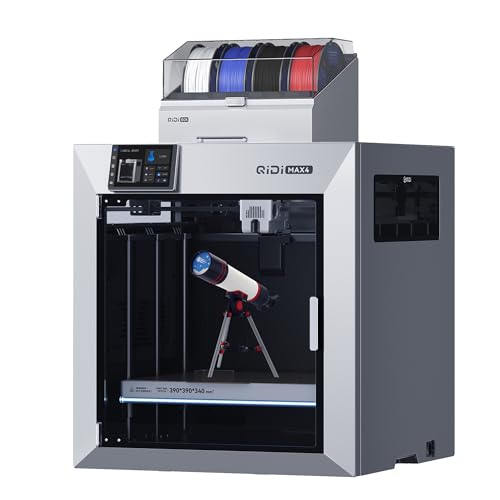
- 390×390×340 mm print area
- 65℃ active heated chamber
- Up to 800 mm/s with AI monitoring
Best For: Large functional parts and high-temp materials
Biggest Build Space Choice
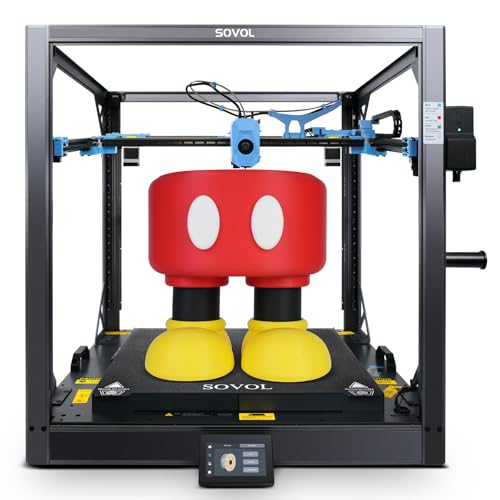
- 500×500×500 mm build volume
- 700 mm/s speed with CoreXY motion
- Eddy current leveling and HD camera
Best For: Oversized prints and full-scale prototypes
Multi-Color Speed Pick
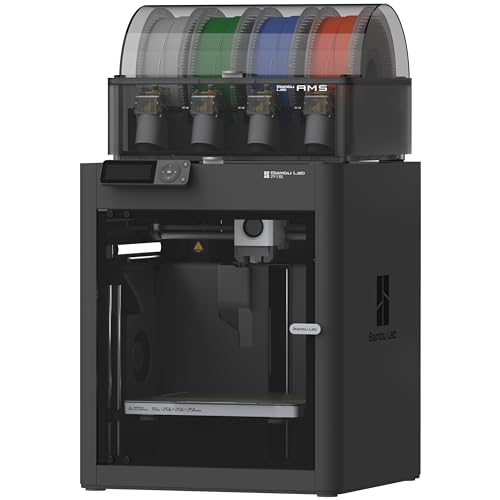
- Up to 16 colors with AMS connected
- 500 mm/s speed with 20,000 mm/s² acceleration
- Enclosed body with automatic bed leveling
Best For: Makers who want fast enclosed printing with multi-color capability.
Auto-Calibrated Value Pick

- Fully automatic one-click leveling
- Core XY structure with up to 600 mm/s speed
- Quick-swap nozzles and app-based monitoring
Best For: Beginners and experienced users who want fast printing with minimal calibration hassle.
Beginner-Friendly Precision Pick

- Full-auto calibration for easy setup
- High-speed printing with 10,000 mm/s² acceleration
- Quiet operation with AMS lite multi-color support
Best For: Beginners, kids, and casual makers who want a quiet, easy printer with optional color printing.
Multicolor Speed Leader

- Up to 16-color printing with multiple CFS units
- 260 × 260 × 260 mm build volume
- 600 mm/s speed with auto leveling and AI camera
Best For: Fast, multicolor printing with easy setup
Toolhead Swap Pro

- 4-toolhead system with 5-second tool changes
- Up to 5X less waste and faster multi-material printing
- 500 mm/s CoreXY speed with 270 × 270 × 270 mm volume
Best For: Efficient multi-color, multi-material printing
Compact Color Workhorse

- 4-color printing with Intelligent Filament System
- Up to 600 mm/s speed and 20000 mm/s² acceleration
- Full-auto calibration with CoreXY vibration control
Best For: Fast, space-saving multicolor printing
Large-Format Speed Pick – Creality Ender 5 Max 400×400×400mm
If you need one of the more practical large format 3d printers for oversized parts or print-farm use, the Creality Ender 5 Max is built around volume and speed. Its 400×400×400 mm build space, CoreXY motion system, and multi-printer WLAN control make it a strong fit for users who want to produce bigger models without constantly splitting designs.
Best For: Print farms, larger prototypes, and batch production workflows that value speed and remote management.
Pros:
- Extra-large 400×400×400 mm build volume for oversized prints or multiple parts at once
- Up to 700 mm/s printing with CoreXY motion for faster output
- 64-point auto leveling and auto Z-offset simplify setup
- All-metal frame, linear rail, and dual-gear extruder support stable production
Cons:
- Large and heavy at 70.4 pounds, so placement will matter
- Built for throughput, which may be more printer than casual hobby users need
The Ender 5 Max is a good match if your priority is maximizing build size without giving up production-focused features. It stands out most in organized, high-output environments where speed, consistency, and remote control are all important.
Enclosed Multi-Color Starter – Bambu Lab P1S Ready-to-Use
Among large format 3d printers, the Bambu Lab P1S is better described as a fast, ready-to-use enclosed machine than a giant-volume workhorse. It offers high-speed printing, automatic bed leveling, and support for multi-color output with AMS, making it appealing to users who want quick setup and dependable everyday printing.
Best For: Users who want a fast enclosed printer with easy setup and optional multi-color capability.
Pros:
- Ready-to-use design with setup in about 15 minutes
- Fully enclosed body helps with advanced filament printing
- Up to 16 colors with AMS support for multi-color projects
- Automatic bed leveling and 500 mm/s speed improve convenience
Cons:
- Not a true large-format machine compared with the other printers in this roundup
- AMS is required for multi-color printing and is not included by default
The P1S makes sense if you care more about speed, enclosure, and ease of use than maximum build size. It is a strong everyday printer, but shoppers specifically seeking extra-large builds will want to compare it against the larger-volume options here.
Industrial Volume Runner-Up – QIDI Max4 Combo 390×390×340mm
If you want large format 3d printers with a more industrial feature set, the QIDI Max4 Combo brings a 390×390×340 mm build area, a heated chamber, and support for abrasive materials. It is aimed at users printing large parts, custom prototypes, or functional models that benefit from stable temperatures and strong first-layer adhesion.
Best For: Advanced users and professionals printing large functional parts in demanding materials.
Pros:
- Ultra-large 390×390×340 mm build volume for big parts and prototypes
- 65℃ active heated chamber for higher-temperature materials
- High-speed capability up to 800 mm/s with strong acceleration
- AI camera and touch interface add monitoring and usability
Cons:
- Polar Cooler is not included and must be purchased separately
- At 120 pounds, it is a substantial machine to place and move
The Max4 Combo is especially compelling if your workflow involves engineering-grade or abrasive filaments. Its chamber, monitoring, and motion system make it feel more production-oriented than a basic oversized printer.
Biggest Build Space Choice – Sovol SV08 Max 500×500×500mm
For buyers comparing large format 3d printers, the Sovol SV08 Max stands out for sheer build space and speed. Its 500×500×500 mm volume is suited to industrial parts, oversized props, and full-scale prototypes, while the CoreXY design and high-flow nozzle are aimed at keeping those big jobs moving quickly.
Best For: Users who need the largest build area here and want to print oversized models faster.
Pros:
- Huge 500×500×500 mm build volume for very large projects
- 700 mm/s speed and 40,000 mm/s² acceleration help cut print times
- Eddy current bed scanning supports precise, contactless leveling
- Built-in HD camera and Obico support simplify remote monitoring
Cons:
- The heated chamber module is only a reserved future upgrade interface, not included
- Large-format CoreXY machines are generally more setup-intensive than compact printers
The SV08 Max is the most ambitious option in this group if maximum print volume is the priority. It pairs that size with strong speed specs, making it a smart fit for users who want fewer split models and more one-piece prints.
Multi-Color Speed Pick – Bambu Lab P1S Combo
If you want a fast, enclosed machine among large format 3d printers, the Bambu Lab P1S Combo is built for users who care more about output quality and speed than manual tinkering. Its multi-color AMS setup, high-speed motion, and automatic bed leveling make it a strong fit for consistent everyday printing.
Best For: Makers who want fast enclosed printing with multi-color capability and easy setup.
Pros:
- Up to 16-color printing with AMS connected for more creative projects
- Very fast printing, rated up to 500 mm/s and 20,000 mm/s² acceleration
- Enclosed design supports advanced filaments and improves print performance
- Automatic bed leveling helps reduce setup friction and first-layer issues
Cons:
- AMS is required for multi-color printing
- Carbon/glass fiber reinforced polymer is not recommended
- Large, premium feature set may be more than casual users need
This is a practical pick if you want speed, enclosure, and multi-material flexibility in one package. It is less about build volume and more about delivering strong results with minimal hassle.
Auto-Calibrated Value Pick – FLASHFORGE AD5M
The FLASHFORGE AD5M is a straightforward choice for buyers comparing large format 3d printers, especially if ease of use matters more than maximum build size. Its fully automatic calibration, Core XY motion system, and quick-swap nozzle are geared toward smooth setup and efficient day-to-day printing.
Best For: Beginners and experienced users who want fast printing with minimal calibration hassle.
Pros:
- Fully automatic one-click leveling for easier first-layer setup
- Core XY all-metal motion structure supports high-speed, stable printing
- Quick-release nozzles swap in as little as 3 seconds
- Remote monitoring and batch control through slicer and app tools
Cons:
- Build volume is 220 x 220 x 220 mm, so it is not a true large-format machine
- Focus is on convenience rather than multi-material capability
- Best results depend on using the software and app ecosystem
For shoppers who want automation and speed without a steep learning curve, the AD5M stands out. It is especially appealing if you value maintenance simplicity and reliable calibration over oversized prints.
Beginner-Friendly Precision Pick – Bambu Lab A1
For buyers exploring large format 3d printers but prioritizing ease of use, the Bambu Lab A1 is a ready-to-use option that keeps setup simple. It combines high-speed motion, full-auto calibration, and optional multi-color printing, making it a practical starter printer for users who want reliable results quickly.
Best For: Beginners, kids, and casual makers who want a quiet, easy printer with optional color printing.
Pros:
- Full-auto calibration handles Z-offset, bed leveling, and more
- High-speed operation with up to 10,000 mm/s² acceleration
- AMS lite support enables multi-color printing when added
- Quiet operation with active motor noise canceling
Cons:
- AMS lite is required for multi-color printing and sold separately unless bundled
- Not positioned as a true large-format printer by the listed dimensions
- Designed more for ease of use than advanced material flexibility
The A1 is a solid fit if you want a user-friendly machine that gets printing fast with little setup. It is best viewed as a convenience-focused printer rather than a large-volume workhorse.
Multicolor Speed Leader – Creality K2 Combo
If you’re shopping for large format 3d printers with fast turnaround and color flexibility, the Creality K2 Combo stands out for its 260 × 260 × 260 mm build volume, 600 mm/s speed, and support for up to 16 colors with multiple CFS units. It is designed for users who want a plug-and-play machine that can handle a wide range of materials without a lot of setup time.
Best For: Makers who want fast, multicolor printing in a largely ready-to-run package.
Pros:
- Supports multicolor printing with up to 16 colors when using four CFS units.
- Offers a 260 × 260 × 260 mm build volume for many common print jobs.
- Pre-assembled for an out-of-the-box setup with screen installation.
- Includes smart auto leveling and an AI camera for print monitoring.
Cons:
- The included K2 Combo package comes with one CFS unit, not four.
- Build volume is useful, but not as large as the biggest machines in this category.
- Advanced multicolor use depends on adding more CFS units.
The K2 Combo is a strong pick if you value speed, quiet operation, and color capability in one machine. Its larger-than-average build area and automatic features make it practical for ambitious everyday printing.
Toolhead Swap Pro – Snapmaker U1
Among large format 3d printers focused on productivity, the Snapmaker U1 is built around a four-toolhead system that swaps in about 5 seconds instead of doing long filament changes. Its 270 × 270 × 270 mm build volume, high-speed CoreXY motion, and multi-material support make it appealing for users who want efficient color and material changes.
Best For: Users who want fast multi-color and multi-material printing with minimal waste.
Pros:
- Four independent toolheads enable true multi-color and multi-material printing.
- Tool changes take about 5 seconds, helping reduce waste and save time.
- Supports a wide range of materials, including PLA, TPU, PETG, ABS, ASA, PA, and PC.
- High-speed CoreXY system reaches up to 500 mm/s across a 270 mm cube build volume.
Cons:
- The build volume is large, but not oversized compared with true large-format machines.
- Its strength is workflow efficiency more than maximum print size.
- Multi-tool printing can be more complex than a single-nozzle setup.
The U1 is aimed at makers who print often and want faster multi-material results without the usual purge waste. Its combination of automation and speed makes it especially attractive for functional parts and detailed prototypes.
Compact Color Workhorse – FLASHFORGE AD5X
If you want large format 3d printers features in a compact footprint, the FLASHFORGE AD5X focuses on speed, 4-color printing, and easy automation. Its CoreXY structure, full-auto calibration, and Intelligent Filament System make it a practical option for users who want productivity without a bulky setup.
Best For: Users who want fast, color-capable printing in a space-saving design.
Pros:
- Prints in 4 colors with the Intelligent Filament System.
- Reaches up to 600 mm/s with acceleration up to 20000 mm/s².
- Full auto leveling helps support consistent first-layer adhesion.
- CoreXY motion and vibration compensation aim to improve print accuracy.
Cons:
- The product emphasis is speed and color, not maximum build volume.
- Its compact form may not suit users prioritizing the largest possible prints.
- Multi-material workflows will still require setup around the IFS system.
The AD5X is a smart fit if you want a fast, compact printer that still handles multicolor jobs well. It pairs high-speed motion with automatic calibration to keep everyday printing straightforward.
How We Picked These Large Format 3d Printers
We focused on models that offer a practical mix of build size, print speed, frame rigidity, and setup convenience. For large-format machines, a bigger bed alone is not enough; consistent first layers, solid motion systems, and thermal control matter just as much. We also favored printers that reduce tuning time, since larger prints can waste more material and time when something goes wrong.
Quick Comparison: What Stands Out
Some of these Large Format 3d Printers are aimed at maximum build volume, while others emphasize faster throughput, multi-color printing, or easier out-of-box use. If you want the most room to work, prioritize models with the largest print envelope. If your goal is faster turnaround on functional parts, a rigid CoreXY-style machine with high-speed motion may be the better fit. For beginners or mixed-use homes and studios, simpler setup and automatic calibration can be more valuable than raw capacity.
Key Buying Factors for Large Format 3d Printers
Build Volume Vs. Footprint
Check the printer’s usable build area, not just its marketing name. A true large-format machine should fit the largest parts you plan to make without requiring awkward splits or post-assembly.
Frame Stability and Motion System
As print size increases, vibration and gantry flex become more noticeable. Stiffer frames, enclosed or semi-enclosed designs, and well-tuned motion systems help preserve dimensional accuracy across tall or wide prints.
Speed Without Sacrificing Quality
High speed is useful, but only if the printer can maintain quality on long jobs. Look for strong auto-leveling, reliable extrusion, and good cooling so large parts don’t fail halfway through.
Material and Chamber Support
If you plan to print ABS, ASA, or other warp-prone materials, enclosure and heated chamber support are especially important. For PLA and PETG, open or lightly enclosed designs can still work well if the machine is stable.
Workflow Features
Features like auto calibration, smart cameras, and multi-material or multi-color systems can save time, but they add complexity. Choose them if they match your workflow; skip them if you mainly need simple, single-material production.
Who Should Buy Which Large Format 3d Printers?
If you want the biggest parts possible, choose a model built around maximum volume and a sturdy frame. If you value speed and cleaner results on functional prints, a fast CoreXY option is often the better fit. Beginners should lean toward ready-to-use machines with strong automation, while advanced users and small businesses may benefit most from multi-material systems and enclosed printers that support more demanding filaments.
In short, the best Large Format 3d Printers are the ones that match your real workload: size, material needs, print speed, and how much hands-on tuning you are willing to do.