A good mini PC can replace a bulky desktop without giving up the essentials: fast everyday performance, quiet operation, and a tiny footprint.
From affordable office machines to stronger Ryzen-based systems for heavier multitasking, this roundup helps you narrow down the right balance of speed, ports, and value.
Best 10 Mini PC Picks for 2026
High-Core Everyday Performer
GMKtec M5 Ultra Ryzen 7 7730U 32GB 512GB

- 8-core Ryzen 7 7730U for smooth multitasking
- 32GB RAM and dual SSD expansion up to 4TB
- Dual 2.5G LAN plus WiFi 6E and triple-display support
Best For: Productivity, light gaming, and multi-monitor home office use
Budget Office Workhorse
BOSGAME E5 Ryzen 3 5300U 8GB 256GB

- Ryzen 3 5300U for solid everyday office use
- Dual 2.5GbE ports for networking and homelabs
- Triple 4K display support with easy upgrade options
Best For: Affordable office work, browsing, and networking projects
Performance-Focused Creator Pick
GMKtec M6 Ultra Ryzen 5 7640HS 32GB 1TB

- Ryzen 5 7640HS with Zen 4 performance
- 32GB DDR5 RAM and 1TB SSD included
- USB4, dual 2.5G LAN, and triple-display support
Best For: Power users, casual gaming, and media-heavy workflows
Sustained Workload Champion
ACEMAGIC M5 Core 5 220H 24GB 512GB
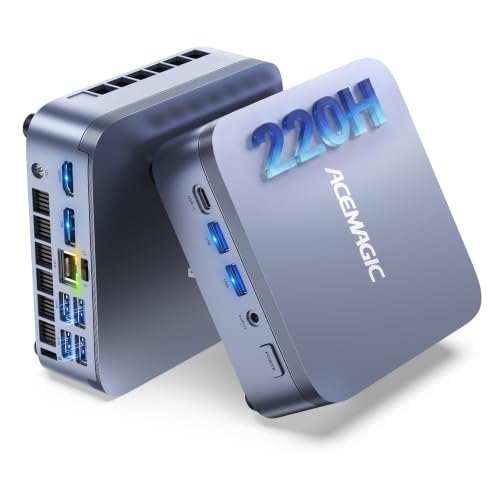
- Intel Core 5 220H with 12 cores and 16 threads
- 45W sustained design with dual-fan cooling
- 24GB LPDDR5 and triple 4K display support
Best For: Heavy multitasking, coding, and sustained office workloads
High-Performance Gaming Pick
GMKtec M7 Ultra Ryzen 7 PRO Mini PC

- Ryzen 7 PRO 6850U with 8C/16T performance
- Radeon 680M graphics with FSR 3.0+ support
- Dual USB4, HDMI 2.1, OCuLink, and quad displays
Best For: Gamers, creators, and power users
Budget Office Value Pick
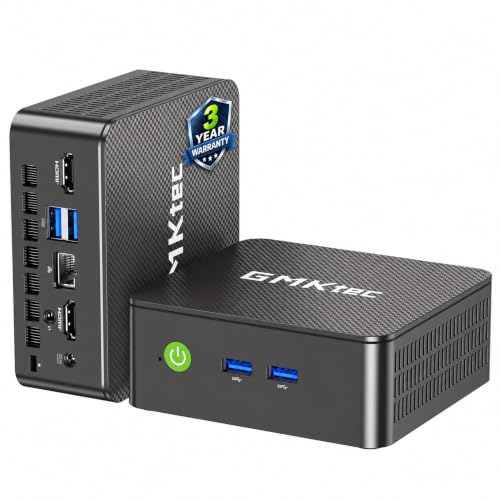
- Core i3-10110U for everyday productivity
- 16GB dual-channel RAM with 512GB SSD
- Dual HDMI, WiFi 6, and 2.5GbE connectivity
Best For: Office users and light server setups
Budget Productivity Mini PC

- Intel N5030 is good for browsing, classes, and office work.
- 12GB RAM with SSD storage keeps daily use responsive.
- Dual 4K HDMI outputs support a productive dual-monitor setup.
Best For: Light-duty home, school, and business computing
High-Value Multitasking Mini PC

- Ryzen 5 3501U supports smooth everyday multitasking.
- 16GB RAM and 512GB NVMe SSD offer a strong base.
- Three 4K display support and WiFi 6 improve versatility.
Best For: Quiet home office users who want memory and display flexibility
High-Core Everyday Performer – GMKtec M5 Ultra Ryzen 7 7730U 32GB 512GB
If you want a mini pc that balances office work, light gaming, and multitasking, the GMKtec M5 Ultra is built for that middle ground. Its Ryzen 7 7730U, 32GB RAM, and dual-SSD expandability make it a practical pick for users who want more headroom than entry-level boxes without moving into higher-power H-series territory.
Best For: Productivity users, light gamers, and home office setups that need strong multitasking and triple-display support.
Pros:
- Ryzen 7 7730U with 8 cores and 16 threads for solid everyday performance
- 32GB DDR4 memory, expandable to 64GB, plus dual-slot SSD support up to 4TB
- Dual 2.5G LAN and WiFi 6E for fast wired and wireless connectivity
- Supports three displays and 4K@60Hz output for flexible work setups
Cons:
- Uses DDR4 and PCIe 3.0 storage rather than newer DDR5/PCIe 4.0 platforms
- Integrated graphics are fine for casual gaming, not high-end graphics workloads
Overall, this is a capable mini pc for people who want a responsive desktop replacement with strong connectivity and upgrade flexibility. It looks especially appealing if dual 2.5G LAN or triple-monitor support matters to your workflow.
Budget Office Workhorse – BOSGAME E5 Ryzen 3 5300U 8GB 256GB
The BOSGAME E5 is a compact mini pc aimed at everyday office and home productivity tasks. With a Ryzen 3 5300U, dual-channel memory, and dual 2.5GbE ports, it focuses on keeping common workloads smooth while staying affordable and easy to tuck behind a monitor.
Best For: Budget-minded office users, browser-heavy work, and basic homelab or networking projects.
Pros:
- Ryzen 3 5300U offers a clear step up from low-end chips for multitasking
- Dual 2.5GbE LAN ports make it useful for routing, firewall, or NAS tasks
- Supports three 4K displays for a more productive desk setup
- Upgradeable design with dual SODIMM slots and an extra M.2 slot
Cons:
- Comes with only 8GB RAM and 256GB storage out of the box
- Less suitable for heavier gaming or demanding creative workloads
This mini pc makes sense if you need a practical Windows 11 Pro machine for work, browsing, and light server duties. Its strongest appeal is the networking hardware and upgrade path, not raw performance.
Performance-Focused Creator Pick – GMKtec M6 Ultra Ryzen 5 7640HS 32GB 1TB
If you want a faster mini pc for heavier multitasking, the GMKtec M6 Ultra stands out with its Ryzen 5 7640HS and DDR5 memory. It is designed to handle productivity, moderate gaming, and modern media tasks with more breathing room than lower-power mini systems.
Best For: Users who want stronger CPU and graphics performance for work, media, and casual gaming.
Pros:
- Ryzen 5 7640HS with Zen 4 architecture for strong overall responsiveness
- 32GB DDR5 RAM and 1TB SSD provide a generous starting configuration
- Radeon 760M graphics can handle moderate gaming and common video codecs
- USB4, dual 2.5G LAN, and triple-display support add serious versatility
Cons:
- Memory maxes out at 32GB in the listed specs, so upgrade room is limited
- Storage ships on PCIe 3.0, even though expansion supports faster drives
As a mini pc, this one is best suited to buyers who care about a stronger processor, faster memory, and broader display options. It has the right mix of speed and connectivity for a powerful compact desktop.
Sustained Workload Champion – ACEMAGIC M5 Core 5 220H 24GB 512GB
The ACEMAGIC M5 is a mini pc built for sustained performance rather than just burst speed. Its Intel Core 5 220H, 45W power design, and cooling setup make it a strong fit for users who keep lots of apps, tabs, and work tools open throughout the day.
Best For: Heavy multitaskers, coding and office professionals, and users who want a compact Windows 11 Pro machine with strong sustained output.
Pros:
- Intel Core 5 220H delivers 12 cores and 16 threads for demanding multitasking
- 45W sustained power design and dual-fan cooling help maintain performance
- 24GB LPDDR5 memory and dual M.2 slots provide a solid base and storage flexibility
- USB-C with DP and PD, plus triple 4K display support, adds setup flexibility
Cons:
- Onboard memory is not upgradable
- Storage expansion tops out at 2TB per drive, which may matter for large libraries
This mini pc is a smart fit if you value stable performance under load more than compact entry-level pricing. It is especially appealing for office stacks, coding workflows, and desk setups that benefit from three displays.
High-Performance Gaming Pick – GMKtec M7 Ultra Ryzen 7 PRO Mini PC
If you want a mini pc that can handle gaming, heavy multitasking, and multi-monitor work, the GMKtec M7 Ultra is built for that role. Its Ryzen 7 PRO 6850U, Radeon 680M graphics, dual USB4, and OCuLink support make it a flexible choice for users who want desktop-style performance in a compact chassis.
Best For: Gamers, creators, and power users who want strong integrated graphics and expansion options.
Pros:
- Ryzen 7 PRO 6850U with 8 cores and 16 threads for demanding workloads
- Radeon 680M graphics with support for AAA gaming and FSR 3.0+
- Dual USB4, HDMI 2.1, and quad-display support up to 8K@60Hz
- OCuLink port and dual 2.5GbE LAN for faster connectivity and eGPU use
Cons:
- Integrated graphics will still trail a dedicated GPU in the heaviest games
- Performance modes and expansion features may be more than casual users need
- Storage ships at 512GB, so large game libraries may require upgrades
This is a strong all-around mini pc for buyers who care about performance, connectivity, and future expansion. It stands out most when you need more than office basics without moving to a full tower.
Quiet Productivity Pick – KAMRUI Pinova P2 Ryzen 7330U Mini PC
The KAMRUI Pinova P2 is a mini pc aimed at efficient everyday computing, light creative work, and compact office setups. With a Ryzen 7330U, 16GB of RAM, triple 4K display support, and a small VESA-friendly design, it fits well where desk space and quiet operation matter.
Best For: Home office users, travelers, and anyone who wants a quiet compact PC for multitasking.
Pros:
- Ryzen 7330U offers efficient 4C/8T performance for productivity
- Triple 4K@60Hz display output supports flexible workstation setups
- 16GB LPDDR4X RAM and 256GB SSD provide a smooth everyday experience
- Compact case with VESA mount and quiet cooling for small spaces
Cons:
- 4-core processor is better for efficiency than heavy CPU workloads
- 256GB storage may feel limited for larger media or project files
- Not designed for demanding gaming or high-end content creation
For buyers who want a practical mini pc instead of a performance-first machine, this model keeps things simple and efficient. It is a good fit for office tasks, streaming, and multi-monitor productivity.
Budget Office Value Pick – GMKtec G3 PRO Core i3 Mini PC
The GMKtec G3 PRO is a practical mini pc for office work, browsing, and light server-style use. Its Core i3-10110U, dual-channel 16GB RAM, 512GB SSD, and dual HDMI output make it a straightforward option when you want reliable everyday performance without paying for extra horsepower.
Best For: Office users, home users, and light server or monitoring setups.
Pros:
- Core i3-10110U offers solid single-core performance for daily tasks
- 16GB dual-channel RAM and 512GB SSD help with responsive multitasking
- Dual HDMI 4K@60Hz output supports two-monitor setups
- WiFi 6, Bluetooth 5.2, and 2.5GbE add flexible connectivity
Cons:
- Older CPU design is aimed more at basic productivity than heavy workloads
- Integrated graphics are suitable for playback, not serious gaming
- Storage expansion is available, but the included capacity may still be modest for some users
This mini pc makes sense when value, simplicity, and connectivity matter more than raw speed. It is especially appealing as a compact office desktop or a small always-on machine.
Compact Office Mini PC – Ryzen 5 3500U Workhorse
If you want a mini pc that balances everyday speed with real expansion options, the C4 SE is built for work, study, and home office use. Its Ryzen 5 3500U processor handles browsing, video calls, programming, and office apps smoothly, while the compact chassis helps keep your desk uncluttered.
Best For: Home office users, students, and small teams who need a compact, upgradeable desktop with dual-network flexibility.
Pros:
- Ryzen 5 3500U 4-core/8-thread performance is a strong fit for multitasking and everyday productivity.
- Supports up to 32GB RAM and adds an extra M.2 SSD slot for future upgrades.
- Triple-display output via HDMI, DisplayPort, and USB-C can make multitasking easier.
- Dual Gigabit Ethernet plus WiFi 5 and Bluetooth 5.0 give you flexible connectivity options.
Cons:
- Ships with 8GB RAM and 256GB SSD, so heavier users may want to upgrade sooner.
- WiFi 5 is practical, but it is not the newest wireless standard.
- The best features here are productivity-focused rather than gaming-focused.
Overall, the C4 SE is a sensible mini pc for buyers who care more about dependable office performance and expansion headroom than flashy extras. The dual LAN and triple-display support help it stand out for organized, efficient setups.
Budget Productivity Mini PC – AK1PLUS Everyday Desktop
The KAMRUI AK1PLUS is a practical mini pc for basic productivity, online classes, and everyday home or office use. With an Intel N5030 processor, 12GB RAM, and a compact footprint, it aims to deliver responsive performance for common tasks without taking much space or power.
Best For: Budget buyers, students, and office users who want a compact everyday PC with dual 4K monitor support.
Pros:
- Intel N5030 is well-suited to web browsing, email, video calls, and light multitasking.
- 12GB RAM and a 256GB SSD help keep daily use and boot times responsive.
- Dual HDMI 2.0 outputs support two 4K@60Hz displays for a larger workspace.
- Expandable storage options include M.2 and 2.5-inch drive support for up to 4TB total.
Cons:
- The processor is aimed at everyday computing, not demanding workloads.
- LPDDR4 memory is not user-highlighted as a major upgrade path like some larger systems.
- Best suited to light productivity rather than heavy media editing or gaming.
In short, this mini pc makes sense if you need a low-power, space-saving desktop for common tasks and dual-monitor productivity. Its storage expansion and remote-management features add useful practicality for home or business environments.
High-Value Multitasking Mini PC – Ryzen 5 3501U Plus
If you want a mini pc with more memory and stronger everyday responsiveness, the Glorlin model is positioned as a capable small desktop for home office and business use. Its Ryzen 5 3501U processor, 16GB RAM, and 512GB NVMe SSD give it a practical edge for multitasking, streaming, and general productivity.
Best For: Users who want a compact, quiet mini desktop with lots of memory, fast storage, and three-display support.
Pros:
- Ryzen 5 3501U offers 4-core/8-thread performance for daily computing and multitasking.
- 16GB DDR4 RAM and 512GB SSD provide a strong starting point for responsiveness and storage.
- Supports three 4K displays through HDMI and Type-C output options.
- WiFi 6 and Bluetooth 5.3 give it modern wireless connectivity.
Cons:
- It is still a compact productivity system, not a machine for heavy graphics workloads.
- While RAM is expandable to 32GB, the base configuration may still be modest for power users.
- Cooling is fan-based, so it is quiet-focused rather than fanless.
As a mini pc, this one stands out for delivering a balanced mix of memory, storage, and display flexibility in a small footprint. It is especially appealing if you want a ready-to-use desktop that supports a cleaner, multi-monitor workspace.
How We Picked the Best Mini PC
We focused on practical factors that matter most in a Mini PC: processor performance, memory and storage capacity, display support, connectivity, and value for the intended use. We also looked for models that make sense for common real-world setups like home offices, media centers, light content creation, and casual gaming.
Quick Comparison
At a glance, the list breaks into three broad tiers: entry-level systems for web, email, and streaming; midrange models for smooth multitasking and office productivity; and higher-performance Mini PCs with newer Ryzen or Intel chips that are better suited to heavier workloads and light gaming. Larger RAM and SSD configurations generally improve responsiveness and longevity.
Key Buying Factors for Mini PC
Processor and Performance
Choose the CPU based on what you actually do. Basic browsing and office apps work fine on modest chips, while demanding multitasking, multiple monitors, and creative tasks benefit from newer Ryzen 5/7 or higher-tier Intel processors.
Memory and Storage
For most buyers, 16GB of RAM is the sweet spot. If you keep many tabs open or run heavier apps, 32GB is a safer choice. SSD size matters too: 512GB is a comfortable baseline, while 1TB is better if you store lots of files or games on the machine.
Ports and Display Support
Check for the ports you need before you buy. Dual display support is useful for productivity, while extra USB ports, Ethernet, and faster networking help if you use peripherals, wired internet, or a home lab-style setup.
Cooling, Noise, and Size
A Mini PC should stay compact without running too hot or loud under load. If you plan to leave it on all day, prioritize a design with efficient cooling and a reputation for stable performance.
Who Should Buy Which Mini PC?
If you want the best all-around everyday machine, look for a balanced midrange Mini PC with at least 16GB of RAM and a 512GB SSD. If your priority is budget office use, an entry-level model is usually enough. If you want stronger multitasking or light gaming, choose a Ryzen 7- or newer Intel-based system with more memory and storage.
For anyone replacing a desktop in a small room, a Mini PC is often the smartest way to get full PC functionality with far less clutter.