Choosing the right multitrack recorder can make songwriting and recording more immediate, especially when you want dedicated controls instead of relying entirely on a computer.
These 10 recorders cover portable demos, tabletop production, field recording, and larger track counts. Compare inputs, workflow, storage, effects, and hands-on control to find the best fit for your setup.
Best 10 Multitrack Recorder with Motorized Faders Picks for 2026
Computer-Free Touchscreen Studio
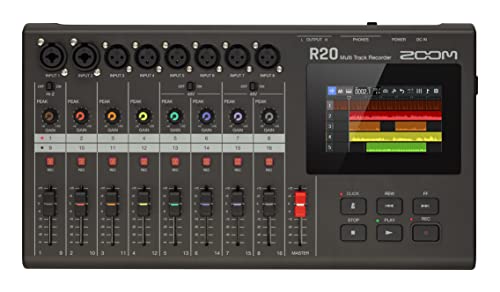
- 16-track recording with eight simultaneous tracks
- Six XLR inputs and touchscreen editing
- Built-in effects, rhythms, and synth sounds
Best For: Computer-free music production and demos
Portable Classic Multitracker
BOSS BR-600 Digital Multitrack Recorder

- Eight playback tracks and 64 V-Tracks
- Built-in stereo microphone and drum machine
- Battery-powered with guitar and vocal effects
Best For: Portable songwriting and basic multitrack recording
Compact Touchscreen Multitracker

- Up to eight-track simultaneous recording and editing
- Touchscreen control with built-in effects
- Compact, SD-compatible, and PC-free
Best For: Mobile musicians and podcasters
Video-Focused Portable Recorder
Zoom Q8 Digital Multitrack Recorder

- Built-in microphone and 2.7-inch screen
- WAV recording with SDHC and USB support
- Lightweight Japanese-version unit
Best For: Portable video and straightforward audio capture
Versatile 8-Track Workstation

- Eight-track simultaneous recording with 16-track playback
- Built-in stereo microphones, sampler, and rhythm machine
- USB interface with SDHC WAV recording
Best For: Layered home recordings and portable tabletop production
Compact Four-Track Option
Tascam DP-004 Digital Recorder

- Four-track digital recording
- Two 1/4-inch mic/line inputs plus switchable guitar input
- WAV recording to SD card with USB 2 connectivity
Best For: Simple demos, songwriting, and portable guitar recording
Clip-Free Portable Recorder

- 32-bit float recording helps avoid clipping
- Four-track layering with bounce and undo
- Built-in rhythms, combo inputs, and USB interface
Best For: Portable songwriting, overdubs, and quick mobile sessions
Portable Pocketstudio

- Up to six-track recording
- Built-in stereo condenser microphones
- Battery-powered, 1.8-pound design
Best For: Mobile songwriting and quick multitrack demos
Accessible Handy Recorder

- 32-bit float recording
- Two XLR/TRS combo inputs
- Includes mic, headphones, tripod, and cable
Best For: Portable music, podcast, and film recording
Compact 32-Bit Studio

- Four tracks plus a bounce track
- Built-in effects and guitar processing
- Includes 64GB card, batteries, and XLR cables
Best For: Layered demos and portable self-contained production
Computer-Free Touchscreen Studio – Zoom R20
The Zoom R20 is a strong choice if you want a multitrack recorder with motorized faders-style hands-on control, though its supplied features center on touchscreen operation rather than physical motorized faders. It records up to 16 tracks, with up to eight tracks simultaneously, and includes six XLR inputs for larger music projects.
Best For: Musicians who want computer-free recording, editing, and mixing with a touchscreen workflow.
Pros:
- Records up to 16 tracks and eight simultaneously.
- Six XLR inputs, including two XLR/TRS combo inputs.
- Touchscreen editing supports drag, drop, swipe, and pinch controls.
- Includes EQ, compression, rhythm patterns, and an onboard synth.
Cons:
- Its control system is touchscreen-based, not confirmed physical motorized faders.
- Maximum sample rate is 44.1 kHz.
The R20 is the most capable option here for building complete projects without a computer. Choose it when input count, onboard editing, and a DAW-style touchscreen matter more than dedicated motorized faders.
Portable Classic Multitracker – BOSS BR-600 Digital Multitrack Recorder
The BOSS BR-600 is a compact digital multitrack recorder for musicians who prefer a dedicated recording device. It offers eight simultaneous playback tracks, 64 V-Tracks, built-in microphones, effects, a drum machine, and battery operation, but the supplied notes do not indicate motorized faders.
Best For: Portable songwriting, guitar recording, and quick ideas without relying on a computer.
Pros:
- Provides eight simultaneous playback tracks and 64 V-Tracks.
- Built-in stereo microphone supports immediate recording.
- Includes guitar, vocal, and pitch-correction effects.
- Battery-powered design and built-in drum machine suit mobile use.
Cons:
- The supplied specifications do not mention motorized faders.
- Included storage is a 128MB CompactFlash card.
- Recording time is listed as 2 hours and 16 minutes.
The BR-600 is an older, highly self-contained option with useful creative tools. It makes sense for portable sketching and basic multitrack work, but it is not the best fit if motorized faders or modern touchscreen editing are priorities.
Compact Touchscreen Multitracker – Zoom R12 MultiTrak
The Zoom R12 is a compact multitrack recorder for musicians and podcasters who want touchscreen control in a mobile format. It can record and edit up to eight tracks simultaneously and includes built-in effects, while the supplied information does not confirm motorized faders.
Best For: Mobile recording, looping, and touchscreen-based creative production.
Pros:
- Records and edits up to eight tracks simultaneously.
- Touchscreen display simplifies navigation and control.
- Built-in guitar, vocal, and studio effects are included.
- Supports SD cards and recording without a PC.
Cons:
- Its eight-track capacity is lower than the Zoom R20’s 16 tracks.
- Motorized faders are not listed among the supplied features.
- Its compact controls may not replace a full-size mixer workflow.
The R12 is a practical choice when portability and touchscreen access matter most. It fits creators who want a small standalone studio, but shoppers specifically seeking physical motorized faders should verify the control layout before buying.
Video-Focused Portable Recorder – Zoom Q8 Digital Multitrack Recorder
The Zoom Q8 is a portable digital recorder with a built-in microphone, SDHC and USB connectivity, and a 2.7-inch screen. It is better suited to straightforward audio or video capture than to a multitrack recorder with motorized faders, since the supplied notes do not list multitrack mixing or motorized controls.
Best For: Portable video capture and simple WAV recording with built-in microphones.
Pros:
- Built-in microphone provides a ready-to-use recording setup.
- Supports SDHC and USB connections.
- Records in WAV format and includes a 2.7-inch screen.
- Lightweight design weighs approximately 0.4 kg.
Cons:
- Supplied details do not identify multitrack recording or motorized faders.
- The listed unit is a Japanese version with a Japanese manual only.
- No US warranty is supplied.
The Q8 should be considered only if portable capture is more important than hands-on multitrack mixing. Its regional documentation and lack of a US warranty are especially important to check before purchase.
Versatile 8-Track Workstation – Zoom R8 Multi-Track Recorder
The Zoom R8 is a practical choice if you need a multitrack recorder with motorized faders-style workflow expectations but prioritize broad recording and production features in a compact tabletop unit. It records up to eight tracks simultaneously, offers 16-track playback, and includes built-in stereo microphones, a pad sampler, and a rhythm machine.
Best For: Musicians and home recordists who want multiple inputs, onboard microphones, and integrated rhythm and sampling tools.
Pros:
- Records up to eight tracks simultaneously and supports 16-track playback.
- Includes two built-in stereo condenser microphones.
- Works as a USB audio interface and records WAV files to SDHC cards up to 32GB.
- Combines recording, pad sampling, and rhythm-machine functions.
Cons:
- Maximum sample rate is 44.1kHz.
- Storage media is limited to SDHC cards up to 32GB.
- The supplied notes do not specify motorized faders.
The R8 stands out for track capacity and its all-in-one feature set. It is a strong fit for layered projects and portable tabletop recording, though buyers specifically requiring motorized faders should verify the control layout before purchasing.
Compact Four-Track Option – Tascam DP-004 Digital Recorder
The Tascam DP-004 is a straightforward portable recorder for smaller projects. While it is not identified in the supplied notes as a multitrack recorder with motorized faders, it provides four-track recording, two 1/4-inch mic/line inputs, a switchable guitar input, and SD-card storage for computer-friendly WAV recording.
Best For: Beginners, guitarists, and songwriters who need a simple four-track setup with dedicated physical inputs.
Pros:
- Offers four-track digital recording in a compact format.
- Provides two 1/4-inch mic/line inputs and a switchable guitar input.
- Records WAV files to SD cards and includes USB 2 connectivity.
- Supports headphone and line output connections.
Cons:
- Provides fewer tracks than the Zoom R8 and R4 options listed here.
- Requires four AA batteries.
- The supplied notes do not specify motorized faders.
The DP-004 keeps the recording workflow focused and accessible. Its four-track limit makes it better suited to sketches, demos, and modest overdub sessions than complex arrangements, but its guitar input and SD-card recording are useful for portable songwriting.
Clip-Free Portable Recorder – Zoom R4 Multi-Track Recorder
The Zoom R4 is a compact alternative for musicians who want a flexible multitrack recorder with motorized faders-style hands-on expectations but need simple, modern capture features instead. Its 32-bit float recording is designed to avoid clipping without manual gain adjustments, while bounce-based layering lets you build arrangements beyond the four primary tracks.
Best For: Mobile musicians and creators who want quick recording, layered overdubs, built-in rhythms, and battery-powered operation.
Pros:
- Uses 32-bit float recording to reduce clipping concerns and gain adjustments.
- Supports recording, layering, bouncing, and undo for iterative sessions.
- Includes two XLR/TRS combo inputs and more than 80 built-in rhythm patterns.
- Works as a 2-in/2-out USB interface and runs on four AA batteries or USB-C.
Cons:
- Captures up to four tracks before using bounce-based layering.
- The supplied notes do not specify motorized faders.
- Its feature set is focused on portable recording rather than a larger multichannel mixer workflow.
The R4 is especially appealing when portability and low-stress recording matter more than a high track count. Its 32-bit float workflow, rhythms, effects, and bounce function make it well suited to building ideas on the move.
Portable Pocketstudio – Tascam DP-006
The Tascam DP-006 is a compact option for musicians who want a multitrack recorder with motorized faders-style workflow expectations but prefer a simple, battery-powered pocketstudio. It records up to six tracks at CD-quality 16-bit/44.1kHz, with two-track simultaneous recording and six-track playback.
Best For: Songwriters and mobile musicians who need built-in microphones and straightforward multitrack recording.
Pros:
- Records up to six tracks with a dedicated stereo master track.
- Includes two built-in omnidirectional condenser microphones.
- Runs on four included AA batteries and weighs 1.8 pounds.
Cons:
- Recording resolution is limited to 16-bit/44.1kHz.
- It does not list motorized faders among its supplied features.
- Its 2.5mm headphone jack may require an adapter for some headphones.
The DP-006 is best viewed as a lightweight songwriting recorder rather than a full control-surface-style studio. Its built-in mics, battery operation, and six-track capacity make it convenient for capturing ideas away from a desk.
Accessible Handy Recorder – Zoom H4essential Bundle
The Zoom H4essential is a portable four-track recorder for creators comparing a multitrack recorder with motorized faders and other hands-on workflows. It combines 32-bit float recording with built-in stereo microphones, two XLR/TRS combo inputs, SD-card recording, and USB connectivity.
Best For: Musicians, podcasters, and filmmakers who need flexible portable recording plus a ready-to-use accessory bundle.
Pros:
- Supports 32-bit float recording while recording to an SD card.
- Provides two XLR/TRS combo inputs alongside stereo microphones.
- Bundle includes a dynamic podcast microphone, headphones, tripod, windscreen, and XLR cable.
Cons:
- It is a four-track handy recorder rather than a dedicated motorized-fader mixer.
- The supplied bundle is heavier and bulkier than a recorder-only setup.
- The notes do not specify battery life or included storage capacity.
The H4essential favors capture flexibility and recording headroom over traditional fader-based mixing. Its 32-bit float format and bundled monitoring and microphone accessories make it a practical field or content-creation package.
Compact 32-Bit Studio – Zoom R4 Multitrak
The Zoom R4 Multitrak is a compact four-track recorder for buyers seeking a multitrack recorder with motorized faders but needing onboard arrangement and processing instead. It offers four recording tracks plus a bounce track, dual XLR/TS inputs, a built-in microphone, 32-bit float capture, and stereo bouncing.
Best For: Musicians who want to layer vocals and instruments, shape sounds onboard, and work without external processors.
Pros:
- Combines four-track recording with a bounce track for expanded layering.
- Includes EQ, reverb, compression, and guitar effects.
- Offers dual XLR/TS inputs, a built-in mic, and 32-bit float recording.
- Accessory set includes two XLR cables, four AA batteries, and a 64GB microSDXC card.
Cons:
- It does not list motorized faders as a feature.
- Recording capacity is centered on four tracks plus bouncing rather than a larger track count.
- It weighs 2.4 pounds before considering connected accessories.
The R4 is a strong fit for self-contained songwriting and demo production. Its onboard effects, bounce workflow, and included storage and cables reduce the need for additional gear, though users specifically requiring motorized fader control should look elsewhere.
How We Picked the Best Multitrack Recorder with Motorized Faders
We selected these recorders based on recording flexibility, input options, track capacity, portability, ease of use, onboard features, and suitability for musicians who want a more tactile alternative to software-only production. Because true motorized faders are uncommon in this category, shoppers should distinguish between dedicated physical controls, touch-sensitive interfaces, and actual automated fader movement.
We also considered whether each model works best for quick songwriting, multitrack rehearsal capture, field recording, overdubbing, or complete computer-free production. A compact four-track recorder may be more useful for a mobile songwriter than a larger unit with more inputs.
Quick Comparison
| Best For | Prioritize | Recommended Type |
|---|---|---|
| Full-band tracking | More inputs and simultaneous recording | Eight- or 16-track tabletop recorder |
| Portable songwriting | Battery life, built-in microphones, and simple overdubbing | Compact four- or six-track recorder |
| Computer-assisted production | USB audio interface functions and controller features | Tabletop recorder with USB connectivity |
| Field recording | Low-noise preamps, durable design, and 32-bit float | Handheld recorder with multitrack support |
| Hands-on mixing | Dedicated faders, knobs, and clear track navigation | Recorder with physical control surfaces |
Key Buying Factors for a Multitrack Recorder with Motorized Faders
Track Count and Inputs
Track count describes how many parts you can build or manage, while input count determines how many sources you can record at once. A drummer or full band may need several XLR inputs simultaneously; a solo musician may value easy overdubbing more than a high input count.
Fader and Workflow Design
If you specifically need a Multitrack Recorder with Motorized Faders, verify the manufacturer’s specifications carefully. Many compact recorders provide physical faders or touch-based controls but do not move automatically to reflect stored automation. Motorized faders are most valuable when switching between scenes, controlling software, or mixing complex projects.
Audio Quality and Headroom
Look for suitable microphone preamps, phantom power when required, and enough headroom for loud sources. Models with 32-bit float recording can reduce clipping concerns in supported workflows, particularly for unpredictable field or rehearsal levels.
Storage, Power, and Connectivity
Check whether the recorder uses SD cards, removable media, internal storage, or USB transfers. Battery operation matters for mobile work, while USB audio and interface functionality can make a recorder more useful in a home studio.
Built-In Features
Built-in microphones, effects, looping, bouncing, metronomes, and editing tools can speed up production. Prioritize features that match your process rather than paying for functions you will rarely use.
Who Should Buy Which Multitrack Recorder with Motorized Faders?
Choose a higher-input tabletop model if you regularly record multiple musicians or want a central songwriting workstation. An eight-track unit is a strong middle ground for guitar, vocals, keys, and rhythm parts, while a 16-track model offers more room for layered arrangements.
Solo songwriters and travelers should favor compact recorders with built-in microphones, battery power, and straightforward overdubbing. If you record concerts, rehearsals, or unpredictable sources, consider a handheld model with 32-bit float and dependable onboard microphones.
Finally, choose a recorder with USB interface or controller functions if it must work alongside a DAW. Those models offer the best flexibility for users who want tactile control without giving up computer-based editing and mixing.