The best multitrack recorders with external microphone input make it easier to capture vocals, instruments, interviews, and location sound without committing to a full studio setup.
We compare 10 portable and tabletop options, from compact songwriting tools to multi-input recorders designed for bands, podcasts, and film crews.
Best 10 Multitrack Recorders with External Microphone Input Picks for 2026
Best Expandable Field Recorder

- Four XLR/TRS inputs with phantom power
- 24-bit/96kHz WAV recording to SD
- Includes XY and MS microphone capsules
Best For: Portable multitrack recording with several external microphones
Best Budget 4-Track Option

- Records built-in and external mics together
- Switchable X-Y or A-B microphone position
- Dual recording adds a safety track
Best For: Simple field recording and entry-level multitrack projects
Best Computer-Free Music Recorder
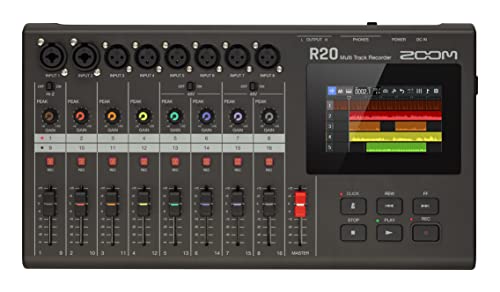
- Up to 16 tracks and eight simultaneous tracks
- Six XLR inputs, including combo inputs
- Touchscreen editing, effects, rhythms, and synth
Best For: Standalone songwriting, band demos, and home music production
Best Portastudio-Style Recorder

- Eight-track recording with two-channel input
- XLR condenser mic and TRS instrument connections
- Built-in mastering, tuner, and metronome
Best For: Hands-on home recording with microphones and instruments
Best Podcasting Pick

- Four XLR inputs with phantom power
- Four headphone outputs with individual controls
- Mix-minus for phone and remote interviews
Best For: Multi-person podcasts and remote interviews
Best Modular Recorder

- Four-track simultaneous recording
- Interchangeable input capsules
- Two XLR/TRS combo inputs with phantom power
Best For: Portable filmmaking and music recording
Best for Camera Rigs
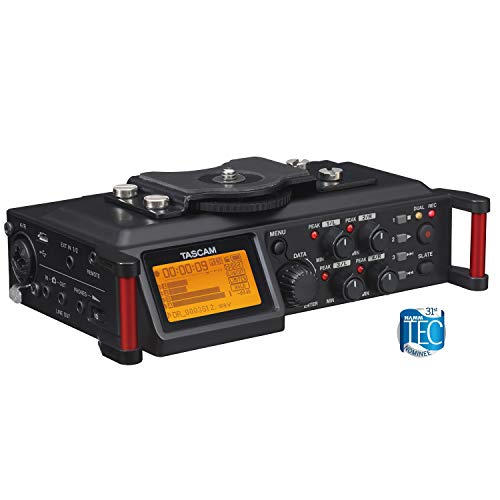
- Four balanced XLR inputs with phantom power
- Camera-mountable design with internal microphones
- Dual Recording mode provides a lower-level safety copy
Best For: Location audio for video and documentary production
Best All-Around Choice

- Four-track recorder with two XLR/TRS inputs
- 32-bit float capture helps prevent clipped takes
- USB-C recording or streaming with SD backup
Best For: Portable music, podcast, video, and field recording
Best for Simple Songwriting

- Up to six tracks for layered arrangements
- Two simultaneous recording tracks
- Built-in microphones and battery operation
Best For: Portable songwriting and basic multitrack demos
Best for Layered Mobile Sessions

- Four tracks with stereo bouncing for added layers
- Two XLR/TS combo inputs for varied sources
- Built-in rhythms, effects, and USB audio interface
Best For: Mobile musicians building layered song ideas
Best Expandable Field Recorder – Zoom H6
The Zoom H6 is a flexible choice among multitrack recorders with external microphone input, offering four XLR/TRS inputs alongside interchangeable stereo microphone capsules. It records up to 24-bit/96kHz audio directly to SD cards and can also function as a multichannel USB audio interface.
Best For: Musicians, podcasters, videographers, and mobile recording setups that need multiple external inputs.
Pros:
- Four XLR/TRS inputs with individual gain controls, pads, and phantom power.
- Records WAV or MP3 files to SD cards up to 128GB.
- Includes XY and MS microphone capsules plus USB interface functionality.
- Supports mounting to a DSLR or camcorder with an optional hot-shoe adapter.
Cons:
- Requires four AA batteries for portable operation.
- The hot-shoe mounting adapter is optional.
The H6 stands out for combining built-in stereo recording with four external microphone or line inputs. Its phantom power and low-noise preamps make it a practical all-purpose recorder for detailed, portable multitrack work.
Best Budget 4-Track Option – Tascam DR-40
The Tascam DR-40 is a straightforward option for buyers comparing multitrack recorders with external microphone input. Its built-in microphones can record at the same time as connected microphones, while dual recording can create a safety track against distorted takes.
Best For: Entry-level field recording, rehearsals, interviews, and simple four-track projects.
Pros:
- Records four tracks using the built-in microphones and external mic inputs together.
- Switchable built-in microphone positioning supports X-Y or A-B recording.
- Dual recording provides a lower-level safety track to help avoid clipping.
- Supports recording up to 24-bit/96kHz.
Cons:
- This is a discontinued model, replaced by the DR-40X.
- Included storage is listed as 2GB.
- Its stated computer compatibility covers older Windows versions.
The DR-40 offers useful flexibility for its class, especially when recording both onboard microphones and external sources. Because it is discontinued, buyers should confirm availability and condition before purchasing.
Best Computer-Free Music Recorder – Zoom R20
The Zoom R20 is a tabletop production recorder for musicians who want multitrack recorders with external microphone input without relying on a computer. It records up to 16 tracks, with up to eight recorded simultaneously, and combines XLR inputs, onboard editing, effects, rhythms, and a touchscreen workflow.
Best For: Songwriters, bands, and home musicians building complete demos or projects directly on the recorder.
Pros:
- Records up to 16 tracks and up to eight tracks simultaneously.
- Provides six XLR inputs, including two XLR/TRS combo inputs.
- Touchscreen controls support recording, editing, and mixing without a computer.
- Includes effects, 150 rhythm patterns, and an onboard synth with 18 sounds.
Cons:
- Maximum sample rate is listed as 44.1kHz.
- At 4.3 pounds, it is less suited to lightweight field recording than handheld models.
The R20 is the most complete standalone music-production choice in this group. Its generous track count and hands-on interface favor full song creation, while the XLR inputs accommodate multiple external microphones and instruments.
Best Portastudio-Style Recorder – Tascam DP-03SD
The Tascam DP-03SD brings a familiar Portastudio workflow to multitrack recorders with external microphone input. It offers eight-track recording, two-channel simultaneous input, an XLR input for condenser microphones, and TRS connections for instruments such as guitar and keyboard.
Best For: Home musicians who prefer dedicated hardware controls for recording, editing, and basic mastering.
Pros:
- Provides eight-track recording with two-channel simultaneous input.
- XLR input supports condenser microphones, while TRS inputs handle instruments.
- Built-in stereo condenser microphones enable recording without an external mic.
- Includes onboard mastering effects, editing functions, tuner, and metronome.
Cons:
- Weighs 5.3 pounds, making it less portable than handheld recorders.
- Listed storage capacity is 4GB.
- Its dedicated Portastudio workflow may be less convenient than touchscreen or computer-based editing.
The DP-03SD is a solid fit for musicians who want a self-contained recording station rather than a compact field recorder. Its instrument-friendly connections and onboard mastering tools support complete, computer-free project creation.
Best Podcasting Pick – Zoom PodTrak P4
The Zoom PodTrak P4 is a practical choice among multitrack recorders with external microphone input when you need to connect several speakers or microphones. It provides four XLR inputs with phantom power, four individually controlled headphone outputs, and multitrack recording for podcast and interview production.
Best For: Podcasts, panel discussions, and remote interviews requiring multiple microphones and headphone monitoring.
Pros:
- Four XLR microphone inputs with phantom power
- Four headphone outputs with individual volume control
- Automatic mix-minus supports phone and remote interviews
- Battery powered and capable of up to 3.5 hours on two AA batteries
Cons:
- Battery life is limited to about 3.5 hours
- Designed primarily around podcast and speech workflows rather than a broad capsule system
The P4 stands out for group recording and call-in flexibility. Its dedicated monitoring and sound-pad features make it especially convenient for compact podcast setups.
Best Modular Recorder – Zoom H5
The Zoom H5 is a flexible option among multitrack recorders with external microphone input, combining a detachable X/Y capsule with two XLR/TRS combo inputs. It records up to four tracks simultaneously and can also function as a multichannel or stereo USB audio interface.
Best For: Filmmakers and musicians who want portable four-track recording with interchangeable input capsules.
Pros:
- Two XLR/TRS combo inputs with selectable phantom power
- Interchangeable capsule system expands recording options
- Four-track simultaneous recording with an audio safety net
- Records to SD or SDHC cards up to 32GB
Cons:
- Only two external XLR/TRS inputs are built into the recorder
- Battery powered by two AA batteries
The H5 is a strong fit when portability and expandability matter. Its capsule system gives it more flexibility than a fixed-input handheld recorder, while USB connectivity adds a useful computer-based workflow.
Best for Camera Rigs – TASCAM DR-70D
The TASCAM DR-70D is built for production crews seeking multitrack recorders with external microphone input for camera-based work. It offers four balanced XLR inputs with phantom power, individual gain controls, internal microphones, and a compact design that can mount above or below a camera.
Best For: Videographers, documentary teams, and filmmakers recording multiple external microphones on location.
Pros:
- Four balanced XLR microphone inputs with phantom power
- Individual gain controls and 64dB of preamp gain
- Dual Recording mode creates a lower-level safety copy
- Supports SD, SDHC, and SDXC cards up to 128GB
Cons:
- Requires four AA batteries
- Heavier than the compact handheld Zoom models listed here
The DR-70D is particularly useful when reliable location audio and camera mounting are priorities. Its safety recording mode and four independent XLR inputs help protect takes from unexpected level spikes.
Best All-Around Choice – Zoom H4 Essential
The Zoom H4 Essential is a flexible option among multitrack recorders with external microphone input. Its four-track workflow, built-in stereo microphones, and two XLR/TRS inputs make it suitable for recording music, interviews, podcasts, video audio, and live performances.
Best For: Creators who want a portable recorder that can handle both built-in microphone recording and external microphones or instruments.
Pros:
- Four-track recording supports larger projects.
- Two XLR/TRS inputs accept external microphones, instruments, mixers, and soundboards.
- 32-bit float recording helps provide clip-free audio without worrying about distorted takes.
- USB-C supports recording or streaming to a phone, tablet, or computer while also saving to an SD card.
Cons:
- Requires two AA batteries.
- Its built-in microphone form factor may not replace a dedicated microphone for every setup.
- The display is relatively compact at 2 inches.
The H4 Essential stands out as a practical all-purpose choice for mobile recording. It combines external input flexibility with 32-bit float capture, USB connectivity, and spoken menu guidance.
Best for Simple Songwriting – Tascam DP-006 Pocketstudio
The Tascam DP-006 is a compact pocketstudio for straightforward multitrack recording. It supports up to six tracks, includes two built-in omnidirectional condenser microphones, and records at CD-quality 16-bit/44.1kHz resolution.
Best For: Songwriters who want a battery-operated recorder for building arrangements with multiple tracks.
Pros:
- Offers up to six tracks for layered song ideas.
- Can record two tracks simultaneously and play back all six tracks simultaneously.
- Includes a dedicated stereo master track.
- Four AA batteries are included.
Cons:
- The supplied notes emphasize built-in microphones rather than dedicated external microphone inputs.
- Recording resolution is limited to 16-bit/44.1kHz.
- The headphones jack is listed as 2.5 millimeters.
The DP-006 is best viewed as a focused songwriting tool rather than a connectivity-heavy field recorder. Its six-track capacity and simple battery-powered design make it useful for developing layered compositions.
Best for Layered Mobile Sessions – Zoom R4 Multi-Track Recorder
The Zoom R4 combines a four-track recorder with external microphone input, stereo bouncing, effects, and built-in rhythm patterns. Its two XLR/TS combo inputs accommodate microphones, instruments, keyboards, and other sources, while 32-bit float recording avoids the need for constant gain adjustments.
Best For: Musicians who want to layer, bounce, and expand ideas while working away from a computer.
Pros:
- Records up to four tracks and uses a dedicated bounce track for adding layers.
- Two XLR/TS combo inputs support microphones, instruments, and keyboards.
- Includes more than 80 built-in rhythm patterns for practice and songwriting.
- Works as a 32-bit float 2-in/2-out USB audio interface and runs on AA batteries or USB-C.
Cons:
- Four-track capacity is lower than the Tascam DP-006’s six-track capacity.
- The supplied notes do not specify a separate external power adapter.
- Its feature set may be more than needed for simple voice-note recording.
The R4 is a strong fit for mobile musicians who want more than basic recording. Its bounce workflow, rhythms, effects, combo inputs, and USB interface give it a particularly versatile creative setup.
How We Picked the Best Multitrack Recorders with External Microphone Input
We focused on recorders that accept external microphones through XLR, TRS, or combo inputs and support multitrack recording rather than simple stereo capture. The selection includes handheld field recorders, dedicated music workstations, podcast-focused devices, and video-oriented units.
We considered input count, track capacity, microphone powering, portability, storage, monitoring, editing workflow, and useful extras such as USB audio interfacing, built-in microphones, effects, sound pads, and 32-bit float recording. The right choice depends more on your recording situation than on the highest track number.
Quick Comparison
| Best For | Look For |
|---|---|
| Solo songwriting | Compact multitrack workflow, built-in microphones, and overdubbing |
| Bands and live sessions | Four or more XLR inputs, reliable monitoring, and higher track counts |
| Podcasts and interviews | Multiple headphone outputs, remote-call support, and easy routing |
| Film and video production | Combo inputs, camera-friendly connections, limiter, and low-cut filtering |
| Field recording | Battery operation, portable design, durable controls, and quality preamps |
Key Buying Factors for Multitrack Recorders with External Microphone Input
Inputs and Microphone Compatibility
Count the microphones or instruments you need to connect at the same time. XLR inputs suit microphones, while combo XLR/TRS inputs can also accept balanced line or instrument connections. If you use condenser microphones, verify that the recorder provides phantom power. Check whether each input has independent gain control and monitoring.
Track Count and Recording Workflow
A four-track recorder may be enough for a singer-songwriter, while a band or layered production benefits from six, eight, or 16 tracks. Also check whether tracks can be overdubbed, bounced, edited, and exported easily. A high track count is less useful if navigation is slow or the device requires a computer for basic tasks.
Portability, Storage, and Power
Handheld models are convenient for location work and often run on batteries. Tabletop and Portastudio-style units generally offer more hands-on controls but take up more space. Confirm the storage format, maximum card capacity, battery life, and whether USB can transfer files or function as an audio interface.
Audio Protection and Monitoring
For unpredictable sources, features such as limiters, low-cut filters, safety tracks, and 32-bit float recording can help prevent unusable takes. Multiple headphone outputs matter for interviews and group sessions, while a clear display and responsive meters make gain-setting easier.
Who Should Buy Which Multitrack Recorders with External Microphone Input?
Choose a compact handheld recorder if you need mobility for rehearsals, interviews, filmmaking, or live sound. Pick a tabletop multitracker when you want more physical controls and a dedicated music-production workflow. Podcast creators should prioritize independent headphone monitoring, phone or USB connectivity, and simple routing. Songwriters can save space with a pocket-sized recorder that combines built-in microphones with external inputs.
Before buying, list your microphones, instruments, required simultaneous inputs, and preferred editing method. That short checklist will usually narrow these Multitrack Recorders with External Microphone Input to the model that best fits your actual sessions.