The best network audio players with headphone output combine streaming convenience with a direct, private listening option. They can add modern services, multi-room playback, high-resolution support, and headphone listening to an existing stereo system.
This roundup includes dedicated streamers, network DACs, CD players, receivers, and portable-style players. The right choice depends on your headphones, source library, amplification needs, and how much control you want from the listening position.
Best 10 Network Audio Players with Headphone Output Picks for 2026
Best Flexible Streamer
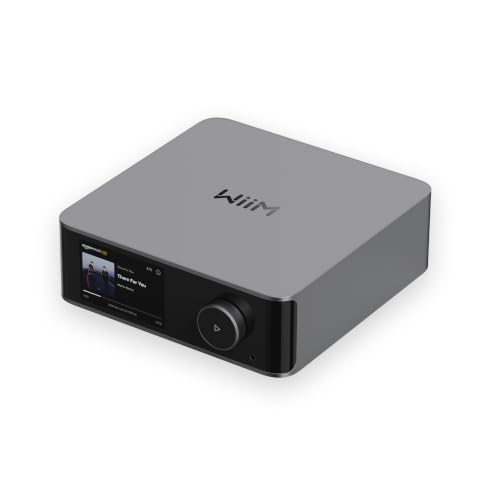
- Dedicated headphone output and broad connectivity
- 24-bit/192 kHz streaming with major services
- Touchscreen, room correction, and multiroom support
Best For: Versatile headphone and stereo systems
Best CD-and-Network Player

- Combines CD playback and network audio streaming
- Supports PCM 384 kHz/32-bit and DSD 128
- Adds a 3.5mm headphone jack and HDMI ARC
Best For: CD collectors building a high-resolution stereo system
Best Audiophile Headphone Streamer

- THX AAA amplifier with full-size 1/4-inch jacks
- Dual ESS DACs and balanced XLR outputs
- BluOS multiroom, AirPlay 2, and HDMI eARC
Best For: Premium headphone listening and multiroom audio
Best All-in-One Headphone System

- Android streamer, DAC, preamp, and headphone amp
- Dual ES9038PRO DACs and powerful THX amplification
- Six-inch touchscreen with HDMI, DLNA, AirPlay, and Roon Ready
Best For: Powerful desktop headphone and media systems
Best Versatile Network Tuner
Grace Link Internet Radio Tuner

- 100,000 internet radio stations plus popular streaming apps
- Analog, digital, Ethernet, Wi-Fi, Chromecast, and Bluetooth connectivity
- Bluetooth transmission supports headphone listening
Best For: Upgrading a traditional stereo with broad streaming and radio access
Best Premium Headphone-Centric Network Player

- Dual-mono design for separated left and right channels
- Balanced 4-pin XLR headphone amplifier with selectable modes
- Preamplifier, multiple inputs, Bluetooth HD codecs, and MQA decoding
Best For: Audiophiles building a premium two-channel and balanced-headphone system
Best Complete Stereo System
Onkyo TX-8470 Network Receiver

- 100-watt two-channel stereo receiver with Wi-Fi and Bluetooth
- Roon, Tidal, Deezer, phono, HDMI, and Dirac support
- Designed to power speakers and integrate multiple home sources
Best For: Building a complete two-channel system for speakers, vinyl, and streaming
Best Network-Ready DAP
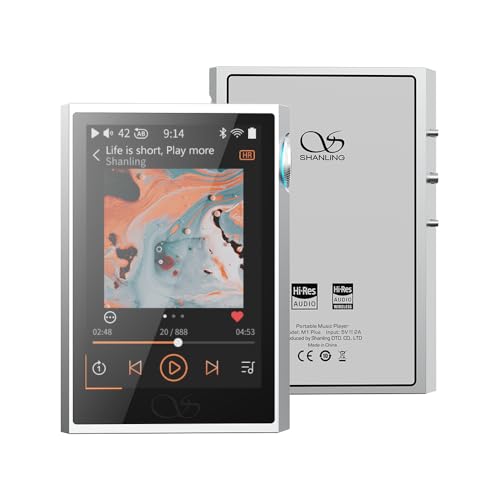
- DLNA and AirPlay over Wi-Fi
- 4.4mm balanced and 3.5mm outputs
- Up to 660 mW at 32 ohms
Best For: Audiophiles seeking a compact network streamer with powerful headphone output
Best Traditional Stereo Hub

- 2 x 120-watt stereo amplification
- Bluetooth, USB, SD, AUX, and RCA inputs
- Front headphone jack and FM radio
Best For: Home stereo setups needing speaker power and casual wireless playback
Best Portable Value Player

- Wi-Fi and Bluetooth with LDAC support
- DSD512 and broad format compatibility
- Expandable storage up to 1TB
Best For: Portable listeners building a large high-resolution music library
Best Flexible Streamer – WiiM Ultra
For listeners comparing network audio players with headphone output, the WiiM Ultra is a versatile choice with a dedicated headphone jack, a 3.5-inch touchscreen, and extensive digital and analog connectivity. Its ESS DAC, Wi-Fi 6, and support for high-resolution playback make it practical for both headphone and stereo systems.
Best For: Flexible home audio setups that need headphone listening, streaming, TV connectivity, and multiroom support.
Pros:
- Dedicated headphone output alongside RCA, optical, coaxial, USB, and HDMI ARC connections.
- Supports playback up to 24-bit/192 kHz with services including Spotify, TIDAL, Qobuz, and Amazon Music.
- Includes a touchscreen, app control, room correction, and multiroom compatibility.
Cons:
- It is not compatible with AirPlay or usable as an AirPlay receiver.
- Its broad feature set may be more than needed for a simple headphone-only system.
The WiiM Ultra stands out when one compact component needs to handle headphones, speakers, TV audio, and multiple streaming sources. Check compatibility with your preferred ecosystem, particularly if AirPlay is essential.
Best CD-and-Network Player – Marantz CD 50n
The Marantz CD 50n combines network audio streaming and CD playback with a 3.5mm headphone jack. It suits listeners who want a traditional disc player alongside high-resolution network sources, plus HDMI ARC for bringing stereo sound from a compatible TV.
Best For: Music fans who want CD playback, network streaming, headphone listening, and a polished stereo component.
Pros:
- Combines a CD player with network audio streaming in one component.
- Supports high-resolution playback up to PCM 384 kHz/32-bit and DSD 128.
- Includes a 3.5mm headphone jack, HDMI ARC, HEOS, and a built-in digital preamp.
Cons:
- The supplied notes do not identify specific streaming services or detailed network connection options.
- Its CD-focused design may be unnecessary for listeners with an all-streaming library.
The CD 50n is a strong fit for a mixed physical-and-digital collection. Its headphone output adds private listening, while HDMI ARC and adjustable output make it useful in a broader stereo or TV setup.
Best Audiophile Headphone Streamer – Bluesound NODE ICON
The Bluesound NODE ICON is aimed at listeners seeking network audio players with headphone output and a more dedicated headphone stage. Its THX AAA headphone amplifier, dual-mono ESS DAC design, full-size 1/4-inch jacks, and BluOS multiroom platform give it a premium, system-oriented approach.
Best For: Audiophile headphone listening and high-resolution multiroom systems with balanced stereo connectivity.
Pros:
- THX AAA headphone amplification with full-size 1/4-inch headphone jacks.
- Dual ESS SABRE DACs, balanced XLR outputs, a 5-inch display, and HDMI eARC.
- Supports AirPlay 2, aptX Adaptive Bluetooth, BluOS multiroom, and personal libraries.
Cons:
- Dirac Live requires an upgrade, and the measurement microphone is an additional purchase.
- Its premium features and connections may be excessive for basic headphone streaming.
The NODE ICON is particularly compelling when headphone quality and whole-home control matter as much as streaming access. Its full-size headphone connections and THX AAA amplifier make private listening a central feature rather than an afterthought.
Best All-in-One Headphone System – FiiO R9
The FiiO R9 is an Android-based network player, DAC, preamplifier, and headphone amplifier in one desktop unit. For shoppers seeking network audio players with headphone output, it offers a large six-inch touchscreen, third-party streaming apps, local network playback, and unusually powerful headphone amplification.
Best For: Desktop listeners who want streaming apps, high-powered headphone output, HDMI functionality, and multiple source options in one device.
Pros:
- Combines network playback, Android streaming apps, USB DAC functionality, preamp duties, and headphone amplification.
- Uses dual ES9038PRO DACs and eight THX AAA 788+ amplifier modules, with up to 7300mW per channel at 32 ohms.
- Supports HDMI decoding and ARC, DLNA, AirPlay, Roon Ready functionality, and a six-inch touchscreen.
Cons:
- Its desktop all-in-one design is larger and more complex than a basic network streamer.
- The supplied notes specify a one-year warranty.
The R9 is the most comprehensive option here for a headphone-centered desktop system. Its Android platform and powerful amplification provide flexibility, while HDMI and network features allow it to serve as the hub for broader audio and entertainment setups.
Best Versatile Network Tuner – Grace Link Internet Radio Tuner
The Grace Link is a practical choice among network audio players with headphone output for upgrading a traditional stereo system. It combines internet radio, major streaming services, Chromecast, Bluetooth, and wired digital or analog connections in a compact tuner with no built-in speaker.
Best For: Stereo owners who want broad streaming and radio access, flexible connectivity, and occasional headphone listening.
Pros:
- Supports up to 100,000 internet radio stations, 100 presets, Spotify Connect, Pandora, Amazon Music, SiriusXM, and more.
- Offers analog and digital outputs, Ethernet, dual-band Wi-Fi, Bluetooth 5.0, and UPnP/DLNA playback.
- Bluetooth can receive phone audio or transmit audio for headphone listening.
- Supports files up to 24-bit/192kHz and includes a five-band equalizer.
Cons:
- It has no built-in speaker, so it requires a stereo, receiver, or headphones for audio playback.
- SiriusXM requires a separate subscription.
The Grace Link stands out for versatility rather than specialized audiophile construction. Its combination of streaming breadth, Chromecast, inputs, outputs, and Bluetooth headphone transmission makes it a flexible addition to an existing audio system.
Best Premium Headphone-Centric Network Player – TEAC UD-701N Network Player
The TEAC UD-701N is a high-end option among network audio players with headphone output, combining network playback with DAC, preamplifier, and dedicated headphone-amplifier functions. Its dual-mono design and balanced 4-pin XLR headphone output suit listeners building a premium two-channel system.
Best For: Audiophiles who want a feature-rich network player with balanced headphone connectivity and preamplifier capability.
Pros:
- Uses a dual-mono structure designed to reduce interference between left and right channels.
- Includes a 4-pin XLR headphone amplifier with balanced and active-ground switching.
- Provides two analog line inputs, four digital inputs, and an analog preamplifier function.
- Supports LDAC, aptX HD, other high-resolution Bluetooth formats, and MQA full decoding.
Cons:
- Its 4-pin XLR headphone output may be less convenient for headphones that use standard connections.
- The supplied notes do not specify supported streaming services or wireless network details.
- Its large component size may require dedicated rack space.
The UD-701N is best viewed as a premium control center rather than a simple streamer. Its balanced headphone section, extensive inputs, and preamplifier functions make it particularly compelling for a carefully assembled high-fidelity system.
Best Complete Stereo System – Onkyo TX-8470 Network Receiver
Onkyo TX-8470 2 Channel Stereo Receiver with Wi-Fi, Bluetooth, Phono, Hi-Res Audio and Roon Ready
Check Price On AmazonThe Onkyo TX-8470 is a network stereo receiver for shoppers who want amplification, streaming, and source connections in one component. It belongs on a network audio players with headphone output shortlist when the priority is a complete two-channel system with Wi-Fi, Bluetooth, phono support, and modern streaming compatibility.
Best For: Listeners who need a powered stereo receiver for speakers, vinyl, and network streaming in a single chassis.
Pros:
- Combines a two-channel amplifier rated at 100 watts output with Wi-Fi and Bluetooth.
- Supports Roon, Tidal, Deezer, and high-resolution audio playback.
- Includes an isolated MM/MC phono board for turntables with moving-magnet or moving-coil cartridges.
- Offers four HDMI ports, voice-control compatibility through Apple and Google assistants, and Dirac Full Band.
Cons:
- The supplied notes identify speaker audio output but do not specifically confirm a headphone output.
- It is a full stereo receiver rather than a compact standalone network player.
- Its two-channel design is not intended as a multichannel surround receiver.
The TX-8470 makes the most sense for a living-room or dedicated stereo setup where speaker amplification and source flexibility matter more than a minimalist streamer design. Verify the headphone-output specification before buying if direct headphone listening is essential.
Best Network-Ready DAP – SHANLING M1 Plus
The SHANLING M1 Plus is a strong choice among network audio players with headphone output when you want portable playback with serious headphone support. Its Wi-Fi, DLNA, and AirPlay connectivity complement local microSD playback, while balanced and single-ended outputs make it flexible for different listening setups.
Best For: Audiophiles who want a compact network streamer and high-powered portable headphone player.
Pros:
- Supports Wi-Fi streaming through DLNA and AirPlay.
- Offers both 4.4mm balanced and 3.5mm headphone outputs.
- Provides up to 660 mW at 32 ohms and supports PCM768/DSD512 playback.
- Compact 116-gram aluminum-and-glass design with about 12.5 hours of playback.
Cons:
- Its 3.2-inch screen may feel small for users accustomed to smartphones.
- It is primarily a music player rather than a full-size home receiver.
Choose the M1 Plus if headphone performance and network flexibility matter more than having a large display or traditional amplifier controls. The coaxial digital output also lets it connect to a desktop audio system.
Best Traditional Stereo Hub – Pyle PCAU46BA
The Pyle PCAU46BA takes a different approach to network audio players with headphone output: it is a home stereo amplifier with Bluetooth, physical media inputs, FM radio, and a front headphone jack. It suits listeners who want one affordable control center for speakers, wired sources, and casual wireless streaming.
Best For: Home users who need a versatile stereo amplifier with a convenient headphone connection.
Pros:
- Delivers 2 x 120 watts into 4 ohms for stereo speakers.
- Includes Bluetooth, USB-A, SD/MMC, AUX, RCA, and FM radio.
- Provides a front-panel headphone jack and dedicated bass, treble, and volume controls.
- Supports 110/220-volt selectable input voltage.
Cons:
- Bluetooth is the wireless connectivity listed; Wi-Fi, DLNA, and AirPlay are not specified.
- Its larger home-audio format is less portable than a dedicated music player.
The PCAU46BA is best viewed as a Bluetooth-enabled stereo receiver rather than a true Wi-Fi network streamer. It is a practical fit when speaker amplification and broad physical input support are more important than advanced network playback.
Best Portable Value Player – Oilsky HiFi Music Player
The Oilsky HiFi music player is a portable option for shoppers comparing network audio players with headphone output and expandable local storage. It combines Wi-Fi and Bluetooth connectivity with high-resolution format support, a touch display, and up to 15 hours of headphone or Bluetooth playback.
Best For: Portable listeners who want Wi-Fi access, Bluetooth headphone support, and a large expandable music library.
Pros:
- Supports Wi-Fi, Bluetooth 4.1, and LDAC, SBC, and AAC transmission.
- Supports native DSD512 and a wide range of lossless audio formats.
- Includes 16GB of built-in storage with expansion up to 1TB.
- Offers a 2.8-inch touch display and up to 15 hours of playback.
Cons:
- The supplied specifications do not identify a separate balanced headphone output.
- Bluetooth version 4.1 is older than the wireless standard in newer players.
- Specific Wi-Fi streaming protocols are not listed.
This player makes sense for listeners who prioritize storage capacity, format compatibility, and portability. If you need clearly specified DLNA or AirPlay support or a balanced output, the SHANLING model is the more explicitly equipped choice.
How We Picked the Best Network Audio Players with Headphone Output
We selected products that offer meaningful network or wireless playback capabilities alongside a headphone-listening path. The list spans dedicated streamers such as the WiiM Ultra and Bluesound Node Icon, premium network DACs, CD and network players, stereo receivers, and more compact Android or portable designs.
We also considered format support, connectivity, ease of use, system compatibility, and value. Because these products serve different roles, the best option is not necessarily the most expensive one. A headphone output may be built into the main unit, available through a DAC stage, or included as part of a broader receiver or media-player design.
Quick Comparison
- Best all-around streamer: WiiM Ultra for broad connectivity, app control, and a modern touchscreen interface.
- Best premium CD and network option: Marantz CD 50n for listeners who want disc playback and refined stereo integration.
- Best high-end network DAC: TEAC UD-701N for advanced digital connectivity and serious two-channel systems.
- Best screen-based media player: FiiO R9 for Android apps, local files, and extensive high-resolution support.
- Best receiver-based solution: Onkyo TX-8470 for listeners who need streaming, amplification, phono, and headphone listening in one chassis.
Key Buying Factors for Network Audio Players with Headphone Output
Headphone Compatibility
Check the output type, power, and impedance range before buying. Efficient headphones may work well with almost any unit, while demanding planar or high-impedance models can benefit from a stronger dedicated amplifier. Also confirm whether the headphone output is active independently or mutes the speaker outputs.
Streaming and Network Support
Look for the services you actually use, such as Spotify Connect, Tidal, Qobuz, SiriusXM, internet radio, Chromecast, or AirPlay. Roon Ready certification, multi-room compatibility, and stable Wi-Fi can matter more than a long list of unused formats.
System Connectivity
Match the player to your existing equipment. Useful connections may include HDMI ARC, optical and coaxial digital outputs, USB, balanced analog outputs, subwoofer output, phono input, and conventional line-level connections. A receiver may be preferable if you also need speakers driven directly.
Control and File Support
A touchscreen can make browsing easier, while app-based control is often faster for large libraries. If you store music locally, verify support for your preferred file types, sample rates, DSD playback, USB storage, and gapless playback.
Who Should Buy Which Network Audio Players with Headphone Output?
Choose a compact streamer if you already own an amplifier or active speakers and mainly want better network access. Pick a premium network DAC or CD player when sound quality, build quality, and stereo-system integration take priority. An all-in-one receiver is better for a simple living-room system that needs amplification, radio, phono, streaming, and headphones without multiple boxes.
For listeners who want apps, local files, and a large display, the FiiO R9-style design is especially flexible. Portable or lower-cost players make sense for casual listening and secondary systems, but verify their software support and headphone power carefully. Before buying, confirm the unit’s output level, preferred streaming services, and connection requirements so it complements rather than duplicates your existing gear.