A reliable cable tester can save hours of guessing when a home-lab connection fails. The right tool helps identify wiring faults, mis-terminated plugs, split pairs, damaged cables, and network issues before you replace working hardware.
These 10 picks cover straightforward RJ45 and RJ11 testing as well as advanced features such as PoE detection, tone tracing, cable-length measurement, optical power testing, and visual fault locating.
Best 10 Network Cable Testers for Home Labs Picks for 2026
Versatile Starter Kit
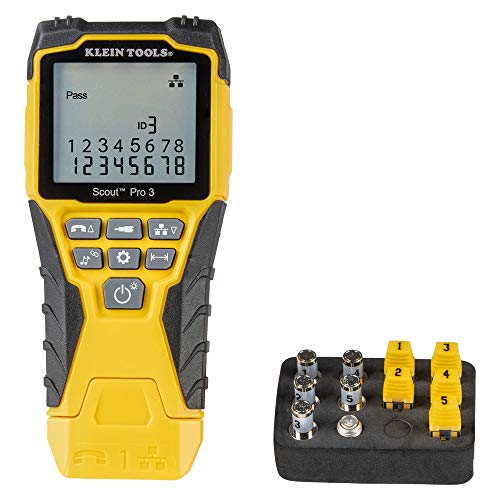
- Tests RJ11/12, RJ45, and coax cables
- Measures runs up to 2,000 feet
- Finds opens, shorts, miswires, and split pairs
Best For: Mixed data, telephone, and coax home labs
Feature-Rich Network Tester

- Includes PoE, port flash, and link testing
- Measures CAT5/CAT6 runs up to 200 meters
- Offers digital tracing and NCV detection
Best For: Active Ethernet and PoE troubleshooting
Simple Pocket Tester

- Tests RJ11, RJ12, and RJ45 cables
- Supports CAT3 through CAT6/6A
- Provides quick LED fault indications
Best For: Basic continuity checks and cable verification
Trace and Identify Tool

- Traces Ethernet, telephone, speaker, and coax wires
- Includes clips and an RJ45 test cable
- Adds wire mapping, work light, and volume control
Best For: Locating unlabeled, non-active low-voltage cables
Fiber-Ready Pro

- Tests copper, PoE, fiber power, and VFL faults
- Measures cable lengths up to 350 meters
- Color display, flashlight, and USB-C charging
Best For: Mixed-media home labs and advanced network troubleshooting
Simple Ethernet Specialist

- Tests CAT5e, CAT6, and CAT6A RJ45 cables
- Finds opens, shorts, miswires, and split pairs
- Compact backlit tester with remote and batteries
Best For: Basic Ethernet cable testing and portable troubleshooting
Compact Fiber Troubleshooter

- Combines nine copper, PoE, and fiber functions
- Measures six optical wavelengths
- Tests cable lengths up to 200 meters
Best For: Home labs needing versatile copper and fiber diagnostics
Versatile Home Lab Pick

- Tests RJ45 CAT5-CAT7 and RJ11 cables
- Fast/slow scans with continuity and miswire checks
- Detachable remote unit for long cable runs
Best For: Mixed Ethernet and telephone wiring in home labs
Maintenance-Focused Choice

- Checks RJ45/RJ11 continuity and shielding
- Adds connector crimping quality-control testing
- Includes storage box, remote unit, and batteries
Best For: Home lab cable maintenance and crimp checks
Compact Troubleshooting Pick

- Tests RJ45/RJ11 continuity and common wiring faults
- Supports CAT5-CAT7 plus UTP and STP cables
- Compact body with adjustable speed and detachable remote
Best For: Routine home lab cable verification and repairs
Versatile Starter Kit – Scout Pro 3 Cable Tester
For home labs that handle more than Ethernet, the Klein Tools Scout Pro 3 is a versatile choice among network cable testers for home labs. It tests RJ11/12, RJ45, and coax cables, while reporting wiremaps, cable length, and several common wiring faults.
Best For: Home lab users who need one tester for data, telephone, and coax runs.
Pros:
- Tests voice, data, and coax-terminated cables.
- Measures cable length up to 2,000 feet.
- Detects opens, shorts, miswires, and split pairs.
- Backlit display shows length, wiremap, cable ID, and results.
Cons:
- Not designed to test PoE.
- Tracing requires the separately sold VDV500-123 analog probe.
The broad connector support makes this a practical starter set for mixed home-lab wiring. Choose it when coax and telephone testing matter as much as Ethernet diagnostics.
Feature-Rich Network Tester – NF-8209 Ethernet Tester
The NOYAFA NF-8209 is aimed at home lab builders who want more than basic continuity checks. Along with wire mapping and length measurement, it supports PoE testing, port flashing, link testing, digital cable tracing, and non-contact voltage detection.
Best For: Home lab users troubleshooting live Ethernet runs, PoE equipment, and cable paths.
Pros:
- Supports normal, anti-interference, and PoE tracing modes.
- Tests shorts, opens, miswiring, and normal connections.
- Measures CAT5/CAT6 pairs from 2.5 to 200 meters.
- Tests standard and non-standard PoE from 5–60V and supports port flash/link testing.
Cons:
- Its feature set may be more than needed for simple cable verification.
- The receiver uses a 9V battery while the transmitter is rechargeable.
With PoE and live-cable features included, the NF-8209 is particularly suited to network closets and active home-lab setups. Its length range is useful for typical residential and small-office runs, though it is not the longest-range option here.
Simple Pocket Tester – LAN Explorer Cable Tester
If your home lab mainly needs quick pass-or-fail checks, this compact LAN Explorer keeps the process simple. It tests RJ11, RJ12, and RJ45 cables, supports CAT3 through CAT6/6A, and uses fast LED indications for common wiring conditions.
Best For: Beginners and home lab users who want an affordable, straightforward continuity tester.
Pros:
- Tests RJ11, RJ12, and RJ45 terminated cables.
- Supports CAT3, CAT5e, and CAT6/6A cables.
- Shows pass, miswire, open, short, and shield conditions.
- Built-in remote stores securely and the tester fits in a pocket.
Cons:
- Does not list cable length measurement, PoE testing, or tone tracing.
- Uses a 9V battery.
This is a good fit when you need basic verification rather than advanced diagnostics. Its single-button operation and compact design make it convenient for checking patch cables and newly terminated runs.
Trace and Identify Tool – Klein Tone and Probe Kit
The Klein Tools VDV500-705 complements network cable testers for home labs when the main challenge is finding the right wire. Its analog tone generator and probe trace open-ended, non-active low-voltage cables, including Ethernet, telephone, speaker, and coax wiring.
Best For: Home lab users identifying unlabeled or hard-to-follow low-voltage cables.
Pros:
- Traces Ethernet, telephone, speaker, coax, video, and data cables.
- Includes alligator clips for unterminated wires and an RJ45 test cable.
- Supports pin-to-pin wire mapping with the toner and probe.
- Probe includes a work light, adjustable volume, and headphone jack.
Cons:
- Designed for open-ended, non-active wires below 60V.
- It is a tracing and mapping kit rather than a dedicated PoE tester.
- Best results require proper grounding and separating wires when possible.
This kit is most useful alongside a continuity tester: use it to locate a cable, then use a network tester to verify termination and faults. Its low-voltage limitation makes checking the cable condition before tracing essential.
Fiber-Ready Pro – NOYAFA 9-in-1 Cable Tester
For home labs that extend beyond basic Ethernet, the NOYAFA tester combines copper-cable diagnostics with fiber testing, PoE checks, and wire tracing. It measures cable lengths up to 350 meters and adds a color display, rechargeable battery, and built-in flashlight for practical troubleshooting in racks, attics, and wiring projects.
Best For: Home lab users who need Ethernet, PoE, copper fault finding, and fiber-link checks in one tool.
Pros:
- Combines continuity, scan, cable length, PoE, port flash, VFL, optical power meter, NCV, and QC functions.
- Measures seven optical wavelengths across an optical power range of -70 to +10 dBm.
- Supports cable-length testing up to 350 meters and offers up to 10 hours of battery life with USB-C charging.
Cons:
- Its many functions may be more than needed for simple RJ45 continuity checks.
- The notes do not specify whether every accessory needed for fiber connections is included.
This is the most capable option here for mixed-media home labs. Choose it when fiber diagnostics and longer cable runs matter as much as everyday Ethernet troubleshooting.
Simple Ethernet Specialist – Klein Tools LAN Scout Jr
The Klein Tools LAN Scout Jr is a compact choice for home labs focused on RJ45 Ethernet cabling. It tests CAT5e, CAT6, and CAT6A cables for common wiring faults, and its backlit display and straightforward three-button interface make routine cable checks easy to read and perform.
Best For: Home lab owners who want a portable, easy-to-use tester for standard RJ45 patch cords and data cables.
Pros:
- Detects opens, shorts, miswires, split pairs, crossover faults, and shield issues.
- Backlit LCD displays pin-to-pin wire maps in low-light areas.
- Includes a remote and batteries in a compact 4.32-ounce kit.
Cons:
- The tone generator probe is sold separately.
- It is designed for RJ45 data cables rather than the broader fiber and multi-cable functions of the NOYAFA testers.
For straightforward Ethernet verification, the LAN Scout Jr keeps the process focused and portable. It is a sensible pick if your home lab does not require optical testing or extended cable-length measurement.
Compact Fiber Troubleshooter – NOYAFA NF-8518 Cable Tester
The NOYAFA NF-8518 gives home lab builders a broad set of network diagnostics in a dedicated tester. Along with continuity, scanning, port blinking, PoE, and cable-length functions, it includes an optical power meter and 650nm visual fault locator for fiber troubleshooting, though its listed cable-length range is shorter than the other NOYAFA model.
Best For: Home labs and small network projects that need copper and fiber checks without carrying separate basic testers.
Pros:
- Provides nine core functions, including continuity, scanning, port blinking, length, PoE, optical power, and NCV testing.
- Measures six optical wavelengths from 850nm to 1625nm with a -70 to +10 dBm detection range.
- Tests network, telephone, and BNC cable lengths from 2.5 to 200 meters.
Cons:
- FC, SC, and ST connector accessories require separate purchase.
- The maximum stated cable-length range is 200 meters.
The NF-8518 is a versatile middle ground for users building a mixed copper-and-fiber toolkit. It offers strong diagnostic coverage, but confirm the included accessories and 200-meter range fit your setup before buying.
Versatile Home Lab Pick – HT812A Network Cable Tester
For home labs that include both Ethernet and telephone wiring, the HT812A is a practical choice among network cable testers for home labs. It checks RJ45 and RJ11 cables for continuity, shorts, open wires, miswiring, and shielding status, with fast and slow scan modes for more precise troubleshooting.
Best For: Home lab users troubleshooting mixed LAN and telephone cabling, especially long or wall-mounted runs.
Pros:
- Supports RJ45 cable categories from CAT5 through CAT7 plus RJ11 telephone lines.
- Detachable master and remote units help test long-distance and structured-cabling runs.
- Includes two AAA batteries and provides clear LED wire-order indicators.
Cons:
- Its testing is focused on wiring faults rather than network performance or link speed.
- The remote-unit design requires keeping track of two separate pieces during testing.
The HT812A offers broad cable compatibility and useful shield-status detection in a compact format. It is a strong fit when a home lab needs straightforward physical-layer troubleshooting across several cable types.
Maintenance-Focused Choice – TESMEN TLP-528A Cable Tester
The TESMEN TLP-528A is a useful option for network cable testers for home labs where cable maintenance and connector checks matter. It supports RJ45 and RJ11 continuity testing, displays results through LEDs, and adds a connector crimping quality-control check for maintenance work.
Best For: Home lab builders who regularly sort, maintain, or quality-check Ethernet and telephone cables.
Pros:
- Supports RJ45/RJ11 cables and checks continuity and shielding status.
- Includes a connector crimping QC check for network maintenance tasks.
- Fast and slow modes, detachable remote, storage box, and two AAA batteries are included.
Cons:
- The supplied notes do not indicate advanced certification or network-performance testing.
- It is primarily a continuity and wiring-maintenance tool rather than a full diagnostic analyzer.
The TLP-528A stands out for adding crimp-quality checking to basic cable verification. Its portable design and separated remote make it especially practical for home labs with ongoing cabling projects.
Compact Troubleshooting Pick – TESMEN TLP-123A Cable Tester
The TESMEN TLP-123A keeps cable troubleshooting simple for home labs. This compact tester checks RJ45 and RJ11 lines for connectivity, shorts, open circuits, miswiring, and shielding status, while adjustable test speed and one-button operation make repeated checks convenient.
Best For: Home lab users who want a compact tester for routine Ethernet wiring checks and long cable runs.
Pros:
- Supports CAT5 through CAT7 Ethernet cabling as well as UTP, STP, and RJ11 lines.
- Detects common wiring faults, including shorts, opens, and miswiring.
- Detachable remote unit and adjustable scan speed support wall ports and structured cabling.
Cons:
- The supplied package does not mention a storage case.
- It checks cable wiring but does not provide network throughput or link diagnostics.
The TLP-123A is a straightforward, portable option for verifying physical cable wiring. Its compact design and broad RJ45/RJ11 compatibility make it well suited to routine home lab installations and repairs.
How We Picked the Best Network Cable Testers for Home Labs
We focused on testers that suit common home-lab tasks: checking Ethernet patch cables, verifying in-wall runs, troubleshooting keystone jacks, testing telephone wiring, and confirming cable terminations. We compared the available feature sets, supported connector and cable types, portability, ease of use, and the level of diagnostic information each tester can provide.
Basic continuity testers can be enough for occasional cable checks, while more capable units add remote identification, wire mapping, length testing, PoE awareness, tone generation, or optical functions. The best choice depends on whether you need a quick go/no-go result or a tool for recurring infrastructure work.
Quick Comparison
- For simple continuity checks: Choose a compact RJ45/RJ11 tester that clearly displays pin order and wiring faults.
- For structured cabling: Look for a remote unit, wire mapping, split-pair detection, and support for longer installed runs.
- For active network troubleshooting: PoE detection, link information, and cable-length testing can make diagnosis faster.
- For locating cables: A tone generator and probe are useful when several cables terminate in the same cabinet or room.
- For fiber-equipped labs: An optical power meter and visual fault locator are worthwhile only if your setup includes fiber links.
Key Buying Factors for Network Cable Testers for Home Labs
Supported Connectors and Cable Standards
Confirm that the tester supports the connectors you actually use. RJ45 is standard for Ethernet, while RJ11 is common for telephone wiring. If your lab uses CAT6A, CAT7, shielded cable, coax, or fiber, check for explicit compatibility rather than assuming a general-purpose tester covers it.
Testing Depth
Continuity and wire-map testing reveal open conductors, shorts, reversals, and crossed pairs. Length testing can help locate a break or estimate the distance to a fault. PoE features are useful for checking whether power is present on a cable, but they do not replace a full network tester or switch diagnostic tool.
Remote Units and Identification
A detachable remote makes it possible to test cables installed through walls or ceilings. Multiple numbered remotes can speed up patch-panel identification, while a tone function helps trace an unknown cable without disconnecting every line.
Fiber Features and Usability
Optical power meters and visual fault locators add value for fiber installations but increase cost and complexity. For copper-only labs, prioritize a clear display, durable housing, accessible controls, replaceable batteries, and a compact design.
Who Should Buy Which Network Cable Testers for Home Labs?
Occasional DIY users should choose a simple, affordable continuity and wire-map tester. Home-lab builders will benefit from a remote, length testing, and clear fault reporting. Network installers and serious homelab operators should consider PoE, tone tracing, and broader cable support. Fiber users should select a model with both an optical power meter and VFL if they need to validate optical links. Before buying, match the tester’s capabilities to your cabling rather than paying for features you will never use.