If you have old negatives or slides stored away, a portable film scanner can turn them into shareable digital files without a complicated setup. The best models make it easy to preview, convert, and save images at home.
Below, we focus on convenience, image quality, supported formats, and overall value so you can choose a scanner that fits your archive, budget, and workflow.
Best 10 Portable Film Scanners Picks for 2026
Compact 35mm Slide Saver
TCNEWCL Foldable Smartphone Scanner

- Foldable body saves space for storage and travel.
- Supports 35mm slides and negatives.
- Uses your smartphone plus a built-in LED backlight.
Best For: Portable, budget-friendly smartphone scanning
Standalone Home Archive Scanner
KODAK Slide N Scan with 5-inch LCD
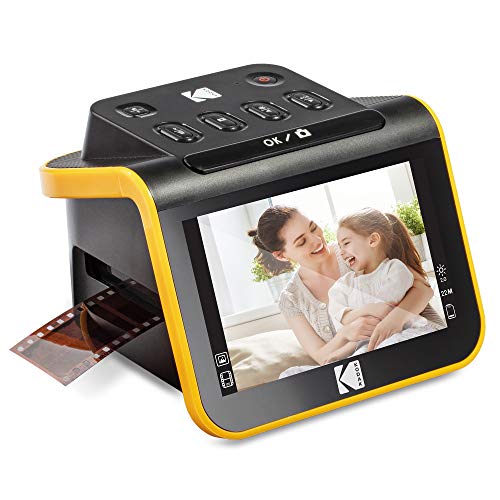
- 5-inch LCD lets you preview and edit on the device.
- Supports 135, 110, 126 film and 50mm slides.
- Saves scans to SD card with easy-load trays.
Best For: Standalone scanning with a built-in screen
Travel-Friendly Slide Digitizer
DigitConvert Battery-Powered Scanner

- Battery-powered and includes 2 AA batteries.
- Foldable design fits easily in a bag.
- Stable clamp and rail help align your phone.
Best For: Portable scanning on the go
All-in-One Memory Converter
DigitPro 5-inch All-in-One Scanner

- Scans slides, negatives, photos, and business cards.
- Built-in 5-inch HD screen for preview and editing.
- Includes SD card and accessories for immediate use.
Best For: Versatile home archiving in one device
Budget Portable Slide Scanning
DigitConvert 35mm Mobile Film and Slide Scanner

- Folds into a compact, travel-ready box.
- Scans 35mm slides and 135 negatives with a smartphone.
- Works with a free app and third-party scan apps.
Best For: Casual archiving and portable smartphone scanning
All-In-One Film Scanner
KODAK SCANZA Film & Slide Scanner
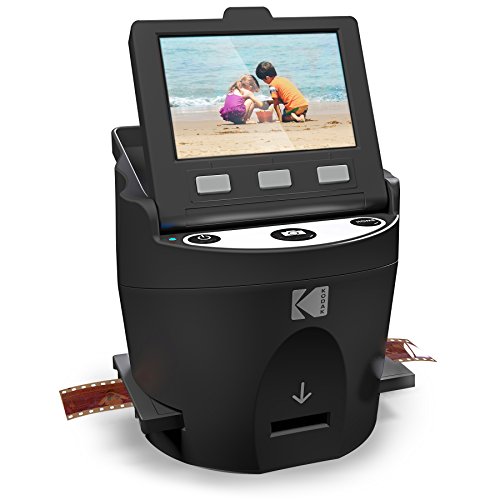
- Built-in 3.5-inch LCD for stand-alone viewing.
- Handles 35mm, 126, 110, Super 8, and 8mm formats.
- Includes adapters, cables, and a cleaning brush.
Best For: Users who want a standalone scanner with broad format support
Toy-Like Portable Scanner

- Collapsible cardboard design stores and travels easily.
- Uses a smartphone plus free Android app for scanning.
- Supports 35mm negatives and color slides.
Best For: Casual experimenting and very low-cost smartphone scanning
Best All-in-One Pick
22MP Film & Slide Scanner with 5-inch LCD

- Handles multiple film and slide formats
- 5-inch LCD for preview and playback
- One-touch scanning with HDMI and USB support
Best For: Households digitizing mixed film collections with minimal setup
Fastest High-Res Option
Magnasonic FS71 24MP Film Scanner with 5-inch Display

- Up to 24MP JPEG output
- Scans and saves without a computer
- Fast-loading trays for quick operation
Best For: Users who want fast, computer-free digitizing with a bigger screen
Most Portable Choice
BEONEGLOBAL ClearScan MINI 16MP Slide & Film Scanner

- Compact and lightweight for easy carrying
- 16MP scans with onboard editing tools
- Supports 35mm/135 and 126 film and slides
Best For: People who need a small scanner for occasional use on the go
Compact 35mm Slide Saver – TCNEWCL Foldable Smartphone Scanner
If you want one of the most portable film scanners for quickly digitizing 35mm slides and negatives, this TCNEWCL model keeps things simple. It folds into a small box, uses a built-in LED backlight, and turns your smartphone into the capture device, so it is a practical pick for casual home archiving or travel use.
Best For: Smartphone users who want a compact, low-cost way to scan 35mm slides and negatives.
Pros:
- Foldable design stores small and is easy to carry while traveling.
- Works with 35mm slides and film negatives.
- Built-in LED backlight makes the scanning setup straightforward.
- Free app support helps with capture, rotation, filtering, and sharing.
Cons:
- Final image quality depends on your phone camera resolution.
- Only supports a basic smartphone-based scanning workflow.
This is a good fit if portability matters more than standalone features. It is best viewed as an easy entry point for reviving old memories without investing in a larger dedicated scanner.
Standalone Home Archive Scanner – KODAK Slide N Scan with 5-inch LCD
This KODAK Slide N Scan is one of the more capable portable film scanners if you want a standalone desktop-style workflow. Its 5-inch LCD, easy-load trays, and built-in editing controls make it a solid choice for converting supported negatives and slides without relying on a computer during scanning.
Best For: Users who want a standalone scanner with a large screen and simple built-in editing.
Pros:
- 5-inch LCD display makes previewing and editing easy.
- Supports 135, 110, and 126 film plus 50mm slides.
- Quick-feeding tray technology helps speed up scanning.
- Saves directly to SD card and includes useful accessories like holders and cables.
Cons:
- SD card is not included.
- Bulkier than foldable smartphone-style scanners.
If you want a more self-contained option for family photo projects, this model offers a good balance of ease and versatility. It is especially appealing for users who prefer a screen-based scanner over phone-dependent setups.
Travel-Friendly Slide Digitizer – DigitConvert Battery-Powered Scanner
Among portable film scanners, the DigitConvert model stands out for a folded, backpack-friendly design and battery-powered operation. It is built for quick scanning of 35mm slides and negatives with a smartphone, making it a practical option if you want a compact digitizing tool you can use almost anywhere.
Best For: Travelers and casual home users who want a compact battery-powered smartphone scanner.
Pros:
- Foldable design makes it easy to pack and store.
- Runs on 2 AA batteries, which are included.
- Stable phone clamp and sliding rail help with alignment.
- Supports 35mm slides and color or black-and-white negatives.
Cons:
- Scanning still depends on your smartphone camera and app workflow.
- Best results require careful phone alignment and autofocus use.
This is a strong pick if you want portability plus a steadier phone-mount setup than basic foldable converters. It is aimed at quick, simple digitizing rather than advanced standalone scanning.
All-in-One Memory Converter – DigitPro 5-inch All-in-One Scanner
If you need portable film scanners that can handle more than just slides, this DigitPro unit is a flexible all-in-one option. It digitizes 35mm slides, 135 and 110 negatives, printed photos, and even business cards, while the built-in 5-inch HD screen and one-touch controls keep the process straightforward.
Best For: Families who want a versatile standalone scanner for film, photos, and documents.
Pros:
- Converts slides, negatives, printed photos, and business cards.
- 5-inch HD screen supports previewing and editing on-device.
- No computer, apps, or drivers are needed for scanning.
- Includes an SD card, holders, trays, cleaning brush, adapter, and USB cable.
Cons:
- Heavier than simple foldable smartphone-based scanners.
- Uses a more desktop-like footprint than ultra-compact models.
This is a good choice if versatility matters more than minimal size. It makes sense for users who want a self-contained archive tool that covers multiple media types in one box.
Budget Portable Slide Scanning – DigitConvert 35mm Mobile Film and Slide Scanner
If you want a simple, portable film scanner for turning old 35mm slides and 135 negatives into JPEGs, this DigitConvert model focuses on convenience first. It uses your smartphone for capture, folds into a compact box for storage or travel, and works with a free recommended app or third-party options like SlideScan and FilmBox.
Best For: Casual family archiving, travel-friendly scanning, and smartphone-based digitizing on a budget.
Pros:
- Folds into a compact, backpack-friendly design for easy storage and travel.
- Supports 35mm slides plus color and black-and-white 135 film negatives.
- Includes a built-in LED backlight and runs on 2 AA batteries.
- Works with the recommended free app and compatible third-party scanning apps.
Cons:
- Final image quality depends on your phone camera resolution.
- Requires careful phone alignment for the sharpest results.
- Best suited to simple scanning rather than advanced standalone workflows.
This is a practical pick if portability and low-cost digitizing matter more than pro-level control. It is a straightforward way to preserve older slides and negatives without bulky equipment.
All-In-One Film Scanner – KODAK SCANZA Film & Slide Scanner
The KODAK SCANZA is a more self-contained option among portable film scanners, with a built-in 3.5-inch LCD and one-touch scanning to JPEG. It is designed to handle 35mm, 126, 110, Super 8, and 8mm film and slides, making it a flexible choice if you have several formats to convert.
Best For: Home users who want a standalone scanner with its own screen and broad film-format support.
Pros:
- Built-in 3.5-inch TFT LCD makes it easy to view scans without a computer.
- Supports multiple formats, including 35mm, 126, 110, Super 8, and 8mm.
- Includes film inserts, adapters, USB/HDMI/AC cables, and a cleaning brush.
- One-touch scan-and-save workflow keeps operation simple.
Cons:
- SD card is not included.
- Listed minimum system requirement is Windows 7 for computer use.
- Not intended for films outside the supported format list.
For buyers who want a more complete tabletop setup, this is the most versatile scanner in the group. Its built-in display and bundled accessories make it easier to manage a larger mix of old film and slide formats.
Toy-Like Portable Scanner – KODAK Mobile Film Scanner
If you are looking for one of the simplest portable film scanners for occasional use, the KODAK Mobile Film Scanner keeps the setup minimal. It uses a collapsible cardboard platform, a battery-powered LED backlight, and your smartphone to scan and save 35mm negatives and slides through a free Android app.
Best For: Light, low-cost experimenting with old film and slides using a smartphone.
Pros:
- Very compact, collapsing design for easy storage and travel.
- Works with 35mm color negatives, black-and-white negatives, and color slides.
- Includes a battery-powered LED backlight and smartphone scan platform.
- Free Android app supports scanning, editing, and sharing.
Cons:
- Cardboard construction is lightweight rather than heavy-duty.
- Image quality depends on slide condition and smartphone camera quality.
- Best described as a simple, affordable tool rather than a full conversion device.
This model makes sense if you want a fun, ultra-basic way to revisit old film without investing in a larger scanner. It is compact and easy to use, but it is best approached as a casual scanning solution.
Best All-in-One Pick – 22MP Film & Slide Scanner with 5-inch LCD
If you want portable film scanners that can handle a wide mix of old media, this model is built for straightforward home digitizing. It converts 35mm/135, 110, 126 negatives, 50mm slides, and Super 8 film, and it adds a 5-inch LCD so you can preview scans without needing a computer.
Best For: Families who want an easy all-in-one scanner for multiple film and slide formats.
Pros:
- Supports 35mm/135, 110, 126 negatives, 50mm slides, and Super 8 film
- 5-inch LCD provides instant preview and playback
- One-touch scanning keeps the process simple for beginners
- Includes HDMI and USB connections for TV viewing or computer transfer
Cons:
- Built-in memory is only 128MB, so external storage is likely needed
- SD card is not included
- Feature set is geared more toward convenience than advanced control
For a practical scan-and-save workflow, this scanner covers the essentials well and includes the accessories needed to get started. It is a strong fit if you want a simple way to preserve mixed-format memories at home.
Fastest High-Res Option – Magnasonic FS71 24MP Film Scanner with 5-inch Display
Among portable film scanners for home archiving, this Magnasonic model focuses on speed and convenience while still delivering higher-resolution output. It scans 35mm, 110, 126, and Super 8 film negatives, plus 135, 126, and 110 slides, then saves directly to an SD card without requiring a computer.
Best For: Buyers who want a fast, no-computer scanner with a large display and high-resolution output.
Pros:
- Produces up to 24MP digital JPEG files
- 5-inch LCD and HDMI output make viewing easy
- No computer needed for scanning or basic adjustments
- Fast-loading trays help keep scans under 5 seconds each
Cons:
- HDMI cable is not included
- SD card is not included
- Warranty is only 1 year
This is a sensible choice if you want quick batch scanning with minimal setup and simple onboard controls. Its combination of a large screen, high resolution, and SD-card workflow makes it well suited to home photo preservation.
Most Portable Choice – BEONEGLOBAL ClearScan MINI 16MP Slide & Film Scanner
If portability matters most, this compact option keeps film scanning simple and easy to move around. It converts 35mm/135 and 126 film and slides to digital photos, uses a 2.31-inch LCD, and saves directly to an SD card for a lightweight workflow.
Best For: Users who want a small, easy-to-carry film scanner for occasional digitizing.
Pros:
- Compact and lightweight design is easy to carry
- 16MP CMOS sensor captures detailed scans
- Front-facing buttons and onboard editing simplify use
- Saves directly to SD card for quick sharing and storage
Cons:
- 2.31-inch screen is smaller than full-size alternatives
- Does not support Super 8 film
- SD card is not included
This is a good fit if you want a small scanner for straightforward digitizing rather than a feature-heavy desktop unit. It offers the core tools needed to scan, adjust, and save memories without much hassle.
How We Picked the Best Portable Film Scanners
We focused on Portable Film Scanners that are practical for home use: simple controls, clear preview screens, broad format support, and a straightforward path from film to digital files. We also favored models that make batch scanning and on-device conversion less frustrating for beginners.
Quick Comparison
Most buyers will notice three major differences: screen size, supported film formats, and how the scanner saves images. Some Portable Film Scanners are built for 35mm negatives and slides only, while others add support for 110, 126, and even Super 8 or 8mm film. Larger displays can make framing easier, while app-based options may appeal if you prefer working from a phone.
Key Buying Factors for Portable Film Scanners
Supported Film Types
Check whether the scanner handles the film you actually own. If your archive includes only 35mm slides and negatives, a simpler model may be enough. If you have mixed family-format film, look for wider compatibility.
Resolution and Output Quality
Higher megapixel ratings can help preserve detail, but image quality also depends on the sensor, optics, and conversion software. For most casual archiving, a well-balanced scanner with reliable color and exposure handling matters more than headline specs alone.
Display and Ease of Use
A built-in LCD makes it easier to position film correctly and confirm exposure before saving. Larger screens are especially helpful if you are scanning a lot of slides or want a less tedious workflow.
Workflow and File Saving
Consider whether images save directly to an SD card, transfer through a computer, or rely on an app. The easiest Portable Film Scanners typically minimize setup and let you work without extra software.
Who Should Buy Which Portable Film Scanners?
If you want the simplest all-around option, choose a model with a larger screen and broad format support. If your collection is mainly 35mm, a compact scanner can save money while still covering the basics. If you plan to digitize a mixed archive, prioritize flexibility over size. And if ease of sharing matters most, an app-based or highly portable model may be the best fit.
In short, the right portable film scanner is the one that matches your film formats, your patience level, and how polished you want the final digital results to be.