Projectors can produce a surprisingly watchable image in a bright room—but only when the screen is designed to control competing light. The best projector screens with ambient light rejection direct more of the projector’s light toward viewers while reducing washout from windows, lamps, and ceiling fixtures.
This roundup includes fixed-frame, portable, motorized, floor-rising, standard-throw, and ultra-short-throw options. Use the buying guide below to match screen type, size, gain, installation method, and projector compatibility to your space.
Best 10 Projector Screens with Ambient Light Rejection Picks for 2026
Bright-Room Long-Throw Pick
Valerion 100-Inch Fresnel ALR Screen
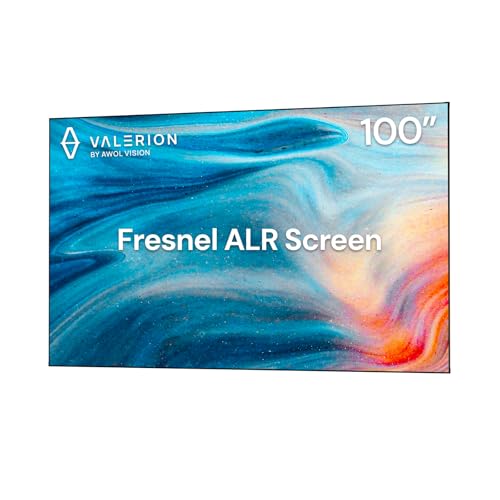
- Up to 85% overhead and side-light rejection
- 1.8 gain with 90-degree viewing angle
- Designed for long-throw, not UST, projectors
Best For: Bright-room home theaters using long-throw projectors
Portable Outdoor Favorite
TOWOND 150-Inch Screen With Stand

- 150-inch screen with 160-degree viewing angle
- Supports front and rear projection
- Folds into a carry bag and sets up without tools
Best For: Backyard cinema and portable large-screen viewing
UST Bright-Room Choice
NothingProjector 100-Inch PET Crystal ALR Screen

- Designed for ultra-short-throw projectors
- Claims up to 85% ambient-light rejection
- 160-degree viewing angle with 4K and 3D support
Best For: Fixed UST installations in bright rooms
Flexible ALR Value Pick
GAINVANE 100-Inch Portable Screen

- 100-inch 16:9 screen for indoor or outdoor use
- Designed to reduce ambient-light impact
- Hook, rope, and bag support flexible setup
Best For: General-purpose bright-room and portable viewing
Best Oversized UST Screen

- 132-inch seamless fixed-frame design
- 95% ambient ceiling-light rejection
- Supports 4K, 8K, HDR, and 3D
Best For: Large UST home theaters in bright rooms
Best Motorized Floor-Rising Screen
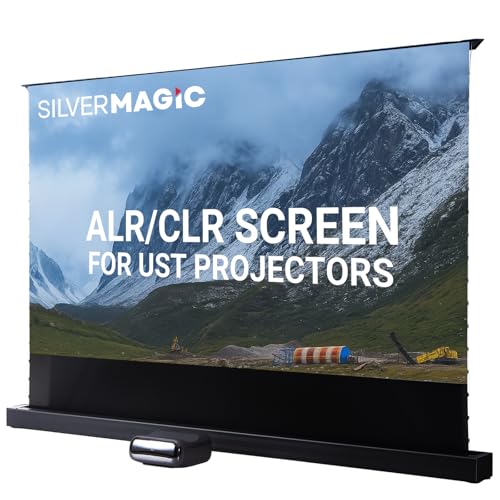
- Up to 95% ambient-light rejection
- USB-triggered automatic raising and lowering
- Supports 4K, 8K, and active 3D
Best For: Retractable UST setups in multipurpose rooms
Best DIY Standard-Throw Material

- 70% ambient-light rejection
- Up to 2.7x gain from center seats
- Trim-to-fit wall or frame installation
Best For: DIY standard-throw setups with centered seating
Best Portable ALR Screen
80-Inch VISULAPEX Screen with Stand

- Over 90% ambient-light rejection claim
- Two-minute tripod or wall-mounted setup
- Portable 16:9 design with adjustable height
Best For: Portable indoor and outdoor viewing
Best Motorized UST Option
NothingProjector 120-Inch Floor-Rising ALR Screen

- 95% ambient ceiling-light rejection claim
- Remote and app-controlled retractable operation
- Large 120-inch screen with 170° viewing angle
Best For: Large UST home-theater installations
Best Fixed-Frame UST Screen
Paris Rhône 100-Inch 4K ALR Screen

- 92% ambient-light rejection claim
- Slim fixed aluminum frame for wall mounting
- Designed for HD and 4K UST projectors
Best For: Permanent UST home-theater installations
Bright-Room Long-Throw Pick – Valerion 100-Inch Fresnel ALR Screen
If you need projector screens with ambient light rejection for a bright living room or daytime viewing, the Valerion 100-inch Fresnel screen is designed to reduce overhead and side light. Its 1.8 gain surface and long-throw compatibility prioritize a brighter, higher-contrast image, but it is not intended for ultra-short-throw projectors.
Best For: Home theaters using long-throw projectors in rooms with overhead or side lighting.
Pros:
- Claims up to 85% rejection of overhead and side ambient light.
- 1.8 gain and a 90-degree viewing angle support bright, detailed images.
- Supports premium 4K and 8K projection and has a scratch-resistant, easy-to-clean finish.
- Rollable design can simplify transport and DIY installation.
Cons:
- Not compatible with ultra-short-throw projectors.
- The 90-degree viewing angle is narrower than several portable alternatives.
- At 33 pounds, it is less convenient to move than lightweight portable screens.
This is a focused choice for a fixed home-cinema setup where brightness and daylight performance matter. Confirm projector throw distance and allow for its wall-mount installation before buying.
Portable Outdoor Favorite – TOWOND 150-Inch Screen With Stand
The TOWOND is a large, portable option for movie nights, presentations, and backyard viewing. While it is not described as a specialized ALR surface, its matte polyester screen supports front and rear projection and offers a wide viewing angle, making it a flexible alternative when portability matters more than dedicated ambient-light rejection.
Best For: Outdoor movie nights, family events, camping, and users who need a large screen with a stand.
Pros:
- Large 150-inch display with a 160-degree viewing angle.
- Supports both front and rear projection.
- Tool-free stand setup is designed to take about five minutes.
- Includes a carry bag and weighs 11.5 pounds for easier transport.
Cons:
- It is not presented as a dedicated ambient-light-rejecting screen.
- The 150-inch size requires an indoor room wider than 140 inches.
- A stand, ropes, and ground stakes may be less suitable for permanent installations.
Choose this model when a wide image and easy relocation are your priorities. For strong daylight performance, a purpose-built ALR screen may be a better fit.
UST Bright-Room Choice – NothingProjector 100-Inch PET Crystal ALR Screen
For ultra-short-throw setups, this NothingProjector model is one of the more specialized projector screens with ambient light rejection in the roundup. Its PET Crystal surface is designed to reject up to 85% of ambient light while maintaining a wide 160-degree viewing angle and a flat, wrinkle-free presentation.
Best For: Ultra-short-throw home theaters, classrooms, and offices that need a fixed 100-inch screen in bright conditions.
Pros:
- Designed specifically for ultra-short-throw projectors.
- Claims up to 85% ambient-light rejection for brighter-room viewing.
- Supports 4K UHD and 3D content with a 160-degree viewing angle.
- Fixed 10mm frame and wrinkle-free PET Crystal material support a neat installation.
Cons:
- Wall mounting makes it less portable than rollable or stand-based screens.
- Its UST specialization limits compatibility with other projector placements.
- The supplied dimensions are approximately 87 by 48 inches, so installation space should be measured carefully.
This is the clearest match for a UST projector in a bright room. Verify the projector’s recommended screen type and mounting geometry before installation to get the intended image alignment.
Flexible ALR Value Pick – GAINVANE 100-Inch Portable Screen
The GAINVANE 100-inch screen offers a flexible approach to projector screens with ambient light rejection. It is designed to reflect light away from the viewer in brighter rooms, while its hook-and-rope mounting options let you use it at home, in an office, or for travel and outdoor movie setups.
Best For: Buyers seeking a general-purpose 100-inch screen for living rooms, conferences, and occasional outdoor use.
Pros:
- Designed to reduce the impact of ambient light in well-lit spaces.
- 100-inch, 16:9 format supports movies, sports, games, and presentations.
- Can be hung with hooks or rope and stored in a bag.
- 160-degree viewing angle accommodates larger groups.
Cons:
- The supplied notes do not specify a quantified ambient-light-rejection percentage.
- It has a glossy finish, which may not suit viewers seeking a matte surface.
- The listed warranty is 90 days.
This screen makes sense when you want a portable, broadly compatible option rather than a dedicated fixed-frame cinema surface. Its flexible mounting is particularly useful for rooms and locations that change frequently.
Best Oversized UST Screen – 132-Inch Seamless ALR
For shoppers seeking projector screens with ambient light rejection for a bright-room ultra-short-throw setup, this 132-inch fixed-frame screen emphasizes scale, seamless presentation, and broad viewing coverage. Its ALR surface is designed to reject ambient light while supporting high-resolution and 3D content.
Best For: Large smart-home theaters using an ultra-short-throw projector and wall-mounted installation.
Pros:
- Oversized 132-inch seamless screen exceeds the common 120-inch size.
- 95% ambient ceiling-light rejection is designed for brighter rooms.
- Supports 4K, 8K, HDR, and active 3D content with a 170° viewing angle.
- Ultra-thin 0.4-inch bezel creates a nearly borderless appearance.
Cons:
- Designed specifically for ultra-short-throw projectors, limiting projector compatibility.
- Fixed wall-mount format requires substantial installation space.
This is a strong choice when maximum screen size and a clean, uninterrupted image matter more than portability. Verify your wall dimensions and UST projector alignment before purchasing.
Best Motorized Floor-Rising Screen – 120-Inch UST ALR
This motorized floor-rising option is among the more convenient projector screens with ambient light rejection for a living room, bedroom, office, or other multipurpose space. Its optical surface is designed to reject up to 95% of ambient light, while USB synchronization can automate raising and lowering with a compatible projector.
Best For: UST projector owners who want a retractable 120-inch screen with automated operation.
Pros:
- Micro-structured surface rejects up to 95% of ambient light.
- Motorized floor-rising design avoids permanent wall mounting.
- USB trigger can synchronize screen movement with projector power.
- Supports 4K, 8K, and active 3D content with a wide viewing angle.
Cons:
- Intended for UST projectors rather than standard-throw models.
- USB synchronization depends on projector compatibility.
- Floor-mounted housing requires available floor space.
Choose this model if concealment and hands-off operation are priorities. Its retractable design suits shared rooms, but measure the floor area and confirm your projector supports the synchronization setup.
Best DIY Standard-Throw Material – 120-Inch High-Gain ALR
For standard-throw projector owners comparing projector screens with ambient light rejection, this gray material offers a customizable wall- or frame-mounted approach. It is designed to suppress 70% of ambient light and deliver up to 2.7x center-seat gain, though brightness falls off from wider seating positions.
Best For: DIY installations using a standard-throw projector, especially when viewers sit near the center.
Pros:
- 70% ambient-light rejection can improve contrast in daytime or lit rooms.
- Up to 2.7x gain boosts brightness from center seating positions.
- Can be trimmed and installed on a wall or DIY frame.
- Included installation materials support a quick setup.
Cons:
- Not suitable for ultra-short-throw projectors.
- Narrow 30° viewing angle can make off-center seating appear darker.
- Brightness may drop below a normal gray screen for farther seats.
This material is a practical fit for budget-conscious DIY builders who can control seating placement. Its center-focused brightness makes projector throw distance and room layout especially important.
Best Portable ALR Screen – 80-Inch VISULAPEX Screen with Stand
If you need projector screens with ambient light rejection that can move between rooms or outdoor spaces, this 80-inch VISULAPEX model is a practical option. Its 1.5-gain gray PVC surface is designed to reject over 90% of ambient light, while the black backing helps limit light transmission and reflection.
Best For: Portable indoor and outdoor movie nights, presentations, camping, and buyers who want tripod or wall-mount flexibility.
Pros:
- Claims over 90% ambient-light rejection with a 1.5-gain surface.
- Sets up in about two minutes and supports tripod or wall mounting.
- Adjustable height, included carry bag, and a sturdy braced tripod design.
- 80-inch 16:9 screen with a stated 160-degree viewing angle.
Cons:
- The indoor setup requires a space wider than 70 inches and taller than 89 inches.
- Its portable tripod format is less streamlined than a fixed-frame installation.
Choose this screen when portability and setup flexibility matter as much as daytime image performance. The lightweight design and adjustable height make it especially versatile, though its tripod footprint should be considered before indoor use.
Best Motorized UST Option – NothingProjector 120-Inch Floor-Rising ALR Screen
For a large home-theater setup using an ultra-short-throw projector, this 120-inch NothingProjector screen combines ambient light rejection with automated operation. Its ST Carbon Black surface is designed for bright rooms and 4K projectors, while the floor-rising design avoids permanent wall mounting.
Best For: UST projector owners who want a large retractable screen, remote or app control, and a wide viewing area.
Pros:
- Designed to reject ambient ceiling light, with a stated 95% rejection rating.
- Motorized floor-rising operation with remote and app controls.
- 120-inch 16:9 screen with a 170-degree viewing angle.
- ST Carbon Black surface supports stated 4K/8K UHD and active 3D use.
Cons:
- Its 120-inch size requires substantial floor and viewing distance.
- The micro-perforated surface may involve some light loss, according to the product notes.
- The listed operation mode is manual despite the electric retractable design details.
This is the most feature-rich choice of the three for a dedicated UST setup, particularly if convenient automated raising and retracting are priorities. Confirm available floor space and projector compatibility before buying.
Best Fixed-Frame UST Screen – Paris Rhône 100-Inch 4K ALR Screen
This Paris Rhône fixed-frame model is built for ultra-short-throw projectors in rooms with low ambient lighting. Its black-grid ALR material is engineered to reject 92% of ambient light, while the slim aluminum frame provides a permanent, theater-style presentation.
Best For: Wall-mounted UST home theaters, classrooms, conference rooms, and buyers who prefer a fixed, wrinkle-free screen.
Pros:
- Black-grid ALR material claims 92% ambient-light rejection.
- 100-inch 16:9 format is tailored to HD and 4K UST content.
- Ultra-slim 0.4-inch aluminum frame and stated 160-degree viewing angle.
- Includes an installation kit and detailed instructions.
Cons:
- It is intended for wall mounting rather than portable use.
- The product notes recommend installation by at least two people.
- It is specified for low ambient room lighting, so it may not suit very bright spaces.
If you want a clean, permanent UST installation, this fixed-frame screen offers a more dedicated theater look than portable alternatives. Its low-light-room guidance and two-person installation recommendation are important planning considerations.
How We Picked These Projector Screens with Ambient Light Rejection
We selected screens across the main home-theater and portable categories, prioritizing stated ambient-light-rejection performance, projector compatibility, image format, installation flexibility, and advertised resolution support. The list includes options for ultra-short-throw (UST) projectors as well as standard-throw models, because their screen surfaces use different light-rejection patterns and are not automatically interchangeable.
We also considered practical details such as frame construction, motorized or manual operation, portability, screen size, front or rear projection support, and suitability for indoor or outdoor use. Manufacturer claims such as gain, 4K/8K support, and rejection percentages should be treated as specifications to verify against your projector and room—not as guarantees of identical real-world performance.
Quick Comparison
| Best for | Screen styles to consider | What to prioritize |
|---|---|---|
| Bright living rooms | Fixed-frame or motorized ALR | Directional rejection, accurate gain, rigid tension |
| UST projectors | UST ALR/CLR floor-rising or fixed-frame | UST compatibility and ceiling-light rejection |
| Portable movie nights | Stand-mounted or foldable screens | Fast setup, stability, storage, and viewing angle |
| Outdoor use | Portable front/rear projection screens | Wind resistance, carry case, washable material |
| DIY installations | ALR screen material | Correct throw type, tensioning, and frame design |
Key Buying Factors for Projector Screens with Ambient Light Rejection
Projector Compatibility
Match the screen to the projector’s throw distance. UST screens are engineered for the steep projection angle produced by ultra-short-throw models. A standard-throw ALR surface may create hotspots, uneven brightness, or poor rejection when paired with a UST projector.
Light Direction and Room Layout
ALR screens are directional. Some reject light from the sides, while CLR-oriented surfaces focus on light coming from above. Identify your main sources of ambient light before choosing a screen, and remember that direct sunlight can overwhelm even a high-performing surface.
Gain, Viewing Angle, and Image Uniformity
Higher gain can make an image appear brighter, but it may narrow the viewing cone or increase hotspot risk. If several people sit off-center, prioritize a wider viewing angle and uniformity over the highest advertised gain.
Size, Aspect Ratio, and Installation
A 16:9 screen suits most movies, streaming content, and gaming. Measure wall width, ceiling height, seating distance, and projector placement before selecting 100, 120, 132, or 150 inches. Fixed frames typically provide the flattest surface, while portable and rising screens trade some rigidity for convenience.
Build Quality and Everyday Use
Check frame tension, motor noise, remote controls, mounting hardware, seams, edge masking, and warranty coverage. For portable screens, inspect the stand’s footprint and the included carrying solution. For outdoor use, plan for wind protection and avoid leaving the material exposed to moisture.
Who Should Buy Which Projector Screens with Ambient Light Rejection?
Choose a fixed-frame ALR screen if you want the most stable image and have a dedicated wall. A motorized or floor-rising model is better when you need to hide the screen between uses. UST projector owners should select a purpose-built UST ALR or CLR screen, especially in rooms with overhead lighting. Portable stand screens fit renters, occasional movie nights, and outdoor viewing, while DIY material makes sense for users who can build and tension a custom frame.
Finally, select screen size based on seating distance and projector brightness rather than choosing the largest option automatically. A properly matched, well-tensioned screen will usually look better than a larger screen that exceeds the projector’s usable brightness or the room’s viewing geometry.