The right projector screen can make a bigger difference than upgrading the projector alone. Screen size, aspect ratio, gain, setup style, and portability all affect how bright, sharp, and convenient your movies or presentations look.
We selected 10 projector screens covering fixed indoor setups, pull-down designs, portable stands, large outdoor formats, and inflatable movie screens. Use the guide below to narrow the options by room, viewing distance, and intended use.
Best 10 Projector Screens Picks for 2026
Best Manual Home Theater Screen
Elite Screens Manual B 100-Inch

- 100-inch 16:9 display
- 4K, 8K, 3D, and HDR-ready surface
- Auto-lock height adjustment
Best For: Permanent home theaters and presentation rooms
Best Inflatable Outdoor Screen
XHYCPY 16-Foot Inflatable Movie Screen

- 16-foot outdoor display
- Front and rear projection
- Blower, stakes, and carry bag included
Best For: Backyard movies and large outdoor parties
Best Value Pull-Down Screen
VIVOHOME 100-Inch Manual Screen
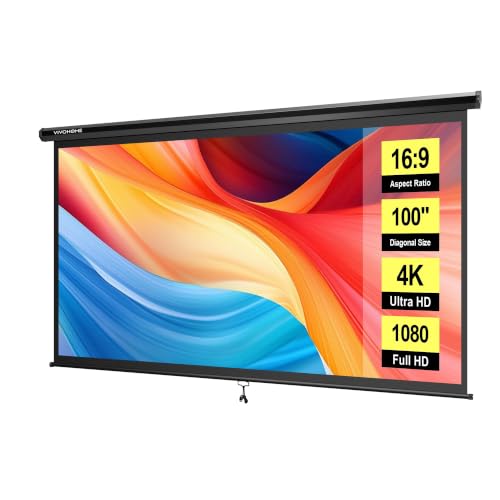
- 100-inch 16:9 display
- Self-locking height adjustment
- Waterproof PVC viewing surface
Best For: Home, classroom, and meeting-room use
Best Portable Tripod Screen
PARIS RHÔNE 80-Inch Outdoor Screen

- Foldable 80-inch PVC screen
- Adjustable 64–85-inch tripod
- Carry bag and ground nails included
Best For: Portable indoor and outdoor movie setups
Best Large Foldable Screen
150-Inch Mdbebbron Projector Screen
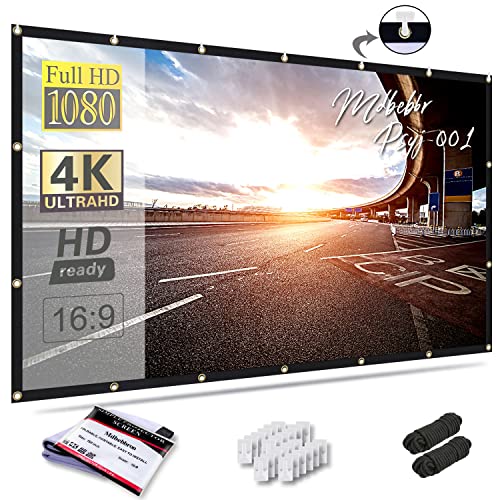
- 150-inch 16:9 viewing area
- Foldable and washable polyester material
- Front and rear projection support
Best For: Large movie nights and portable presentations
Best Freestanding Outdoor Screen
STWUI 120-Inch Projector Screen

- 120-inch 16:9 freestanding design
- Weighted chassis for added stability
- Carry bag and tool-free assembly
Best For: Outdoor movie nights and portable events
Best Quick-Setup Tripod Screen
excelimage 80-Inch Tripod Projector Screen
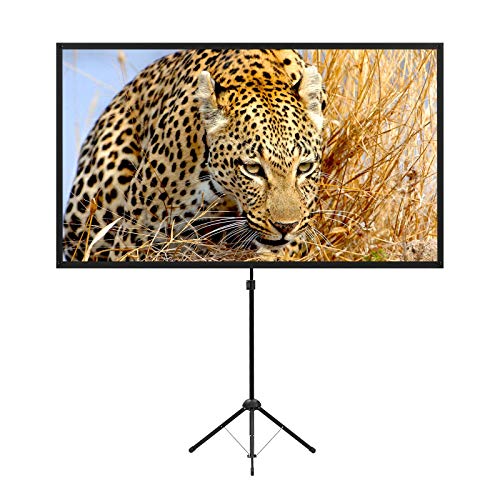
- 80-inch 16:9 projection surface
- Adjustable tripod with tensioned tubes
- Sets up in about two minutes
Best For: Compact home cinema and classroom use
Best Budget Pick
Lejiada 100-Inch Foldable Screen
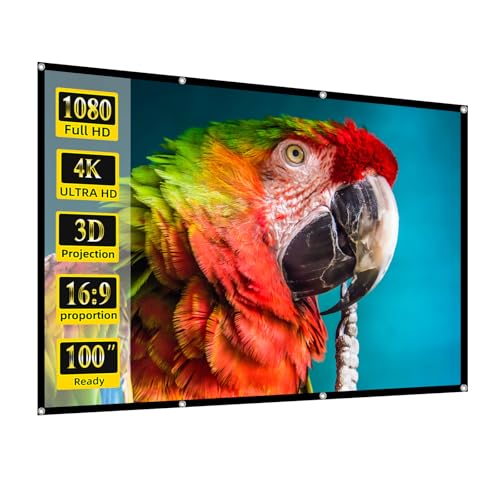
- Lightweight 16:9 polyester design
- Includes basic mounting accessories
- Best in dark environments
Best For: Casual movie nights, camping, and temporary setups
Best for Large Outdoor Viewing
TOWOND 150-Inch Screen with Stand

- Large 150-inch projection surface
- Front and rear projection support
- Tool-free setup with carry bag
Best For: Backyard cinema and spacious event setups
Best Manual Home Theater Screen – Elite Screens Manual B 100-Inch
If you want a permanent indoor setup, this 100-inch Elite Screens model is one of the more feature-rich projector screens in the group. Its 16:9 MaxWhite 2 surface supports 4K, 8K, 3D, and HDR-ready projection, while the manual pull-down design lets you choose among multiple viewing heights.
Best For: Home theaters, offices, and presentation rooms that need a large wall- or ceiling-mounted screen.
Pros:
- 100-inch diagonal display with a 16:9 aspect ratio.
- 1.1-gain MaxWhite 2 material and a 180-degree viewing angle.
- Two-inch interval auto-lock mechanism allows flexible height settings.
- Greenguard and Greenguard Gold certified, with a two-year parts-and-labor warranty.
Cons:
- Manual operation is less convenient than a motorized screen.
- Its roughly 93.5-inch-wide case requires substantial mounting space.
This is a strong choice when image compatibility and dependable fixed mounting matter more than portability. Check the available wall or ceiling area carefully before buying.
Best Inflatable Outdoor Screen – XHYCPY 16-Foot Inflatable Movie Screen
For large backyard gatherings, this 16-foot inflatable option gives you projector screens flexibility that fixed indoor models cannot. It supports both front and rear projection, includes the blower and anchoring accessories, and packs into a carry bag for events away from home.
Best For: Backyard movie nights, parties, camping trips, and other large outdoor events.
Pros:
- Large 16-foot screen with a 16:9 ratio and 160-degree viewing angle.
- Supports both front and rear projection.
- Included 110V, 180W blower inflates the screen in about two minutes.
- Removable, machine-washable screen and included carry bag simplify maintenance and storage.
Cons:
- The blower must remain powered throughout the viewing session.
- Outdoor setup requires tethers and yard stakes for stability.
- The listed manufacturer warranty is only 90 days.
This screen is designed for maximum outdoor viewing area and setup flexibility. Plan for access to a 110V outlet and enough open space for the inflatable frame and tie-downs.
Best Value Pull-Down Screen – VIVOHOME 100-Inch Manual Screen
This VIVOHOME model is a practical pick among projector screens for rooms that need a straightforward wall- or ceiling-mounted display. The 100-inch 16:9 screen uses a manual self-locking pull-down mechanism and a matte surface designed for wide, uniform viewing.
Best For: Home theaters, classrooms, meeting rooms, gaming spaces, and karaoke rooms.
Pros:
- 100-inch diagonal viewing area with an 87-by-49-inch image surface.
- Self-locking mechanism holds the screen at different heights.
- Supports 3D, 1080p, 4K, 8K, and Full HD sources.
- Three-layer waterproof PVC fabric and a protective metal casing support durability.
Cons:
- Screws and L-brackets are not included.
- Manual pull-down operation requires physical adjustment.
- A slight odor may be noticeable when first unpacked.
Its broad compatibility and wipe-clean PVC surface make it a versatile everyday screen. Measure for the approximately 92-inch-wide overall housing and arrange suitable mounting hardware separately.
Best Portable Tripod Screen – PARIS RHÔNE 80-Inch Outdoor Screen
If you need projector screens that can move between rooms and outdoor spaces, this PARIS RHÔNE model combines a foldable PVC surface with an adjustable tripod. The included carry bag, support rods, and ground nails make it suited to both indoor viewing and backyard movie nights.
Best For: Portable home theaters, outdoor movies, classrooms, and flexible room-to-room setups.
Pros:
- Portable 80-inch screen with a 160-degree viewing angle.
- Cinema-grade 1.5-gain PVC material is designed for bright, color-accurate projection.
- Height-adjustable aluminum tripod ranges from 64 to 85 inches.
- Includes carry bag, three ground nails, and four support rods.
Cons:
- The 80-inch size provides less viewing area than the 100-inch alternatives.
- Tripod and screen setup still requires assembly before use.
- The product information lists a 12-month warranty.
This is a convenient choice when portability matters more than maximum screen size. Its included outdoor anchoring hardware adds useful stability for backyard setups, while the tripod can be moved indoors when needed.
Best Large Foldable Screen – 150-Inch Mdbebbron Projector Screen
For shoppers comparing projector screens for a large home theater or flexible presentation setup, the Mdbebbron offers a spacious 150-inch, 16:9 viewing area without a heavy frame. Its lightweight, foldable polyester design is easy to store, while front and rear projection support adds placement flexibility.
Best For: Large indoor or outdoor movie setups, offices, classrooms, and buyers who need a screen that packs into a backpack or suitcase.
Pros:
- Large 130-by-73-inch viewing area with a 150-inch diagonal
- Foldable, lightweight, washable polyester material designed to resist creasing
- Supports front and rear projection with a 160-degree viewing angle
- Can be attached using hooks, ropes, nails, brackets, or double-sided tape
Cons:
- Requires a separate wall, support, or mounting method
- Manual setup may take longer than a freestanding screen
The Mdbebbron is a practical choice when image size and portability matter more than having an integrated stand. Its double-sided projection capability makes it especially adaptable, but you will need to supply a suitable mounting surface or support system.
Best Freestanding Outdoor Screen – STWUI 120-Inch Projector Screen
Among portable projector screens, the STWUI stands out for buyers who want a freestanding setup for outdoor movie nights. It combines a 120-inch, 16:9 wrinkle-free milk silk screen with a reinforced metal stand, carry bag, and support features intended to improve stability.
Best For: Backyard movies, camping, courtyards, schools, offices, weddings, and other indoor or outdoor events where a floor-mounted screen is useful.
Pros:
- Freestanding 120-inch screen with a 16:9 format
- Supports front and rear projection with a 160-degree viewing angle
- Weighted and lengthened chassis is designed for improved stability
- Folds into the included carry bag and assembles without tools
Cons:
- At 5 pounds, it is less lightweight than a simple fabric-only screen
- Outdoor stability may still require the included or additional ground nails
- Listed warranty period is 30 days
The STWUI is a strong fit if you prefer a complete floor-standing system instead of attaching a screen to a wall. Its improved chassis and included storage bag add convenience, though buyers should plan for careful anchoring outdoors.
Best Quick-Setup Tripod Screen – excelimage 80-Inch Tripod Projector Screen
For smaller rooms and quick outdoor viewing, this excelimage model is one of the more compact projector screens in the group. Its 80-inch, 16:9 surface uses four tensioned tubes to stay flat, while the adjustable tripod and included bag support fast setup and transport.
Best For: Home cinema, classrooms, living rooms, gardens, and buyers who prioritize a two-minute setup with a freestanding tripod.
Pros:
- Compact 80-inch 16:9 screen suitable for many indoor and outdoor venues
- Tripod and tensioned aluminum tubes help maintain a stable, flat surface
- Designed to assemble or disassemble in about two minutes
- Includes a carrying bag and has a two-year manufacturer warranty
Cons:
- Smaller viewing area than the 120-inch and 150-inch alternatives
- At 8.5 pounds, it may not be the lightest option for travel
- Tripod footprints can require more floor space than a wall-mounted screen
The excelimage is a sensible pick for buyers who want a reliable, self-supporting screen without the size of a large outdoor display. Its quick assembly and adjustable tripod make it convenient for repeated use in different locations.
Best Budget Pick – Lejiada 100-Inch Foldable Screen
If you need portable projector screens for occasional movie nights, camping, or backyard gatherings, this lightweight 100-inch Lejiada model keeps setup simple and costs down. Its foldable polyester design packs compactly, though it performs best in a completely dark room or against a solid, opaque wall.
Best For: Budget-conscious buyers who need a temporary indoor or outdoor screen without a stand.
Pros:
- Lightweight, foldable design fits easily in a backpack.
- 100-inch, 16:9 format with a 160-degree viewing angle.
- Includes ropes, hooks, and double-sided tape for flexible mounting.
- Useful for casual family gatherings, camping, and backyard viewing.
Cons:
- Thin material is not intended for professional home theater use.
- Creases may appear because the screen ships folded.
- Stand, bracket, and carry bag are not included.
This is a practical entry-level choice when portability and value matter more than a perfectly smooth, premium presentation. Stretching it tightly for several days can help reduce shipping wrinkles.
Best for Large Outdoor Viewing – TOWOND 150-Inch Screen with Stand
Among large projector screens, this TOWOND model stands out for outdoor cinema setups that need a freestanding display. The 150-inch screen supports front and rear projection, includes a foldable stand and carry bag, and can be assembled without tools in about five minutes.
Best For: Backyard theaters, family events, and large outdoor gatherings with ample setup space.
Pros:
- Large 150-inch screen with a 160-degree viewing angle.
- Supports both front and rear projection.
- Tool-free foldable stand sets up and breaks down quickly.
- Includes ground nails, ropes, brackets, storage bag, and crossbars.
Cons:
- At 11.5 pounds, it is less lightweight than smaller portable screens.
- Requires substantial space; indoor rooms should be wider than 140 inches.
- No warranty is listed in the supplied specifications.
Choose this model when screen size is the priority and you have room to accommodate its broad footprint. Its included support hardware makes it more complete for outdoor use than a screen-only design.
Best Portable Stand Setup – TOWOND 100-Inch Tripod Screen
For portable projector screens with their own support system, this 100-inch TOWOND model combines a tripod, detachable crossbar, and carry bag in a relatively manageable package. The thicker polyester screen is washable and supports front or rear projection, while included sandbags, ropes, and stakes help improve stability outdoors.
Best For: Buyers who want a reusable 100-inch screen with a freestanding tripod for indoor and outdoor use.
Pros:
- 100-inch, 16:9 matte screen with a 160-degree viewing angle.
- Supports front and rear projection.
- Tool-free tripod and detachable crossbar assembly.
- Includes carry bag, sandbag, ground nails, and windproof ropes.
Cons:
- Requires careful leg locking and even fastening for stability.
- Outdoor use needs sandbags, ropes, and ground stakes, especially in wind.
- No warranty is listed in the supplied specifications.
This is a balanced option for users who want more structure than a hanging screen without moving up to a very large format. Follow the setup guidance and add the included stabilizing accessories for a steadier outdoor installation.
How We Picked These Projector Screens
We compared the selected screens by size, 16:9 compatibility, installation method, portability, stated image support, and suitability for indoor or outdoor use. We also considered practical details such as wrinkle resistance, included stands or blowers, storage bags, front and rear projection, and how much setup each design typically requires.
Because projector performance depends heavily on room lighting and placement, no single screen is ideal for every buyer. A compact pull-down model may be best for a dedicated room, while a freestanding or inflatable screen is generally more useful outside.
Quick Comparison
| Screen type | Best for | Main advantage | Potential trade-off |
|---|---|---|---|
| Manual pull-down | Home theaters and offices | Clean, permanent installation | Less convenient to move |
| Portable stand | Indoor and outdoor viewing | Flexible placement and easy storage | Needs a stable, level surface |
| Foldable fabric | Travel, parties, and large groups | Large image in a packable format | May require tensioning to reduce creases |
| Inflatable | Backyard movie nights | Very large viewing area and quick setup | Requires power and suitable outdoor space |
Key Buying Factors for Projector Screens
Size and Viewing Distance
A larger screen is not automatically better. Match the diagonal size to your projector’s throw distance and the audience’s seating position. An 80- to 100-inch screen is often practical for smaller rooms, while 120- to 150-inch models suit larger spaces and outdoor gatherings.
Aspect Ratio and Image Quality
Most movies and modern projectors use a 16:9 aspect ratio, so these screens are a sensible default for streaming and home theater. Terms such as 4K, 8K, HDR, or HD describe compatibility or intended use; the projector, source content, viewing distance, and screen material still determine perceived detail.
Gain, Color, and Lighting
Screen gain affects how much light is reflected toward viewers. In a dark room, a neutral or moderate-gain white surface can provide balanced viewing angles. For outdoor use or rooms with ambient light, prioritize a bright projector and a screen surface designed to preserve contrast rather than relying on the screen specification alone.
Installation and Portability
Pull-down screens work well when you can mount them securely and want a tidy setup. Stand-mounted and foldable screens are better for renters, multipurpose rooms, and occasional events. Check the packed dimensions, included hardware, carrying case, and setup instructions before buying.
Front or Rear Projection
Front projection is the most common arrangement, but rear-projection support can help when viewers need to avoid blocking the image or when the projector must sit behind the screen. Confirm that the screen remains opaque enough for your planned lighting and placement.
Who Should Buy Which Projector Screens?
For a Dedicated Home Theater
Choose a manual pull-down screen in a size that fits your wall and seating distance. It offers a clean appearance and avoids repeatedly assembling a portable frame.
For Backyard Movie Nights
Look for a stand-mounted, foldable, or inflatable screen with a carry bag and secure support. Inflatable designs are especially suitable for very large audiences, provided you have nearby power and can anchor the setup safely.
For Renters and Frequent Travelers
A lightweight portable screen with a stand is usually the most flexible choice. Favor quick assembly, compact storage, wrinkle-resistant material, and a stable frame over maximum diagonal size.
For Offices and Presentations
A pull-down screen or moderate-size portable model is generally easier to position and view than an oversized outdoor screen. Prioritize a clear 16:9 surface, dependable mounting or stand stability, and a size appropriate for the room.