Resin 3D printing can be a powerful classroom tool for design, engineering, science, and art programs. The best options for schools balance print quality, ease of use, safety, and manageable maintenance.
This roundup focuses on resin printers for schools, plus the wash, cure, and resin supplies that help educators build a smoother, more predictable workflow.
Best 10 Resin Printers for Schools Picks for 2026
Auto-Leveling Classroom Starter
ELEGOO Mars 5 Resin 3D Printer
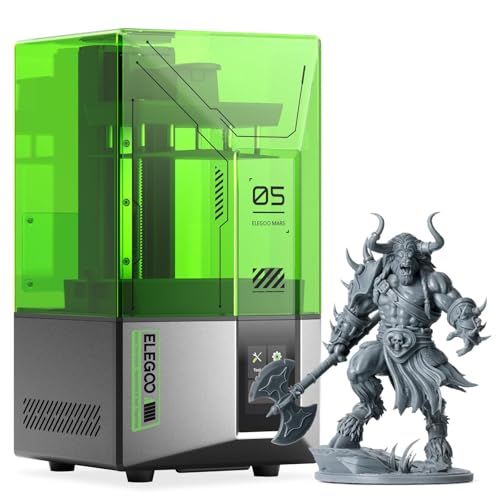
- One-click automatic leveling
- Self-check and safety alerts
- 4K mono LCD detail
Best For: School labs needing a simple, low-hassle resin printer
Post-Print Cleanup Station
Creality UW-01 Wash and Cure Station

- All-in-one washing and curing
- 360° rotating curing tray
- Large washing container
Best For: Schools needing a shared resin post-processing station
High-Detail Student Project Printer

- 7-inch 10K mono LCD
- Uniform LighTurbo light source
- Resume printing after outages
Best For: Schools prioritizing fine-detail prints and easy startup
Safe Shared Finishing Hub
ELEGOO Mercury Plus 2.0 Wash and Cure
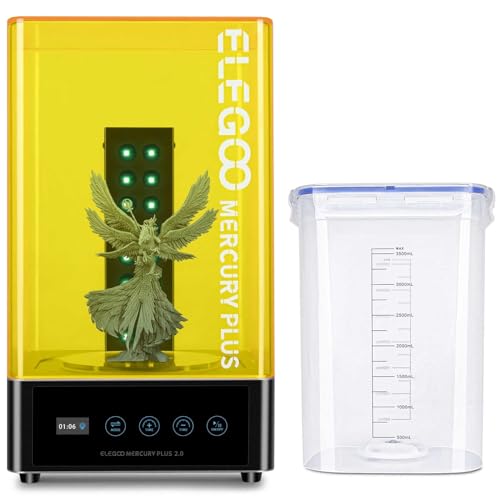
- Sealed washing design
- Anti-UV lid protection
- Flexible wash modes
Best For: Shared school labs needing safer resin post-processing
Classroom-Ready Dual-Material Detail
ANYCUBIC Photon P1 Dual-Color Resin 3D Printer

- Dual-color/-material printing for more creative projects
- Factory-calibrated auto-leveling with pressure feedback
- AI monitoring checks plate, resin level, and vat residue
Best For: schools that want creative dual-material printing with low-maintenance operation
High-Resolution Multi-Surface Output
RAINBOWDGT A3 UV Printer for Stickers and Labels

- 5760x2880 DPI output for detailed prints
- Includes a Windows laptop with drivers pre-installed
- Vacuum platform helps prevent shifting or misalignment
Best For: school labs or clubs focused on custom stickers, labels, and mixed-surface UV printing
Compact Beginner Resin Pick
MALYAN S100 Mini Resin 3D Printer

- One-click calibration and auto leveling
- 5.5-inch 2K LCD for high-detail prints
- Compact, lightweight design for small classrooms
Best For: beginner-friendly school use where simplicity, compact size, and quick setup matter most
School Lab Pick
Siraya Tech Fast ABS-Like Gray Resin

- Fast curing supports quicker classroom turnaround.
- Low odor and easy cleaning suit shared labs.
- ABS-like toughness helps prints handle student use.
Best For: School makerspaces needing a durable, easy-to-manage resin.
High-Detail Classroom Choice

- Low shrinkage supports accurate classroom models.
- Quick curing and fluidity help speed prints.
- Works with all DLP/LCD printers.
Best For: Schools that need detailed prints and wide printer compatibility.
Budget-Friendly Classroom Resin
SUNLU Standard Gray Resin Plus

- Affordable option with strong value for schools.
- Broad LCD, DLP, and SLA compatibility.
- Easy cleaning and low shrinkage simplify use.
Best For: Budget-minded classrooms needing an easy-to-use, compatible resin.
Auto-Leveling Classroom Starter – ELEGOO Mars 5 Resin 3D Printer
If you’re comparing resin printers for schools, the ELEGOO Mars 5 is built around simplicity and reliability. Its one-click automatic leveling, self-check routine, and built-in safety alerts make it easier for beginners, lab staff, and students to get started with fewer setup mistakes and less wasted material.
Best For: School labs and classrooms that want a beginner-friendly resin printer with automated setup and safety checks.
Pros:
- One-click automatic leveling reduces calibration hassle.
- Self-check helps verify components before each print.
- Residue detection and resin shortage alarms help prevent damage and waste.
- 4K mono LCD and COB light source support fine detail.
Cons:
- Resin printing still requires post-processing and careful handling.
- Build size details are not highlighted in the supplied notes.
For a school environment, the Mars 5 stands out more for ease of use than for advanced throughput. If your priority is helping new users print confidently with fewer interruptions, it’s a practical entry point.
Post-Print Cleanup Station – Creality UW-01 Wash and Cure Station
For resin printers for schools, post-processing matters almost as much as the printer itself. The Creality UW-01 combines washing and curing in one unit, which can streamline cleanup after student projects and help standardize the finishing workflow in a classroom or makerspace.
Best For: School makerspaces that want an all-in-one wash and cure station for resin print cleanup.
Pros:
- Wash-and-cure design saves time in the post-processing workflow.
- 360° rotating curing tray helps expose models evenly.
- Double-row UV LEDs support quick curing and broader light coverage.
- Large washing container supports bigger models.
Cons:
- It is an accessory, not a printer, so it does not produce parts on its own.
- The large footprint may take up valuable lab space.
If your school already has resin printers, this station can make cleanup more organized and repeatable. It is especially useful where multiple users need a single, dependable finishing setup.
High-Detail Student Project Printer – ANYCUBIC Photon Mono 4
When choosing resin printers for schools, detail and consistency are often key for prototypes, miniatures, and demonstration parts. The ANYCUBIC Photon Mono 4 emphasizes a 10K mono LCD, stable lighting, and a tuned build platform, making it a strong fit for classrooms that want crisp results and a straightforward start-up process.
Best For: Classrooms and labs that need high-detail resin prints with a straightforward setup.
Pros:
- 7-inch 10K mono LCD delivers very fine detail.
- LighTurbo matrix light source helps create uniform lighting and smooth surfaces.
- Pre-assembled, calibrated, and tested before shipment for easier setup.
- Resume printing after power loss helps reduce waste.
Cons:
- Build volume is moderate, so it may not suit larger class projects.
- Still requires resin-specific handling and post-processing.
This model is a strong pick if you want a classroom printer that prioritizes precision over size. It is especially appealing for projects where surface finish and small details matter more than maximum volume.
Safe Shared Finishing Hub – ELEGOO Mercury Plus 2.0 Wash and Cure
For schools using resin printers, a dedicated wash and cure unit can make the workflow safer and more predictable. The ELEGOO Mercury Plus 2.0 focuses on sealed washing, UV protection, and simple controls, which can help keep post-processing organized in a shared classroom setting.
Best For: Shared school labs that want a safer, easy-to-use wash and cure station.
Pros:
- Sealed washing helps reduce alcohol evaporation.
- Anti-UV lid blocks 99.95% of ultraviolet rays.
- Front TFT screen makes timing simple and intuitive.
- Flexible washing modes support build plates or a cleaning basket.
Cons:
- Washing is not ideal for water-washable resin.
- Like other post-processing stations, it is an accessory rather than a printer.
For shared school use, the Mercury Plus 2.0 is best when you want cleaner handling and a more controlled finishing step. Its simple interface and protective features make it easier to standardize across different users.
Classroom-Ready Dual-Material Detail – ANYCUBIC Photon P1 Dual-Color Resin 3D Printer
For schools that want resin printers for schools with more creative flexibility, the ANYCUBIC Photon P1 stands out for dual-color and dual-material printing. It also adds factory-calibrated auto-leveling, AI monitoring, and a stable motion system, which can help reduce setup friction and improve consistency in busy classroom or makerspace use.
Best For: classrooms and school labs that want creative dual-material printing with low-maintenance operation.
Pros:
- Dual-color/-material printing supports more advanced classroom projects.
- Smart Leveling 3.0 is factory-calibrated and includes real-time pressure feedback.
- Wave Release Technology helps models detach more easily and lowers failure rates.
- AI monitoring checks plate installation, resin level, and vat residue.
Cons:
- Designed for resin printing, so it still requires the usual cleanup and handling workflow.
- Industrial-resin support may be more capability than many basic school projects need.
- Its 39-pound weight makes it less portable than compact desktop units.
Overall, the Photon P1 is a strong fit when a school wants more than entry-level resin printing and values automated checks that support repeatable results. Its feature set leans toward dependable production and creative flexibility rather than minimalism.
High-Resolution Multi-Surface Output – RAINBOWDGT A3 UV Printer for Stickers and Labels
If your search for resin printers for schools includes a broader classroom production tool, the RAINBOWDGT A3 UV printer is built for stickers, labels, glossy finishes, and embossed effects. It is not a resin printer, but it does offer high-resolution output, a built-in vacuum platform, and beginner-friendly setup with an included Windows laptop.
Best For: school labs or clubs focused on custom stickers, labels, and mixed-surface UV printing.
Pros:
- 5760×2880 DPI output supports detailed, professional-looking prints.
- Includes a Windows laptop with drivers pre-installed for easier setup.
- Vacuum adhesion platform helps keep materials aligned during printing.
- Supports flat, cylindrical, gloss, sticker, and 3D embossing modes.
Cons:
- It is a UV printer, not a resin printer, so it does not match the core keyword literally.
- Large 121-pound build is not very portable for classroom moves.
- Windows-only software and support flow may limit flexibility in some school environments.
For schools that need custom printed products more than resin models, this machine offers strong versatility and a more guided onboarding experience. Its size and format make it better suited to dedicated lab space than a shared tabletop.
Compact Beginner Resin Pick – MALYAN S100 Mini Resin 3D Printer
For buyers comparing resin printers for schools, the MALYAN S100 is the most straightforward entry-level option here. It combines one-click auto calibration, auto leveling, a magnetic build plate, and a compact footprint, making it a practical choice for smaller classrooms or introductory student projects.
Best For: beginner-friendly school use where simplicity, compact size, and quick setup matter most.
Pros:
- One-click calibration and auto leveling simplify classroom setup.
- 5.5-inch 2K LCD screen supports high-precision detail.
- Magnetic build plate makes removal and cleanup easier between print jobs.
- Compact 7.7-pound design is easier to place in a small lab space.
Cons:
- Small 115 x 65 x 110 mm build volume limits larger student projects.
- Best results depend on matching resin settings to each material.
- Not as feature-rich as higher-end printers for heavier classroom use.
The S100 makes sense when a school wants an approachable resin printer that is easy to set up and easier to manage day to day. Its smaller build area is the main tradeoff, but that is often acceptable for learning-focused projects.
School Lab Pick – Siraya Tech Fast ABS-Like Gray Resin
For resin printers for schools, Siraya Tech Fast ABS-Like resin is a practical option when you want strong results without a lot of extra hassle. It is designed for fast printing and curing, has low odor, and cleans up easily, which can make classroom workflows simpler. The gray finish also helps produce models with a smooth surface and high resolution.
Best For: School makerspaces and classrooms that want a tough, low-odor resin for everyday model printing.
Pros:
- Fast printing and curing can help students complete projects more efficiently.
- Low odor and easy cleanup make post-processing more manageable in shared spaces.
- ABS-like stiffness and toughness help prints stand up better to handling.
- Wide compatibility with most LCD and DLP printers, including 8K-capable machines.
Cons:
- Primarily suited to small and half-length models, not larger classroom builds.
- Still requires alcohol-based rinsing after printing.
- Resin printing setup and post-processing may be more involved than basic classroom 3D printing.
Overall, this is a solid choice if your school needs a fast, durable resin that balances print quality with easier cleanup. It is especially appealing for model-making and other detail-focused educational projects.
High-Detail Classroom Choice – ANYCUBIC Gray LCD Resin
When comparing resin printers for schools, a resin that delivers high precision and stable results can make student projects easier to teach and repeat. ANYCUBIC’s standard gray resin emphasizes low shrinkage, quick curing, and good fluidity, which supports detailed prints and smoother surfaces. It is also described as compatible with all DLP/LCD 3D printers.
Best For: Schools that prioritize accurate detail and broad printer compatibility for LCD/DLP classrooms.
Pros:
- Low shrinkage helps preserve model dimensions and surface quality.
- Quick curing and excellent fluidity can reduce forming time.
- Hardness and toughness support easier model removal and accurate details.
- Compatible with all DLP/LCD printers, with best results on ANYCUBIC LCD machines.
Cons:
- Requires a full shake before use to mix the components evenly.
- Package size is 500g, which may run out faster in active classrooms.
- Best suited to resin workflows already equipped for LCD/DLP printing.
This resin makes sense for schools that value consistent detail and dependable output. Its balance of precision, stability, and broad compatibility can fit well in a classroom or lab environment.
Budget-Friendly Classroom Resin – SUNLU Standard Gray Resin Plus
For resin printers for schools, SUNLU Standard Resin Plus stands out as a budget-conscious option that still aims for clean, reliable results. It is marketed as easy to use, easy to clean, low odor, and highly compatible with 365-405nm LCD, DLP, and SLA printers. That makes it a straightforward fit for novice-friendly school projects.
Best For: Schools and clubs looking for an affordable, easy-to-use resin with broad printer support.
Pros:
- Good fluidity and novice-friendly printing behavior make it easier to learn.
- Low shrinkage helps maintain accurate size and shape.
- Easy cleanup with isopropyl alcohol or ethanol simplifies post-processing.
- Broad compatibility across LCD, DLP, and SLA printers adds flexibility.
Cons:
- Light odor may still be noticeable in smaller indoor spaces.
- Standard resin performance may not match specialty resins for extreme toughness.
- Color and material handling still require careful classroom supervision.
For schools that want a practical resin without overcomplicating the workflow, this is an appealing pick. Its mix of affordability, compatibility, and easier finishing makes it especially useful in educational settings.
How We Picked the Best Resin Printers for Schools
We looked for products that make sense in school settings: consistent print quality, beginner-friendly controls, accessible support materials, and a workflow that can be supervised by staff. For Resin Printers for Schools, that also means considering cleanup, ventilation needs, and how much training students will need before they can use the equipment responsibly.
Quick Comparison
Think in terms of role, not just price. A compact printer is usually best for individual student projects or small labs, while a wash-and-cure station improves safety and turnaround time. Entry-level resin choices are useful for general classroom printing, and tougher ABS-like resins are better when students need durable functional parts. Schools should also weigh build volume, software compatibility, and how easy it is to replace consumables.
Key Buying Factors for Resin Printers for Schools
Safety and Supervision
Resin printing requires gloves, ventilation, and clear handling procedures. Schools should choose equipment that supports a controlled workspace and make sure students understand uncured resin safety before use.
Ease of Use
Auto-leveling, simple touch interfaces, and clear setup instructions reduce downtime and help teachers focus on instruction rather than troubleshooting.
Print Quality and Reliability
For classroom learning, consistency often matters more than maximum speed. Look for stable layer exposure, reliable curing, and a reputation for producing clean details with fewer failed prints.
Workflow Support
Wash and cure stations can be especially valuable in school makerspaces because they standardize post-processing and help keep the process organized for multiple users.
Material Choice
Standard grey resin is a common starting point for class projects, while fast-curing or ABS-like formulas can be better for prototypes that need more strength or faster turnaround.
Who Should Buy Which Resin Printers for Schools?
Elementary and middle school labs usually benefit from simpler, smaller systems with strong supervision and limited complexity. High school engineering programs often need a more capable printer plus a wash-and-cure setup for regular production. College labs and makerspaces may want to mix printers, cleaning stations, and durable resins so they can support more advanced projects and heavier use. If your school is just starting, prioritize a dependable printer and one standardized resin before expanding to specialty materials.