Apartment smart homes need compact gear that works across brands without demanding complicated wiring or a dedicated control room. The right hub can unify lights, plugs, sensors, thermostats, remotes, and routines while keeping setup manageable.
We compared 10 popular options across connectivity, automation support, physical controls, smart-home standards, and apartment-friendly features to help you choose a hub that fits your space and devices.
Best 10 Smart Home Hubs for Apartments Picks for 2026
Best Sensor-Rich Pick

- Monitors temperature, humidity, and light
- Controls infrared appliances remotely
- Supports Matter, Alexa, Google Home, and Apple Home
Best For: Climate monitoring and IR appliance control in apartments
Best Advanced Local Hub

- Supports Aqara Zigbee, Thread, and Matter bridging
- Runs many automations locally
- Offers PoE, dual-band Wi-Fi, IR, and encrypted storage
Best For: Large Aqara-based apartment systems and privacy-focused automation
Best Touchscreen Control Center

- 8-inch customizable smart home dashboard
- Built-in support for Zigbee, Matter, Thread, and more
- Controls devices, cameras, routines, security, and media
Best For: Families wanting shared on-screen Alexa control
Best Compact Aqara Starter Hub

- Supports up to 128 Aqara Zigbee devices
- Includes alarm speaker, RGB light, and illumination sensor
- Works with Apple HomeKit, Google Assistant, Alexa, and IFTTT
Best For: Compact Aqara-based apartment automation
Best Universal-Remote Hub

- Controls 8,000+ IR brands
- Matter and voice-assistant support
- Built-in 93 dB alarm
Best For: Mixed legacy appliances and smart devices
Best Local Automation Hub

- Local processing can work offline
- Supports Zigbee, Matter, Thread, and Ethernet
- No subscription required
Best For: Multi-brand apartment automation
Best Budget Tapo Sensor Hub

- Supports up to 64 Tapo devices
- Low-power sensor connectivity
- Built-in chime and 90 dB siren
Best For: Tapo sensor and button systems
Best Overall

- Controls infrared appliances and SwitchBot devices
- Built-in climate display and physical dial
- Matter bridge with Alexa, Google, and Apple Home support
Best For: Mixed-device apartment setups and expanding smart homes
Best for Tuya Devices

- Combines Zigbee 3.0 and Bluetooth mesh
- Supports up to 128 Tuya devices
- Remote, group, automation, and voice control
Best For: Apartments built around Tuya or Smart Life devices
Best Budget IR Hub
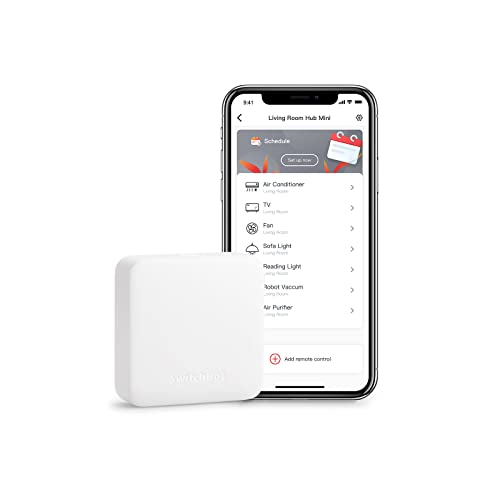
- Learns compatible remotes in about five seconds
- Controls TVs and air conditioners by app or voice
- Compact USB-powered design
Best For: Simple apartment setups focused on infrared appliances
Best Sensor-Rich Pick – SwitchBot Hub 2
For apartments where temperature comfort and remote control matter, the SwitchBot Hub 2 is a practical choice among smart home hubs for apartments. It combines Wi-Fi monitoring for temperature, humidity, and light with infrared control for appliances such as TVs and air conditioners. It supports 2.4GHz Wi-Fi and works with Alexa, Google Home, Apple Home, and Matter-supported SwitchBot devices.
Best For: Apartment residents who want climate monitoring, IR appliance control, and simple automation scenes in one compact hub.
Pros:
- Built-in temperature, humidity, and light sensing with remote monitoring.
- Can consolidate compatible infrared remotes for TVs, air conditioners, and other appliances.
- Supports scenes, geofencing, two physical buttons, and Matter integration for select SwitchBot devices.
Cons:
- Wi-Fi connectivity is limited to 2.4GHz.
- Matter support is centered on SwitchBot products, with broader device support developing over time.
The Hub 2 stands out when an apartment setup needs both environmental data and infrared control. It is less suited to shoppers seeking a broad, brand-neutral multi-protocol hub.
Best Advanced Local Hub – Aqara Smart Home Hub M3
The Aqara Smart Home Hub M3 is a strong option for larger or more advanced apartment setups. It supports Aqara Zigbee and Thread devices, Matter bridging, local automations, dual-band Wi-Fi, and optional Power over Ethernet. Its encrypted local storage and lack of microphone or camera components also make it appealing for privacy-conscious users.
Best For: Apartment owners building a substantial Aqara-based system with local automation, Thread support, and flexible networking.
Pros:
- Supports up to 127 Aqara Zigbee devices and 127 Thread devices, with Thread repeaters needed.
- Prioritizes local automations and can migrate Zigbee devices from older Aqara hubs.
- Offers 360-degree IR control, dual-band Wi-Fi, PoE, USB-C power options, and encrypted local storage.
Cons:
- Its Zigbee support is intended for Aqara devices rather than third-party Zigbee devices.
- A USB power adapter is not included.
- Some Matter and IR functionality varies by integration platform.
The M3 is one of the most capable smart home hubs for apartments when expansion and local reliability are priorities. Its feature set may be more than needed for a small, simple installation.
Best Touchscreen Control Center – Amazon Echo Hub
The Amazon Echo Hub takes a different approach to smart home hubs for apartments by adding an 8-inch touchscreen control panel. It lets residents organize device controls, view compatible cameras, start routines, manage security devices, and control media from a customizable dashboard. The built-in hub supports Wi-Fi, Bluetooth, Zigbee, Matter, Sidewalk, and Thread devices.
Best For: Households that want an easy wall-mounted dashboard for Alexa-compatible devices, routines, cameras, and security controls.
Pros:
- Customizable 8-inch dashboard for organizing controls and resizing sections.
- Built-in support for Wi-Fi, Bluetooth, Zigbee, Matter, Sidewalk, and Thread devices.
- Can control compatible cameras, locks, alarms, sensors, security systems, routines, and media.
Cons:
- Wall-mount cable pass-throughs, Power over Ethernet, and tabletop stands are sold separately.
- Some Ring features require Alexa+ and a compatible Ring subscription.
- Its strongest experience is centered on Alexa-compatible devices.
The Echo Hub is especially useful when shared, on-screen control is more convenient than relying on phones or voice commands alone. It is a control panel as much as a traditional hub, so installation and placement deserve planning.
Best Compact Aqara Starter Hub – Aqara Hub M1S Gen 2
The Aqara Hub M1S Gen 2 is a compact entry point for apartment residents choosing Aqara sensors and automation devices. It connects Aqara Zigbee 3.0 devices over 2.4GHz Wi-Fi, supports up to 128 Aqara devices with repeaters, and adds an alarm speaker, RGB light, and illumination sensor. It also works with Apple HomeKit, Google Assistant, Alexa, and IFTTT.
Best For: Small to medium Aqara installations that need a compact bridge with alarm, night-light, and sensor features.
Pros:
- Supports up to 128 Aqara devices using Zigbee 3.0 and compatible repeaters.
- Built-in 2-watt speaker can serve as an alarm or doorbell with customizable ringtones.
- Includes configurable RGB lighting and an illumination sensor for automations.
Cons:
- Requires a secure 2.4GHz Wi-Fi network and does not support Wi-Fi 6.
- Designed for Aqara Zigbee devices, not third-party Zigbee devices.
- Some child-device features may not be compatible across every supported platform.
The M1S Gen 2 is a sensible pick for straightforward Aqara automation in an apartment, particularly when a built-in alarm or night-light is useful. Users wanting Thread, dual-band Wi-Fi, or broader protocol support should consider a newer multi-protocol hub.
Best Universal-Remote Hub – Tapo H110
For apartments with a mix of older electronics and newer smart devices, the Tapo H110 is a versatile choice among smart home hubs for apartments. Its Matter support, IR control, app access, voice compatibility, and built-in alarm help consolidate everyday controls without requiring separate remotes for many appliances.
Best For: Apartment residents who want to control TVs, air conditioners, fans, and other IR appliances alongside compatible smart-home devices.
Pros:
- Supports more than 8,000 infrared brands and 18 appliance types.
- Works with Alexa, Google Assistant, and Siri through Matter.
- Includes a built-in 93 dB alarm and remote app access.
- Supports schedules, automations, and location-based control.
Cons:
- Requires 2.4 GHz Wi-Fi.
- IR-controlled appliances must be within infrared range.
- Some Tapo sensors and accessories are needed for expanded security functions.
The H110 stands out when apartment living means managing both legacy appliances and smart accessories. It is especially practical for replacing several remotes while adding routines and alerts in one compact system.
Best Local Automation Hub – Homey Pro mini
The Homey Pro mini is a strong option for smart home hubs for apartments when local processing, broad compatibility, and flexible automation matter most. It supports Zigbee, Matter, Thread, and Ethernet, while its local control can keep automations working even when the internet is unavailable.
Best For: Apartment dwellers building a multi-brand system who want advanced routines, local processing, and no required subscription.
Pros:
- Supports Zigbee, Matter, Thread, and Ethernet out of the box.
- Works with more than 1,000 brands and supports Alexa, Google Assistant, and Siri.
- Local data processing can improve privacy and reliability.
- Includes Homey Flow for customized routines and unlimited features without a monthly fee.
Cons:
- Z-Wave, Bluetooth, and infrared require the separately sold Homey Bridge.
- Advanced workflows may require using the Homey desktop app.
- Ethernet connectivity may be less convenient where the router is far from the hub.
Choose the Homey Pro mini if you expect your apartment setup to grow across brands and protocols. Its local operation and subscription-free feature set make it a capable central controller, though additional hardware may be necessary for certain device types.
Best Budget Tapo Sensor Hub – Tapo H100
The Tapo H100 is a straightforward choice among smart home hubs for apartments if you primarily use Tapo sensors, buttons, switches, and related accessories. Its low-power wireless connection is designed for stable sensor communication, while the built-in chime and siren add useful alert options in a compact space.
Best For: Tapo users who need a simple apartment hub for sensors, buttons, and low-power device connections.
Pros:
- Connects up to 64 Tapo devices.
- Uses low-power wireless communication to help extend device battery life.
- Offers up to 30 meters of stated connection distance.
- Built-in siren reaches up to 90 dB for sensor-triggered alerts.
Cons:
- Requires a 2.4 GHz Wi-Fi connection.
- Designed primarily for Tapo sensors, switches, and buttons rather than broad multi-brand control.
- Cannot directly connect to Tapo smart plugs or lighting according to the supplied notes.
The H100 makes sense for a focused Tapo setup rather than a universal smart-home system. Its device capacity, low-power connections, and audible alerts are well suited to apartment entry monitoring and simple sensor-based routines.
Best Overall – SwitchBot Hub 3
For apartment dwellers who want a broad control center, the SwitchBot Hub 3 is one of the most versatile smart home hubs for apartments. It combines infrared appliance control, SwitchBot support, Matter bridging, room monitoring, and physical controls in one compact unit.
Best For: Apartment residents building a mixed-device setup with TVs, air conditioners, SwitchBot products, and Matter-compatible devices.
Pros:
- Controls more than 100,000 infrared appliances, including TVs, lights, and air conditioners.
- Built-in screen displays temperature, humidity, weather, and other home information.
- Supports Matter bridging, Alexa, Google Assistant, Apple Home, scenes, and geofencing.
- Physical dial and customizable scene buttons are convenient for guests, children, and seniors.
Cons:
- Requires a 2.4GHz Wi-Fi connection; 5GHz networks are not supported for setup.
- Does not support RF devices such as some ceiling fans and garage door openers.
- Some features require additional SwitchBot devices.
The Hub 3 is a strong choice when you want apartment-wide convenience without relying entirely on phone or voice control. Its larger feature set makes it especially useful for a growing ecosystem.
Best for Tuya Devices – Smart Multi-Mode Gateway
This compact gateway is a practical pick for apartments centered on Tuya or Smart Life products. It combines Zigbee 3.0 and Bluetooth mesh connectivity, allowing compatible sensors, buttons, and other devices to work through one 2.4GHz network connection.
Best For: Renters and apartment owners using Tuya or Smart Life Zigbee and Bluetooth devices.
Pros:
- Combines Zigbee 3.0 and Bluetooth mesh in one gateway.
- Supports remote control, group control, and automation through the Smart Life or Tuya app.
- Works with Alexa and Google Home voice commands.
- Supports up to 128 compatible Tuya smart home devices.
Cons:
- Supports Tuya and Smart Life devices only.
- Requires a 2.4GHz network.
- Compatibility depends on the specific protocol and device ecosystem.
Its compact design and high stated device capacity suit apartments where a single gateway needs to coordinate multiple sensors and controls. The main limitation is the strict Tuya/Smart Life compatibility requirement.
Best Budget IR Hub – SwitchBot Hub Mini
If your apartment mainly needs remote control for an air conditioner or TV, the SwitchBot Hub Mini keeps things simple. This small, USB-powered IR hub connects compatible appliances and SwitchBot devices to Wi-Fi, making it a straightforward entry point among smart home hubs for apartments.
Best For: Renters who want app and voice control for infrared appliances without a more advanced hub.
Pros:
- Smart learning mode can mimic an existing remote in about five seconds.
- Controls compatible TVs, air conditioners, and other infrared appliances from one app.
- Works with Alexa, Google Assistant, Siri, and IFTTT.
- Compact, portable, and USB-powered.
Cons:
- Supports 2.4GHz Wi-Fi only.
- Infrared control works best with a clear line of sight.
- Its listed maximum supported device count is 10.
The Hub Mini is a sensible low-complexity option for a small apartment setup focused on everyday appliances. Choose it when you need reliable IR control rather than Matter, Zigbee, or Bluetooth device management.
How We Picked the Best Smart Home Hubs for Apartments
We focused on hubs that solve common apartment problems: limited space, mixed-brand devices, unreliable infrared remotes, and the need for simple, reversible installation. The lineup includes compact bridges, display-based controllers, advanced multi-protocol hubs, and models with built-in sensors or chimes.
Key considerations included Matter, Zigbee, Thread, Bluetooth, Wi-Fi, and infrared support; compatibility with Alexa, Apple Home, and other platforms; local or cloud-dependent automation; app quality; and whether the hub adds useful functions beyond basic device pairing.
Quick Comparison
| Best For | Recommended Hub Type | What to Look For |
|---|---|---|
| Simple remote control | Compact IR hub | TV and air-conditioner support, 2.4GHz Wi-Fi |
| SwitchBot devices | SwitchBot Hub Mini or Hub 2 | Bluetooth-to-Wi-Fi bridging and IR control |
| Touchscreen control | Amazon Echo Hub | Wall or tabletop display, Alexa compatibility |
| Advanced automation | Aqara Hub M3 or Homey Pro mini | Matter, Zigbee, Thread, and broader device support |
| Doorbells, sensors, or alerts | Tapo H100 or H110 | Built-in chime and sensor automation |
Key Buying Factors for Smart Home Hubs for Apartments
Connectivity and Compatibility
Check which wireless protocols your current and planned devices use. Matter can improve cross-platform compatibility, while Zigbee and Thread may provide efficient mesh networking. Bluetooth support is useful for nearby sensors, and infrared is essential if you want to control an air conditioner, television, or older audio equipment.
Size, Placement, and Wi-Fi Requirements
Compact hubs are easier to place near a router or entertainment center, but some need a clear line of sight for infrared commands. Confirm whether the unit requires 2.4GHz Wi-Fi, Ethernet, or a specific ecosystem. Renters should favor tabletop or adhesive-friendly setups rather than hubs that require permanent wiring.
Automation and Privacy
Look for routines that can combine motion, temperature, humidity, schedules, and device states. If dependable operation matters, investigate whether key automations work locally or depend on an internet connection. Also review account, microphone, camera, and cloud-storage settings before setup.
Control Style
Phone apps are convenient, but a physical knob, touchscreen, voice assistant, or dedicated chime can make daily control faster. A display hub is particularly useful in a larger apartment, while a small bridge may be better for a bedroom, office, or entertainment console.
Who Should Buy Which Smart Home Hubs for Apartments?
Choose the SwitchBot Hub Mini for basic SwitchBot integration and IR control in the smallest footprint. Step up to the SwitchBot Hub 2 or Hub 3 if you want temperature and humidity monitoring, with the Hub 3 adding a screen and knob.
The Aqara Hub M3 is the stronger choice for advanced Aqara and Matter-based automations, while the Aqara M1S Gen 2 suits shoppers who want a simpler bridge with alarm and home-automation functions. Pick Homey Pro mini when broad protocol support and multi-brand automation are priorities.
For Alexa-centered apartments, the Amazon Echo Hub offers the most visual control. Choose Tapo H100 or H110 when a built-in chime and Tapo sensor ecosystem are more important than a general-purpose display. The multi-mode Zigbee/Bluetooth gateway is best reserved for buyers who already know they need that specific protocol mix and app ecosystem.