Unstable venue power can create noise, nuisance shutdowns, and unnecessary risk for mixers, amplifiers, wireless systems, and other live-sound equipment. The right conditioner adds practical protection while helping you organize power in a portable rack or touring setup.
We compared 10 stage-ready options across outlet capacity, sequencing, monitoring, portability, and control features so you can choose a model that matches your rig and the demands of each venue.
Best 10 Stage Power Conditioners for Live Sound Picks for 2026
Premium Noise Control

- Nine outlets with 15A capacity
- Noise filtering and surge protection
- LED illumination plus USB port
Best For: Live sound rigs needing robust outlet capacity and power filtering
Flexible Rack Sequencing
Monoprice Stage Right Power Conditioner
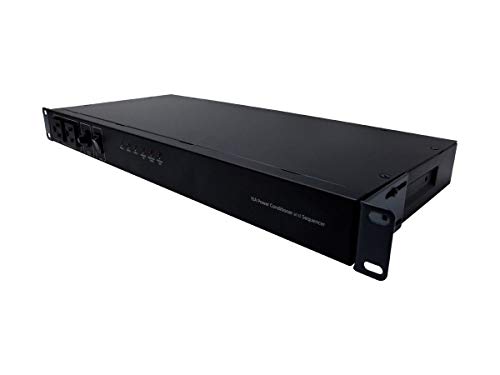
- Eight outlets across three zones
- 15A capacity with surge protection
- 1U rack-mount metal housing
Best For: Rack systems requiring staged power control
High Outlet Capacity

- Eleven outlets for larger setups
- Noise filtering and surge protection
- Stainless-steel construction
Best For: Equipment-heavy live sound racks needing extra outlets
Digital Voltage Monitoring

- Ten outlets with two always-on front outlets
- LCD voltage readout and sequencing
- USB port with surge and overload protection
Best For: Stage and studio setups needing monitoring and flexible access
Best Rackmount Protection

- 12 outlets with front and rear access
- EVS, surge protection, and RFI/EMI filtering
- USB-C and USB-A charging
Best For: Compact rackmount live-sound rigs needing versatile power protection
Best Portable Option

- Eight outlets in a portable design
- Audio filtration with status LEDs
- USB-A, USB-C, and a 9-foot cable
Best For: Portable live rigs and compact rehearsal setups
Best for Networked Racks
Furman CN-1800S SmartSequencing

- 15-amp, nine-outlet 1U rack unit
- SmartSequencing for orderly startup
- IP control and voltage/current reporting
Best For: Installed AV racks and multi-zone power management
Portable Filtration Pick

- Six outlets with audio filtration
- 540-joule surge protection
- Portable design with a 9-foot cable
Best For: Small mobile audio rigs and portable live setups
Rack Sequencing Pick

- Eight sequenced plus two always-on outlets
- LCD voltage display and 15-amp capacity
- Surge protection with EMI/RFI filtering
Best For: Rack-mounted live rigs needing controlled startup
High-Capacity Controller
Professional ST-368 Power Sequencer

- Ten sockets with eight rear and two front outlets
- LCD monitoring and eight-channel LED indicators
- USB, Type-C, filtering, and independent switches
Best For: Larger rack-based audio and production systems
Premium Noise Control – Radial Power-2
For stage power conditioners for live sound, the Radial Power-2 is a rack-friendly option focused on practical power distribution, noise filtering, and surge protection. It provides nine outlets, a 15A capacity, LED illumination, and a USB port for compatible devices.
Best For: Live sound rigs needing nine outlets, noise filtering, and USB charging in one unit.
Pros:
- Nine outlets for pro-audio and other electronic equipment
- Noise filtering and surge protection
- LED illumination and one USB port
- Stainless-steel enclosure with a two-year warranty
Cons:
- Weighs 12.4 pounds, making it relatively heavy to transport
- Uses a North American Type B plug
The Power-2 is a strong fit when outlet capacity and filtering are priorities. Its heavier enclosure may be better suited to a permanent or frequently used rack setup than a lightweight mobile rig.
Flexible Rack Sequencing – Monoprice Stage Right Power Conditioner
The Monoprice Stage Right combines power conditioning with sequencing for stage power conditioners for live sound. Its 1U rack-mount design offers eight outlets arranged across three zones, along with 15A capacity and surge protection.
Best For: Rack-based audio systems that need staged power control across three outlet zones.
Pros:
- Three zones support organized power sequencing
- Eight outlets for amplifiers, speakers, and other electronics
- 1U rack-mount metal enclosure
- 15A capacity with surge protection
Cons:
- Provides fewer outlets than some 10- or 11-outlet alternatives
- Uses a North American Type B plug
Its defining advantage is zone-based sequencing rather than maximum outlet count. That makes it especially practical for organized rack systems where equipment needs to be powered in a controlled sequence.
High Outlet Capacity – Radial Power-1
The Radial Power-1 is a straightforward choice among stage power conditioners for live sound, offering 11 outlets with noise filtering and surge protection. Its stainless-steel construction and rack-oriented dimensions make it suitable for equipment-heavy setups.
Best For: Live sound racks that need more outlets for multiple pieces of connected equipment.
Pros:
- Eleven outlets accommodate larger equipment setups
- Noise filtering helps address power-related interference
- Built-in surge protection
- Stainless-steel construction
Cons:
- The supplied notes do not specify voltage, amperage, or warranty details
- Its listed dimensions may require careful rack or case planning
The Power-1 emphasizes outlet count and basic protection features. Choose it when your main concern is connecting several devices while retaining noise filtering and surge protection in a rack-style unit.
Digital Voltage Monitoring – Pyle PCO875 Power Sequencer
The Pyle PCO875 adds sequencing and voltage visibility to the stage power conditioners for live sound category. This 1U rack-mount controller has eight rear outlets, two always-on front outlets, a digital LCD display, USB charging, and protection against spikes, surges, overloads, and voltage fluctuations.
Best For: Stage or studio setups needing ten outlets, a voltage readout, and front-panel always-on connections.
Pros:
- Ten total outlets, including two front-panel always-on outlets
- Digital LCD display for voltage readout
- Built-in sequencing with one-button operation
- USB port plus spike, surge, overload, and voltage-fluctuation protection
Cons:
- Rated at 13A and 2000W, lower than the 15A rating of some alternatives
- The supplied notes do not specify the USB port’s charging output
The PCO875 is appealing when monitoring and outlet organization matter as much as basic conditioning. Its front-panel always-on outlets and LCD readout can be particularly useful in stage, home-theater, and studio environments.
Best Rackmount Protection – Furman M-8z Merit Z Series
For stage power conditioners for live sound, the Furman M-8z combines rack-friendly power distribution with voltage shutdown, surge protection, and noise filtering. Its 12 outlets and front USB charging make it practical for compact audio and video rigs.
Best For: Rackmount live-sound setups needing broad outlet coverage and voltage protection.
Pros:
- Provides 12 outlets, including four front outlets and eight rear outlets with extra spacing for bulky adapters.
- EVS disconnects equipment during severe over- or undervoltage conditions and reconnects when power stabilizes.
- Offers 126 joules of surge protection and over 20 dB of RFI/EMI attenuation.
- Includes front USB-C and USB-A charging, status lights, and integrated rack ears.
Cons:
- Its Type B plug and 120-volt design are intended for North American power systems.
- The 4.6-pound rack unit may be more than needed for a very small portable setup.
The M-8z is a well-rounded choice when a live rig needs multiple outlets, basic power monitoring, and protection features in a conventional rackmount format.
Best Portable Option – Black Lion Audio PG-P Plus
The Black Lion Audio PG-P Plus is a practical portable pick among stage power conditioners for live sound. It provides eight outlets, audio filtration, USB charging, status LEDs, and a long 9-foot cable for flexible placement around a stage or rehearsal space.
Best For: Portable performers and smaller rigs that need straightforward distribution and charging.
Pros:
- Offers eight outlets for connected audio equipment and other electronics.
- Includes audio filtration intended to help manage power-related noise.
- Provides USB-A and USB-C charging ports.
- The 9-foot power cable and portable design support flexible placement.
Cons:
- Has fewer outlets than the 12-outlet Furman M-8z.
- Its supplied notes do not specify voltage-shutdown protection or rack ears.
- The Type B plug is designed for North American power systems.
Choose the PG-P Plus when portability and convenient charging matter more than rack integration or advanced voltage-management features.
Best for Networked Racks – Furman CN-1800S SmartSequencing
For installed or larger stage power conditioners for live sound, the Furman CN-1800S adds smart sequencing and network-based management to a 15-amp rack unit. It is designed to power equipment in the proper order while reporting voltage and current across compatible CN-series systems.
Best For: Installed AV systems and multi-zone racks requiring remote power control and sequencing.
Pros:
- Provides SmartSequencing to power connected gear in the proper order.
- Supports IP-addressable control and BlueBOLT integration through the BB-RS232 module.
- Reports line voltage and current draw for system monitoring.
- Controls CN MiniPorts across multi-zone installations and includes nine outlets in a 1U chassis.
Cons:
- Its 15-amp, networked design may be excessive for a simple portable gigging setup.
- BlueBOLT connectivity requires the BB-RS232 module.
- The supplied notes do not list a USB charging port.
The CN-1800S is best viewed as a control-oriented rack solution: its value comes from sequencing, monitoring, and remote management rather than simple outlet expansion alone.
Portable Filtration Pick – Black Lion Audio PG-P
For compact rigs that need straightforward protection and cleaner power, the Black Lion Audio PG-P is a practical option among stage power conditioners for live sound. It provides six outlets, audio filtration, surge protection rated at 540 joules, and a 9-foot power cable in a portable enclosure.
Best For: Musicians, small live-sound setups, and mobile professional audio equipment.
Pros:
- Six outlets accommodate several audio devices.
- Audio filtration is designed for professional audio equipment.
- 540-joule surge protection and a long 9-foot cable support flexible setup.
- Portable stainless-steel enclosure and a 2-year warranty.
Cons:
- Six outlets may be limiting for larger stage systems.
- It is a power strip-style unit rather than a rack-mount sequencer.
The PG-P is best when portability and simple filtered power matter more than extensive outlet capacity or sequencing features. Its compact format makes it easy to add to a small live rig.
Rack Sequencing Pick – Sound Town STPS-1028
The Sound Town STPS-1028 combines rack-friendly power management with staged startup for live and studio systems. As stage power conditioners for live sound, it stands out with eight sequenced outlets, two always-on outlets, surge and spike protection, EMI/RFI filtering, and a front LCD voltage display.
Best For: Rack-mounted live rigs and studios that need controlled equipment startup and real-time voltage information.
Pros:
- Eight sequenced outlets help protect speakers and connected equipment during startup.
- Two always-on outlets and one USB charging port add convenience.
- Built-in spike protection and EMI/RFI filtering address surges and interference.
- 1U rack-mountable design with a front LCD display and up to 15 amps of power.
Cons:
- The 8.53-pound rack unit is less portable than a basic power strip.
- Its sequenced outlet layout may be more capability than a very small setup requires.
Choose the STPS-1028 when orderly power-up and rack integration are priorities. The mix of sequenced and always-on outlets makes it adaptable for stage, studio, and home-theater configurations.
High-Capacity Controller – Professional ST-368 Power Sequencer
The Professional ST-368 is built for larger, multi-device systems that need rack-mounted sequencing, monitoring, and charging access. Among stage power conditioners for live sound, its supplied specifications highlight ten sockets, a 3300W-rated high-power design, AC noise filtering, an LCD voltage display, and USB and Type-C charging ports.
Best For: Larger audio racks and production setups that need multiple outlets, channel control, and front-panel monitoring.
Pros:
- Ten universal sockets include eight rear outlets and two front normally-open outlets.
- Independent channel switches support flexible equipment control.
- Built-in AC noise filtering helps suppress RF and electromagnetic interference.
- LCD voltage monitoring, eight-channel LED indicators, USB, and Type-C charging add front-panel utility.
Cons:
- The 8.63-pound, 1U rack unit is intended for installed or rack-based systems rather than casual portability.
- Its feature set may be excessive for small rigs with only a few devices.
- The supplied specifications list both 3300W and 3000W maximum-total-output figures, so buyers should verify the operating limit.
The ST-368 is a feature-rich choice for organizing a substantial rack system. Its outlet count, sequential control, front-panel indicators, and charging ports make it especially useful when centralized power management is important.
How We Picked the Best Stage Power Conditioners for Live Sound
We focused on features that matter when equipment is used in rehearsal rooms, clubs, houses of worship, theaters, and mobile production rigs. Our comparison considered outlet count, rack compatibility, sequencing zones, voltage monitoring, surge and overvoltage protection, current capacity, control options, and portability. We also separated straightforward power distribution from models designed for more deliberate startup and shutdown management.
Specifications can vary by revision and market, so verify the manufacturer’s current ratings and installation guidance before connecting high-draw equipment. A power conditioner is not a substitute for properly rated venue power, grounding, or an appropriately sized distribution system.
Quick Comparison
| Best For | Features to Prioritize | Typical Choice |
|---|---|---|
| Compact rack rigs | 1U design, protected outlets, clear switch and display | Basic rack power conditioner |
| Sequenced systems | Multiple zones, timed startup, controlled shutdown | Power conditioner/sequencer |
| Touring and portable setups | Compact housing, rugged construction, flexible placement | Portable conditioner or surge protector |
| Managed installations | Remote control, IP access, monitoring, automation | Smart or network-controlled conditioner |
Key Buying Factors for Stage Power Conditioners for Live Sound
Electrical Capacity and Outlet Layout
Check the unit’s maximum amperage and wattage against the combined demand of your equipment. Leave practical headroom rather than operating continuously at the limit. Count the outlet types and locations too: rear-panel outlets are convenient for a rack, while front access can help with temporary accessories.
Sequencing and Startup Protection
Sequencing turns connected devices on and off in an intentional order. This can reduce turn-on pops and prevent every amplifier or powered speaker from drawing inrush current simultaneously. Multi-zone sequencing is especially useful when separating mixers, processors, amplifiers, and peripheral equipment.
Monitoring and Protection
A voltage display or status indicator makes it easier to spot questionable venue power before a show. Look for clearly stated surge protection, overvoltage or extreme-voltage shutdown, and protection-status indicators. These features improve awareness, but they cannot correct every wiring or grounding problem.
Rack Fit, Noise, and Portability
Confirm the unit’s rack height, depth, mounting hardware, and cable clearance. For mobile rigs, weight and ruggedness matter as much as outlet count. If the conditioner will sit near microphones or in a quiet control position, consider fan noise and switching behavior.
Who Should Buy Which Stage Power Conditioners for Live Sound?
Choose a simple rack conditioner if you mainly need organized outlets and basic protection for a small mixer, processor, wireless rack, or effects system. Choose a sequencer when your setup includes power amplifiers, powered speakers, or several devices that benefit from controlled startup and shutdown. A portable model suits musicians and technicians who move between venues and need protection without committing to a full rack installation.
For permanent venues, larger production systems, or remotely managed installations, prioritize higher current capacity, comprehensive monitoring, and network or IP control. If your rig includes unusually demanding amplifiers or multiple high-power devices, calculate the load carefully and consider professional power distribution rather than relying on a consumer-style conditioner alone.