Choosing the right subwoofer can make bass-heavy mixes easier to judge, but more low end is not always better. Room size, monitor compatibility, placement, and acoustic treatment all affect whether a sub improves your monitoring system or creates muddy, uneven bass.
We’ve selected 10 subwoofers for home studios across several budgets and use cases, including compact desktop models, Bluetooth-equipped options, and larger studio subwoofers designed for more demanding monitoring setups. Use the guide below to narrow the list based on your room and workflow.
Best 10 Subwoofers for Home Studios Picks for 2026
Studio-Monitor Match

- 8-inch driver with a 150W amplifier
- 22Hz–150Hz listed frequency response
- Crossover, phase, and XLR controls
Best For: Recording setups seeking adjustable Yamaha studio-monitor bass extension
Room-Tuning Flexibility

- 10-inch woofer with 130W maximum output
- Adjustable crossover, phase, and volume
- Footswitch-ready subwoofer bypass
Best For: ADAM T-Series monitor users who want flexible studio calibration
Desktop Connectivity Pick

- 8-inch driver with 100W power
- Bluetooth 5.0 plus TRS, RCA, and aux inputs
- Crossover controls and front headphone output
Best For: Compact studios needing flexible wired, wireless, and headphone connections
High-Power Compact Option
Audioengine S8 Powered Subwoofer
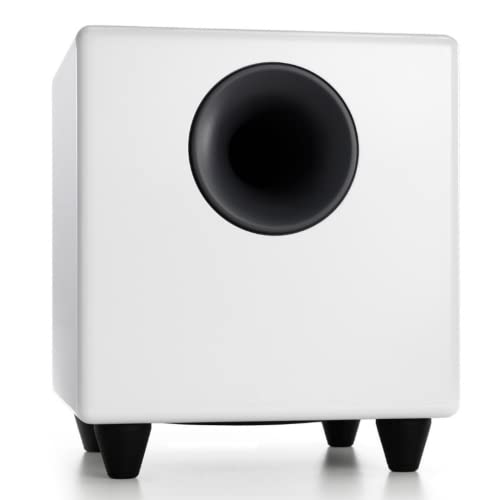
- Compact 8-inch down-firing design
- 250W listed maximum output
- Optional wireless use with Audioengine W3
Best For: Small studios wanting powerful bass and flexible placement
Best Studio Subwoofer for Powerful Low End

- 10-inch front-firing driver with 170W RMS power
- Adjustable lowpass and 80 Hz highpass filtering
- Balanced XLR/TRS connections and footswitch bypass
Best For: Serious home studios needing powerful, configurable low-end monitoring
Best Compact Value Subwoofer
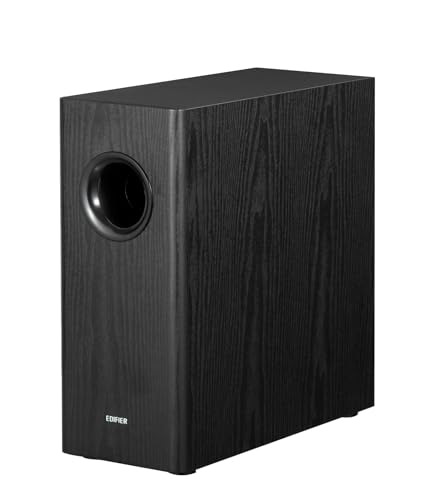
- 8-inch woofer with 70W RMS Class-D amplification
- Adjustable 30–160 Hz low-pass filter and phase selector
- Compact cabinet with RCA and 3.5mm-to-RCA cables
Best For: Space-conscious desktop studios using RCA-connected speakers
Best Desktop-Controlled Subwoofer
Mackie CR8SBT 8-inch Studio Subwoofer

- 8-inch subwoofer with up to 200W stated maximum output
- TRS, RCA, and Bluetooth connectivity
- Desktop remote includes volume and sub-bypass controls
Best For: Desktop studios using CR Series monitors and wanting easy remote control
Room-Tuning Powerhouse

- 12-inch driver with 325W RMS amplification
- App-based volume, presets, and DSP tuning
- Sealed, braced cabinet with 20Hz response
Best For: Home studios needing deep, adjustable bass and ample headroom
Studio-Focused Integrator

- 10-inch woofer reaches down to 28Hz
- XLR and TRS wired connectivity
- Footswitch-ready sub and crossover bypass
Best For: Producers and mixers using compatible studio monitor setups
Compact Bass Booster

- Compact 60W down-firing powered design
- Wooden enclosure with vibration-dampening feet
- Suitable for studio, gaming, and home audio systems
Best For: Small home studios and desktop setups needing simple bass enhancement
Studio-Monitor Match – Yamaha HS8S
For home studios built around Yamaha HS-series monitors, the Yamaha HS8S is a focused option among subwoofers for home studios. Its 8-inch driver, 150W amplifier, and controls for crossover and phase give you practical ways to integrate low-end extension into your monitoring setup.
Best For: Recording and live-music setups that need a wired, Yamaha-oriented studio subwoofer.
Pros:
- 8-inch bass-reflex powered design with a listed 22Hz–150Hz frequency response.
- 150W amplifier provides substantial power for a compact studio subwoofer.
- Low-cut, high-cut, and phase controls support system adjustment.
- XLR connectivity suits professional audio setups.
Cons:
- Its floor-standing enclosure weighs 33.6 pounds, so it is not especially portable.
- Connectivity is wired despite Bluetooth being listed among compatible protocols.
- It is designed as a studio subwoofer rather than a compact desktop unit.
The HS8S is a sensible pick when monitor integration and adjustment controls matter more than a small footprint. Check the crossover range and available connections against your existing monitors before buying.
Room-Tuning Flexibility – ADAM Audio T10S
The ADAM Audio T10S is a compact active choice among subwoofers for home studios, particularly for owners of ADAM T5V or T7V monitors. Its downward-facing 10-inch woofer, adjustable crossover, phase rotation, and dedicated volume control make placement and calibration more flexible.
Best For: Home-studio users pairing an adjustable subwoofer with ADAM T-Series monitors.
Pros:
- 10-inch driver and 130W maximum output provide substantial low-frequency capability.
- Downward-facing woofer offers more placement flexibility.
- Adjustable crossover, phase rotation, and volume controls help with calibration.
- Footswitch bypass makes it easy to compare mixes with and without sub-bass.
Cons:
- Its listed frequency response begins at 28Hz, so it may not reach as low as some alternatives.
- RCA is the listed connectivity technology, which may require suitable cabling or adapters.
- It is primarily intended for studio recording rather than general wireless listening.
The T10S stands out for workflow-friendly calibration and bypass features. It is especially compelling when your monitors and room benefit from a dedicated, adjustable low-end extension.
Desktop Connectivity Pick – PreSonus Eris Sub 8BT
The PreSonus Eris Sub 8BT combines an 8-inch front-firing driver with studio-focused controls and Bluetooth 5.0. For home studios that also handle multimedia or casual listening, it offers balanced, unbalanced, auxiliary, and wireless input options in a compact design.
Best For: Desktop-oriented creators who want studio monitoring plus Bluetooth and headphone convenience.
Pros:
- 8-inch driver reaches a listed 30Hz low end with 100W of power.
- Highpass and lowpass controls help match the subwoofer to main monitors.
- Bluetooth 5.0, balanced TRS, RCA, and front-panel auxiliary inputs provide flexible connectivity.
- Front headphone output and amplifier support quick headphone referencing.
Cons:
- The 30Hz listed low-end extension is not as deep as some larger studio subwoofers.
- Its many multimedia features may be unnecessary for a strictly production-focused setup.
- Bluetooth range is listed at 10 meters, so wireless placement remains room-dependent.
The Eris Sub 8BT is a versatile choice when your home studio doubles as a listening and media workspace. Its crossover controls and broad connection selection make it easier to fit into mixed desktop systems.
High-Power Compact Option – Audioengine S8 Powered Subwoofer
The Audioengine S8 is a compact 8-inch powered subwoofer for creators who want substantial bass without a large cabinet. It is a practical alternative among subwoofers for home studios, with 250W output, a down-firing design, and the option to add an Audioengine W3 wireless kit.
Best For: Small home studios and hybrid listening setups that prioritize powerful, easy-to-place bass.
Pros:
- 250W output provides a strong power rating for its compact 8-inch format.
- Down-firing design supports flexible placement and resonant bass delivery.
- RCA and auxiliary connectivity works with desktops, receivers, and home-audio sources.
- Sleep mode helps reduce power use when the subwoofer is idle.
Cons:
- It has fewer studio-specific adjustment controls listed than the Yamaha, ADAM, or PreSonus options.
- Wireless operation requires the separately added W3 transmitter and receiver kit.
- Its listed output mode is mono, which may not suit every monitoring workflow.
The S8 makes the most sense when compact placement and high rated output are priorities. For critical mixing, confirm that its available connections and control layout provide the integration flexibility your monitors require.
Best Studio Subwoofer for Powerful Low End – PreSonus Eris Pro Sub 10
For home studios that need substantial sub-low extension, the PreSonus Eris Pro Sub 10 combines a 10-inch front-firing driver with 170 watts RMS of Class AB power. Its adjustable crossover, monitor highpass filter, polarity control, and balanced connectivity make it a flexible choice for integrating a subwoofer into a serious monitoring setup.
Best For: Home-studio mixing setups using balanced XLR or TRS monitors and needing strong, adjustable low-frequency output.
Pros:
- 10-inch front-firing driver reaches down to a stated 20 Hz frequency response.
- Continuously variable 50–130 Hz lowpass filter helps blend the sub with full-range monitors.
- Includes a switchable 80 Hz highpass filter, polarity invert, ground lift, and footswitch bypass.
- Balanced XLR and TRS inputs and pass-through outputs support studio-oriented connections.
Cons:
- At 37 pounds, it is less convenient to reposition than a compact desktop subwoofer.
- Its 10-inch cabinet takes up more floor space than the smaller 8-inch alternatives.
The Eris Pro Sub 10 is the most studio-focused option here, particularly for users who want detailed integration controls and high output rather than a minimal desktop footprint.
Best Compact Value Subwoofer – Edifier T5s Powered Subwoofer
The Edifier T5s is a compact option for home studios and desktop setups that want more bass without adding a large studio monitor sub. Its 8-inch long-throw woofer, 70 watts RMS, adjustable 30–160 Hz low-pass filter, and 0°/180° phase selector provide useful setup flexibility.
Best For: Desktop or bookshelf-speaker systems with RCA connectivity and limited space.
Pros:
- 8-inch front-firing woofer delivers a stated frequency response down to 35 Hz.
- Low-pass filter and phase selector help match the subwoofer to connected speakers.
- Compact design, front-firing driver, and right-firing port suit space-conscious installations.
- Includes RCA and 3.5mm-to-RCA cables, plus auto-standby after 15 minutes of inactivity.
Cons:
- Connectivity is centered on RCA and is less studio-oriented than balanced XLR or TRS.
- The series-connection setup requires the main speaker to have a compatible line input.
- Its 70-watt output is more modest than the larger PreSonus and Mackie options.
The T5s makes sense when convenient RCA integration, a relatively slim enclosure, and straightforward desktop use matter more than maximum output or balanced studio connections.
Best Desktop-Controlled Subwoofer – Mackie CR8SBT 8-inch Studio Subwoofer
The Mackie CR8SBT is designed to add bass to desktop monitor systems, especially Mackie CR Series speakers. It connects through TRS or RCA, offers Bluetooth input, and includes a desktop remote for convenient volume adjustment and subwoofer bypass while you work.
Best For: Desktop home studios using CR Series or similarly equipped monitors and wanting convenient remote control.
Pros:
- 8-inch driver and up to 200 watts of stated maximum output add bass below typical desktop monitors.
- TRS and RCA connections support common monitor and audio-source setups.
- Adjustable crossover helps blend the subwoofer with connected monitors.
- Included desktop remote provides volume and sub-bypass control from the listening position.
Cons:
- Its stated frequency response begins at 40 Hz, higher than the PreSonus and Edifier specifications.
- Bluetooth is convenient for playback but is not a substitute for a balanced studio signal path.
- The product is specifically positioned for CR Series monitors, so connection compatibility should be checked.
The CR8SBT is a practical desktop choice when hands-on control and Bluetooth convenience are priorities, particularly alongside Mackie CR monitors.
Room-Tuning Powerhouse – SVS SB-1000 Pro
SVS SB-1000 Pro Subwoofer (Black Ash) | 12-in Driver, 325 Watt RMS, Sealed Cabinet
Check Price On AmazonFor home studios that need deep, controlled bass without a large cabinet, the SVS SB-1000 Pro combines a sealed design, a 12-inch driver, and app-based tuning. Its 325-watt RMS amplifier and 20Hz frequency response make it a powerful option for monitoring low-end detail, provided your room and main speakers can support its output.
Best For: Home studios needing deep bass, substantial headroom, and convenient in-room adjustment.
Pros:
- 12-inch high-excursion driver and 325-watt RMS amplification deliver substantial low-end output.
- Sealed, rigidly braced MDF cabinet is designed to minimize cabinet resonance.
- Smartphone app provides volume control, presets, and performance tuning.
- Compact dimensions make it easier to fit into smaller rooms or systems.
Cons:
- Its powerful output may be more than a small home studio requires.
- Wireless connectivity is listed, but the subwoofer is primarily intended for a wired audio setup.
The SB-1000 Pro is a strong all-around choice when accurate, adjustable, room-filling bass matters more than the lowest possible price. Its DSP and sealed enclosure give you useful tools for integrating a subwoofer into a working studio.
Studio-Focused Integrator – KRK S10.4
The KRK S10.4 is purpose-built for professional music production, mixing, and listening. For home studios choosing subwoofers for home studios, its 10-inch glass aramid woofer, 160-watt Class D amplifier, and XLR/TRS connectivity offer a practical match for compatible monitor systems.
Best For: Producers and mixers who want a studio-oriented subwoofer with professional connections and flexible placement.
Pros:
- 10-inch glass aramid composite woofer extends bass to 28Hz.
- 117dB maximum SPL provides strong output for monitoring and listening.
- Front-firing port and curved cabinet support placement flexibility.
- Footswitch control can enable or disable the subwoofer and crossover filter.
Cons:
- The footswitch is not included.
- At 35 pounds, it is less convenient to move than compact alternatives.
- It uses wired XLR/TRS connections rather than wireless communication.
Choose the S10.4 when your priority is a dedicated studio workflow rather than general home audio. Its professional I/O and bypass control are especially useful when comparing mixes with and without extended low end.
Compact Bass Booster – OHAYO V8
The OHAYO V8 is a compact, accessible option for smaller home studios and desktop audio systems. Its 60-watt Class D amplifier, down-firing driver, and wooden enclosure add low-end presence without requiring a large subwoofer footprint.
Best For: Small studios, desktop setups, gaming, and general listening where compact size is a priority.
Pros:
- Compact 8.4-by-10.9-by-8.4-inch enclosure fits easily on or near a shelf.
- Built-in 60-watt Class D amplifier avoids the need for an external receiver.
- Down-firing driver is designed to provide room-filling bass.
- Vibration-dampening feet help reduce surface rattling.
Cons:
- Its 5.25-inch driver and 60-watt output provide less headroom than larger studio subwoofers.
- The supplied notes do not specify a frequency response or professional studio crossover controls.
- Bluetooth connectivity may require compatibility checking with your existing audio chain.
The V8 makes the most sense when space and simplicity outweigh maximum low-frequency extension. It can add useful bass to a modest setup, but demanding mixing work may call for a larger, more studio-specific model.
How We Picked the Best Subwoofers for Home Studios
We evaluated these models by focusing on the features that matter most in a home recording or mixing environment: frequency response, amplifier power, driver size, crossover and level controls, connection options, cabinet design, and compatibility with nearfield monitors. We also considered practical factors such as footprint, wireless or Bluetooth functionality, front- versus down-firing design, and suitability for small rooms.
A subwoofer should extend your monitoring system without overwhelming it. The best choice depends less on maximum output than on whether you can integrate it accurately and position it where bass remains consistent at your listening position.
Quick Comparison
| Best For | Recommended Type | What to Look For |
|---|---|---|
| Small desktop studio | Compact 8-inch or smaller model | Adjustable crossover, modest output, compact footprint |
| Mixing with nearfield monitors | Dedicated studio subwoofer | Balanced response, stereo inputs and outputs, phase control |
| Large or treated room | 10- or 12-inch powered subwoofer | Higher headroom, deeper extension, flexible integration controls |
| Casual production and media | Bluetooth or wireless-ready model | Convenient connectivity and remote volume control |
Key Buying Factors for Subwoofers for Home Studios
Room Size and Acoustic Treatment
Low frequencies interact strongly with walls and corners. In a small untreated room, a powerful subwoofer can exaggerate certain notes while making others disappear. Compact models are often easier to integrate, while larger units make more sense in spacious, treated rooms.
Driver Size and Power
Eight-inch subwoofers typically offer a practical balance for home studios. Ten- and 12-inch models can deliver deeper bass and greater headroom, but they require more space and careful placement. Choose output based on the room and listening level rather than wattage alone.
Integration Controls
Look for an adjustable crossover, phase or polarity control, and a level control. Stereo inputs and outputs allow the subwoofer to sit between your audio interface and monitors, helping you manage the transition between the sub and main speakers.
Connectivity and Convenience
Bluetooth, wireless readiness, and remote controls can be useful for production rooms that also handle streaming or casual listening. For critical mixing, prioritize reliable wired connections and accurate response over convenience features.
Who Should Buy Which Subwoofers for Home Studios?
Choose a compact 8-inch model if you work in a bedroom studio, use small nearfield monitors, or need controlled low-end extension without taking over the room. These are usually the safest starting point for untreated spaces.
Choose a dedicated studio subwoofer if you mix, master, or produce bass-heavy music and need crossover, phase, and level adjustments for precise monitor integration. Models designed specifically for studio monitoring are generally the strongest fit for critical work.
Choose a larger 10- or 12-inch subwoofer if your room is bigger, acoustically treated, and capable of handling deeper bass without major resonances. These options suit users who need additional headroom for electronic music, film, gaming audio, or full-range monitoring.
Whichever model you select, begin with a low subwoofer level, place it carefully, and calibrate it with familiar reference tracks. A properly integrated subwoofer should make bass easier to judge—not simply louder.