The right subwoofer can add depth, impact, and realism to music without overwhelming vocals or instruments. Whether you are building a home stereo, upgrading a home theater, or mixing at a desk, the best choice depends on room size, speaker pairing, connection options, and bass accuracy.
We compared 10 powered and passive models across compact, studio, and full-size categories to help you find a subwoofer that delivers controlled low frequencies and fits your system, space, and budget.
Best 10 Subwoofers for Music Picks for 2026
Premium Precision Pick

- 12-inch sealed subwoofer with 325W RMS
- DSP app enables room tuning and presets
- Rigid cabinet supports controlled bass
Best For: Listeners wanting powerful, tunable bass for music
Dynamic Value Performer

- 12-inch copper-spun front-firing woofer
- 400W dynamic digital amplification
- Low-pass, phase, line, and LFE controls
Best For: Systems needing lively bass and flexible wired integration
Studio Monitoring Choice

- 8-inch bass-reflex design reaches a stated 22Hz
- 150W amplifier for studio-focused bass
- Adjustable low/high cut and phase controls
Best For: Recording and live-music monitoring setups
Compact Room Favorite
Polk Audio PSW10 10-inch Subwoofer
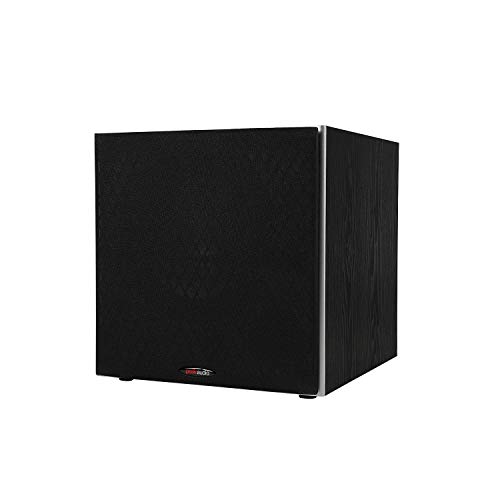
- 10-inch woofer with 50W RMS amplification
- Designed for small-to-mid-size rooms
- Adjustable crossover and RCA/speaker-level inputs
Best For: Affordable bass upgrades in modest-sized rooms
Best Compact Studio Pick

- 8-inch driver reaches down to 30 Hz
- Bluetooth 5.0 and flexible wired inputs
- Adjustable crossover and room-tuning controls
Best For: Music production, desktop listening, and compact studio systems
Best for Deep, Powerful Bass
Klipsch R-100SW 10-Inch Subwoofer

- 10-inch front-firing spun-copper woofer
- 300-watt peak all-digital amplifier
- Adjustable crossover and phase controls
Best For: Powerful bass in home audio, TV, and gaming systems
Best Straightforward Home Setup
Yamaha NS-SW100BL 10-Inch Subwoofer

- 10-inch powered woofer for home systems
- Twisted flare port targets clear, tight bass
- Advanced YST II technology and simple styling
Best For: Home theater and general music listening
Compact Bass Pick
BESTISAN SW65C Powered Subwoofer

- Compact 8-inch down-firing design
- RCA, LFE, AUX, and speaker-level connections
- Includes coaxial cable and remote
Best For: Small-room stereo, TV, and soundbar systems
Clean Power Choice
Dayton Audio Classic CS1200 12-inch Subwoofer

- 12-inch woofer with 200-watt Class-D amplifier
- Braced cabinet for tight, controlled bass
- Includes RCA, LFE, and speaker-level inputs
Best For: Powerful music and home theater systems
Compact Passive Option
Audio Fantasy SUB65 6.5-inch Passive Subwoofer

- 6.5-inch down-firing woofer
- 100W RMS and 150W peak ratings
- MDF cabinet with anti-shock base
Best For: Existing amplified systems in small to mid-size rooms
Premium Precision Pick – SVS SB-1000 Pro
SVS SB-1000 Pro Subwoofer (Black Ash) | 12-in Driver, 325 Watt RMS, Sealed Cabinet
Check Price On AmazonFor listeners seeking subwoofers for music with controlled, room-filling bass, the SVS SB-1000 Pro combines a sealed cabinet, 12-inch driver, and 325-watt RMS amplifier. Its app-based tuning makes it practical to adjust performance for different rooms and listening preferences.
Best For: Music listeners who want powerful, precise bass in a compact sealed enclosure.
Pros:
- 12-inch high-excursion driver delivers substantial output with stated low distortion.
- 325 watts RMS and more than 820 watts peak power provide strong headroom.
- DSP smartphone app supports volume control, presets, and in-room tuning.
- Rigidly braced sealed cabinet is designed to minimize unwanted resonance.
Cons:
- Its corded, wired/wireless-capable design still requires a power connection and system compatibility checks.
- The larger 12-inch format may be more than needed for very small rooms.
The SB-1000 Pro is a strong choice when musical detail and flexible tuning matter as much as bass output. Its sealed design and app controls make it especially adaptable for carefully balanced systems.
Dynamic Value Performer – Klipsch R-12SW
The Klipsch R-12SW is a straightforward option among subwoofers for music, using a 12-inch front-firing copper-spun woofer and a 400-watt dynamic amplifier. Low-pass crossover and phase controls help integrate it with a compatible stereo or home theater system.
Best For: Listeners who want energetic bass from a traditional powered subwoofer with simple integration controls.
Pros:
- 12-inch front-firing woofer is built for impactful low-frequency output.
- All-digital amplifier provides up to 400 watts of dynamic power.
- Line/LFE inputs support compatibility with many receivers.
- Low-pass crossover and phase controls aid system setup.
Cons:
- Its 20-by-20-by-17.75-inch dimensions require considerable floor space.
- It offers wired connectivity rather than wireless communication.
With its large driver, high dynamic rating, and practical controls, the R-12SW suits systems where lively, pronounced bass is a priority. Plan for its relatively substantial cabinet footprint.
Studio Monitoring Choice – Yamaha HS8S Studio Subwoofer
The Yamaha HS8S takes a studio-oriented approach to subwoofers for music, pairing an 8-inch bass-reflex driver with a 150-watt amplifier. Its adjustable low-cut, high-cut, and phase controls are designed to help integrate the subwoofer with monitoring equipment.
Best For: Recording and live-music setups using compatible studio monitors or other XLR-equipped equipment.
Pros:
- 8-inch bass-reflex design covers a stated 22Hz–150Hz range.
- 150-watt amplifier provides dedicated powered bass for monitoring systems.
- Low-cut control can be adjusted from 80Hz to 120Hz.
- High-cut control and phase switch provide useful integration options.
Cons:
- Its XLR connectivity is more specialized than typical consumer home-audio connections.
- The 18-by-16-by-18.5-inch cabinet is not especially compact for an 8-inch subwoofer.
The HS8S is best viewed as a control-focused studio subwoofer rather than a general-purpose living-room model. Its crossover and phase adjustments make it a sensible match for production-oriented systems.
Compact Room Favorite – Polk Audio PSW10 10-inch Subwoofer
For smaller rooms, the Polk Audio PSW10 offers an accessible way to add low-end weight to music systems. This 10-inch powered subwoofer uses a 50-watt RMS amplifier, a directed port, and adjustable crossover controls to support straightforward integration.
Best For: Small-to-mid-size rooms and budget-conscious listeners upgrading an existing home-audio system.
Pros:
- 10-inch Dynamic Balance woofer adds bass depth and punch.
- Compact design is intended for small-to-mid-size rooms.
- Variable 80Hz–160Hz crossover supports blending with different speakers.
- Speaker-level outputs and RCA/line-level connectivity simplify system integration.
Cons:
- Its 50-watt RMS amplifier is less powerful than the larger models in this roundup.
- The stated 40Hz–160Hz (-3dB) response does not extend as low as the SVS model’s stated 20Hz response.
- It uses wired connectivity and is not waterproof.
The PSW10 is a practical entry point for adding bass without moving to a larger, higher-powered enclosure. It is particularly suitable when room size, budget, and easy hookup matter more than maximum output.
Best Compact Studio Pick – PreSonus Eris Sub 8BT
For listeners and creators seeking subwoofers for music, the PreSonus Eris Sub 8BT combines an 8-inch driver, Bluetooth 5.0, and studio-focused controls in a compact enclosure. Its adjustable crossover and tuning controls make it practical for integrating with desktop monitors or a small listening setup.
Best For: Music production, desktop listening, and compact studio-monitor systems.
Pros:
- Reaches down to 30 Hz for extended low-frequency detail.
- Bluetooth 5.0 plus balanced TRS, RCA, and front-panel aux inputs.
- Adjustable highpass, lowpass, and room-tuning controls help integrate the subwoofer cleanly.
- Front headphone output and automatic power-saving mode add convenience.
Cons:
- The compact 8-inch design may provide less room-filling output than larger home-theater models.
- Its studio-oriented controls and connections may be more than casual listeners need.
The Eris Sub 8BT is a versatile choice when accurate bass, flexible connectivity, and easy monitor integration matter more than maximum impact. It is especially well suited to nearfield music setups.
Best for Deep, Powerful Bass – Klipsch R-100SW 10-Inch Subwoofer
The Klipsch R-100SW is a strong contender among subwoofers for music when you want forceful low end from a traditional wired home-audio design. Its 10-inch front-firing woofer, 300-watt peak amplifier, and adjustable crossover and phase controls support both music and mixed-use systems.
Best For: Home audio listeners who want powerful bass for music, television, and gaming.
Pros:
- 10-inch spun-copper IMG woofer delivers substantial low-frequency output.
- All-digital amplifier provides up to 300 watts of peak power.
- Low-pass crossover and 0/180-degree phase controls help match the subwoofer to a system.
- LFE and line-level RCA inputs support broad receiver compatibility.
Cons:
- It is wired and does not include wireless communication.
- The larger 26-pound cabinet takes more floor space than a compact desktop subwoofer.
With a stated 32 Hz–120 Hz frequency response, the R-100SW emphasizes impactful, adjustable bass rather than studio-style compactness. It makes sense for listeners building a conventional living-room setup around an AV receiver or stereo source.
Best Straightforward Home Setup – Yamaha NS-SW100BL 10-Inch Subwoofer
For buyers comparing subwoofers for music and home theater, the Yamaha NS-SW100BL offers a straightforward 10-inch powered design with Yamaha’s Advanced YST II technology. Its twisted flare port is intended to produce clear, tight bass while the black cabinet fits easily into a conventional room setup.
Best For: Home-theater systems and listeners who want simple, room-friendly bass enhancement.
Pros:
- 10-inch cone woofer provides a substantial low-frequency foundation.
- Twisted flare port is designed to help deliver clear, tight bass.
- Advanced YST II supports Yamaha’s powered-subwoofer design.
- Its understated styling suits many living-room systems.
Cons:
- The supplied notes list 100 watts of maximum output, below the Klipsch model’s stated peak rating.
- Connectivity is wired, so it is less convenient for users seeking wireless placement.
- The supplied specifications are oriented toward home theater rather than detailed studio integration.
The NS-SW100BL is a sensible option when you want an uncomplicated 10-inch subwoofer for a home-theater or general listening system. Its port design and Yamaha servo technology prioritize controlled, usable bass without adding complex setup features.
Compact Bass Pick – BESTISAN SW65C Powered Subwoofer
If you want an easy way to add low-end impact, the BESTISAN SW65C is a practical option among subwoofers for music. Its compact, down-firing design is suited to smaller spaces, while RCA, LFE, AUX, and high-level speaker connections make it flexible for stereo, TV, soundbar, and home theater setups.
Best For: Small to medium rooms, compact stereo systems, soundbars, and listeners who want a simple powered subwoofer with broad wired compatibility.
Pros:
- Compact cabinet with an 8-inch dynamic driver and down-firing bass presentation.
- Multiple connection options, including RCA, LFE, AUX, and high-level speaker inputs and outputs.
- Includes a coaxial cable and remote control for a convenient setup.
- Works with a variety of sources, including TVs, turntables with a preamp, and CD/DVD players.
Cons:
- Its 60-watt maximum output is more suited to compact systems than very large rooms.
- It requires main speakers or a soundbar for a complete audio system.
- The manufacturer recommends line-level signals of 850mV or less and cautions against direct pairing with high-power amplifiers.
The SW65C emphasizes convenience and system flexibility rather than maximum output. It is a sensible choice when you need deeper bass without giving up much floor space or dealing with complicated wiring.
Clean Power Choice – Dayton Audio Classic CS1200 12-inch Subwoofer
The Dayton Audio Classic CS1200 is a strong candidate among subwoofers for music when you want substantial, controlled low-end output. Its 12-inch woofer, 200-watt Class-D amplifier, and braced cabinet are designed to provide tight bass for both music and movies, with flexible inputs for straightforward integration.
Best For: Larger listening spaces, home theater systems, and music listeners who prioritize powerful, accurate bass and long-term support.
Pros:
- 12-inch woofer and 200-watt Class-D amplifier provide a substantial bass foundation.
- Rigid, braced cabinet is designed to help reduce boominess and distortion.
- Stereo RCA, LFE, and speaker-level inputs support a wide range of system configurations.
- Auto-on operation, simple controls, and a five-year manufacturer warranty add convenience and confidence.
Cons:
- The 18-inch depth and larger cabinet require more floor space than compact subwoofers.
- The gray grille is sold separately; the included grille is black.
- It is a wired floor-standing design rather than a wireless solution.
With its larger driver and higher amplifier rating, the CS1200 is built for listeners who want a fuller, more authoritative low end. Its flexible connectivity and five-year warranty make it especially appealing for a permanent home audio or theater setup.
Compact Passive Option – Audio Fantasy SUB65 6.5-inch Passive Subwoofer
The Audio Fantasy SUB65 offers a compact, budget-conscious route to fuller bass for listeners who already have suitable amplification. As a passive choice among subwoofers for music, it uses a 6.5-inch down-firing woofer, a 4-ohm load, and a sturdy MDF cabinet, but it must be connected to an external amplifier or receiver.
Best For: Small to mid-size rooms, studio or party setups, and buyers who already own an amplifier or receiver with compatible speaker connections.
Pros:
- Compact 6.5-inch down-firing woofer delivers up to 100 watts RMS and 150 watts peak.
- MDF cabinet is designed to reduce acoustic resonance.
- Anti-shock base helps stabilize the enclosure and supports down-firing placement.
- Compact dimensions make it easy to fit into smaller home theater or studio systems.
Cons:
- It is passive and cannot be used on its own; an external amplifier or receiver is required.
- Its 4-ohm impedance requires an amplifier that can safely support the load.
- Connection is through standard speaker wire, so additional cables may be needed for some interfaces.
The SUB65 is best viewed as a space-saving add-on for an existing amplified system, not an all-in-one bass solution. If you already have compatible amplification, its small cabinet and down-firing design can add low-end presence without taking over the room.
How We Picked the Best Subwoofers for Music
We evaluated these models by looking at the specifications that matter most for music playback: driver size, amplifier power, cabinet design, crossover and phase controls, connectivity, and overall placement flexibility. We also considered whether each subwoofer is better suited to nearfield listening, bookshelf speakers, a larger stereo room, or a home theater system.
Power ratings are useful for comparison, but they do not tell the whole story. A well-designed sealed cabinet may sound tighter than a larger ported model, while room size and speaker sensitivity can have a greater effect on perceived output than wattage alone.
Quick Comparison
| Best For | Recommended Type | What to Prioritize |
|---|---|---|
| Desktop or studio listening | Compact studio subwoofer | Low noise, adjustable crossover, easy connections |
| Bookshelf speaker upgrades | 10-inch powered subwoofer | Speaker-level or line-level integration and phase control |
| Medium rooms | 10- to 12-inch powered subwoofer | Clean output, flexible crossover, adequate headroom |
| Large rooms or home theater | High-output 12-inch model | Amplifier reserve, cabinet construction, deep extension |
| Custom installations | Passive subwoofer | Compatible amplifier, impedance, and enclosure design |
Key Buying Factors for Subwoofers for Music
Sealed Vs. Ported Cabinets
Sealed subwoofers are often preferred for music because they can provide controlled, quick-sounding bass and are easier to place. Ported designs typically produce more output and deeper impact per watt, making them attractive for large rooms and mixed music-and-movie systems.
Driver Size and Power
A 10-inch driver is a versatile choice for many living rooms, while a 12-inch model can move more air and maintain headroom at higher volume. Compact 6.5- and 8-inch models make more sense for desks, small rooms, and nearfield listening. Look for RMS power rather than peak power when comparing sustained performance.
Integration and Controls
Adjustable crossover, volume, and phase controls help blend the subwoofer with your main speakers. Line-level inputs are common in stereo and studio setups; home theater receivers generally use an LFE input. Confirm that the connections match your amplifier or receiver before buying.
Room Placement
Bass changes significantly with placement. Start near the front wall, avoid placing the subwoofer tightly in a corner unless you need more output, and experiment with position. Larger rooms may benefit from higher-output models or two smaller subwoofers for smoother coverage.
Who Should Buy Which Subwoofers for Music?
Choose a compact studio subwoofer if you listen at a desk, produce music, or need restrained low-end extension. A 10-inch powered model is a practical match for bookshelf speakers and average-size rooms. Pick a 12-inch subwoofer when you want stronger dynamics, listen at higher volume, or need bass that remains composed in a larger space.
For a clean, music-focused presentation, prioritize integration controls and cabinet design over the largest advertised wattage. If home theater impact is equally important, favor a ported high-output model with deep extension. Passive options can work well in custom systems, but only when you already have a suitable amplifier and understand impedance and crossover requirements.