Sending one HDMI source to several screens is simple in theory, but the right distribution amplifier must match your resolution, copy-protection, cable length, and audio requirements. The wrong unit can cause blank displays, handshake errors, or inconsistent picture quality.
We selected 10 HDMI distribution solutions covering compact home setups, professional AV systems, long-distance CAT cable installations, and specialized SDI workflows. Use the guide below to narrow the choices by performance, compatibility, and installation needs.
Best 10 Video Distribution Amplifiers with Hdmi Picks for 2026
Simple 4-Display Duplicator
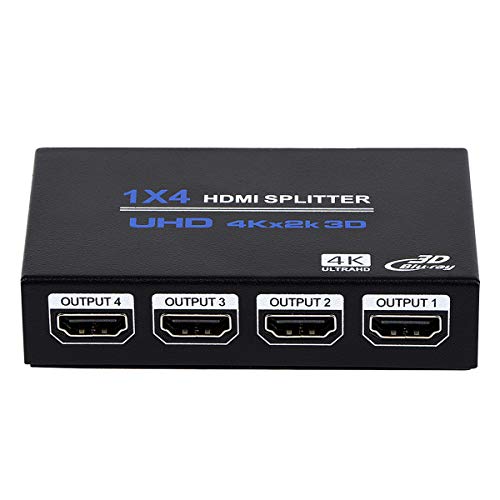
- Sends one source to four identical displays
- Supports 4K@30Hz, 3D, and surround audio
- No extended desktop, HDR, VRR, or CEC
Best For: Basic mirrored-display installations
Eight-Screen 4K Distribution

- Routes one HDMI source to up to eight displays
- Supports 4K UHD and 1080p at 60Hz
- Includes HDCP 2.2 and lossless audio support
Best For: Larger duplicated-display installations
Flexible 4K60 Mirroring

- Duplicates one source to four displays at 4K60
- Supports HDR, 18Gbps bandwidth, and HDMI 2.0
- Adds EDID control and broad audio support
Best For: 4K60 gaming and home theater systems
Next-Generation HDMI Distribution

- Delivers 48Gbps bandwidth with FRL6 support
- Includes custom and extended EDID management
- Extracts digital 7.1 or two-channel analog audio
Best For: Advanced gaming and professional AV installations
Best for Long-Run Multi-Display Setups

- Sends one source to eight displays
- Runs over CAT6/6a/7 cable
- Includes IR pass-back and loop-out
Best For: Large meeting rooms, retail displays, and multi-screen installations
Best Compact 1x2 Amplifier
Monoprice Blackbird 4K HDMI Splitter

- Mirrors one source to two displays
- Supports 4K at 30Hz and 3D video
- Handles advanced digital audio formats
Best For: Two-display home theater and presentation setups
Best 4K60 Four-Display Splitter
OREI UltraHD 1x4 HDMI Splitter

- Mirrors one source to four displays
- Supports 4K at 60Hz and 18Gbps
- Includes EDID and broad audio support
Best For: Synchronized 4K displays in classrooms, bars, retail, or home theaters
Best Budget 4K Mirror Splitter

- 1 HDMI input to 4 mirrored outputs
- Supports 4K@30Hz, 3D, and HDCP 1.4
- Powered metal housing with cascade support
Best For: Stable mirrored HDMI distribution in homes and commercial spaces
Best SDI/HDMI Production Hub
AVMATRIX SD2080 Distribution Amplifier

- Converts and distributes HDMI and 3G-SDI
- Provides four HDMI and four SDI outputs
- Supports 1080p60 with SDI re-clocking
Best For: Live production, broadcast, and mixed HDMI/SDI systems
Best 4K60 Mixed-Display Splitter
J-Tech Digital 1x4 HDMI Splitter

- Supports 4K@60Hz with 18Gbps bandwidth
- Downscales for mixed 4K and 1080p displays
- Includes HDR, Dolby Vision, EDID, and HDCP support
Best For: Mixed-resolution home, gaming, and commercial display setups
Simple 4-Display Duplicator – Compact 4K HDMI Splitter
For shoppers seeking video distribution amplifiers with HDMI for straightforward multi-screen mirroring, this 1×4 splitter sends one source to four identical displays. It supports up to 4K at 30Hz, plus 3D and several surround-audio formats, but it does not extend a desktop or provide separate content on each screen.
Best For: Home theaters, classrooms, or basic signage setups using one HDMI source and four mirrored displays.
Pros:
- Distributes one HDMI input to four simultaneous outputs.
- Supports 4K at 30Hz, 2K at 60Hz, and 1080p at 120Hz.
- Plug-and-play design with support for DTS-HD, Dolby TrueHD, and Dolby AC-3.
Cons:
- Mirrors the same image rather than extending or independently controlling displays.
- Does not support HDR, VRR, or CEC.
- 4K at 60Hz is limited to YCbCr and is not the primary listed 4K mode.
This is a practical budget-oriented choice when duplicated content is all you need. Confirm your source and display requirements first, especially if HDR, HDMI 2.1 features, or extended desktop support matter.
Eight-Screen 4K Distribution – KanexPro 1×8 HDMI Amplifier
The KanexPro HDSP184K is a stronger fit for video distribution amplifiers with HDMI in larger display installations. It distributes one 4K HDMI source to as many as eight televisions or compatible displays while supporting HDCP 2.2, full HD, and lossless surround-audio formats.
Best For: Commercial signage, conference rooms, classrooms, and home theaters that need one source routed to up to eight displays.
Pros:
- Provides eight HDMI outputs from one input.
- Supports both 1080p at 60Hz and 4K UHD video.
- Handles Dolby Digital, DTS-HD, and Dolby TrueHD audio.
- HDCP 2.2 compliance suits compatible 4K content sources and displays.
Cons:
- Designed for duplicated output rather than independent content on each screen.
- The supplied information does not specify HDMI 2.1 gaming features or HDR support.
Choose this model when output count is the priority. Its eight-port layout is more installation-ready than a compact four-output splitter, provided your equipment is compatible with its listed HDMI and HDCP capabilities.
Flexible 4K60 Mirroring – OREI EDID HDMI Splitter
Among video distribution amplifiers with HDMI, the OREI UHDS-104 stands out for 4K at 60Hz support, 18Gbps bandwidth, HDR compatibility, and an EDID control switch. It duplicates one HDMI source across four displays and is built for plug-and-play use with devices such as streaming players, consoles, computers, and Blu-ray players.
Best For: Gaming, home theater, office, and presentation systems needing four mirrored displays with 4K60 compatibility.
Pros:
- Supports 4K at 60Hz, HDR, and full HDMI 2.0 bandwidth up to 18Gbps.
- EDID control helps manage resolution compatibility between connected displays.
- Supports LPCM 7.1, Dolby TrueHD, and DTS-HD Master Audio.
- Metal construction is intended to aid heat dissipation.
Cons:
- Duplicates one input rather than extending a desktop or showing different content.
- It has four outputs but is not a multi-input HDMI switch.
This is a well-rounded four-display option when 4K60 and HDR are more important than newer HDMI 2.1 features. The EDID switch adds useful flexibility for mixed-display setups.
Next-Generation HDMI Distribution – 48Gbps 1×4 HDMI 2.1 Amplifier
For advanced video distribution amplifiers with HDMI, the AC-DA14-AUHD-GEN2 offers 48Gbps bandwidth and HDMI 2.1b-oriented features for demanding modern displays. Its custom EDID Blend and four-block EDID support are designed to help manage complex display environments, while audio extraction supports up to 7.1-channel digital or two-channel analog output.
Best For: High-bandwidth gaming, professional AV systems, and installations using next-generation HDMI displays.
Pros:
- Provides 48Gbps bandwidth with Fixed Rate Link 6 support.
- Offers custom EDID blending for combining information from different displays.
- Supports extended four-block EDID for demanding next-generation screens.
- Extracts audio for up to 7.1-channel digital or two-channel analog systems.
Cons:
- The supplied notes do not list specific supported resolutions or refresh rates.
- Advanced EDID and audio-extraction features may be unnecessary for basic setups.
- Requires the included 12V power supply for operation.
This is the most technically advanced option in the group, particularly for systems where bandwidth, EDID management, and audio extraction matter. Verify the exact display resolution and feature requirements before purchasing.
Best for Long-Run Multi-Display Setups – OREI 1×8 HDMI Extender
For buyers comparing video distribution amplifiers with HDMI, the OREI HD18-EX165-K is designed for sending one source to multiple displays over CAT6, CAT6a, or CAT7 cable. It supports eight remote receivers, a local HDMI loop-out, EDID management, and IR pass-back for larger meeting-room, retail, or entertainment installations.
Best For: Distributing one HDMI source to up to eight remote displays over network cable.
Pros:
- Includes eight CAT6 receivers and a local HDMI output.
- Supports up to 1080p at 60Hz and 2K at 60Hz.
- Power over LAN eliminates the need for a receiver-side adapter.
- IR pass-back enables remote source control.
Cons:
- 4K support is limited to 30Hz.
- Requires compatible CAT6/6a/7 cabling and a more involved installation than a direct HDMI splitter.
This is the most capable option here for long-distance, eight-screen distribution, especially when centralized source control matters. It is less suitable for installations that require 4K at 60Hz.
Best Compact 1×2 Amplifier – Monoprice Blackbird 4K HDMI Splitter
Monoprice Blackbird 4K 1x2 HDMI Amplifier Splitter - 48-bit Deep Color, 3D Video Support, Black
Check Price On AmazonThe Monoprice Blackbird is a straightforward choice among video distribution amplifiers with HDMI when you need to duplicate one source to two displays. Its HDMI 1×2 design supports 4K at 30Hz, 3D video, 48-bit Deep Color, and a broad range of digital audio formats.
Best For: Simple two-display home entertainment or presentation setups.
Pros:
- Splits one HDMI input to two sink devices.
- Supports 4K at 30Hz and 1080p at 120Hz.
- Handles 3D video and 48-bit Deep Color.
- Supports formats including Dolby TrueHD, DTS-HD, and 7.1-channel LPCM.
Cons:
- Provides only two HDMI outputs.
- 4K operation is limited to 30Hz.
- Uses the older HDCP 1.4 protocol.
This compact amplifier fits buyers who want basic, reliable two-screen mirroring with strong audio and 3D format support. Consider another model if you need four displays, CAT cable extension, or 4K at 60Hz.
Best 4K60 Four-Display Splitter – OREI UltraHD 1×4 HDMI Splitter
For a modern four-screen installation, this OREI UHDS-104 is one of the more suitable video distribution amplifiers with HDMI. It mirrors one HDMI source across four outputs and supports 4K at 60Hz, 18Gbps bandwidth, HDCP 2.0, EDID, and several multichannel audio formats.
Best For: Mirroring a 4K source across four TVs, monitors, or projectors.
Pros:
- Distributes one input to four displays simultaneously.
- Supports 4K at 60Hz with 18Gbps bandwidth.
- Offers broad audio compatibility, including Dolby TrueHD and DTS-HD Master Audio.
- Metal enclosure supports heat dissipation and plug-and-play setup.
Cons:
- Mirrors the source rather than extending separate desktop screens.
- Works best with HDMI cables up to 30 feet.
- Does not provide CAT cable extension or remote receivers.
This is a strong fit for synchronized 4K distribution in classrooms, bars, retail displays, and home theaters. Its main limitation is that all connected screens show the same content, so it is not a replacement for a multi-monitor extender.
Best Budget 4K Mirror Splitter – MT-ViKI 1×4 HDMI Splitter
For straightforward video distribution amplifiers with HDMI, the MT-ViKI provides one HDMI input and four identical outputs. It supports up to 4K at 30Hz, includes a dedicated AC adapter, and is designed for stable operation with TVs, monitors, projectors, and other HDMI displays.
Best For: Home theaters, conference rooms, classrooms, retail displays, and security monitoring setups that need mirrored content on up to four screens.
Pros:
- Splits one HDMI source to four displays simultaneously.
- Supports 4K@30Hz, 1080p@60Hz, 3D video, and HDCP 1.4.
- Powered metal housing helps with signal stability, heat dissipation, and EMI protection.
- Supports up to 100 feet of total transmission and can be cascaded.
Cons:
- Supports mirror mode only; it cannot extend a desktop across displays.
- Does not function as an HDMI switch and has no remote.
- 4K operation is limited to 30Hz.
This is a practical, durable choice when reliable mirrored distribution matters more than high-refresh 4K or extended-screen functionality. Its included power adapter and metal enclosure make it suitable for ongoing installations.
Best SDI/HDMI Production Hub – AVMATRIX SD2080 Distribution Amplifier
The AVMATRIX SD2080 is a flexible option among video distribution amplifiers with HDMI, combining HDMI and 3G-SDI conversion with multi-output distribution. It can split HDMI or SDI sources to four matching outputs, while DIP switches provide quick input-format selection for broadcast, live production, and security applications.
Best For: Live broadcasts, professional video production, OB vans, cameras, and security systems using both HDMI and SDI equipment.
Pros:
- Accepts HDMI or 3G-SDI input and provides four HDMI plus four SDI outputs.
- Supports SDI-to-HDMI and HDMI-to-SDI conversion up to 1080p60.
- SDI equalization and re-clocking help maintain transmission quality over longer runs.
- Plug-and-play operation automatically detects compatible input signals and formats.
Cons:
- Maximum supported video resolution is 1080p60, not 4K.
- More specialized than a basic HDMI-only splitter.
- Requires a 12V/2A power supply and configuration via DIP switches for format selection.
Choose the SD2080 when your system needs cross-compatibility between HDMI and SDI rather than simple consumer display mirroring. Its re-clocking and equalization features make it better suited to structured production and installation environments.
Best 4K60 Mixed-Display Splitter – J-Tech Digital 1×4 HDMI Splitter
For modern video distribution amplifiers with HDMI, the J-Tech Digital 1×4 splitter stands out with 4K@60Hz support and multi-resolution output. It can keep 4K on compatible displays while downscaling to 1080p for older screens, helping one source work across a mixed-display setup.
Best For: Homes, gaming setups, conference rooms, and installations combining newer 4K displays with older 1080p televisions or monitors.
Pros:
- Distributes one HDMI source to four displays.
- Supports 4K@60Hz, 18Gbps bandwidth, HDR10, and Dolby Vision.
- Automatically downscales output for mixed 4K and 1080p displays.
- Supports HDCP 2.3/2.2, EDID copy, and advanced audio formats including Dolby Atmos and DTS:X.
Cons:
- All connected displays receive the same source rather than extended desktop content.
- EDID priority favors Output 1, which may affect settings in unusual display combinations.
- The supplied details do not specify maximum cable distance or a metal enclosure.
This is the strongest fit for buyers who want higher-refresh 4K and compatibility across displays with different capabilities. Its downscaling and EDID features reduce setup issues without giving up HDR or advanced audio support.
How We Picked the Best Video Distribution Amplifiers with Hdmi
We focused on practical features that affect reliability in real installations: supported resolution and refresh rate, HDMI bandwidth, HDCP compatibility, EDID management, output count, signal extension, downscaling, and build quality. The selection includes 1×2, 1×4, and 1×8 designs, along with CAT-based extension and SDI-to-HDMI distribution equipment.
We also considered whether each unit fits a specific use case. A small conference room may only need a compact four-output splitter, while a commercial display system may require HDCP 2.2, 18Gbps throughput, EDID control, or long-distance transmission.
Quick Comparison
| Best For | Features to Prioritize | Typical Choice |
|---|---|---|
| Home theater or small office | 4K support, compact housing, dependable power | 1×2 or 1×4 splitter |
| Multiple displays | Eight outputs, HDCP compatibility, EDID management | 1×8 distribution amplifier |
| Long cable runs | CAT6/CAT7 transmission, loop output, distance ratings | HDMI-over-CAT extender splitter |
| Mixed-resolution screens | Downscaling and flexible EDID control | Downscaling-capable 4K splitter |
| Broadcast or installed AV | SDI compatibility, rack-friendly connectivity | SDI distribution converter |
Key Buying Factors for Video Distribution Amplifiers with Hdmi
Resolution, Refresh Rate, and Bandwidth
Confirm that the amplifier supports the exact signal you plan to distribute. 4K at 60Hz generally requires substantially more bandwidth than 4K at 30Hz, especially with HDR or high-color-depth content. An 18Gbps model is a better fit for many modern 4K sources than an older basic splitter.
HDCP and EDID Compatibility
HDCP support matters for protected content from streaming devices, Blu-ray players, and some set-top boxes. EDID management helps the source negotiate a usable format when connected displays have different capabilities. If screens vary between 1080p and 4K, choose a model with explicit EDID options or downscaling.
Output Count and Distance
Choose more outputs than you currently need if the system may expand. For long runs, standard HDMI cables may be unreliable; HDMI-over-CAT models can send signals farther over suitable CAT6 or CAT7 cabling. Check the manufacturer’s distance ratings at the resolution you intend to use.
Audio and Installation Details
Verify support for the audio formats your source uses, and check whether the unit includes a power adapter, loop output, mounting provisions, or a durable metal enclosure. These details can matter more than a small difference in headline specifications.
Who Should Buy Which Video Distribution Amplifiers with Hdmi?
Choose a compact 1×2 or 1×4 unit for a television, projector, monitor, or small classroom setup. An 1×8 model is better for signage, retail displays, training rooms, and other systems where one source feeds many screens. For mixed-display systems, prioritize EDID management or 1080p downscaling. If the displays are spread across rooms or floors, select an HDMI-over-CAT solution rather than relying on long passive HDMI cables.
Specialized SDI-to-HDMI equipment is intended for broadcast and professional video environments, not typical home theater use. Before buying any of these Video Distribution Amplifiers with Hdmi, confirm every connected display’s input standard, maximum resolution, HDCP version, cable distance, and power requirements. That short compatibility check is the best way to avoid handshake problems after installation.