Wireless DMX controllers can simplify stage, DJ, and event lighting by reducing cable runs while keeping fixtures coordinated. The right system depends on channel capacity, transmitter and receiver count, operating range, and whether you need app, MIDI, wired, or sound-activated control.
We’ve selected 10 wireless DMX controllers spanning compact kits, multi-receiver systems, dual-mode consoles, and app-based control options. Use the guide below to match each format to your fixtures, venue, and workflow before you buy.
Best 10 Wireless Dmx Controllers Picks for 2026
Best Wireless DMX Kit for Multi-Fixture Setups
Donner DMX512 Wireless Controller
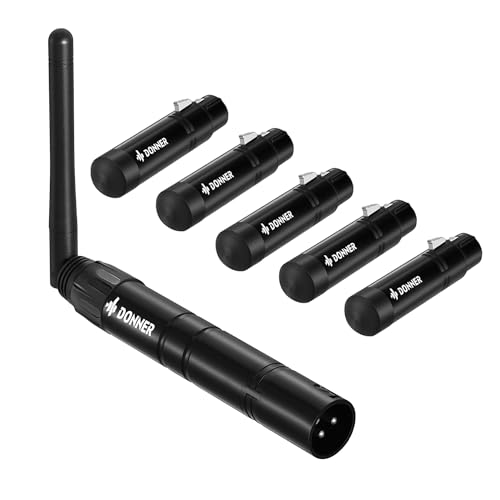
- Includes one transmitter and five receivers
- Seven ID groups and 126-channel frequency hopping
- Stated 500-meter visible-distance range
Best For: Multi-fixture DMX512 stage and event lighting
Best Wireless DMX Controller for Programmable Shows
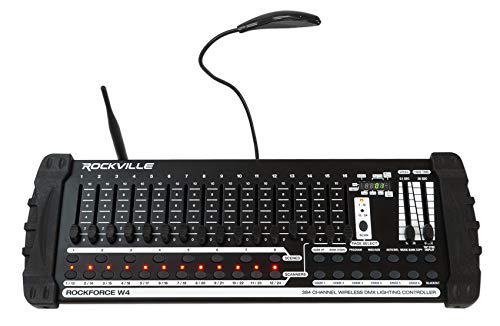
- 384 channels for up to 24 intelligent lights
- 30 banks, six chases, and 240 scenes
- Built-in 2.4GHz transmitter with MIDI support
Best For: Programmable DJ, mobile, and professional lighting shows
Best Plug-and-Play Wireless DMX Kit

- One transmitter connects to seven receivers
- Seven ID groups for separate lighting setups
- 126 frequency-hopping channels for stable transmission
Best For: Stage, club, DJ, and event lighting installations
Best App-Based Wireless DMX Controller

- 256-channel control from an iPad or Android tablet
- Fixture library with more than 15,000 options
- 50 presets and 21 automatic effects
Best For: Tablet-based control for mobile and compact lighting setups
Multi-Light Wireless Link

- Supports standard DMX512 over 2.4GHz wireless transmission
- Includes seven receivers for multi-fixture setups
- Seven ID groups and 126-channel frequency hopping
Best For: Large stage and event lighting rigs
All-in-One Lighting Console
384-Channel Wireless DMX Controller

- 384 channels for up to 12 intelligent lights
- Wireless 2.4GHz and wired 3-pin XLR modes
- Sound, MIDI, manual, and programmable scene control
Best For: DJs and indoor stage lighting operators
Fast Mobile Setup
Wireless DMX 1 Transmitter & 2 Receivers

- Includes transmitter, two receivers, and power adapters
- Lists up to 1,000 feet of wireless range
- Seven group IDs and 126-channel frequency hopping
Best For: Mobile DJs and small event lighting rigs
Flexible Wireless Control
Lixada DMX 512 Wireless Controller

- 126-channel frequency jumping
- 16 selectable wireless ID groups
- Adjustable four-grade output power
Best For: Flexible DMX512 lighting setups
Large-Setup Value
Donner Wireless DMX Controller 8-Piece Kit

- One transmitter with seven receivers
- Rechargeable receiver design
- 500-meter visible-distance range
Best For: Multi-fixture stage and party lighting
Rugged Short-Version Kit
Donner DMX512 Wireless Controller
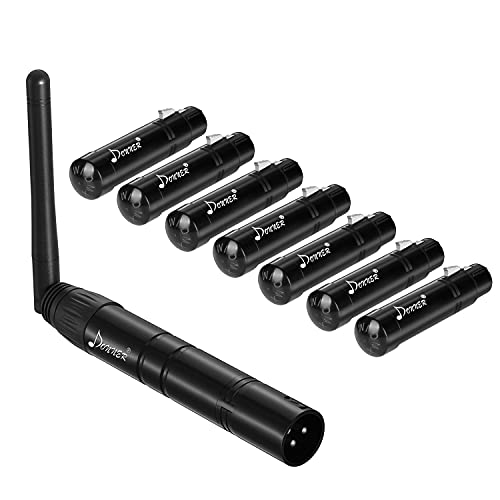
- Metal black-shell construction
- Seven selectable ID groups
- 126-channel automatic frequency jumping
Best For: Corded-power DMX512 stage lighting
Best Wireless DMX Kit for Multi-Fixture Setups – Donner DMX512 Wireless Controller
The Donner DMX512 Wireless Controller is a practical option for reducing cable runs in stage, disco, party, and bar lighting setups. Its transmitter can send standard DMX512 data to multiple receivers, provided the fixtures support DMX512.
Best For: Users who need a transmitter with five receivers for wireless control of several compatible DMX fixtures.
Pros:
- Includes one transmitter and five receivers.
- Offers seven selectable wireless ID groups for separate setups.
- Uses 126-channel frequency hopping with stated 500-meter visible-distance communication.
- Provides tricolor status indicators and standard DMX512 data transmission.
Cons:
- Requires a power adapter because the units do not have built-in batteries.
- Works only with devices marked as DMX512-compatible.
This is a straightforward wireless DMX solution when the main priority is distributing one controller’s signal across multiple compatible fixtures without running long cables.
Best Wireless DMX Controller for Programmable Shows – Rockville ROCKFORCE W4
The Rockville ROCKFORCE W4 combines a 384-channel lighting controller with a built-in 2.4GHz wireless transmitter. Among wireless DMX controllers, it suits users who want hands-on programming, MIDI support, and multiple scene and chase options in a rack-mountable console.
Best For: DJs, mobile entertainers, and professional users controlling multiple intelligent lights with programmable scenes and chases.
Pros:
- Controls up to 24 intelligent lights with 16 channels each.
- Includes 30 banks, six chases, and up to 240 scenes.
- Supports up to seven wireless groups and 25 receivers through its 2.4GHz transmitter.
- Offers MIDI, music-triggered operation, manual override, and wired DMX input/output.
Cons:
- Its 20.7-inch-wide, 6.2-pound rack-style design is less compact than an app-based interface.
- Its extensive controls may be more than needed for simple wireless fixture control.
With physical sliders, programmable banks, and multiple operating modes, the ROCKFORCE W4 is aimed at show control rather than a minimal plug-and-play wireless link.
Best Plug-and-Play Wireless DMX Kit – Wireless DMX512 1-to-7 System
This wireless DMX512 transmitter-receiver kit is designed to send standard DMX data without a cable between the controller and lighting fixtures. It includes one transmitter and seven receivers, making it a useful choice for expanding a compatible stage, club, DJ, or event lighting setup.
Best For: Event and stage users who want seven wireless receiver endpoints with simple setup and independent ID groups.
Pros:
- Includes one transmitter and seven receivers.
- Supports seven independent ID groups for separate lighting networks.
- Uses 126 automatic frequency-hopping channels for anti-interference performance.
- Promotes a plug-and-play connection between a controller and compatible fixtures.
Cons:
- The supplied notes do not specify an exact communication distance.
- It is intended for standard DMX512 systems, so compatibility should be confirmed before purchase.
This kit is well suited to users who value receiver quantity and uncomplicated deployment, especially when several fixtures need wireless DMX coverage in the same venue.
Best App-Based Wireless DMX Controller – ADJ MyDMX Go
The ADJ MyDMX Go takes a tablet-based approach to wireless DMX control. This 256-channel app interface connects through Wi-Fi and USB, supports a large fixture library, and provides presets and automatic effects without requiring traditional scene programming.
Best For: Tablet users who want accessible control, fixture compatibility, and quick effects for compact or mobile lighting systems.
Pros:
- Provides 256-channel control through an iPad or Android tablet.
- Works with a library of more than 15,000 fixtures.
- Offers 50 user presets and 21 automatic effects without programming.
- Supports up to two lighting universes with 3-pin XLR and USB connectivity.
Cons:
- Requires an iPad or Android tablet for app-based operation.
- Its supplied details describe a compact interface rather than a standalone hardware controller with physical faders.
- Additional upgrades are available separately.
MyDMX Go is a strong fit for users who prefer visual, tablet-based wireless DMX control and fast preset creation over manual console programming.
Multi-Light Wireless Link – 1 Transmitter & 7 Receivers
For larger lighting rigs, this wireless DMX controller kit pairs one transmitter with seven receivers. It supports standard DMX512 data over the 2.4GHz ISM band, with real-time transmission, automatic frequency hopping, and a stated visible-range distance of up to 400 meters.
Best For: Stage, party, and event setups needing one transmitter to serve multiple DMX lights.
Pros:
- Includes one transmitter and seven receivers for broad fixture coverage.
- Uses 126 automatically hopping channels for improved resistance to interference.
- Offers seven selectable ID groups for separate wireless networks in the same location.
- Uses 3-pin XLR connectors and metal construction.
Cons:
- The kit is more extensive than needed for a small lighting setup.
- The listed 400-meter communication distance applies to visible-distance conditions.
This is a practical choice when you need to distribute DMX512 control across many fixtures without running long signal cables. Its seven receivers and selectable network groups make it especially useful for larger or segmented installations.
All-in-One Lighting Console – 384-Channel Wireless DMX Controller
This wireless DMX controller combines a 384-channel lighting console with 2.4GHz wireless and traditional 3-pin XLR wired operation. Its faders, LED display, sound activation, MIDI support, and programmable scenes give DJs and event operators several ways to manage compatible stage lights.
Best For: DJs, weddings, bars, churches, and indoor stages that need hands-on lighting control with wireless or wired flexibility.
Pros:
- Provides 384 DMX channels and supports up to 12 intelligent lights.
- Offers both 2.4GHz wireless and 3-pin XLR wired modes.
- Includes sound-activated, auto, manual, and MIDI control options.
- Stores 30 banks and 240 programmable static scenes.
Cons:
- Its console-style controls may be more than needed for simple plug-and-play lighting.
- The supplied details do not specify a wireless communication range.
Choose this model if you want a complete control surface rather than only a wireless transmitter and receiver pair. The scene memory and multiple operating modes are useful for repeatable shows, while wired DMX remains available for conventional setups.
Fast Mobile Setup – Wireless DMX 1 Transmitter & 2 Receivers
Designed for mobile lighting work, this wireless DMX controller set includes one transmitter, two receivers, and three power adapters. It uses 2.4GHz frequency hopping for real-time, no-delay DMX512 transmission and lists a range of up to 1,000 feet, making it suited to quick event installations.
Best For: Mobile DJs, weddings, discos, and small stage rigs where reducing XLR cable runs is a priority.
Pros:
- Includes power adapters for all three units.
- Uses 126-channel automatic frequency hopping to help limit interference.
- Supports seven independent group IDs for separate lighting systems.
- Its two receivers provide a practical setup for multiple fixtures.
Cons:
- The units are not battery-powered and require power adapters during operation.
- It includes fewer receivers than larger multi-light kits.
This set offers a balanced option for users who want faster installation without committing to a seven-receiver package. The included adapters support continuous operation, while the group IDs help manage separate rigs in busy venues.
Flexible Wireless Control – Lixada DMX 512 Wireless Controller
The Lixada DMX 512 Controller is a practical option for buyers comparing wireless DMX controllers for disco, DJ, party, recording, and stage-lighting setups. It transmits standard DMX512 data wirelessly and includes adjustable power output, frequency selection, and an LCD display.
Best For: Users who want a flexible wireless DMX link with multiple network IDs and adjustable transmission power.
Pros:
- 126-channel automatic frequency jumping supports reliable communication.
- Sixteen selectable ID groups allow separate wireless networks in the same location.
- Four power-rate output settings provide transmission flexibility.
- Designed for real-time DMX512 data transmission without a stated delay.
Cons:
- The supplied notes do not specify communication distance.
- It is intended for DMX512 equipment, so compatibility should be checked before purchase.
With its 16-group coding and adjustable output power, this Lixada model is a versatile pick for wireless lighting layouts where interference management and cable-free installation matter.
Large-Setup Value – Donner Wireless DMX Controller 8-Piece Kit
This Donner kit is built for buyers who need wireless DMX controllers for several fixtures at once. It includes one transmitter and seven receivers, with rechargeable receivers, selectable wireless groups, and a stated 500-meter visible-distance communication range.
Best For: Stage, disco, party, and bar lighting setups that need one transmitter to control multiple DMX512 fixtures.
Pros:
- Seven receivers are included with one transmitter.
- One transmitter can control many receivers.
- Rechargeable receivers reduce the number of power sockets needed during use.
- Offers seven selectable wireless ID groups and 126-channel automatic frequency jumping.
Cons:
- The transmitter does not have a built-in battery.
- It supports devices marked with DMX512 only.
- The stated 500-meter communication distance applies to visible-distance conditions.
For larger lighting systems, the seven-receiver bundle is the main advantage. It reduces the need to buy matching receiver units separately while retaining interference-management features for coordinated DMX512 control.
Rugged Short-Version Kit – Donner DMX512 Wireless Controller
The Donner EC803+EC825X7 set suits buyers looking for wireless DMX controllers in a metal black-shell design. It uses the 2.4G ISM band, supports standard DMX512 transmission, and includes seven selectable wireless groups for stage, disco, party, and bar lighting.
Best For: Corded-power lighting installations that need a durable-looking wireless DMX512 transmitter-and-receiver kit.
Pros:
- Metal black shell provides a sturdy enclosure for the wireless units.
- Seven selectable ID groups help separate wireless networks.
- 126 automatic frequency-jumping channels support anti-interference performance.
- Transmits DMX512 data in real time without a stated delay.
Cons:
- The system has no built-in battery and requires a power adapter while operating.
- It supports DMX512-marked devices only.
- The supplied listing information is inconsistent about the included receiver count, so verify the package contents before ordering.
This kit emphasizes interference resistance and a metal housing rather than battery convenience. It is a sensible fit when the lighting rig already has access to corded power and uses compatible DMX512 fixtures.
How We Picked These Wireless Dmx Controllers
We focused on the features that affect real-world lighting control: DMX channel capacity, wireless frequency, included transmitters and receivers, wired compatibility, power options, control interfaces, and portability. The selection includes compact systems for small parties, larger receiver bundles for multi-fixture installations, traditional console-style units, and app-oriented control.
Because wireless DMX performance depends on antenna placement, interference, fixture compatibility, and venue layout, specifications should be treated as a starting point rather than a guarantee of identical range in every location. Confirm the connector type, DMX profile, and operating requirements before ordering.
Quick Comparison
| Best For | Look For | Typical Advantage |
|---|---|---|
| Small DJ rigs | Compact 2.4GHz kits with one or two receivers | Easy setup and lower cost |
| Multiple fixtures | Seven or more receivers and group identification | Less cable across a larger rig |
| Complex lighting scenes | 384-channel control, MIDI, or app support | More programming flexibility |
| Mixed installations | Wireless and wired dual-mode operation | Useful backup and compatibility |
Key Buying Factors for Wireless Dmx Controllers
Channel Capacity and Fixture Compatibility
Check how many DMX channels the controller supports and how many channels each fixture uses. A 384-channel controller may suit basic PAR lights and moving heads, but larger productions can require multiple universes or a more advanced console. Also verify whether the system uses 3-pin or 5-pin DMX connections and whether adapters are needed.
Transmitter and Receiver Count
A kit with several receivers is practical when fixtures are spread across a stage, truss, or room. Extra receivers can also simplify expansion, but make sure they support the same wireless protocol and group or frequency settings as the transmitter.
Range, Interference, and Reliability
Most products here use the 2.4GHz band, which is convenient but shared with Wi-Fi and other devices. Favor clear line of sight, keep antennas away from metal obstructions, and test the full venue before a performance. A wired fallback is valuable for critical events.
Control Method and Power
Choose physical faders and buttons for hands-on operation, MIDI when integrating with a DJ or production workflow, or app control when you prefer scenes and presets from a mobile device. Built-in batteries can make receivers easier to position, while rechargeable transmitters reduce cable clutter.
Who Should Buy Which Wireless Dmx Controllers?
Choose a compact receiver kit if you run a small DJ setup, party rig, or a few wireless PAR fixtures and want quick installation. Choose a multi-receiver bundle for stages, venues, and event spaces where cable runs are inconvenient or visually distracting. Choose a 384-channel or MIDI-equipped controller if you need more hands-on programming, sound-reactive operation, or integration with other performance equipment. Choose an app-based controller if portability and scene management matter more than dedicated physical controls. Finally, choose a wireless-and-wired dual-mode unit when reliability and compatibility with existing DMX infrastructure are top priorities.