If your workspace is cramped, the right display setup can make your laptop feel instantly more productive without taking over your desk. Laptop screen extenders for small desks add usable screen space while keeping your footprint compact.
This roundup focuses on portable, easy-to-set-up options that are better suited to tight home offices, dorm rooms, and travel-friendly workstations.
Best 10 Laptop Screen Extenders for Small Desks Picks for 2026
Easy-Setup Choice

- FHD 1080p IPS screen with 300 nits
- Driver-free plug-and-play setup
- 180° rotation and multiple display modes
Best For: Small desks, quick setup, and flexible everyday multitasking
Triple-Screen Upgrade
15.6-Inch Rotating Dual Monitor
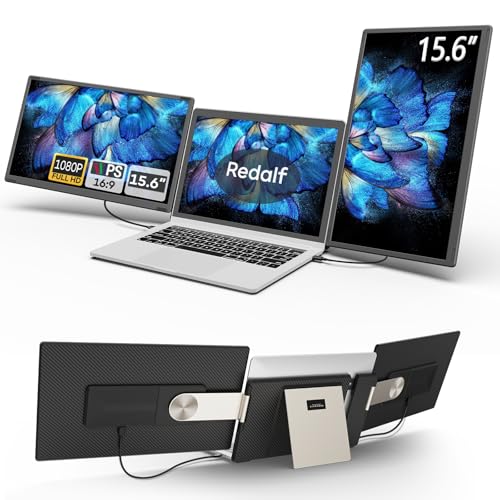
- Triple-screen layout with detachable use
- 235° horizontal and 90° vertical rotation
- 1080p IPS panels with built-in speakers
Best For: Power users who need maximum multitasking on a compact desk
Best for a bigger single-screen feel
FLYTOCCA 15.6" FHD Detachable Extender

- 15.6-inch 1080p IPS display
- Detachable screen with vertical mode
- USB-C plug-and-play with USB-A/HDMI fallback
Best For: Users who want a larger detachable extender for flexible multitasking on tight desks
Best for ultra-light travel setups
14.2" Ultra-Portable Dual Monitor Extender

- Only 1.87 lbs and 0.27 inches thin
- Extend, mirror, and portrait modes
- 1080p IPS display with 300 nits brightness
Best For: Frequent travelers and remote workers who need a slim extender that won’t overwhelm a small desk
Triple-Screen Travel Setup
Synnov 15.6" Triple Monitor Extender

- 15.6-inch FHD IPS triple-screen design
- 4 lb, 0.19-inch thin portable build
- Plug-and-play with USB-C or HDMI
Best For: Remote workers and travelers who want three screens on a small desk
Compact Dual-Screen Pick
VueForge 14" Portable Laptop Extender

- 1.8 lb lightweight dual-screen design
- 14-inch FHD IPS panel with wide viewing
- Adjustable kickstand for small desks
Best For: Users who want a compact, flexible second screen
Matte Eye-Care Dual Monitor

- Matte anti-glare 14-inch FHD IPS display
- Stable telescopic stand for 13-17.3 inch laptops
- USB-C or HDMI plug-and-play setup
Best For: Long sessions and users who prefer a low-glare screen
Portable 14-Inch Pick – 1080P FHD USB-C/HDMI/USB-A Extender
If you’re looking at laptop screen extenders for small desks, this 14-inch option is built to add workspace without feeling bulky. Its 1080p FHD IPS panel, matte finish, and support for extended, mirrored, and portrait modes make it a practical pick for everyday multitasking, especially when desk space is tight.
Best For: Users who want a lightweight, travel-friendly extender for compact home offices, cafes, or shared workspaces.
Pros:
- 14-inch 1080p FHD IPS display with 72% NTSC color gamut
- Supports Extended, Mirrored, and Portrait modes
- Lightweight 2.34 lb design and 0.9-inch folded thickness
- Works with USB-C, HDMI, and USB-A connections
Cons:
- When using HDMI, it needs an extra USB-A to USB-C cable for power
- Best fit is limited to laptops up to 15.35 inches wide
- 60Hz panel is fine for productivity, not aimed at high-refresh use
This model makes sense if you want a straightforward portable monitor that adds screen space without taking over a small desk. The blend of thin build, flexible modes, and broad compatibility keeps setup simple for mobile work.
Easy-Setup Choice – 14-Inch IPS Monitor Extender
For shoppers comparing laptop screen extenders for small desks, this ROYY 14-inch monitor extender focuses on easy setup and flexible viewing. It offers 1080p IPS clarity, 300 nits brightness, and multiple display modes, making it a useful add-on when you need more room for windows but not more clutter.
Best For: People who want a compact dual-screen setup for work, presentations, or casual multitasking.
Pros:
- 14-inch FHD 1080p IPS panel with 300 nits brightness
- Driver-free plug-and-play setup with included cables
- Supports expansion, mirror, landscape, and portrait modes
- 180° rotation helps adjust the viewing angle easily
Cons:
- Older devices may not support the needed ports
- At 14 inches, it adds space but still keeps a modest screen size
- Best results depend on using the correct back port on the monitor
This is a solid pick if your priority is convenience on a tight workspace. It gives you the core features most people need from a screen extender without demanding a complicated setup process.
Triple-Screen Upgrade – 15.6-Inch Rotating Dual Monitor
If you need laptop screen extenders for small desks but still want maximum screen space, this 15.6-inch triple-screen design stands out for its flexible, foldable layout. It supports 235° horizontal rotation, 90° vertical rotation, and detachable use, so you can adapt it to a cramped desk or separate it for travel.
Best For: Users who need a high-output multitasking setup for programming, spreadsheets, finance, or presentations.
Pros:
- 15.6-inch FHD 1080p IPS panels with built-in speakers
- 235° horizontal and 90° vertical rotation for flexible positioning
- Detachable design lets one side be used independently
- Plug-and-play support for USB-C, USB-A, and HDMI
Cons:
- More ambitious than a simple single-screen extender, so it may feel large for very tiny desks
- Mac support excludes M1/M2/M3 chips according to the notes
- HDMI use still requires an extra USB-A to USB-C power connection
This model is best when desk space is limited but workload is not. The rotating, detachable structure gives it unusually strong flexibility, but it is most valuable if you truly plan to use the extra screens.
Premium Multi-Tasker – 15.6-Inch Triple Screen Extender
Among laptop screen extenders for small desks, this KYY model is aimed at users who want a premium-feeling multi-monitor setup without sacrificing portability. It offers two 15.6-inch FHD IPS screens, a built-in stand, and support for landscape or portrait use, which makes it a strong choice for dense workflows in limited spaces.
Best For: Professionals and traders who want a portable dual-screen workflow for office, travel, or meeting use.
Pros:
- Dual 15.6-inch FHD 1080p IPS screens with wide viewing angles
- One-cable USB-C connection design for simpler setup
- Built-in stand adjusts up to 90° for stable positioning
- Each screen rotates 0° to 360° for flexible sharing and layout changes
Cons:
- Drivers must be downloaded first, so it is not fully driver-free
- Not compatible with PS5 or Xbox Series X
- Best suited to productivity rather than entertainment-first use
This extender is a good fit if you want an organized dual-screen setup that still travels well. Its aluminum-alloy build, flexible rotation, and single-cable workflow make it especially appealing for structured, screen-heavy tasks.
Best for a bigger single-screen feel – FLYTOCCA 15.6" FHD Detachable Extender
If you’re shopping for laptop screen extenders for small desks, the FLYTOCCA model is a strong pick when you want more screen space without crowding your setup. Its 15.6-inch FHD display gives you room to spread out documents, coding tools, or dashboards, while the detachable design and slim fold-down body make it easier to stow when your desk has to do double duty.
Best For: Users who want a larger 15.6-inch extender with detachable portability and vertical mounting for work-focused multitasking.
Pros:
- 15.6-inch 1080p IPS panel offers a larger working area than common 14-inch options.
- Detachable screen and vertical mount support help with coding, long documents, and vertical workflows.
- Single-cable USB-C setup, with USB-A plus HDMI fallback, keeps setup simple.
- Folds down for travel and can be detached to save bag space.
Cons:
- At 1.5 pounds, it is portable but not the lightest option here.
- Best fit depends on your laptop having the right Type-C or USB-A/HDMI ports.
Overall, this is a practical choice if you want a fuller desktop-style experience on a small desk and value vertical mode as much as raw screen size. It balances workspace expansion with straightforward plug-and-play use.
Best for ultra-light travel setups – 14.2" Ultra-Portable Dual Monitor Extender
Among laptop screen extenders for small desks, this 14.2-inch model stands out for keeping your footprint lean. At 1.87 pounds and just 0.27 inches thin, it is built for users who need extra screen space without adding much bulk, whether you work from a compact home office, a café table, or a shared workspace.
Best For: Frequent travelers, remote workers, and students who want a very slim, lightweight dual-screen setup.
Pros:
- Ultra-portable at 1.87 lbs and 0.27 inches thin.
- Supports extend, mirror, and portrait modes for flexible multitasking.
- 1080p IPS panel with 300 nits brightness for clear everyday viewing.
- No-driver setup with USB-C or HDMI plus USB-A cable options.
Cons:
- 14.2-inch size is smaller than some 15.6-inch alternatives.
- Requires the right port combination for the easiest setup on non-USB-C laptops.
This is the best fit when desk space is at a premium and portability matters as much as productivity. It keeps the setup simple while still giving you the extra screen real estate needed for real multitasking.
Best for maximum screen expansion – domyfan 15.6" Triple Portable Monitor
If you want laptop screen extenders for small desks but need the biggest productivity boost possible, the domyfan triple portable monitor is the most expansive option here. Its 15.6-inch FHD IPS display and triple-screen design are made for people who juggle spreadsheets, creative tools, or multiple reference windows and want to reduce constant switching.
Best For: Power users who want a triple-screen setup and don’t mind a larger, more involved extender.
Pros:
- Triple portable monitor design creates a much larger multitasking workspace.
- 15.6-inch 1080p IPS display delivers sharp, vibrant visuals.
- Supports extended, duplicated, and second-screen modes.
- Comes with a complete cable kit and travel sleeve.
Cons:
- At 3.9 lbs, it is heavier than simpler single-screen extenders.
- Not compatible with Mac M1/M2/M3/M4 chips.
- Setup notes indicate you may need two full-function USB-C ports or alternate cabling.
This model makes sense when your priority is maximum on-screen workspace, not minimalism. It is more of a desktop-expansion tool than a grab-and-go accessory, but it can transform a small desk into a serious multi-window setup.
Triple-Screen Travel Setup – Synnov 15.6" Triple Monitor Extender
If you want laptop screen extenders for small desks that still feel expansive, the Synnov 15.6-inch model is built around turning one compact workspace into a triple-screen setup. It supports extend, mirror, and portrait modes, so you can keep research, email, meetings, and docs visible without constant tab switching.
Best For: Remote workers, programmers, and travelers who want three screens in a portable package.
Pros:
- 15.6-inch FHD IPS panels with 178° viewing angles for a larger, clearer workspace
- Triple-monitor layout supports extend, mirror, and portrait modes for multitasking
- Lightweight 4 lb build and 0.19-inch thin profile for easier transport
- Plug-and-play setup with USB-C or USB-C plus HDMI connections
Cons:
- Requires at least one full-featured USB-C port on the laptop
- Not compatible with MacBook models using M1/M2/M3 chips
- Triple-screen format can be more than some small-desk users need
The Synnov is a strong pick if your priority is maximum screen space in a portable form. It trades a bit of simplicity for a lot of productivity, especially when you need multiple windows open at once.
Compact Dual-Screen Pick – VueForge 14" Portable Laptop Extender
For laptop screen extenders for small desks, the VueForge 14-inch model keeps the footprint modest while still adding a useful second display. Its built-in adjustable stand makes it easier to set a comfortable angle without needing much desk space, and the 1.8 lb design stays easy to carry between home, office, and travel.
Best For: People who want a lightweight dual-screen upgrade with a flexible stand.
Pros:
- Only 1.8 lbs, making it one of the more portable options here
- 14-inch FHD IPS display with wide-angle viewing for everyday multitasking
- Adjustable aircraft-grade aluminum kickstand for height, tilt, and swivel control
- Plug-and-play support via USB-C or HDMI with broad device compatibility
Cons:
- Smaller than 15.6-inch models if you want the largest possible workspace
- Dual-screen format adds less total screen area than triple-monitor extenders
- Best setup still depends on available laptop ports and cable compatibility
This is a practical choice when desk space is tight and portability matters. It offers a balanced mix of screen size, flexibility, and simple setup without feeling oversized.
Matte Eye-Care Dual Monitor – CIDETTY 14" Travel Extender
The CIDETTY 14-inch option is a good fit if you want laptop screen extenders for small desks with a low-glare finish and a stable, compact setup. Its matte anti-glare panel, adjustable telescopic stand, and dual-screen design make it easier to work comfortably in a limited space without constantly rearranging your desk.
Best For: Long work sessions, shared viewing, and users who prefer a matte screen.
Pros:
- Matte anti-glare IPS display helps reduce reflections and eye strain
- 14-inch 1080p panel with 178° viewing angle and 300-nit brightness
- Adjustable telescopic stand provides a secure fit for 13-17.3 inch laptops
- Plug-and-play support for USB-C and HDMI connections
Cons:
- Dual-screen layout offers less screen space than triple-monitor extenders
- Some older laptops may need a special cable or may lack the required ports
- Not the lightest-feeling choice if your top priority is ultra-minimal travel gear
CIDETTY stands out for its matte screen and stable mounting approach, which can be helpful on crowded desks. If you want a comfortable second display rather than the largest possible setup, it’s a sensible, easy-to-use option.
How We Picked the Best Laptop Screen Extenders for Small Desks
We focused on Laptop Screen Extenders for Small Desks that balance screen size, portability, and ease of setup. Priority went to models with foldable or detachable designs, broad laptop compatibility, and simple plug-and-play connections that reduce cable clutter.
We also considered whether the extender could be used without dominating a shallow desk, since compact workspaces need a screen solution that adds productivity without adding bulk.
Quick Comparison
For the smallest desks, lighter 14-inch class extenders are usually the easiest fit. If you want more side-by-side workspace, 15.6-inch models can be worthwhile, but they tend to occupy more physical space and may feel better on a deeper desk or with a stand that keeps the setup tidy.
In general, choose a dual-screen extender if you mainly want email, chat, and reference windows. Pick a triple-screen style only if you regularly multitask and have enough room to open and close the display arms comfortably.
Key Buying Factors for Laptop Screen Extenders for Small Desks
Size and Footprint
Measure your desk before buying. The best Laptop Screen Extenders for Small Desks should fit beside or behind your laptop without blocking a keyboard, mouse pad, or notebook space.
Weight and Portability
Lighter models are easier to reposition, store, and carry. If you work in more than one place, prioritize slim builds that fold flat and travel well.
Connection Type
USB-C, HDMI, and USB-A support matters because it affects compatibility and cable management. A cleaner, single-cable setup is especially helpful when outlet and port access are limited.
Display Quality
Look for 1080p resolution, IPS panels, and decent brightness for readable text and comfortable viewing. These features matter more than extra bells and whistles if your main goal is productive multitasking.
Flexibility
Rotation, detachable monitors, and adjustable mounting can help you tailor the setup to your desk layout. Flexible positioning is often the difference between a cluttered and a clean small-desk workspace.
Who Should Buy Which Laptop Screen Extenders for Small Desks?
If you need the smallest possible footprint, go with a compact 14-inch option. If your workflow involves frequent split-screen work, a 15.6-inch extender may feel more comfortable. Travelers and hybrid workers should favor ultra-light models, while power users who juggle multiple apps may prefer a detachable or triple-monitor design.
In short, the best choice depends on how much desk space you can spare, how many apps you keep open at once, and whether portability or maximum screen area matters more.