The best streaming encoders with HDMI turn a camera, switcher, game console, or media source into a network-ready video feed for platforms, players, and production systems. The right model depends on more than resolution: protocol support, latency, audio handling, recording, and workflow compatibility all matter.
This roundup compares 10 HDMI encoder options, from compact 1080p units to versatile 4K models with loop-through, NDI|HX, PoE, multi-input mixing, and multi-channel output capabilities.
Best 10 Streaming Encoders with Hdmi Picks for 2026
Best Value HDMI Encoder
URayCoder 1080p Multi-Protocol Encoder

- 1080p at up to 60fps
- Four-stream, multi-protocol output
- Overlays and HDMI/line-in audio
Best For: Budget-conscious 1080p streaming and IPTV setups
Best 4K HDMI Encoder
Magewell Ultra Encode HDMI Plus

- 4K HDMI encoding at 30fps
- HDMI loop-through for monitoring
- Streaming and recording together
Best For: Professional 4K HDMI production workflows
Best High-Frame-Rate HDMI Encoder
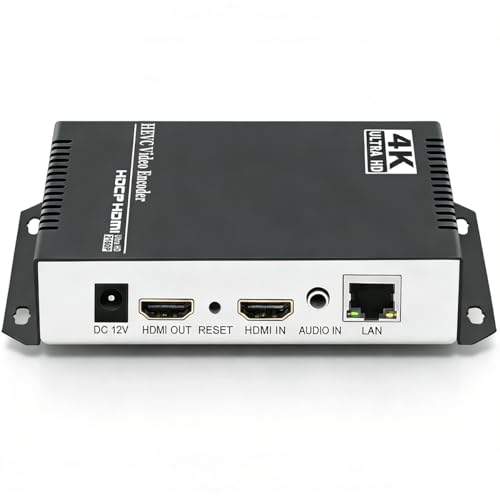
- 4K encoding up to 30fps
- Up to 120fps at 2K or lower
- Supports WebRTC, SRT, HLS, and RTMP
Best For: Flexible 4K streaming and high-frame-rate HD workflows
Best Hybrid HDMI/SDI Encoder

- HDMI and SDI inputs with mixing
- HDMI 4K up to 60fps
- Streams to six destinations
Best For: Professional productions using mixed HDMI and SDI sources
Best Multi-Platform 4K Encoder
4-Channel HDMI Streaming Encoder

- Four HDMI channels with up to 16 simultaneous feeds
- Supports 4K30 and 1080p60 channel combinations
- LCD monitoring and extensive streaming protocols
Best For: Multi-camera broadcasts and IPTV deployments
Best Compact 1080p60 Encoder

- Hardware H.265/H.264 encoding at 1080p60
- Browser setup without PC software or drivers
- Compact design with HDMI and 3.5mm audio support
Best For: Single-source streaming and remote monitoring
Best Customizable 4K Encoder
Multi-Channel HDMI to IP Streamer
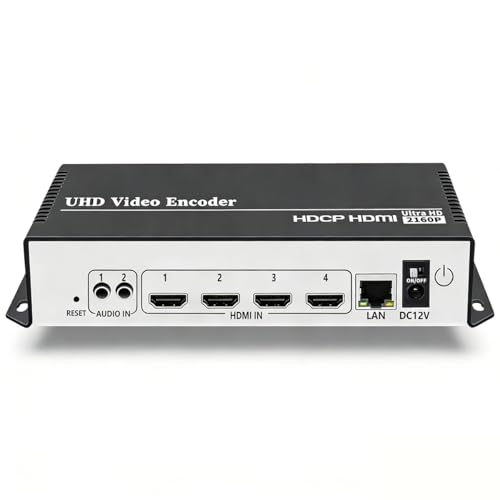
- 4K30 encoding with up to 120 fps at lower resolutions
- Four simultaneous streams with varied protocols
- Extensive overlays, video controls, and audio options
Best For: Professional and enterprise IP video distribution
Best 4K Multi-Platform Encoder

- 4K input and output at up to 30fps
- Up to four protocol-based streams
- Lifetime warranty and technical support
Best For: 4K IPTV and multi-platform streaming
Best Compact Encoder

- Compact 200g design with HDMI loopout
- Records to USB drive or TF card
- Supports cropping and multiple protocols
Best For: Portable 1080p streaming and compact installations
Best Flexible Network Encoder

- 4K HDMI-to-IP encoding at up to 30fps
- Supports ONVIF, SRT, RTMP(S), and HLS
- Up to four simultaneous protocol outputs
Best For: IPTV, OBS, NVR, and multi-platform streaming
Best Value HDMI Encoder – URayCoder 1080p Multi-Protocol Encoder
For shoppers comparing streaming encoders with hdmi, the URayCoder UHE265-1S is a practical 1080p option for converting HDMI video and audio into network streams. It supports H.265/H.264 encoding at up to 1080p and offers broad protocol compatibility for common streaming and IP-video setups.
Best For: YouTube, Facebook, OBS, IPTV, NVR, and multi-platform 1080p streaming.
Pros:
- Supports 1080p input and output at up to 60fps with H.265/H.264 encoding.
- Can output up to four streams using protocols including RTMP(S), RTSP, SRT, HLS, and UDP.
- Includes overlays, video adjustments, HDMI or 3.5mm line-in audio, and remote management.
Cons:
- Limited to 1080p rather than 4K video.
- Only one HDMI video input is provided.
This encoder is a strong fit when reliable 1080p delivery and protocol flexibility matter more than premium 4K production features. Its customization tools and stated lifetime technical support add value for branded streams and installations.
Best 4K HDMI Encoder – Magewell Ultra Encode HDMI Plus
The Magewell Ultra Encode HDMI Plus is a capable choice among streaming encoders with hdmi for users who need 4K capture, local pass-through, recording, and flexible network delivery. Its loop-through output makes it easier to monitor or route the HDMI source while streaming.
Best For: 4K live production, events, corporate AV, education, and HDMI-based broadcast workflows.
Pros:
- Encodes HDMI video up to 4096×2160p30 and provides HDMI loop-through.
- Supports RTMP, RTMPS, SRT, NDI|HX, HLS, and TS over UDP/RTP.
- Streams and records simultaneously to internal, USB, or network storage.
- Offers Gigabit Ethernet with PoE, Wi-Fi, web control, API access, and a 128GB internal capacity.
Cons:
- 4K encoding is limited to 30fps.
- 4G/5G modem support requires a separately supplied USB modem.
Choose this model when a polished standalone workflow is more important than the lowest purchase price. Loop-through, onboard recording, NDI|HX, and multiple control options make it well suited to installed or mobile production systems.
Best High-Frame-Rate HDMI Encoder – URayCoder 4K HDMI IP Encoder
For buyers seeking streaming encoders with hdmi that can handle 4K sources and high frame rates, this URayCoder model supports 4K input and output at up to 30fps, while supporting up to 120fps at 2K and lower resolutions. It also provides an unusually broad set of streaming protocols.
Best For: 4K HDMI streaming, high-frame-rate 2K or lower-resolution video, and multi-platform distribution.
Pros:
- Supports 3840×2160 4K video at up to 30fps and up to 120fps at 2K or below.
- Works with RTMP(S), RTSP, SRT, HLS, WebRTC, TRTC, ICECAST, and other protocols.
- Can send up to four streams simultaneously to different destinations.
- Provides overlays, cropping, mirroring, audio-source selection, and remote status viewing.
Cons:
- 4K frame rate is limited to 30fps.
- The supplied details do not specify storage or recording features.
This is a versatile network encoder for users who need more protocol options than a basic HDMI-to-IP converter provides. Its high-frame-rate support below 4K is particularly useful for smoother 2K or HD content.
Best Hybrid HDMI/SDI Encoder – Magewell Ultra Encode AIO
The Magewell Ultra Encode AIO stands out among streaming encoders with hdmi by combining HDMI and SDI inputs in one production device. It supports 4K encoding, dual-input layouts, recording, overlays, and up to six simultaneous streaming destinations.
Best For: Broadcast, live events, studios, and productions that combine HDMI and SDI sources.
Pros:
- Accepts HDMI or SDI and supports picture-in-picture or side-by-side mixing.
- Handles HDMI up to 4096×2160p60 and SDI up to 4096×2160p30.
- Streams to up to six destinations using RTMP(S), SRT, NDI|HX2/HX3, HLS, and UDP/RTP.
- Records to SD card, USB storage, or network drives while streaming.
Cons:
- SDI 4K input is limited to 30fps.
- Its rack-mountable production design may be more capability than casual streamers need.
For complex productions, the AIO offers the broadest source and workflow flexibility in this group. Dual-input mixing, six-destination streaming, recording, and multiple control options make it a strong choice for professional deployments.
Best Multi-Platform 4K Encoder – 4-Channel HDMI Streaming Encoder
For demanding workflows involving multiple HDMI sources, this streaming encoder with HDMI combines four-channel input, H.265/H.264/MJPEG support, and extensive network protocols. It can handle up to two 4K30 channels plus two 1080p60 channels and distribute each channel to multiple destinations.
Best For: Multi-camera broadcasts, IPTV installations, CATV head-ends, and users who need simultaneous streaming to several platforms.
Pros:
- Four HDMI inputs and outputs with support for up to 16 simultaneous feeds.
- Supports 4K30 and 1080p60 encoding across specified channel combinations.
- Broad protocol support, including RTMP, RTMPS, SRT, RTSP, HLS, UDP, and RTP.
- LCD status screen, OSD overlays, and mirror/flip controls add monitoring and production flexibility.
Cons:
- Its multi-channel feature set may be more than a basic one-camera setup requires.
- Advanced streaming configurations may require networking knowledge.
This ORIVISION model stands out when scale matters. The four-channel design and high feed count make it a strong choice for professional or institutional setups, while the built-in display and one-year warranty add practical support.
Best Compact 1080p60 Encoder – HDMI to IP Streaming Box
This compact streaming encoder with HDMI is designed for straightforward 1080p60 distribution. Hardware H.265/H.264 encoding, browser-based setup, and support for protocols such as RTMP, RTSP, SRT, HLS, and WebRTC make it suitable for live video, monitoring, and digital signage.
Best For: Single-source streaming from a computer, console, camera, or other HDMI device where a small, low-power encoder is preferred.
Pros:
- Hardware encoding supports 1080p60 with H.265 and H.264.
- Browser-based configuration requires no dedicated software or drivers.
- Compact 90 × 54 × 29 mm design fits behind displays or in tight equipment spaces.
- Supports HDMI embedded audio, 3.5mm audio input, and OSD text, logo, and timestamp overlays.
Cons:
- It has one HDMI port, so it is intended for a single source rather than multi-camera production.
- The 1080p60 maximum is less suitable for 4K streaming workflows.
The UNISHEEN BM1000 is a practical pick for users who want a small encoder with simple web configuration. Its feature set favors reliable single-source streaming rather than advanced multi-input production.
Best Customizable 4K Encoder – Multi-Channel HDMI to IP Streamer
For flexible 4K workflows, this streaming encoder with HDMI supports H.265/H.264 encoding, 4K input and output at up to 30 fps, and high frame rates up to 120 fps at 2K and lower resolutions. It can also produce four streams using different protocols for platforms, servers, or internal networks.
Best For: Professional streaming, enterprise video distribution, and creators who need configurable overlays, audio options, and multi-platform output.
Pros:
- Supports 4K UHD at 30 fps and up to 120 fps at 2K or lower resolutions.
- Can output four streams simultaneously using varied protocols.
- Offers text, scrolling captions, logos, timestamps, cropping, rotation, flipping, and mirroring.
- Includes HDMI embedded audio and line-in audio support, plus lifetime warranty and technical support.
Cons:
- Its extensive configuration options may be excessive for basic streaming needs.
- The supplied details identify one HDMI port, so it should not be assumed to be a multi-input switcher.
The URayCoder UHE265-4-4K is geared toward users who value customization and protocol flexibility. Its 4K support, four-output capability, and enterprise-oriented support make it a versatile option for more involved IP video systems.
Best 4K Multi-Platform Encoder – URayCoder UHE265-1L-4K
If you need streaming encoders with hdmi for high-resolution sources, the URayCoder UHE265-1L-4K combines 4K input/output with broad network protocol support. It can produce up to four streams using different protocols, making it a flexible choice for multi-platform or IPTV workflows.
Best For: 4K live streaming, IPTV distribution, and users who need simultaneous multi-platform outputs.
Pros:
- Supports 4K UHD at up to 30fps and up to 120fps at 2K or lower resolutions.
- Works with RTSP, RTMP(S), SRT, HLS, HTTP, UDP, WebRTC, and other protocols.
- Supports up to four simultaneous streams and customizable text, logos, timestamps, and video settings.
- Includes lifetime warranty and technical support according to the supplied product notes.
Cons:
- 4K output is limited to 30fps.
- Its extensive configuration options may be more than basic users need.
This is the strongest fit in the group for advanced 4K distribution and multi-platform streaming. Choose it when protocol flexibility and customization matter more than a compact form factor.
Best Compact Encoder – ORIVISION EH1211 1080P
For streaming encoders with hdmi that need to fit in a small installation, the ORIVISION EH1211 offers 1080p encoding, HDMI loopout, and a lightweight design. USB or TF-card recording and built-in cropping add useful flexibility for classrooms, conference rooms, and signage.
Best For: Portable 1080p streaming setups, compact installations, classroom use, and digital signage.
Pros:
- Ultra-compact 125 x 72 x 25mm design weighing about 200g.
- Includes HDMI input, loopout, audio input and output, USB 2.0, and TF-card support.
- Can record HDMI or RTSP video locally and crop the encoding region.
- Supports RTSP, RTMP(S), SRT, HLS, HTTP, UDP, RTP, FLV, and ONVIF.
Cons:
- Maximum input and output resolution is 1080p at 30Hz.
- Only one output channel can reach 1080p, and simultaneous outputs cannot both be 1080p30.
- The supplied notes specify a 3-year limited warranty rather than lifetime coverage.
The EH1211 is a practical choice when space, local recording, and HDMI pass-through are priorities. Its 1080p limit makes it less suitable for 4K workflows, but its compact connectivity is useful for mobile or installed applications.
Best Flexible Network Encoder – URayCoder 4K HDMI to IP
The URayCoder 4K HDMI-to-IP encoder is designed for turning an HDMI source into network video for IPTV, live streaming, OBS, and NVR applications. It supports 4K video and a broad selection of protocols, while offering audio, overlay, and image-adjustment controls.
Best For: HDMI-to-IP distribution, IPTV systems, OBS workflows, and YouTube or Facebook streaming.
Pros:
- Supports 4K UHD input and output at up to 30fps.
- Offers RTSP, RTMP(S), SRT, HLS, HTTP, UDP, ONVIF, WebRTC, and other protocol support.
- Can output up to four streams with different protocols simultaneously.
- Includes HDMI and line-in audio support plus overlays, cropping, rotation, flipping, and mirroring.
Cons:
- 4K operation is limited to 30fps.
- The feature set may be unnecessarily complex for simple one-platform streaming.
This model is a well-rounded option for installations that need both streaming-platform compatibility and network video integration. It is especially appealing when ONVIF, multiple outputs, or detailed stream customization are part of the setup.
How We Picked the Best Streaming Encoders with Hdmi
We focused on the features that most affect real-world streaming workflows: HDMI resolution and frame-rate support, H.264 and H.265 encoding, available network protocols, audio support, loop-through, recording, input flexibility, and installation requirements. We also included a range of form factors and capabilities, from straightforward single-channel encoders to more advanced 4K and multi-channel hardware.
Because product listings can vary by revision and seller, verify the manufacturer’s specifications before purchase—especially supported frame rates, licensing, included accessories, and whether a stated feature applies to every input or output mode.
Quick Comparison
| Best For | Look For | Useful Features |
|---|---|---|
| Basic live streaming | 1080p HDMI, H.264, RTMP | Simple setup and broad platform compatibility |
| Higher image quality | 4K input and H.265 | Lower bandwidth at comparable quality |
| Professional production | NDI|HX, SDI, recording, mixing | Integration with production and IP workflows |
| IPTV or distribution | RTSP, UDP, HLS, SRT, multicast | Flexible delivery across networks and players |
Key Buying Factors for HDMI Streaming Encoders
Resolution, Frame Rate, and Codec
Choose an encoder that matches the source you actually use. A 1080p60 model is sufficient for many webinars, classes, and live channels, while 4K support is more appropriate for high-detail production or future-proofing. H.264 remains the safest choice for broad compatibility. H.265 can reduce bandwidth, but playback and platform support may be narrower.
Protocols and Platform Compatibility
RTMP or RTMPS is common for public platforms, while RTSP and UDP are useful for local players, surveillance-style systems, and IPTV. SRT is valuable over unreliable networks, and HLS or WebRTC may suit browser-based or low-latency distribution. Confirm that the encoder supports the exact protocol, authentication method, and stream destination you need.
Inputs, Audio, and Monitoring
Check the HDMI version, maximum input format, embedded-audio support, and any separate audio connections. HDMI loop-through is helpful when you need to send the source to a monitor or switcher without adding latency or a splitter. Multi-input models can simplify live production but may require more configuration.
Network, Recording, and Installation
Gigabit Ethernet is preferable for high-bitrate 4K streams. PoE can reduce cabling in permanent installations, while onboard recording is useful for backups and repurposing content. Consider cooling, power requirements, management software, and whether the unit can be mounted securely near the source.
Who Should Buy Which Streaming Encoders with Hdmi?
Choose a compact 1080p encoder for occasional streaming, education, meetings, or a simple camera-to-platform setup. Select a 4K H.265 model when bandwidth efficiency and higher-resolution sources matter. Buyers building IPTV, venue, or internal distribution systems should prioritize broad protocol support, multicast, and dependable network management. For studios and live-event teams, a model with loop-through, recording, NDI|HX, SDI, dual inputs, or mixing can justify the higher cost by reducing extra hardware.